
 Worksheets
Unit 1 (Scientific Method, Tools, Adaptations & Variations
Total questions: 45
Worksheet time: 1hrs 1mins
Name
Class
Date
1.
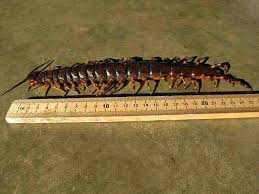
The SI base unit of length is the
a)
gram
b)
foot
c)
yard
d)
meter
2.
The measuring system we use in science is:
a)
the SI system
b)
scientific system
c)
english system
d)
none of the above
3.
The unit "gram" measures what?
a)
volume
b)
mass
c)
length
d)
speed
4.
A graduated cylinder measures
a)
length
b)
height
c)
mass
d)
volume
5.

A triple beam balance measures...
a)
mass
b)
weight
c)
length
d)
volume
6.
Which group would have organisms with the most amount of similar characteristics?
a)
kingdom
b)
Family
c)
species
d)
Class
7.
The scientific name for an organism is made from the:
a)
class and family name
b)
genus and species name
c)
domain and kingdom name
d)
kingdom and phylum name
8.
Who developed our current classification system?
a)
Aristotle
b)
Linnaeus
c)
Biff LaRue
d)
P. Manning
9.

The 8 levels of classification, most broad to most specific.
a)
Domain, Genus, Family, Order, Class, Phylum, Kingdom, Species
b)
Domain, Species, Kingdom, Genus, Phylum, Family, Class, Order
c)
Domain, Kingdom, Phylum, Class, Order, Family, Genus, Species
d)
Order, Kingdom, Species, Domain, Phylum, Family, Class, Genus
10.

Humans belong to the domain...
a)
Eukarya
b)
Bacteria
c)
Archaea
d)
Mammals
11.

Which is the correct Scientific Name for an Ibex
a)
Capra Ibex
b)
Capra ibex
c)
capra ibex
d)
capra Ibex
12.
What is the purpose of a dichotomous key?
a)
to find a common ancestor
b)
to show the evolution of organisms
c)
to see what organisms eat
d)
to identify organisms
13.

A dichotomous key for trees is provided. Hikers found a tree that has large brown cones and single sharp needles. What species of tree have the hikers found?
a)
Juniper
b)
Pine
c)
Spruce
d)
Fir
14.

A dichotomous key for insects is given. To what order does an insect with two pairs of scaly wings belong?
a)
Coleoptera
b)
Heteroptera
c)
Diptera
d)
Lepidoptera
15.
What step do we always start with when using dichotomous keys?
a)
1
b)
2
c)
3
d)
4
16.

Using this dichotomous key, identity the name of the circled fish.
a)
band-tail puffer
b)
spotted goat fish
c)
peacock flounder
d)
trumpet fish
17.

The first part of a scientific name is an organism's _______________ and the second part is its ________________.
a)
species, genus
b)
phylum, order
c)
class, spices
d)
genus, species
18.

An illustration and a dichotomous key are given. What is the correct classification for this organism?
a)
Class Insecta
b)
Order Amblygygi
c)
Order Araneae
d)
Order Scorpiones
19.
What is an adaptation?
a)
A feature or behavior that helps an animal survie.
b)
The food that an animal eats.
c)
How energy moves in a food web.
20.
Which of these BEST describes how some birds survive when the weather gets cold?
a)
a. They store twigs and sticks in their nest
b)
b. They migrate to a warmer climate
c)
c. They grow more feathers to stay warm in the winter
d)
d. They hide in bushes and wait for warm weather
21.
Why do some animals hibernate?
a)
The cold weather makes them sleepy.
b)
Their food supply is smaller in the winter.
c)
They have no one to play with.
22.
An animal's color or pattern that helps it blend into its surroundings
a)
Environment
b)
Mimicry
c)
Camouflage
d)
Polka Dots
23.
Which adaptation would NOT help a hawk catch a mouse?
a)
Hollow Bones
b)
Good eye sight
c)
Talons
d)
Camouflage
24.

The best way to wipe out a species is to change its ?
a)
Natural habitat
b)
plants
c)
trees
d)
diet
25.

Biodiversity is...
a)
the study of life
b)
different colored butterflies
c)
the variety of life and species in an ecosystem
d)
overrated
26.
A series of steps used by scientists to solve a problem or answer a question.
a)
scientific method
b)
recipe
c)
data collection
d)
metric system
27.
Which is NOT a step in the scientific method?
a)
Make observation
b)
Form a theory
c)
Collect data
d)
Form a hypothesis
28.
This variable in an experiment is the one being deliberately changed by the scientist.
a)
dependent variable
b)
independent variable
c)
data
d)
control group
29.
This variable is the actual data collected during the experiment.
a)
independent variable
b)
dependent variable
c)
control group
d)
data group
30.

What is a hypothesis?
a)
a prediction based on observations about what you think will happen in an experiment
b)
a random guess
c)
a statement of the outcome of your experiment
d)
step by step directions for your experiment
31.

This is the last step in the scientific method
a)
Draw a conclusion
b)
Record your data as results
c)
Share what you have learned with others
d)
Collaborate with others
32.

A hypothesis should be in the form of
a)
If...there...is
b)
If...then...because
c)
It...is...done
d)
I...think...about
33.
This is a period of deep sleep that occurs in some animals when outside temperatures are cold: ______
a)
hibernation
b)
migration
34.
How do adaptations help animals?
a)
To hide from predators
b)
to hunt for food
c)
to survive in their habitats
d)
All of these are correct
35.
An example of a physical adaptation is...
a)
a turtle hiding inside its shell
b)
The spikes on a porcupine fish
c)
a rabbit burrowing underground
d)
a viper biting when threatened
36.
Which of these BEST describes how some birds survive when the weather gets cold?
a)
a. They store twigs and sticks in their nest
b)
b. They migrate to a warmer climate
c)
c. They grow more feathers to stay warm in the winter
d)
d. They hide in bushes and wait for warm weather
37.
Michael went to the circus and saw a seal balance a beach ball on its nose. This is an example of a...
a)
instinct
b)
mimicry
c)
camouflage
d)
learned behavior
38.
Biodiversity refers to
a)
extinct species
b)
the variety of species on Earth
c)
nonrenewable resources
d)
the rate of species decline
39.
If you were testing how well different dish soap cleaned grease, the independent (experimental) variable would be the:
a)
Dishes
b)
Water
c)
Dish Soap
d)
Types of Grease
40.
The __________________ variable is the variable you are observing and that changes in response to the _________________ variable.
a)
independent (experimental), dependent
b)
dependent, independent (experimental)
c)
dependent, control
d)
independent (experimental), control
41.
Behavioral changes of individuals of a species that allow for better survival. (Acquired traits)
a)
Variation
b)
Adaptation
c)
Behavior
d)
Environment
42.
Where the better adapted organisms survive to pass traits along to offspring.
a)
Evolution
b)
Natural Selection
c)
Extinction
d)
Artifical Selection
43.
Which organisms are most likely to survive?
a)
the best adapted
b)
the fastest
c)
the strongest
d)
the most domesticated (tamed)
44.
Why are advantageous traits more likely to be passed onto offspring?
a)
Because they are more likely to survive and reproduce.
b)
Because they come from dominant alleles.
c)
Because they come from recessive alleles.
d)
Because the trait is an acquired phenotype.
45.
Organisms with the most beneficial traits will survive. This is known as survival of the fittest, or ___.
a)
theory of evolution
b)
variations
c)
natural selection
d)
ecosystems
100 %

