
 Worksheets
Atmosphere L4-6 Practice Test
Total questions: 64
Worksheet time: 46mins
Name
Class
Date
1.
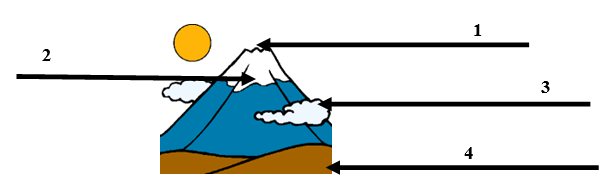
Where is the altitude the greatest?
a)
1
b)
2
c)
3
d)
4
2.
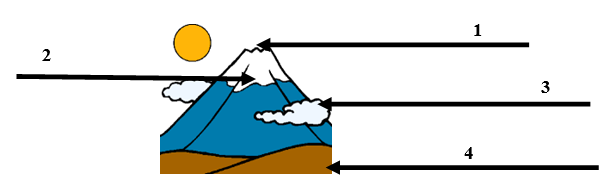
Where is the air pressure the greatest?
a)
1
b)
2
c)
3
d)
4
3.
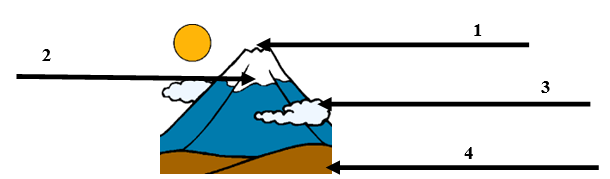
Where is the temperature the highest?
a)
1
b)
2
c)
3
d)
4
4.
What protects us from dangerous ultraviolet radiation from the sun?
a)
Ozone
b)
thermosphere
c)
troposphere
d)
Carbon Dioxide
5.
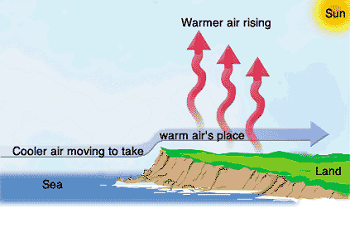
Warm air rises because --
a)
it has a higher dew point than the cool air
b)
it is less buoyant than cool air
c)
it contains less water vapor
d)
it is less dense than cool air
6.
What is the function of the ozone layer?
a)
to allow UV rays to get to Earth
b)
to block UV rays from getting to Earth
c)
To keep oxygen in
d)
to allow meteors to get to Earth
7.
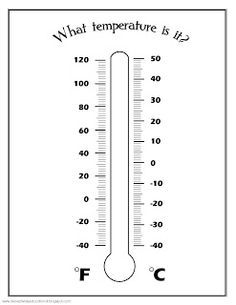
This weather instrument is a...
a)
thermometer
b)
anemometer
c)
rain gauge
d)
barometer
8.
What causes warm air to rise?
a)
the fact that it's less dense than cold air
b)
The fact that it weighs more than cold air
c)
The fact that it has higher pressure than cold
d)
the fact that its more dense than cold air
9.
What causes wind to blow?
a)
Differences in longitude
b)
Shock waves from clouds
c)
Differences in air temperature and pressure
d)
The rotation of the earth
10.
Which term best describes how the earth's atmosphere is heated?
a)
Spirally
b)
Unevenly
c)
Circularly
d)
Kinetically
11.
What creates the air pressure difference between the equator and the poles?
a)
The length of the seasons
b)
The rotation of the earth
c)
the duration of the solar year
d)
The amount of direct sunlight each area receives
12.
When warm air rises and then cool and sinks, this creates a
a)
high pressure
b)
convection current
c)
low pressure
d)
stratospheric pressure
13.
When Earth's rotation causes the wind to curve, it is known as the
a)
cloudy
b)
Coriolis effect
c)
high pressure
d)
low pressure
14.
In a sea breeze, the air is warmer above the _____.
a)
land
b)
ocean
c)
sky
d)
beach
15.
How does the air move in a sea breeze?
a)
wind moves from north to south
b)
wind moves from ocean to the land
c)
wind moves from the land to the ocean
d)
wind moves from south to north
16.
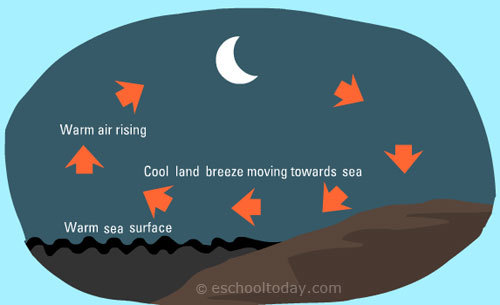
Is this a land or a sea breeze?
a)
land breeze
b)
sea breeze
17.
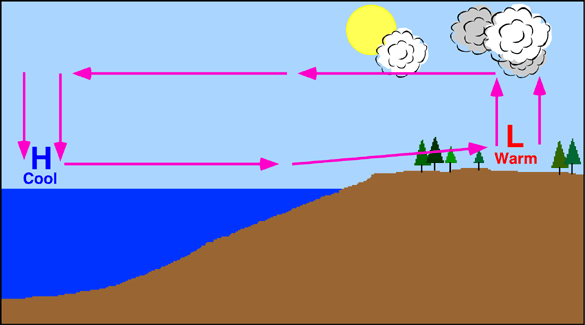
Is this a land or a sea breeze?
a)
land breeze
b)
sea breeze
18.
The jet stream usually moves from
a)
north to south
b)
west to east
c)
east to west
d)
south to north
19.
Wavelengths that are a little shorter than visible light are
a)
infrared
b)
red
c)
violet
d)
ultraviolet
20.
Which electromagnetic wave can be felt as heat?
a)
visible light
b)
ultraviolet radiation
c)
infrared radiation
d)
x -rays
21.
The total energy of motion is ...
a)
radiation
b)
thermal energy
c)
absorbed energy
d)
temperature
22.
what is the meaning of conduction
a)
when heat transfers from objects that are not touching
b)
heat rise
c)
cold fall
d)
when heat transfers from objects that are touching
23.
what kind of heat is happening when the sun heats your body
a)
conduction
b)
convection
c)
density
d)
radiation
24.
heat energy traveling through space is an example of _____
a)
convection
b)
density
c)
radiation
d)
conduction
25.
heat always travels from _____ to ______ objects
a)
hot to cold
b)
cold to hot
c)
cold to cold
d)
hot to hot
26.
conduction is when energy is transfered in direct contact
a)
true
b)
false
27.

The candle will slowly heat the metal and transfer the heat directly to the mans hand.
a)
conduction
b)
convection
c)
radiation
28.

The Gulf Stream is a current that brings warm ocean water from the south to the north. What type of heat transfer is this?
a)
conduction
b)
convection
c)
radiation
d)
Insolation
29.
Transfer of thermal energy through "flow"
a)
conduction
b)
convection
c)
radiation
30.
Transfer of thermal energy through "touch"
a)
conduction
b)
convection
c)
radiation
31.
A chair is placed several feet from a fireplace. The fireplace has a glass screen. The side of the chair facing the fireplace gets warm because of
a)
conduction
b)
convection
c)
radiation
32.
What tool do we use to measure temperature?
a)
Thermometer
b)
Ruler
c)
Balance
d)
Magnifying Glass
33.
30 degrees Fahrenheit is very...
a)
Hot
b)
Cold
c)
Awesome
d)
Happy
34.
100 degrees Fahrenheit is very...
a)
cool
b)
happy
c)
cold
d)
hot
35.
Freezing point is...
a)
32 degrees Fahrenheit
b)
0 degrees celsius
c)
all of the above
36.
Boiling Point is...
a)
212 degrees Fahrenheit
b)
100 degrees Celsius
c)
Both
37.
How do we measure temperature?
a)
In Degrees
b)
In Inches
c)
In Centimeters
d)
In Pounds
38.
What is boiling water in Fahrenheit?
a)
212
b)
112
c)
100
d)
50
39.
What is boiling water in Celsius?
a)
212
b)
112
c)
100
d)
50
40.
What is freezing in Celsius?
a)
32
b)
35
c)
0
d)
-5
41.
What is freezing in Fahrenheit?
a)
100
b)
0
c)
32
d)
35
42.
Wind speed is measured by ...
a)
barometer
b)
anemometer
c)
thermometer
d)
hygometer
43.
Throughout the year, there is usually some wind blowing at the beach during the day and night. What is the cause of these winds?
a)
air flowing down mountains to the ocean
b)
differences in the humidity over land and ocean
c)
differences in the temperature of land and ocean
d)
air flowing from the upper parts of the atmosphere
44.
In which direction do prevailing westerlies flow?
a)
from east to west
b)
from west to east
c)
from north to south
d)
from south to north
45.
Which types of winds cause weather in North Carolina?
a)
polar easterlies
b)
prevailing westerlies
c)
polar westerlies
d)
prevailing easterlies
46.
Global winds over the United States blow in which direction?
a)
east to west
b)
north to south
c)
south to west
d)
west to east
47.
The jet stream usually moves from
a)
north to south
b)
west to east
c)
east to west
d)
south to north
48.
What causes wind?
a)
convection currents
b)
conduction currents
c)
radiation currents
d)
tropical currents
49.
What causes GLOBAL winds to move in all directions?
a)
breezes
b)
coriolis effect
c)
westerlies
d)
easterlies
50.

Which is number 1?
a)
polar easterlies
b)
trade winds
c)
doldrums
d)
prevailing westerlies
51.
Winds that blow steadily over long distances are
a)
Local Winds
b)
Global Winds
c)
Sea Breezes
d)
Land Breezes
52.
The two types of local winds are
a)
land and sea breezes
b)
jet streams and local breezes
c)
trade winds and breezes
d)
global winds and local breezes
53.
Global winds tend to curve because of the...
a)
Greenhouse effect
b)
Coriolis effect
c)
Carolina effect
d)
Prevailing wind effect
54.
Bands of winds about 10 kilometers above the earth. .
a)
Horse Latitudes
b)
Doldrums
c)
Coriolis Effect
d)
Jet Stream
55.
These winds blow from the west, moving from the horse latitudes toward the poles. They bring storms across much of the United States.
a)
trade winds
b)
eaterlies
c)
westerlies
56.
Winds move from areas of ________ pressure to areas of _________ pressure.
a)
low...high
b)
high...low
c)
fast...slow
d)
slow...fast
57.
Calm areas where warm air rises
a)
Doldrums
b)
Horse Latitiudes
c)
Westerlies
d)
Easterlies
58.

Which is number 5
a)
doldrums
b)
polar easterlies
c)
trade winds
d)
prevailing westerlies
59.

Which is number 2?
a)
trade winds
b)
doldrums
c)
prevailing westerlies
d)
polar easterlies
60.

Which is number 4?
a)
polar easterlies
b)
doldrums
c)
trade winds
d)
prevailing westerlies
61.
These winds are a low-pressure zone near the equator.
a)
dolrums
b)
horse latitudes
62.
These winds are high-pressure zones located about 30° north and 30° south of the equator.
a)
doldrums
b)
horse latitudes
63.
How do jet streams influence the weather?
a)
by creating clouds
b)
by increasing the moisture in the atmosphere
c)
by moving weather from one area to another very quickly
d)
by drying out the atmosphere
64.
If you wanted to visit an area with very little wind, where might you go?
a)
The doldrums around the equator
b)
the jet streams in the northern and southern hemisphere
c)
the North or South Pole
d)
the area around the Mediterranean Sea
100 %

