
 Worksheets
Chemical Reactions Study Guide
Total questions: 37
Worksheet time: 57mins
Name
Class
Date
1.
___________________ are the elements or compounds that are formed or produced in a chemical reaction.
a)
Polymers
b)
Bonds
c)
Reactants
d)
Products
2.
___________________ are the elements or compounds that are formed or produced in a chemical reaction.
a)
Polymers
b)
Bonds
c)
Reactants
d)
Products
3.
Is melting an object technically known as a chemical reaction?
a)
I don't know
b)
Yes
c)
No
4.
Exothermic reactions...
a)
Absorb energy
b)
Release energy
c)
Release Color
d)
Absorb Color
5.
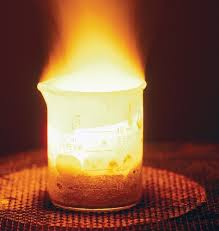
In the equation,
2Mg + O2 ---> 2MgO,
which are the reactants?
2Mg + O2 ---> 2MgO,
which are the reactants?
a)
Mg and O
b)
MgO
c)
Mg and MgO
d)
O and MgO
6.
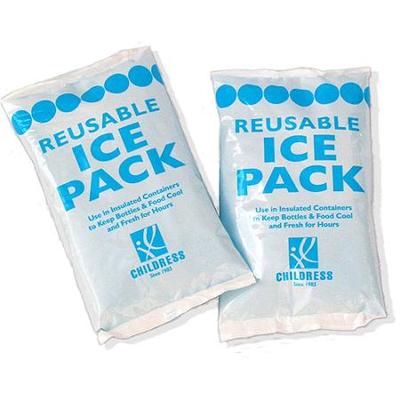
An gel ice pack getting cold after you put it in the freezer for an hour is an example of...
a)
Chemical Change
b)
Physical Change
7.
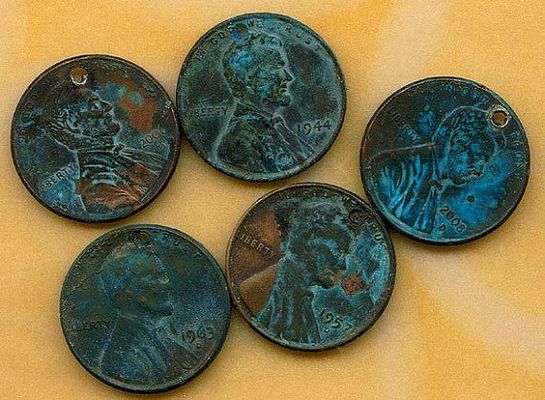
A copper penny turning greenish after a few years is an example of...
a)
Chemical Change
b)
Physical Change
8.
What happens to the bonds between atoms in a chemical change?
a)
Bonds are broken
b)
Bonds are formed
c)
Either bonds are broken or formed
9.
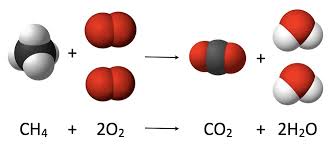
___________________ are the elements are compounds that leave (are formed in) a chemical
reaction.
reaction.
a)
Polymers
b)
Bonds
c)
Reactants
d)
Products
10.
In a chemical equation, the substances that are on the right side of the arrow are the...
a)
reactants
b)
products
c)
catalysts
d)
inhibitors
11.
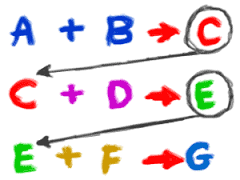
The substances on the left side of the arrow are...
a)
products
b)
reactants
c)
inhibitors
d)
catalysts
12.
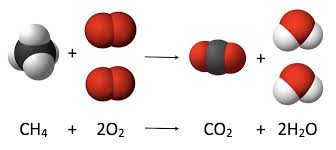
Which type of reaction will feel warm?
a)
endothermic
b)
exothermic
c)
endergonic
d)
none of these
13.
_______________ can speed up the rate of reactions and/or lower the amount of energy needed for
the reaction to take place.
the reaction to take place.
a)
Carbohydrates
b)
Fuel source
c)
Chemical
d)
Catalyst
14.
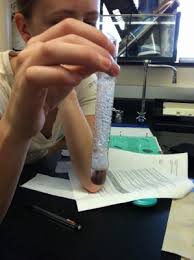
In chemical reactions, the law of conservation of mass is......
a)
disobeyed
b)
not true
c)
obeyed
d)
used sometime
15.
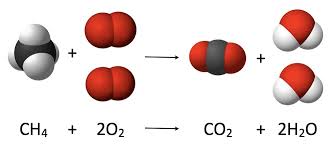
Balance this equation:
Sb2S3 + O2 --> Sb + SO2
Sb2S3 + O2 --> Sb + SO2
a)
No solution
b)
Sb2S3 + 3O2 --> 2Sb + 3SO2
c)
Sb2S3 + O2 --> 2Sb + SO2
d)
Already balanced
16.
Balance this equation:
N2 + O2 --> NO
N2 + O2 --> NO
a)
N2 + O2 --> 2NO
b)
2N2 + O2 --> 2NO
c)
No Solution
d)
Already balanced
17.
Balance this equation:
Al + S --> Al2S3
Al + S --> Al2S3
a)
Al + 2S --> 2Al2S3
b)
2Al + 3S --> Al2S3
c)
No solution
d)
Already balanced
18.
What is H2SO4
made up of?
made up of?
a)
2 hydrogen, 1 sulfur, 4 oxygen
b)
1 hydrogen, 2 sulfur, 4 oxygen
c)
2 hydrogen & 4 sodium
d)
1 hydrogen & 6 sodium
19.

The blue numbers in the image below are called ___________.
a)
compounds
b)
coefficients
c)
subscripts
d)
chemical formulas
20.

The red numbers in the image below represent ________
a)
subscripts
b)
coefficients
c)
chemical formulas
d)
compounds
21.
How many atoms are Oxygen atoms are in this formula 3C2H8O ?
a)
8
b)
33
c)
1
d)
3
22.
The most important subatomic particle when determining an elements REACTIVITY is what?
a)
protons
b)
neutrons
c)
valence electrons
d)
electrons
23.
The small number to the right of a symbol that is written below the normal line of letters to show how many atoms of an element are present in a substance. H2O (example the #2)
a)
Subscript
b)
Coefficient
c)
Chemical formula
d)
Yield
24.
Which is the correct formula for:
one carbon (C)
two oxygen (O)
one carbon (C)
two oxygen (O)
a)
CO2
b)
CO
c)
C2O
d)
2CO
25.
Ionic or covalent?
Na Br
Na Br
a)
Ionic
b)
Covalent
26.
Ionic or covalent?
C O
C O
a)
Ionic
b)
Covalent
27.
Two Reactants and One Product
a)
Decomposition
b)
Synthesis
c)
Combustion
d)
Single Replacement
28.
One reactant into several products.
a)
Decomposition
b)
Synthesis
c)
Combustion
d)
Single Replacement
29.

What is the type of reaction shown at the top?
a)
Synthesis
b)
Decomposition
c)
Single Replacement
d)
Double Replacement
30.

This pictures simulates what type of reaction?
a)
Synthesis
b)
Decomposition
c)
Single Replacement
d)
Double Replacement
31.

What type a reaction is taking place in this picture?
a)
Synthesis
b)
Decomposition
c)
Single Replacement
d)
Double Replacement
32.
what is the name for the solid formed during a reaction?
a)
Precipitate
b)
Gas
c)
bubbles
d)
aqueous
33.
When two atoms share electrons, a chemical bond is formed. This type of bond is called:
a)
covalent bond
b)
ionic bond
c)
crystal bond
d)
polyatomic bond
34.
How many valence electrons does hydrogen have?
a)
4
b)
3
c)
2
d)
1
35.
An ionic bond happens between what kinds of elements?
a)
metals and metals
b)
metals and nonmetals
c)
nonmetals and nonmetals
36.
Which type of bond does Nitrogen and Hydrogen make?
a)
covalent
b)
metallic
c)
ionic
d)
James
37.
Which of the following is NOT an ionic compound:
a)
CaO
b)
NaOH
c)
BaCl2
d)
Br2
100 %

