
 Worksheets
Matter 1 Test Review
Total questions: 70
Worksheet time: 1hrs 17mins
Name
Class
Date
1.
Weight is...
a)
The amount of space an object occupies
b)
A state of matter
c)
The amount of matter in a given space
d)
The measure of the amount of gravity on an object's mass
2.
Volume is...
a)
The amount of space an object occupies
b)
A state of matter
c)
The amount of matter in a given space
d)
The measure of the amount of gravity on an object's mass
3.

A gas
a)
has a definite shape but no definite volume
b)
has a definite volume but no definite shape
c)
has fast-moving particles
d)
has particles in a bunch
4.

At higher temperatures
a)
particles in an object have less energy
b)
particles in an object move faster
c)
particles in an object move slower
d)
particles in an object stop moving
5.

Which state of matter has tightly packed molecules?
a)
solid
b)
liquid
c)
gas
d)
plasma
6.

Which state of matter has a definite shape?
a)
solid
b)
liquid
c)
gas
d)
plasma
7.
How is a gas defined?
a)
Indefinite shape, indefinite volume
b)
Definite shape, definite volume
c)
Found in stars
d)
Definite volume, indefinite shape
8.
Particles (molecules) in a ______________________ have more energy than the other states of matter.
a)
gas
b)
solid
c)
liquid
d)
vacuum
9.
The state of matter that has no definite size or shape is
a)
Solid
b)
Liquid
c)
Gas
d)
Bose-Einstein Condensate
10.
Water can be found in the following states of matter: solid, liquid, and a gas.
a)
True
b)
False
11.
The smallest part of an element that can be identified as that element is
a)
nucleus.
b)
atom.
c)
proton.
d)
molecule.
12.
An element is made up of only one kind of _____.
a)
isotope
b)
plastic
c)
atom
d)
metal
13.
A _____ is a particle in an atom with a positive charge.
a)
isotope
b)
electron
c)
proton
d)
neutron
14.
Neutrons have a _____ charge.
a)
postive
b)
negative
c)
neutral / no
d)
bananas
15.
Most of the mass of an atom is found it its _____.
a)
electron cloud
b)
nucleus
c)
atomic number
d)
empty space
16.

Which is an electron?
a)
A
b)
B
c)
C
17.

Which is a proton?
a)
A
b)
B
c)
C
18.

Which is a neutron?
a)
A
b)
B
c)
C
19.
What is made up two or more different elements that are chemically combined?
a)
Element
b)
Mixture
c)
Compound
d)
Solids
20.
Which of the following is not a compound?
a)
HCl
b)
Cl
c)
NaCl
d)
CO2
21.
What cannot be broken down into other substances?
a)
Compound
b)
Mixture
c)
Solids
d)
Element
22.
Which of the following represents an element?
a)
H2O
b)
H2
c)
NaCl
d)
CaCO3
23.
_____ are small particles that make up most matter on Earth.
a)
compounds
b)
atoms
c)
mixtures
d)
elements
24.
Electrons have a _____ charge.
a)
positive
b)
negative
c)
neutral / no
d)
subatomic
25.

Which state of matter has a definite shape?
a)
solid
b)
liquid
c)
gas
d)
plasma
26.

At higher temperatures
a)
particles in an object have less energy
b)
particles in an object move faster
c)
a gas contracts
27.
Matter must gain heat or lose heat in order to change states.
a)
True
b)
False
28.

Which of these is NOT a state of matter?
a)
Solid
b)
Water
c)
Gas
d)
Liquid
29.

Which state of matter has the LEAST energy?
a)
Solid
b)
Liquid
c)
Gas
d)
Plasma
30.

Which state of matter has the MOST energy?
a)
Solid
b)
Liquid
c)
Gas
d)
All have the same amount of energy
31.

Using the diagrams in the picture, which of the following statements is correct?
a)
The particles in diagram 1 move faster than the particles in diagram 2.
b)
The particles in diagram 3 move fast enough to break away from each other.
c)
The particles in diagrams 1 and 2 are vibrating in place.
d)
The particles in diagram 2 are affected by electric and magnetic fields.
32.
Based on the following characteristics, classify the state of matter:
Charged atoms
Found in stars
Atoms move at extremely high speeds
Charged atoms
Found in stars
Atoms move at extremely high speeds
a)
Plasma
b)
gas
c)
liquid
d)
solid
33.

The particles in
a)
ice water have less energy than the particles in ice do.
b)
ice have more energy than the particles in water do.
c)
ice water have more energy than the particles in boiling water do
d)
boiling water have more energy than the particles in ice water do.
34.

The aurora borealis (northern lights- in space) is an example of what state of matter?
a)
liquid
b)
solid
c)
plasma
d)
gas
35.
Which one of these is a chemical property?
a)
melting point
b)
boiling point
c)
color
d)
flammability
36.

What is matter?
a)
a pure substance
b)
anything that occupies space and possesses mass
c)
an element
d)
a compound
37.

A measure of the amount of matter in an object.
a)
Weight
b)
Mass
c)
Volume
d)
Density
38.
Which type of property is the ability to conduct electricity?
a)
physical property
b)
chemical property
39.
Which of the following properties is a physical property?
a)
magnetism
b)
reaction
c)
flammability
d)
combustion
40.
What is anything that has mass and takes up space?
a)
matter
b)
substance
c)
chemistry
d)
property
41.

By looking at the molecules below, what state of matter is most likely being shown?
a)
Solid
b)
Liquid
c)
Gas
d)
Matter
42.

Ability to rust is this type of property:
a)
Physical change
b)
Chemical change
43.

This is an example of a
a)
physical change
b)
chemical change
44.
What makes weight different than mass?
a)
Weight is the amount of matter in a given space.
b)
Mass is the amount of matter in a given space.
c)
Weight is the measure of gravity's pull on mass.
d)
Mass disappears in space because there is no gravity.
45.
What is a chemical property?
a)
A property where a substance is changed so that the atoms link up differently
b)
A property where a substance changes it's state of matter
c)
A property where a substance changes it's phase
d)
A property where a substance changes it's shape
46.
What is a physical property?
a)
A property where a substance is changed so that the atoms link up differently
b)
A property where a new substance is formed
c)
A property where a substance changes it's phase
d)
A property where a substance burns and catches fire
47.
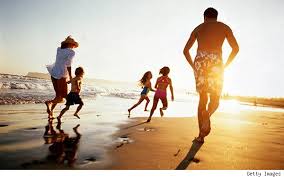
The sun shines down on this family as the play on the beach.
a)
conduction
b)
convection
c)
radiation
d)
equilibrium
48.

Walking on the warm sand sand with your bare feet.
a)
conduction
b)
convection
c)
radiation
d)
equilibrium
49.
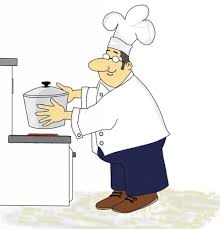
The man goes to take the hot pot off the stove with his bare hands.
a)
conduction
b)
convection
c)
radiation
d)
equilibrium
50.
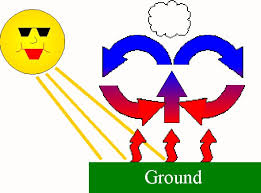
Warm air rises and the cool air sinks.
a)
conduction
b)
convection
c)
radiation
d)
equilibrium
51.

Heat transfers from an area of ____temperature to an area of ___ temperature.
a)
high to low
b)
low to high
c)
high to high
d)
low to low
52.
After cooking an egg in boiling water, you cool the egg by putting it into a bowl of cold water. Which of the following explains the egg's cooling process?
a)
Temperature is transferred from the egg to the water.
b)
Energy is transferred from the water to the egg.
c)
Energy is transferred from the egg to the water.
d)
Cold moves from the water into the egg.
53.
Why do we wear sweaters in cold weather?
a)
To keep cold out.
b)
To generate heat.
c)
To reduce heat loss.
d)
All of the above.
54.
You pick a can of soda up off the countertop. The countertop underneath the can feels colder than the rest of the counter. Which explanation do you think is the best ?
a)
The cold has been transferred from the soda to the counter.
b)
There is no heat energy left in the counter beneath the can.
c)
Some heat has been transferred from the counter to the soda.
d)
The heat beneath the can moves away into other parts of the countertop.
55.
If you put a metal spoon and a wooden spoon into a pot of boiling water, one will become too hot to touch. Why?
a)
Metals conduct heat better than wood.
b)
Wood conducts heat better than metals.
c)
Metals pull in heat because heat is attracted to metals.
d)
Wood isn't as strong as metals.
56.
When you hold a metal coat hanger in a camp fire to roast a marshmallow, the coat hanger might get too hot to hold. Why might the coat hanger get too hot?
a)
The heat radiates along the coat hanger.
b)
The heat builds up near the flame until it can't hold it anymore and then moves along the coat hanger.
c)
Metal atoms vibrate with more energy when they get hot, and they collide with atoms near them, which makes the neighboring atoms vibrate, too.
d)
Since metals melt in fire, they react very strongly to fire and get hot easily.
57.
An aluminum plate and a plastic plate have been in the freezer all night long. When you remove them the next morning...
a)
the plates have the same temperature.
b)
the plastic plate has a higher temperature.
c)
the plastic plate has a lower temperature.
d)
the aluminum plate has a lower temperature.
58.
As water in a freezer turns into ice,
a)
the water absorbs energy from the air in the freezer.
b)
the water absorbs the coldness from the air in the freezer.
c)
the freezer air absorbs heat from the water.
d)
the water neither absorbs nor releases energy.
59.
Molecules in cold substances move more _________ than molecules in hot substances.
a)
quickly
b)
slowly
c)
happily
d)
merrily
60.
The transfer of heat by currents through liquids or gases is called
a)
Perspiration
b)
Radiation
c)
Conduction
d)
Convection
61.
According to the kinetic theory of matter, molecules of matter are always in CONSTANT random motion. From greatest to least rank the amount of kinetic energy of solid, liquid, and gaseous molecules.
a)
gas, liquid, solid
b)
gas, solid, liquid
c)
liquid, gas, solid
d)
solid, liquid, gas
62.

Atoms or molecules in a solid do not move until they are heated.
a)
True
b)
False
63.
What happens to the density of air when it is cooled?
a)
It becomes less dense and rises
b)
It becomes less dense and sinks
c)
It becomes more dense and rises
d)
It becomes more dense and sinks
64.
Pieces of ice are melting in a beaker full of room temperature water. Which of the following is true?
a)
Heat will not transfer at all
b)
Heat will transfer from the ice to the water until thermal equilibrium is reached
c)
Heat will transfer from the water to the ice until thermal equilibrium is reached
d)
The coolness goes from the ice to the beaker
65.
A can of Coke will sink in a bowl of water. A can of Diet Coke will float in a bowl of water. How do the densities of the two drinks compare?
a)
They have the same density.
b)
The coke is less dense than the diet coke.
c)
The coke is more dense than the diet coke.
d)
The diet coke is more dense than the coke.
66.
A can of Coke will sink in a bowl of water which has density of 1. A can of Diet Coke will float in a bowl of water. What does this tell you about the density of the Diet Coke?
a)
it is bigger than 1
b)
it is smaller than 1
c)
it is equal to 1
d)
it is equal to -1
67.
Which property of matter is determined by dividing its mass by its volume?
a)
elasticity
b)
buoyancy
c)
density
d)
matter
68.
A brick sinks in water while a wooden block of the same size floats. This is because the brick has a
a)
lower volume than the wooden block
b)
lower density than the wooden block
c)
higher volume than the wooden block
d)
higher density than the wooden block
69.

Put the liquids in order from most dense to least dense?
a)
4, 3, 2, 1
b)
1, 2, 3, 4
c)
3, 4, 2, 1,
d)
4, 3, 1, 2
70.

Which box has a higher density?
a)
Box A
b)
Box B
c)
cannot be determined
d)
they are the same
100 %

