wayground logo

Free Printable Worksheets

Font size

S
M
L
XL
Worksheets

Physics: The Earth and Beyond

Total questions: 72

Worksheet time: 3hrs 32mins

Name
Class
Date
1.

Which of the following is a dwarf planet in our solar system?

a)

Venus

b)

Mercury

c)

Ceres

d)

Neptune

2.

Which is the correct order of the main planet in solar system?

a)

Mercury, Earth, Venus, Mars, Jupiter, Saturn, Uranus, Neptune.

b)

Earth, Mercury, Mars, Venus, Jupiter, Saturn, Uranus, Neptune.

c)

Mercury, Venus, Earth, Mars, Jupiter, Saturn, Uranus, Neptune.

d)

Venus, Mercury, Earth, Mars, Jupiter, Saturn, Neptune, Uranus.

3.

The most distance planet from the Sun is ....

a)

Jupiter

b)

Neptune

c)

Uranus

d)

Saturn

4.

Scientist used to believe that there were nine planets. Which object used to be considered a planet, but not anymore?

a)

Ceres

b)

Makemake

c)

Haumea

d)

Pluto

5.

Many of the planets have moons orbiting around them. What is the name of the force that keeps the moons orbiting around the planet?

a)

Frictional force

b)

Gravitational force

c)

Tension force

d)

Electromagnetic force

6.

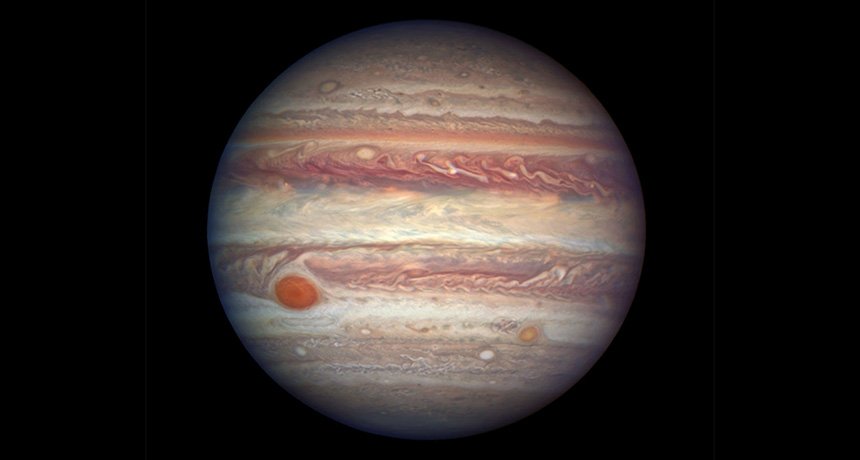
The largest planet in Solar System is called ....

a)

Earth

b)

Mars

c)

Jupiter

d)

Saturn

7.

This planet is called the reddish planet. The reddish color is comes from the iron oxide in its soil. What planet is this?

a)

Venus

b)

Mars

c)

Ceres

d)

Mercury

8.

A huge spherical ball that gives heat throught the solar system

a)

A star

b)

All stars

c)

The Sun

d)

The earth

9.

The biggest planet that has a ring is called

a)

Saturn

b)

Jupiter

c)

Uranus

d)

Neptune

10.

The biggest planet without a ring is

a)

Mercury

b)

Saturn

c)

Jupiter

d)

Neptune

11.

Is it true the earth is flat

a)

True

b)

Faslse

12.

Why would a person weigh more on Jupiter than on the Earth?

a)

Jupiter has more mass, and therefore more gravity

b)

Jupiter has less mass, and therefore more gravity

c)

Jupiter has more mass, and therefore less gravity

d)

Jupiter has less mass, and therefore less gravity

13.

What is gravity?

a)

A push or pull on an object

b)

The force of attraction (pull) between two objects

c)

The tendency to keep moving in a straight line

d)

Any object that orbits another object

14.

What is caused by the tilt of Earth's axis?

a)

Months

b)

Years

c)

Seasons

d)

Hours

15.

Why do stars appear to move across Earth's sky each night?

a)

Earth rotates on its axis

b)

The stars orbit each other

c)

Earth revolves around the Sun

d)

The stars rotate with the Moon

16.

What is the Moon to Earth?

a)

Comet

b)

Axis

c)

Satellite

d)

Probe

17.

Why does the moon appear to shine?

a)

It is like a star and gives off light

b)

It refracts light from space

c)

It reflects light from the sun

d)

It absorbs light from the sun

18.

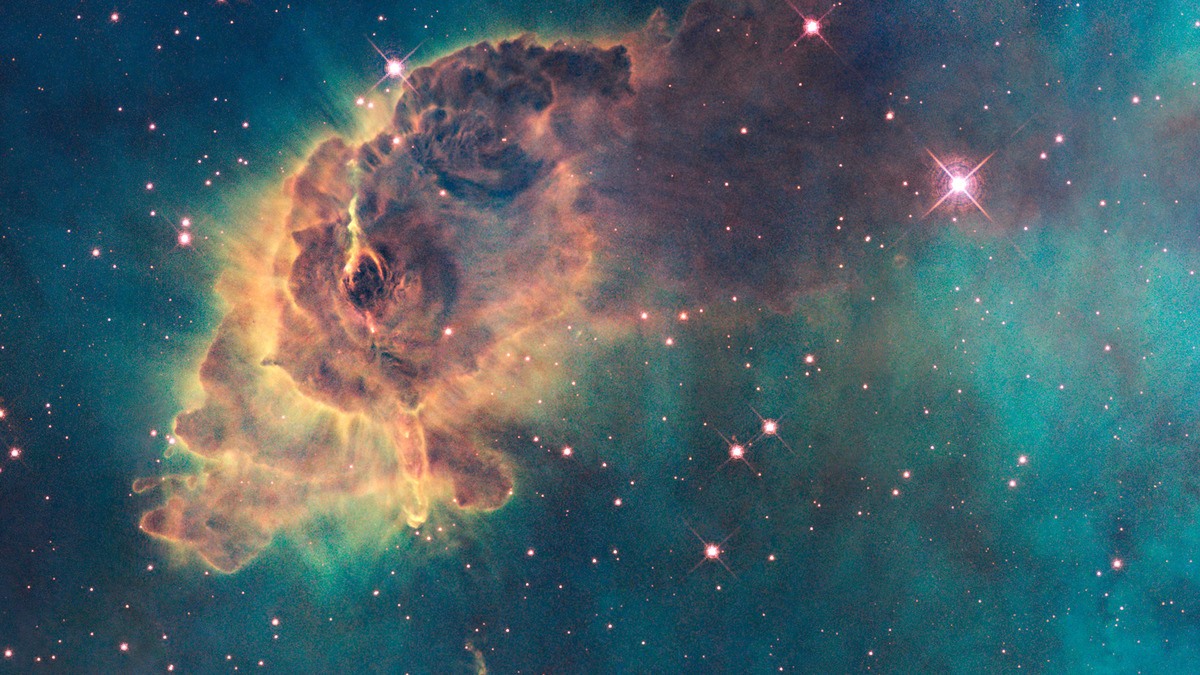
What is the name of the gas/dust clouds that form stars?

a)

Nebulas

b)

Protostars

c)

Supernova

d)

Neutron Star

19.
The Milky Way galaxy is an example of an irregular galaxy
a)
true
b)
false
20.
Which of the following separates the outer planets from the inner planets?
a)
Asteroid Belt
b)
Great Red Spot
c)
Kuiper Belt
21.
Galaxies are composed of (best answer)
a)
stars
b)
stars and gas
c)
stars, dust, and gas
d)
stars, dust, and gas held together by gravity
22.
What is not a galaxy?
a)
Optical Galaxy
b)
Spiral Galaxy
c)
Elliptical Galaxy
d)
Irregular Galaxy
23.
Which of the following describes an asteroid?
a)
Composed of a nucleus, tail, and coma
b)
Orbit the sun like a planet
c)
Have an elliptical orbit of the sun
d)
Shooting star
24.

Where does the light that makes the moon visible come from?

a)

the moon

b)

the sun

c)

Earth

d)

another planet

25.

Made of irregularly shaped pieces of rock, metal, and dust.

a)

asteroid

b)

comet

26.
What is a huge ball of very hot gases in space?
a)
galaxy
b)
equator
c)
star
d)
constellation
27.
The star at the center of our solar system
a)
equator
b)
sun
c)
planet
d)
constellation 
28.
An imaginary line around the Earth equally distant from the North and South poles
a)
axis
b)
equator
29.
A body that revolves around a star
a)
planet
b)
moon phase
c)
moon
d)
sun
30.
What is the imaginary line that runs through the center of the Earth?
a)
axis
b)
revolution
c)
axle
d)
satellite 
31.
When the southern hemisphere has winter, what season does the northern hemisphere have?
a)
winter
b)
spring
c)
summer
d)
fall
32.
The sun is a _______________.
a)
planet
b)
satallite
c)
galaxy
d)
star
33.
It takes the earth one year to make one what?
a)
revolution
b)
rotation
c)
turn
d)
flip 
34.
Why does the Sun appear to rise and set each day?
a)
The moon rotates on its axis.
b)
The Earth rotates on its axis.
c)
The sun rotates on its axis.
d)
The Earth revolves on its axis.
35.
About how many days does it take for the moon to complete a phase?
a)
45 days
b)
28 days 
c)
1 day
d)
365 days 
36.
Earth's seasons are caused by the tilt of its axis and its revolution.
a)
True 
b)
False
37.
All planets are the same size.
a)
True
b)
False
38.
The sun goes around the Earth.
a)
True
b)
False
39.
It takes the Earth 365 1/4 days to make one what?
a)
rotation
b)
revolution 
c)
resolution 
d)
circle
40.
How many hours does it take the Earth to make one rotation? 
a)
48
b)
24
c)
28
d)
365
41.
Mercury, Venus, Earth, Mars, Saturn, Uranus, Neptune. 
Which planet is missing?
a)
Pluto
b)
Jupiter
c)
the sun
d)
the moon
42.

________is made up of a star and the planets and other space objects that revolve around it.

a)

star

b)

sun

c)

solar system

d)

asteriod

43.

What is the only planet known to contain life?

a)

Mars

b)

Jupiter

c)

Venus

d)

Earth

44.

Why are all the planets round in the solar system?

a)

They are not round.

b)

The planets spin and that makes them round.

c)

The planets are round because of gravity.

d)

The planets are round because they orbit the sun.

45.

Which statement explaining the relationship between stars and planets is true?

a)

the sizes of the planets are same to the sizes of nearby stars

b)

planets create light

c)

planets orbit the sun

d)

D. stars orbit some moon

46.
What is a planet?
a)
a group of stars that forms a pattern in the sky
b)
a large ball of hot gases that gives off heat and light
c)
a large ball or rock or gas that moves around the sun
d)
a toy aliens play with
47.
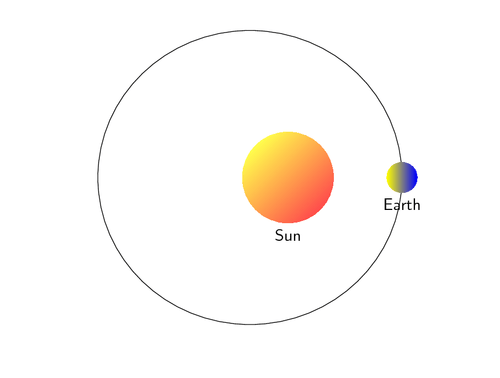
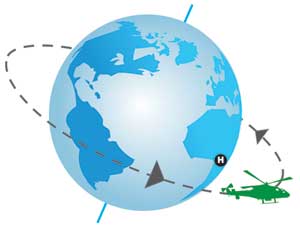
This picture shows the path Earth takes as it moves around the sun. What is the path called?
a)
a constellation
b)
a moon
c)
an orbit
d)
a planet
48.
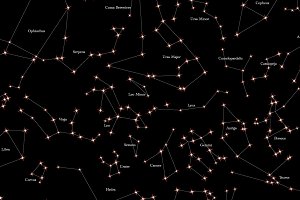
A group of stars forms a pattern. What is this pattern called?
a)
a solar system
b)
a constellation
c)
a ball of hot gases
d)
a planet
49.
What is another word for rotate?
a)
orbit
b)
skip
c)
spin
d)
run
50.
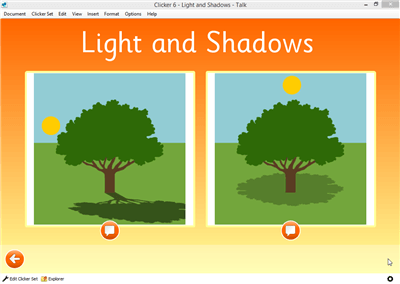
At what time of day is a shadow the shortest?
a)
8 AM
b)
12 PM
c)
4 PM
d)
when I am brushing my teeth
51.
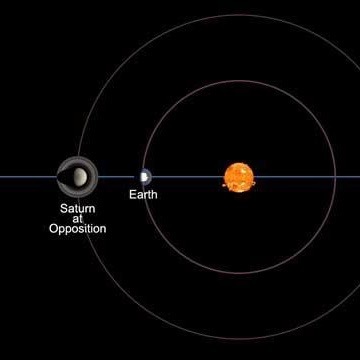
Compared to Earth, does Saturn take a longer or shorter amount of time to orbit the sun?
a)
longer
b)
shorter
52.
Why does the sun appear to change throughout the day?
a)
Earth rotates.
b)
The moon blocks the sun.
c)
The Sun gets closer to Earth.
d)
Spaceships move in front of the sun.
53.
____ comes before Winter in the Southern hemisphere. 
a)
summer
b)
spring
c)
fall
54.
The next season in the Northern hemisphere after spring is ____. 
a)
fall
b)
summer
c)
winter
55.
If its ____ in the Northern hemisphere, then its fall in the Southern hemisphere. 
a)
spring
b)
summer
c)
fall
d)
winter
56.
If its ____ in the Northern hemisphere, then its summer in the Southern hemisphere. 
a)
spring
b)
summer
c)
fall
d)
winter
57.
In winter, the axis of the earth is pointed away or toward the sun?
a)
towards
b)
up
c)
down
d)
away
58.
In summer, the axis of the earth is pointed away or toward the sun?
a)
towards
b)
up
c)
down
d)
away
59.
Why is the Equator warmest?
a)
Because it is closest to the sun.
b)
Because it receives the most direct sunlight
c)
Because no clouds form here.
d)
Because it is far from the sun
60.
If its ____ in the Northern hemisphere, then its summer in the Southern hemisphere. 
a)
spring
b)
summer
c)
fall
d)
winter
61.
What happens when the area in which you live tilts away from the sun?
a)
It is summer.
b)
It is spring.
c)
It is winter.
d)
It is fall.
62.
If its ____ in the Northern hemisphere, then its fall in the Southern hemisphere. 
a)
spring
b)
summer
c)
fall
d)
winter
63.

Choose ALL the correct statements from the list below. There may be more than one.

a)

It takes 365 days for the Earth to revolve once around the sun.

b)

The Earth completes a rotation on its axis every 12 hours.

c)

The Earth's axis is tilted.

d)

The Sun orbits the Earth in a clockwise direction.

e)

The rotation of the Earth makes it appear as if the Sun is moving across the sky.

64.

If Earth was not tilted, what statement would be correct?

a)

The seasons are unaffected.

b)

The seasons are reversed.

c)

There are no seasons.

65.
Sunlight hits Earth’s surface most directly at the _______. Because of this, this area doesn't experience seasons.
a)
north pole
b)
south pole
c)
equator
d)
axis
66.

Day and night are caused by movement of...

a)

The Sun

b)

The Earth

67.

What are the consequences of revolution and the tilt of our planet?

a)

Day and de night

b)

Seasons

c)

Shadows

68.

The Earth’s rotation and revolution happen at the same time.

a)

True

b)

False

69.

The summer happens when…

a)

the hemisphere is tilted toward the Sun.

b)

the hemisphere is tilted away from the Sun.

70.

Day and night is caused by the ______________

a)

revolution of Earth around the Sun

b)

orbit of Earth around the Moon

c)

rotation of earth on its axis.

d)

rotation of the Moon on it's axis

71.

As a calendar year only has 365 days, there is a _____________ every four years. We add an extra day to the month of February.

a)

Month year

b)

Day year

c)

Leap Year

72.
What causes the sun to look like it is rising in the east and setting in the west?
a)
moon's orbit
b)
sun's rotation
c)
Earth's revolution
d)
Earth's rotation