wayground logo

Free Printable Worksheets

Font size

S
M
L
XL
Worksheets

2022-2023 Benchmark Practice

Total questions: 75

Worksheet time: 39mins

Name
Class
Date
1.

What is the scale of the sub-graduates for this graduated cylinder?

a)

.1 mL

b)

.2 mL

c)

.5 mL

d)

1 mL

2.
What is the scale of the sub-graduates for this graduated cylinder?
a)
.1 mL per sub-graduate
b)
1 mL per sub-graduate
c)
.2 mL per sub-graduate
d)
.5 mL per sub-graduate
3.
What is the volume of the water in this graduated cylinder?
a)
21 mL
b)
23.5 mL
c)
22 mL
d)
21.5 mL
4.
What is the volume of the water in this graduated cylinder?
a)
7.6 mL
b)
7.2 mL
c)
6.6 mL
d)
6.8 mL
5.
What is the temperature on this thermometer?
a)
 85° Fahrenheit       
b)
 80° Fahrenheit       
c)
 90° Fahrenheit       
d)
 95° Fahrenheit       
6.
What is the temperature on this thermometer in Celsius degrees?
a)
 32° Fahrenheit       
b)
 0° Celsius       
c)
 0° Fahrenheit       
d)
 40° Fahrenheit       
7.
Which thermometers temperature is about  25° Celcius?
a)
Blue
b)
Green
c)
Blue
d)
Blue and Green
8.

What does the abbreviation kg stand for

a)

decimeter

b)

hectoliter

c)

centimeter

d)

kilogram

9.

Milliliter has what abreviation

a)

dk

b)

ML

c)

ml

d)

mm

10.

What base unit would you use to measure lemonade

a)

grams

b)

meters

c)

liters

11.

The base unit of mass is

a)

gram

b)

liter

c)

meter

d)

cubic centimeter

12.
Which is the longest?
a)
meter
b)
kilometer
c)
centimeter
d)
milimeter
13.

What is mass?

a)

The amount of space an object takes up

b)

The amount of matter in a given space

c)

The amount of matter in an object

14.

What is volume?

a)

The amount of space an object takes up

b)

The amount of matter in a given space

c)

The amount of matter in an object

15.

What is density?

a)

The amount of space an object takes up

b)

The amount of matter in a given space

c)

The amount of matter in an object

16.

What is the unit for mass?

a)

Grams (g)

b)

Milliliters (mL)

c)

Grams/Milliliter (g/mL)

17.

What is the unit for volume?

a)

Grams (g)

b)

Milliliters (mL)

c)

Grams/Milliliter (g/mL)

18.

What is the unit for Density?

a)

Grams (g)

b)

Milliliters (mL)

c)

Grams/Milliliter (g/mL)

19.

What is the equation to find density?

(a)  

20.

When you put an object in a graduated cylinder of water and measure how much the water level changed what is this process called?

a)

Relative Density

b)

Displacement

c)

Density

21.

Why is a hot air balloon able to rise into the sky?

a)

The hot air is less dense then the atmosphere, so it rises

b)

The hot air is more dense then the atmosphere, so it rises

c)

The hot air has the same density as the atmosphere, so it rises

22.

Why does oil float on top of the water in an oil spill?

a)

Oil has the same density of water

b)

Oil is less dense than water

c)

Oil is more dense than water

23.
What Is Matter?
a)
Anything That has weight and takes up space.
b)
Anything that you can see or taste.
c)
What you can touch.
d)
you and go throught this.
24.
A gas
a)
has a definite shape but no definite volume
b)
has a definite volume but no definite shape
c)
has fast-moving particles
25.
At higher temperatures
a)
particles in an object have less energy
b)
particles in an object move faster
c)
a gas contracts
26.
The opposite phase of melting is 
a)
freezing 
b)
sublimation
c)
condensation 
d)
deposition 
27.
Melting
a)
liquid to solid
b)
solid to liquid
c)
solid to gas
d)
gas to liquid
28.
Freezing
a)
Solid to gas
b)
Liquid to solid
c)
Gas to solid
d)
Liquid to gas
29.
Which state of matter has tightly packed molecules?
a)
solid
b)
liquid
c)
gas
30.
What are the states of matter?
a)
solid, liquid, and juice
b)
solid and liquid
c)
solid and gas
d)
solid, liquid, and gas
31.
The drops of water that appear on the outside of a glass of cold juice on a warm day are an example of?
a)
sublimation
b)
condensation
c)
evaporation
32.
Define a liquid.
a)
Indefinite shape, indefinite volume
b)
Definite shape, definite volume
c)
Found in stars
d)
Definite volume, indefinite shape
33.

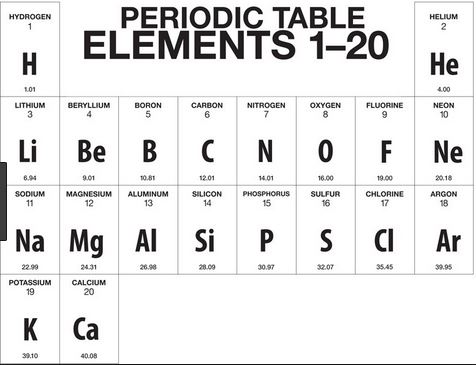
How many valence electrons does Hydrogen Have?

a)

1 Valence electron

b)

2 Valence electron

c)

3 Valence electron

d)

4 Valence electron

e)

5 Valence electron

34.

How many valence electrons does Helium Have?

a)

1 Valence electron

b)

2 Valence electron

c)

3 Valence electron

d)

4 Valence electron

e)

5 Valence electron

35.

How many valence electrons does Phosphorus Have?

a)

1 Valence electron

b)

2 Valence electron

c)

3 Valence electron

d)

4 Valence electron

e)

5 Valence electron

36.

How does the amount of sunlight each tomato plant gets, affect the number of tomatoes that grow on them?

The amount of sunlight is...

a)

independent variable

b)

dependent variable

c)

controlled variable (constant)

37.

How does the type of music playing affect a person's heartrate?

A person's heartrate is...

a)

independent variable

b)

dependent variable

c)

controlled variable (constant)

38.

Which type of stain remover can remove a grass stain the most?

The amount of stain remover you use is...

a)

independent variable

b)

dependent variable

c)

controlled variable (constant)

39.

How does adding coffee grounds to soil affect how tall a plant grows?

The type of plant is...

a)

independent variable

b)

dependent variable

c)

controlled variable (constant)

40.

A teacher gives one group of students candy before a test, and does not give another group of students candy before a test. He compares their scores to see if candy before a test improves their grades.

What is the independent variable?

a)

The student test scores

b)

The test they are taking

c)

Whether or not they get candy.

41.

You drop a tennis ball from three different heights: 1 meter, 2 meters, and 3 meters above the ground. You measure to see how high the ball bounces.

What is a controlled variable (constant)?

a)

The ball you use

b)

The height you drop the ball from

c)

The height the ball bounces

42.

What type of container keeps my turkey sandwich the coldest in my lunch box during the school day? Plastic container, plastic bag, or aluminum foil?

What is the dependent variable?

a)

The type of container

b)

The sandwich

c)

The temperature of my sandwich

43.
What kind of properties can only be observed when a substance changes into a different substance?
a)
physical properties
b)
chemical properties
44.
Which type of property is the ability to conduct electricity?
a)
physical property
b)
chemical property
45.
Properties that can be observed without changing the identity of the substance.
a)
Physical
b)
Chemical
46.
Example for physical property
a)
odor
b)
burns in air
c)
reacts with water to create hydrogen gas
d)
rust
47.
Which of the following is a sign that a chemical reaction has occurred?
a)
change in shape
b)
melting
c)
formation of a gas
d)
dissolving
48.
Which of the following is NOT an example of a physical change?
a)
crumpled paper
b)
pencil sharpening
c)
shrunken clothing
d)
rust
49.
A change where one or more new substances are created.
a)
Physical Change 
b)
Chemical Change 
50.
Fizzing, foaming, and burning are all examples of
a)
Chemical change
b)
Physical change
51.
Change in density is a physical change.
a)
True
b)
False
52.
Rust on an iron bar is an example of chemical change.
a)
True 
b)
False
53.
Flammability is an example of what property?
a)
Chemical property
b)
Physical property
54.
Physical properties are
a)
properties that can be observed without changing the identity of the substance
b)
properties that describe how a substance changes into a completely different substance
55.
Which of the following word pairs correctly completes the sentence below?
_______ are corrosive substances characterized as having a strong smell, a sour taste, and a _______.
a)
Acids; pH less than 7
b)
Acids; pH greater than 7
c)
Bases; pH greater than 7
d)
Bases; pH less than 7
56.
Holly has an unknown substance in a beaker. She wants to determine the relative pH of the unknown substance. She places a piece of blue litmus paper into the substance, and the litmus paper stays blue.
The substance in the beaker
a)
is a base.
b)
has a neutral pH.
c)
is an acid.
d)
does not have a pH.
57.
Which of the following is a base?
a)
orange juice
b)
water
c)
vinegar
d)
dishwashing detergent
58.
 Which of the following is an acid?
a)
shampoo
b)
baking soda
c)
orange juice
d)
water
59.
The pH of a solution is tested, and it is found to be a basic solution. Of the following choices, what could the pH have been?
a)
3
b)
9
c)
7
d)
5
60.
What would be considered the weakest base? 
a)
8
b)
14
c)
7.8
d)
11.6
61.
Many cleaning solutions are bases. Which of the following is a property of most bases?
a)
feels slippery
b)
white color
c)
can only be liquid
d)
tastes sour
62.
Which of the following elements has 13 electrons?
a)
Nitrogen
b)
Aluminum
c)
Silicon
d)
Phosphorus
63.
What is the atomic number of Chlorine (Cl)?
a)
17
b)
Cl
c)
35.453
d)
Chlorine
64.
Which element below has 11 protons?
a)
Boron (B)
b)
Nitrogen (N)
c)
Silicon (Si)
d)
Sodium (Na)
65.
The section labeled D is known as the?
a)
Electron cloud
b)
Neutron
c)
Nucleus
d)
Electron
66.
Letter A Is positively charged particle called?
a)
Neutron
b)
Proton
c)
Electron
d)
Atom
67.
How many electron shells does this atom have?
a)
1
b)
2
c)
3
d)
4
68.
How many protons does this element have?
a)
6
b)
4
c)
2
d)
3
69.
The smallest unit of matter is called?
a)
An electron
b)
An element
c)
An atom
d)
A solid
70.
Which scientist developed the atomic theory
a)
Aristotle
b)
Dalton
c)
Democritus
71.
What scientist is best known for his "Plum Pudding" model of the atom?
a)
J.J. Tomson
b)
Ernest Rutherford
c)
John Dalton
d)
Democritus
72.
Place the following scientists in order, from earliest to latest: 
A) Ernest Rutherford
B) J.J. Thomson
C) John Dalton
a)
B,C,A
b)
C,A,B
c)
A,C,B
d)
C,B,A
73.
J.J. Thomson provided evidence that an atom...
a)
is the smallest particle of matter
b)
contains negatively charged particles
c)
has an overall negative charge
d)
has an overall positive charge
74.
Rutherford's gold foil experiment provided evidence that...
a)
negative and positive charges are spread evenly throughout the atom.
b)
alpha particles have a positive charge.
c)
gold is not a dense as previously thought.
d)
there is a dense positively charged nucleus at the center of an atom.
75.
Ernst Rutherford discovered which part of the atom through the use of gold foil?
a)
Proton
b)
Neutron
c)
Electron
d)
Orbitals