
 Worksheets
Organisms & Adaptations Test Review
Total questions: 72
Worksheet time: 1hrs 17mins
Characteristics to help an organism survive and reproduce are called ____________________________.
features
flexibility
adaptations
structures
Living things have two kinds of adaptations: __________________ and __________________ adaptations.
behavioral and physical
physical makeup and structural
psychological and structural
thrive and survive
A giraffe has a long neck in order to better reach leaves to eat. This is an example of ______________.
an adaptation
environment
response
stimulus
How do adaptations help animals?
to escape from predators
to hunt for food
to survive in their habitats
all of these are correct
A cactus has thick, waxy leaves that help hold in water. This is an example of a _____________________________ adaptation.
behavioral
physical
physiological
An action done on purpose to help with survival by choice.
physical adaptation
behavioral adaptation
physiological adaptation
A physical feature that helps an organism survive (body part).
physical adaptation
behavioral adaptation
physiological adaptation
Adult whales migrate to warmer southern water because:
There is more food in the southern waters
They do not like the colder northern waters
The newborn calves do not have enough blubber to survive in the colder northern waters
Upwelling provides more nutrients in southern waters
The main reason whales do NOT live in fresh water is because:
They will not be able to find food in fresh water
They need the denser salt water to be able to float and breather air from the surface
The lakes and rivers are too small
They need salt to keep their skin moist
Temperature, light, air, and water are all _____ parts of the environment
breathing
biotic
abiotic
living
Is rain an abiotic or biotic factor?
abiotic
biotic
Is a plant an abiotic or biotic factor?
abiotic
biotic
Is an animal an abiotic or biotic factor?
abiotic
biotic
A living or once-living organism in an ecosystem is a
population
biotic factor
abiotic factor
community
Which of the following is NOT an abiotic factor?
sun
temperature
water
grass
The 'D' in DRY MIX stands for:
dependent variable
y-axis
x-axis
independent variable
The 'Y' in DRY MIX stands for:
dependent variable
y-axis
x-axis
independent variable
The 'I' in DRY MIX stands for:
dependent variable
y-axis
x-axis
independent variable
The 'X' in DRY MIX stands for:
dependent variable
y-axis
x-axis
independent variable
A census is done by scientists to estimate:
abiotic factors
population size
water pressure
temperature
Decreasing ocean temperature causes the density of the water to ______.
decrease
increase
stay the same
fluctuate
More than half of Earth's oxygen is created by ______________ in the ocean.
phytoplankton
zooplankton
hydrothermal vents
whales
Another reason algae /phytoplankton are important is because these serve as _____________ to most food chains in the ocean
salinity protection
primary food source
barriers from strong currents/weather systems

Which ocean zone allows plants to grow?
midnight zone
sunlight zone
twilight zone
intertidal zone


Ocean creatures the swim well are called ___________________.
Plankton
Nekton
Benthos
Twilos
___________________ are microscopic and float on ocean currents.
Benthos
Nekton
Plankton
Cetacean

Abiotic is non-living

Biodiversity, aka biological diversity, usually refers to
the same species in a general location
the number of different species in a given area
the number of animal species in a given area
the number of plant species in a given area
An experiment is performed on plants to see how different liquids affect plant growth.
Each plant in the experiment is given a different liquid (water, apple juice, or milk). Each plant has the SAME amount of soil and sunlight.
In this investigation, what is the dependent variable?
Type of plant
Water, apple juice, milk
Plant growth
Color of the plant's leaves
Ms. H set up an experiment to see how the mass of a ball affects the distance it rolls off a ramp. Identify the independent variable.
Distance traveled by the ball
Height of the ramp
Mass of the ball
Who set up the experiment (Ms. S, etc)
Ms. H set up an experiment to see how the mass of a ball affects the distance it rolls off a ramp. What is the dependent variable?
Distance traveled by the ball
Height of the ramp
Mass of the ball
Where the experiment took place.
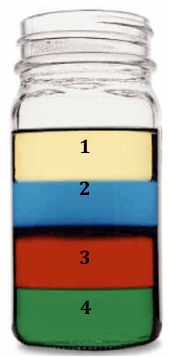
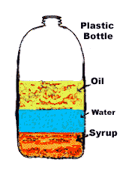

Which is more dense: cold water or hot water?
Cold
Hot
Which is more dense: saltwater or freshwater?
Freshwater
Saltwater

How many protons are in this element?
12
8
7
6
What is the mass number for this element?
12
8
7
6

How many Neutrons are in this element?
12
8
7
6
What is the atomic number of this element?
12
8
7
6
How many electrons are in this element?
12
8
7
6

APE stands for?
Atomic # = Protons = Electrons
Atomic # + Mass # = Neutrons
Protons = Electrons = Neutrons


How many Energy Levels does an atom of Sodium have?
1
2
3
4

The independent variable is always the _______ in a table.
x (left side)
y (right side)

The dependent variable is always the _______ in a table.
x (left side)
y (right side)

If ONLY the dependent variable in a data set is measurable (is a number and has units) then you would use what type of graph?
Line Graph
Bar Graph

If BOTH the dependent variable and independent variable in a data set are measurable (is a number and has units) then you would use what type of graph?
Line Graph
Bar Graph

