wayground logo

Free Printable Worksheets

NEW

Font size

S
M
L
XL
Worksheets

Matter & Measurement Test Review

Total questions: 71

Worksheet time: 2hrs 46mins
Name
Class
Date
1.
At higher temperatures
a)
particles in an object have less energy
b)
particles in an object move faster
c)
a gas contracts
2.
A gas
a)
has a definite shape but no definite volume
b)
has a definite volume but no definite shape
c)
has fast-moving particles
3.
Boiling
a)
liquid to gas
b)
gas to solid
c)
gas to liquid
d)
solid to liquid
4.
Freezing
a)
Solid to gas
b)
Liquid to solid
c)
Gas to solid
d)
Liquid to gas
5.
Which state of matter has tightly packed molecules?
a)
solid
b)
liquid
c)
gas
6.
What is happening when my ice cream changes from a solid to a liquid?
a)
freezing
b)
melting
c)
burning
d)
evaporation
7.
What is condensation?
a)
gas to solid
b)
gas to liquid
c)
liquid to solid 
d)
solid to liquid 
8.
An object with which of the following densities will float on water?
a)
0.7 g/cm3
b)
1.2 g/cm3
c)
3.5 g/cm3
d)
11.4 g/cm3
9.
A can of Coke will sink in a bowl of water.  A can of Diet Coke will float in a bowl of water.  What does this tell you about the density of the Diet Coke?
a)
it is bigger than 1
b)
it is smaller than 1
c)
it is equal to 1
d)
it is equal to -1
10.
Why do ice cubes float in a  glass of water?
a)
the ice cubes are more dense than the water
b)
the water is more dense than the ice cubes
c)
the water is more dense than the glass
d)
the ice is more dense than the glass
11.
Which property of matter is determined by dividing its mass by its volume?
a)
elasticity
b)
buoyancy
c)
density
d)
viscosity
12.
What is the volume of Object X?
a)
10.0 cm3
b)
15.0 cm3
c)
20.0 cm3
d)
25.0 cm3
13.
Frank has an eraser. It has a mass of 4g, and a volume of 2cm3. What is its density?
a)
8 g/cm3
b)
2 g/cm3
c)
1/2 g/cm3
d)
24 g/cm3
14.
Which are chemical changes
a)
Iron rusting 
b)
Glass breaking
c)
Clothing ripping
d)
Hair cut
15.
Which is not an example of chemical changes
a)
Burning Wood
b)
Dyeing Hair
c)
Digesting Food
d)
Chopping wood
16.
The mass after a physical change, such as ice melting into water, stays the same
a)
True
b)
False
17.
Is making a cake physical or chemical
a)
physical
b)
chemical
c)
ducktile
d)
maluable
18.
Which of the following is an example of a physical change?
a)
The surface of a copper penny changing color after being in a drawer for years
b)
Melted butter becoming a solid when placed in the refrigerator
c)
A car rusting when exposed to the air and rain
d)
Bread toasting
19.
Which form of matter lacks a fixed shape but has a definite volume?
a)
Gas
b)
Solid
c)
Liquid
d)
Plasma
20.
A chemical change is a change in:
a)
the appearance of a substance. 
b)
the chemical composition of a substance. 
c)
the type of matter. 
d)
the way matter is created. 
21.
What is the volume of the water in this graduated cylinder?
a)
16 mL
b)
14 mL
c)
10.6 mL
d)
20.4 mL
22.
What is the volume of the liquid in this graduated cylinder?
a)
44 mL 
b)
30.6 mL 
c)
37 mL 
d)
36 mL
23.
What is the mass on this triple beam?
a)
270g
b)
202g
c)
272g
d)
200g
24.
What is the mass on this triple beam?
a)
143g
b)
40g
c)
43g
d)
3g
25.
What is the mass on this triple beam?
a)
40g
b)
1g
c)
401g
d)
41g
26.
What do bases do to blue litmus paper?
a)
Turn it Red 
b)
Turn it Blue
c)
Turn it Yellow
d)
Turn it Green
27.
What do acids do to red litmus paper?
a)
Turn it Red 
b)
Turn it Blue
c)
Turn it Yellow
d)
Turn it Green
28.
What do acids do to universal indicator?
a)
Red 
b)
Blue
c)
Yellow
d)
Green
29.
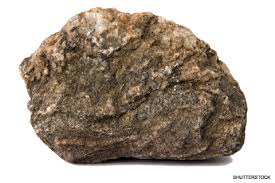
Which physical property of the rock is being measured using the graduated cylinder?
a)
Mass
b)
Volume
c)
Hardness
d)
Melting Point
30.

Iodine is an indicator for what nutrient?

a)

glucose

b)

starch

c)

protein

d)

lipids

31.
What happens in ALL chemical changes?
a)
Change in state of matter
b)
A new substance is formed
c)
Bubbles are produced
d)
An explosion
32.

What are indicators used for

a)

Measuring density of substances

b)

Drinking

c)

Measuring strength of acids or alkalis

d)

Decoration

33.
State of matter with no definite shape or volume.
a)
solid
b)
liquid
c)
gas
d)
Mississippi
34.
What happens when my glass of water is sitting in the sun and disappears into a gas?
a)
evaporation
b)
burning
c)
melting
d)
freezing
35.
Which form of matter fills the space like it has in the balloon?
a)
liquid
b)
string
c)
solid
d)
gas
36.
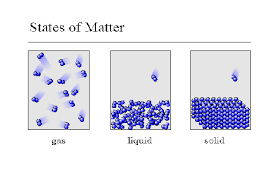
Which state of matter has particles arranged like this?
a)
solid
b)
liquid
c)
gas
37.
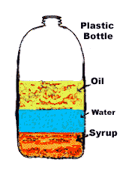
Which liquid is the least dense?
a)
oil
b)
water
c)
syrup 
d)
plastic bottle
38.
Why do some substances float on water?
a)
they are warmer than water
b)
they are cooler than water
c)
they are more dense than water
d)
they are less dense than water
39.
Which box has a higher density?  
a)
Box A
b)
Box B
c)
cannot be determined
d)
they are the same
40.
What is the measuring unit for mass?
a)
centimeter 
b)
millimeter 
c)
grams 
d)
pounds
41.
Define the term "mass".
a)
Mass/Volume
b)
Anything that has mass and takes up space 
c)
The amount of space an object occupies.
d)
The amount of matter in an object.
42.
Volume is ...
a)
Mass/Volume
b)
The amount of matter in an object.
c)
The amount of space an object occupies.
d)
Anything that has mass and occupies space.
43.
Density is...
a)
the amount of mass in an object
b)
the amount of space an object takes up
c)
the amount of mass in a given space
d)
the weight of an object
44.

Water has a density of 1g/mL. In order for something to float in water it must _____________.

a)

Have a density greater than 1g/mL

b)

Have a density less than 1g/mL

c)

Have a density that is exactly 1g/mL

d)

Nothing will float in water

45.
Which states of matter have a definite volume?
a)
solid and gas
b)
solid and liquid
c)
gas and liquid
d)
solid, liquid, and gas
46.
What would the label be for the density of a block that has a mass of 9 grams and volume of 12 cm3?
a)
g/cm3
b)
g/ml3
c)
grams
d)
milliliters
47.

A can of some types of diet soda will float in water; a can of regular soda will sink in water: this happens because they have a different ___________________.

a)

gravity

b)

density

c)

mass

d)

volume

48.

What are the units for density?

a)

g/mL or g/cm3

b)

grams

c)

milliliters

d)

centimeters cubed

49.

Calculate the density: a rock has a mass of 12 g and a volume of 6 mL

a)

0.5 g/mL

b)

2 g/mL

c)

3 mL/g

d)

2 mL/g

50.
If you know the density and the mass of an object, what equation would you use to calculate its volume?
a)
V = D/M
b)
V = M/D
c)
V = M x D
d)
V = l x w x h
51.
If you are given a cube of sugar, how could you calculate its volume?
a)
V = M/D
b)
V = MD
c)
V = l x w x h
d)
V = final water level - initial water level
52.
What is the volume of the fish inside the graduated cylinder?
a)
38 mL
b)
6 mL
c)
32 mL
d)
Not enough information to solve
53.
An empty beaker has a mass of 60 grams.  When oil is added to the graduated cylinder, it has a mass of 200 grams. What is the mass of the oil?
a)
140 grams
b)
200 grams
c)
140 mL
d)
260 g
54.
Jack has a rock. The rock has a mass of 14g and a volume of 2cm3. What is the density of the rock?
a)
7 mL
b)
7 g/cm3
c)
28 g/cm3
d)
1/7 g/cm3
55.

The tool used to measure the mass of a substance or object is a ______________.

a)

triple beam balance

b)

graduated cylinder

c)

ruler

d)

thermometer

56.
The following liquids are poured together in a beaker: alcohol (density=0.79), corn syrup (density=1.38), water (density=1.0), and cooking oil (density=0.93).  Which of these liquids will sink to the bottom of the beaker?
a)
alcohol
b)
corn syrup
c)
water
d)
cooking oil
57.

Calculate the mass in g if...

D = 4g/cm3 and V = 10 cm3

a)

2.5

b)

40

c)

14

d)

0.4

58.

Calculate the volume in cm3 if...

M = 60 g and D = 3 g/cm3

a)

180

b)

0.05

c)

20

d)

63

59.

Calculate the mass in g if...

V = 40 cm3 and D = 8 g/cm3

a)

5

b)

48

c)

0.2

d)

320

60.

What is the volume in cm3 of a cuboid (box) measuring 2cm by 3cm by 5cm?

a)

30

b)

10

c)

6

d)

15

61.
A rock’s density is 5 g/cm3. Determine the mass of the rock if it has a volume of 20 cm3.
a)
4 g
b)
20 g
c)
50 g
d)
100 g
62.
A piece of copper has a mass of 89g and a volume of 10 cm3.  What would be the density of the copper?
a)
0.89 g/cm3
b)
89 g/cm3
c)
8.9 g/cm3
d)
890 g/cm3
63.

What is the basic shape of a liquid?

a)

A sphere

b)

The same shape as a gas, only rounder

c)

A cube

d)

Whatever shape its container is

64.

An _____ reaction is a chemical reaction that releases heat.

a)

Exothermic

b)

Molecule

c)

Chemical Reaction

d)

Density

65.
Shaquita has a box with a mass of 27g and a volume of 9cm3.
What is the density of the box?
a)
3 g/cm3
b)
1/3 g/cm3
c)
27 g/cm3
d)
39 g/cm3
66.
If you had a sealed bottle of water, how would the mass of the water bottle change after a 5 day period?
a)
Mass would increase. 
b)
Mass would stay the same. 
c)
Mass would decrease. 
d)
None of the above.
67.
Find mass of the water only.   Mass of a beaker & H20 = 500 g.  Mass of empty beaker =100 g.
a)
400g
b)
600g
c)
100g
d)
15g
68.
 Which substance has the least amount of density?
a)
vegetable oil
b)
water
c)
dish soap
d)
honey
69.

Corn syrup has a density of 1.4g/ml, vegetable oil has a density of .9g/ml, and water has a density of 1g/ml. If you put all the liquids in one beaker how will they stack?

a)

Vegetable oil, corn syrup, & water

b)

Water, vegetable oil, & corn syrup

c)

Vegetable oil, water, & corn syrup

d)

Corn syrup, vegetable oil, & water

70.
A change in which NEW substances are formed.
a)
Chemical change
b)
Physical change
c)
Casual change
d)
Formal change
71.
A change in phase or state of matter ...
a)
Chemical
b)
Physical