
 Worksheets
Units 5,6,7,&8 Review
Total questions: 70
Worksheet time: 5hrs 35mins
Which statement best describes how energy transfer within Earth’s atmosphere can affect a weather condition?
During convection, warm air rises and cool air falls which affects the amount of precipitation
During radiation, electromagnetic waves transfer heat and light energy which affects the air temperature.
During radiation, objects directly transfer heat to each other which affects the air temperature
During convection, electromagnetic waves transfer heat and light energy which affects the amount of precipitation.
Tornadoes and hurricanes are large areas of __________ pressure.
No
High
Average
Low

What front does this symbol show?
Warm front
Cold front
Occluded Front
Stationary Front

What front does this symbol show?
Warm Front
Cold Front
Occluded Front
Stationary Front

What front does this symbol show?
Warm Front
Cold Front
Occluded Front
Stationary Front

What front does this symbol show?
Warm Front
Cold Front
Stationary Front
Occluded Front
Air masses are large bodies of air that have relatively uniform __________ and humidity.
Pressure
Temperature
Wind Speed
Wind Direction
High pressure areas move toward areas of __________ pressure.
no
low
high
equal
The boundary between two air masses is called a(n) __________.
Front
Stationary Front
Warm Front
Cold Front
_______ pressure systems are characterized by fair weather.
High
Low
_______ pressure systems are characterized by cloudy, rainy weather.
High
Low


Near which city is the high pressure system located?
Seattle
Minneapolis
Dallas
Chicago
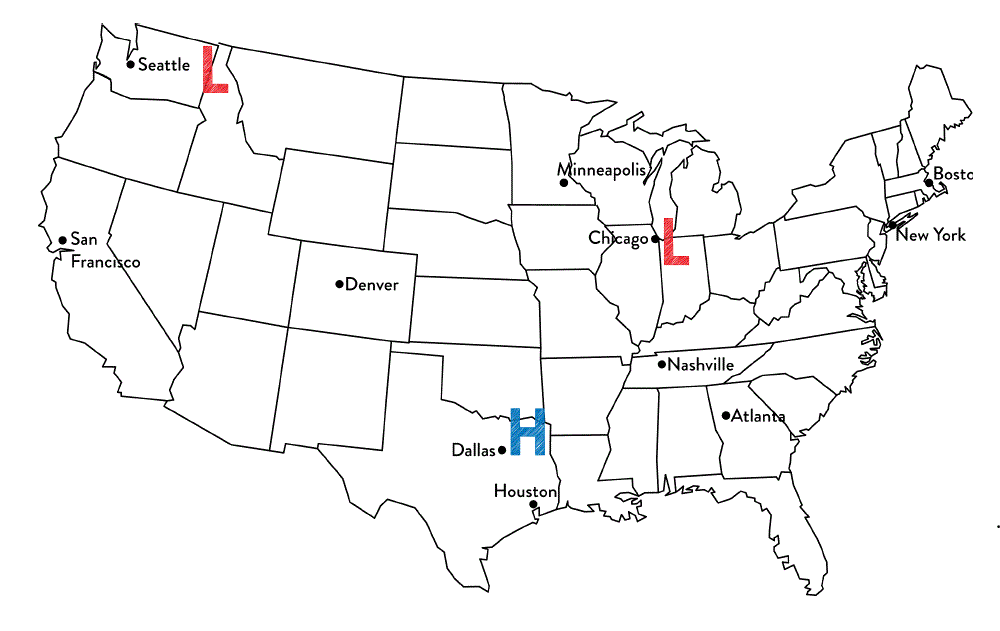
Tim said that Chicago is most likely to experience rainy weather. Jennifer thinks that Dallas is most likely to experience rainy weather.
Which student is correct?
Tim because Chicago is the closest to a low pressure system and they produce precipitation.
Jennifer because high pressure systems produce precipitation
Both students are correct because all systems produce precipitation
Neither of the students are correct because the cities are not close enough to the system.

What type of weather is Minneapolis most likely experiencing?
light/drizzly rain
severe thunderstorms
sunny skies
cloudy skies, light precipitation

Which lettered location is most likely experiencing rain and possible thunderstorms?
Location A
Location D
Location E
Location ?
Tim said that Chicago is most likely to experience rainy weather. Jennifer thinks that Dallas is most likely to experience rainy weather.
Which student is correct?
Tim because Chicago is the closest to a low pressure system and they produce precipitation.
Jennifer because high pressure systems produce precipitation
Both students are correct because all systems produce precipitation
Neither of the students are correct because the cities are not close enough to the system.


True or False:
The Ocean current distribute heat from the Sun's unequal heating of the Earth's surface.
True
False

What do all waves transfer?
Matter
Heat
Electricity
Energy

What are the two types of waves?
longitudinal and transverse
sound and light

What is the number of complete waves passing a fixed point in a given amount of time?
Amplitude
Intensity
Wavelength
Frequency

Which type of waves have the longest wavelength?
Visible light
Radio waves
X-rays
Gamma-Rays

Shorter wave lengths can carry more energy. Which of these probably carries the MOST energy:
Infrared light
Visible light
X-rays
UV light

What is the distance between the calm sea and the highest wave called?
Wave
Frequency
Amplitude
Magnitude

What does #1 represent?
Period
Frequency
Wavelength
Amplitude

What does #2 represent?
Period
Frequency
Wavelength
Amplitude


In a longitudinal wave..... (2 correct answers)
Energy moves in the same direction as the wave
Energy moves at a right angle to the wave
The particale of the wave move along the wave
The particales just vibrate
*How does sound usually travel?
An object vibrates, and those vibrations travel through the air in one direction as transverse waves.
An object vibrates, and those vibrations carry air in one direction as longitudinal waves.
An object vibrates, and those vibrations carry air in all directions as transverse waves.
An object vibrates, and those vibrations travel through the air in all directions as longitudinal waves.

Because of where they are located on the EM spectrum, X-Rays have a ______________ frequency than visible light.Hint: Choose two correct answers.
higher
lower
You should raise your hand when you have a question. :)

What form of radiation has the greatest frequency?
X-Rays
Visible Light
Gamma Rays
Radio Waves

The model shows Earth is several positions relative to the sun. In which position is it winter in North America?
Position 1, because North America receives the most sun.
Position 2, because North America is tilted toward the sun.
Position 3, because North America is parallel to the sun.
Position 4, because North America is tilted away from the sun.


Neap tides happen at _________ and _________ phases of the moon.
first quarter and new moon
last quarter and full moon
waxing and waning
1st quarter and 3rd quarter

Wha type of tide would this arrangement of earth-moon-sun create?
full moon tide
new moon tide
neap tide
spring tide

Which sphere of the Earth includes all the water on the planet?
Atmosphere
Hydrosphere
Biosphere
Geosphere
Which sphere of the Earth includes the air and gases that surround the planet?
Atmosphere
Hydrosphere
Biosphere
Geosphere

When the Earth's water from the Hydrosphere turns into vapor (gas) to the atmosphere. What is the process called

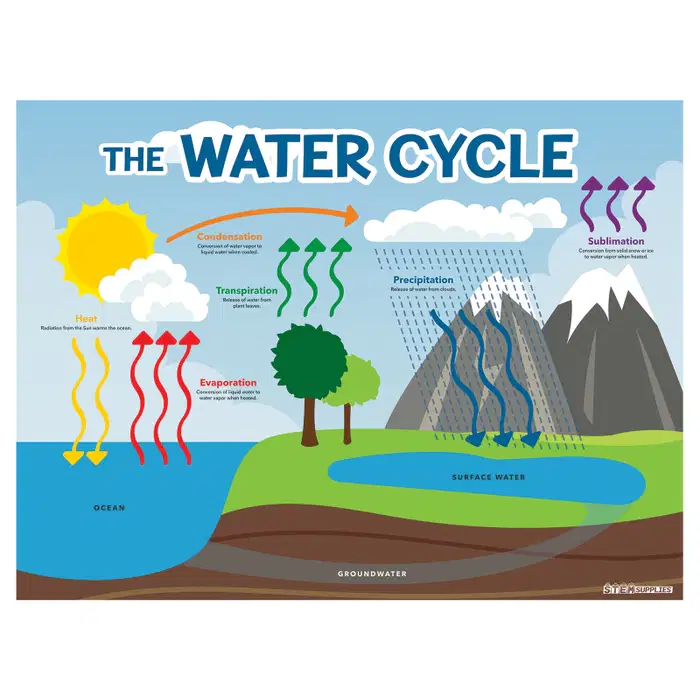
Water from the __________, evaporates into the __________and becomes a gas, then it condenses to become rain
Hydroshere, Atomosphere
Atomsphere, Hydrosphere
Hydroshpere, Biosphere
Geosphere, Hydrosphere
The 3 Spheres of the Earth that are involved when a volcano erupts sending ash into the air and sending lava down the sides into the sea?
Hydrosphere
Atomsphere
Biosphere
Geosphere
How does the density of the layers change as you travel closer towards the center of the Earth?
density decreases
density stays the same
density increases
This layer of the earth is liquid?
Inner Core
Outer Core
Upper Mantle
Lower Mantle

Which of the following are associated with volcanoes? (2 answers)
Igneous Rocks
Sedimentary Rocks
Metomorphic Rocks
Fossils
A rock deep within the Earth experiences extreme temperature and pressure. After a long period of time it becomes which rock?
Magma
Igneous
Metamorphic
Sedimentary
To turn an Ignenous Rock into a metamorphic rock, it will be subjected to extreme
Heat & Pressure
Melting & Cooling
Weathering & Erosion
Erosion
What type of climate would you expect in the North of the USA, NOT near water or the equator
warm all the time
warm summer, cold winter, with some rain
cold all the time
warm summers and warm winters, lots of rain
The Climate is NOT effected by the Earth's Atmosphere
True
False
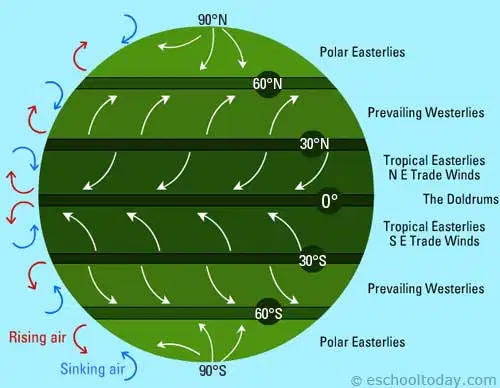
Global Wind patterns show that the weather in the high lattidudes are caused by
Trade Winds
Westerlies
Eastierlies
Hurricanes need what tempature of water
Cold water, that's why they happen in the winter
Warm water, that's why they happen in the summer

