
 Worksheets
FSSA Review: Physical Science
Total questions: 67
Worksheet time: 59mins

Which person has gained the most gravitational potential energy?
a. a 50 kg person who lives on the second floor
b. a 50 kg person who lives on the third floor
c. a 100 kg person who lives on the second floor
d. a 100 kg person who lives on the third floor

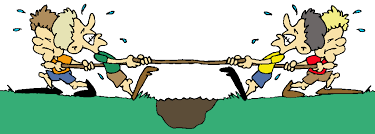
What happens to Box X and Box Y as a result of the forces?
A. Box X starts moving, speeding up, and Box Y remains at rest.
B. Box X starts moving at constant speed, and Box Y remains at rest.
C. Box X starts moving at constant speed, and Box Y starts moving, speeding up.
D. Box X starts moving, speeding up, and Box Y starts moving at a constant speed.
An object moves at a constant speed.
What will happen to this object’s motion over time if no new forces are applied?
It will change direction.
It will increase in speed.
It will decrease in speed.
It will maintain a constant speed.

When there is movement, potential and gravitational energy change to _________ Energy.
chemical
potential
elastic
kinetic
The heat energy that is released when fuel is consumed was originally stored in the fuel's...
chemical bonds
burning flame
waste products
candle wax

Nash puts his cold Coke Slurpee onto the metal roof of his mom's car. Describe the heat transfer that takes place.
Heat is transferred from the car's roof into the Slurpee and increases the temperature of the Slurpee.
Heat is transferred from the Slurpee into the roof and increases the temperature of the roof.
The Slurpee stays the same temperature until it is completely gone.
The roof doesn't change temperature due to the fact that it sits in the sun all day.
If energy is lost during a chemical reaction, it is usually lost in the form of...
potential energy
radiant energy
heat energy
all of the above
When reactants combine, the resulting products need to have ________ the reactants.
the same properties as
many properties in common with
different properties than
none of the above
In a chemical reaction, you begin with 23 atoms. When the reaction is over, you would expect to have ______ atoms remaining.
23
less than 23
more than 23
There is not enough information to tell.
Which of the following is a sign that a chemical reaction has occurred?
change in shape
melting
formation of a gas
dissolving

Select the element that is a non-metal.
N
Cu
Ni
Na

Select the element that is a metal.
O
Ca
F
Cl
A beaker with 200 mL of water is placed on a hot plate and heated. The water boils at 100 degrees C. At what temperature would 110 mL of water boil?
200 degrees C
100 degrees C
110 degrees C
210 degrees C
Chemical X has a mass of 5 grams, and chemical Y has a mass of 10 grams. If the two chemicals are mixed and a complete chemical reaction takes place, what is most likely the mass of the product?
5 grams
10 grams
15 grams
50 grams
How can a scientist, using the periodic table, find an element with properties similar to another element?
By comparing density
By finding its periodic group
By comparing malleability
By comparing atomic weight
Which is an example of a physical change?
boiling
rotting
burning
rusting
After a chemical reaction occurs in an open test tube, measurements indicate that the mass of the reactants is greater than the mass of the products remaining in the test tube. What most likely explains the measurements?
A solid was produced.
A gas was produced.
The salinity of the reactants was high.
The temperature of the reactants was low.

You own a fireworks company. You are out of the element sodium (Na) and need to substitute an element with similar properties before your fireworks show starts.
Chlorine (Cl), because it is in the same period as sodium, and elements in the same period have similar electron structure and similar chemical properties.
Lithium (Li), because it is in the same group as sodium, and elements in the same group have similar electron structure and similar chemical properties
Magnesium (Mg), because it only has one more proton than sodium and therefore, similar chemical properties.
Neon (Ne), because it only has one less proton than sodium and therefore, similar chemical properties
On a hot summer day, you make a glass of refreshing sweet iced tea by combining boiling water, tea, sugar, and ice.
What type of change occurs and how do you know?
Physical change; sugar dissolves in the tea and water, but the chemical composition remains the same.
Physical change; sugar dissolves in the tea and water which breaks the bonds of the molecules
Chemical change; sugar dissolves in the tea and water due to heat being added to the water
Chemical change; sugar dissolves in the tea and water which breaks the bonds of the molecules

Sally rolled a marble down a ramp to investigate the potential energy and kinetic energy of a marble. She planned to measure the kinetic and potential energy at three different points but forgot to measure the kinetic energy at Point C.
the kinetic energy would be 0 joules at Point C
the kinetic energy at Point C would have to be 16 joules
the kinetic energy at Point C would have to be 12 joules
the kinetic energy would be 1 joule at Point C
In a chemical reaction, table sugar (sucrose) is mixed with sulfuric acid. The result of the reaction is a towering black structure of elemental carbon, water vapor, carbon dioxide, and sulfur dioxide gases.
How can conservation of matter be proved using this reaction?
The masses of the sugar, sulfuric acid, and glassware should be recorded before the experiment, then the resulting reactant masses should be compared with the original masses.
The masses of the resultant gases and structure should be weighed to show that the resultants are heavier than the products
The masses of the resultant gases and structure should be weighed to show that the resultants are lighter than the products.
The masses of the sugar, sulfuric acid, and glassware should be recorded before the experiment, then the energy lost can be added to the resultants and compared to the original masses.

Is the substance an atom or a molecule?
It is an atom because it has a nucleus.
It is an atom because C and O are subatomic particles
It is a molecule because it is held together by energy and not chemical bonds
It is a molecule because it has two different elements that are held together by bonds
The molecules of the substance are packed close together and have fixed positions in space relative to each other
solid
liquid
gas
plasma
When volcanoes erupt, they emit large plumes of hot smoke and ash, which can spread and cover miles of sky. Which process lifts the hot, black clouds into the sky?
radiation that causes thermal energy to transfer into the clouds and hold them together
conduction that causes thermal energy to pass from the smoke into the ground
conduction that causes warmer air to spread and cooler air to condense into clouds
convection that causes warmer air to rise and cooler air to sink into its place



When particles are heated they begin to ____.
move faster
mover slower
move up
jump out of the pot
Why would the temperature of boiling water be higher than the temperature of ice water?
Because the particles in the boiling water are moving faster.
Because the particles in the boiling water aren't moving at all.
Because the particles in the boiling water are moving slower.
Because the particles in the boiling water are moving at the same speed.
Which of the following processes is an example of a chemical change?
Burning wood
Boiling water
Breaking glass
Melting ice
A burning candle converts _____ energy into _____ energy.
nuclear, electromagnetic
kinetic, electromagnetic
electrical, electromagnetic
chemical, light

In the figure shown, the light waves change direction as a result of _____.
diffraction
refraction
reflection
reverberation
In the figure shown in question 8, the directional change of light waves occurs because ____________.
light waves travel faster through air than water
light waves travel faster through water than air
the angle of reflection of waves always equals the angle of incidence
waves carrying less energy produce light with lower intensity
Particles in a bowl of hot soup are moving _____ the particles in the soup when it has cooled.
the same speed as
slower than
faster than
particles do not move
A balloon expands when heat is applied to it. Why is this?
the gas cools off and causes the size of the balloon to change
when the gas heats up, the particles move closer together
when a gas is heated, the particles move faster and further away from each other, hitting the walls of the container with great force
when the gas cools, the particles move closer together
Match the description to the graph:
"The car is traveling at a constant speed."


In which of the following graphs below did one runner overtake (run past) the other?


Luis rubbed a balloon on his hair and held the balloon next to the wall. He observed that the balloon stuck to the wall. Which of the following is responsible for the balloon sticking to the wall?
Electric Force

According to the provided graph, which element has the lowest melting and boiling points?
Flourine
Chlorine
Bromine
Astatine
Recipes for baked goods, such as cookies, cakes, and quick breads, tend to use softened butter because it mixes much easier with flour and sugar in batters or cookie dough than hard, cold butter or even melted butter. Softened butter is made by letting the butter sit at room temperature until it is soft to the touch. Use your knowledge to particles to explain why softened butter is better for baking.
The particles in the softened butter are moving slower and are further apart making it easier to combine with other ingredients.
The particles in softened butter are moving faster and have less attractive forces so the butter combines more easily with the other ingredients.
The particles in the softened butter are moving faster and are very close together making it easier for them to combine.
The particles in the softened butter are moving slower and have more attractive forces so the butter combines more easily with other ingredients.
Radar works like an echo. It shoots electromagnetic energy out and when it hits an object, the wave is reflected back. What would be an effective way to prevent the echo from happening?
Paint the object with reflective paint.
Paint the object with paint that absorbs that wavelength.
A more rounded object will prevent detection.
If the object is fast enough it will not be detected.

Explain what is happening in this image.
Red and blue light is being reflected as green.
The leaf is pointing at the eye.
The green light is being reflected while the other colors are being absorbed.
White light is being reflected after it transforms to green light.
A substance that is 3 on the pH scale would be a(n):
acid
base
neutral
solute
Which example is a compound?
N2
O2
Cu
H2O2

homogenous mixture
atoms

homogeneous
mixture
Heterogeneous mixture


What are the 3 factors that affect rate of dissolution (how fast things dissolve)?
temperature, wind, surface area
temperature, agitation, surface area
emotions, attitude, language
temperature, sound, surface area
If I dissolve carbon dioxide in water, what is the solvent?
Carbon Dioxide
There is no solvent
Oxygen
Water

