
 Worksheets
Earth science
Total questions: 75
Worksheet time: 1hrs 17mins
Name
Class
Date
1.
What do we call the center of the Earth?
a)
Mantle
b)
Crust
c)
Apple
d)
Core
2.
Roughly how long ago did Pangaea break apart?
a)
2 million years
b)
20 million years
c)
200 million years
d)
2000 million years
3.
Which is the hottest part of the Earth?
a)
The core
b)
The mantle
c)
The crust
d)
The Asthenosphere
4.
What is the core made of?
a)
Molten rock
b)
Solid rock
c)
Molten metal
d)
Solid metal
5.
What layer is between the inner core and the mantle?
a)
asthenosphere
b)
crust
c)
outer core
d)
lithosphere
6.
Which is the coolest part of the planet?
a)
inner core
b)
outer core
c)
mantle
d)
crust
7.
How far is it to the center of the Earth in miles?
a)
4000
b)
400
c)
40,000
d)
27408
8.
Which two metals are thought to be found in the core?
a)
iron and steel
b)
iron and nickel
c)
gold and silver
d)
iron and copper
9.
How hot is it in the Earth's center?
a)
600 Celcius
b)
6000 Celcius
c)
6 million Celcius
d)
451 Fahrenheit
10.
Which of these layers is the largest?
a)
lithosphere
b)
asthenosphere
c)
outer core
d)
mantle
11.
Which layer has the most letters in it?
a)
crust
b)
lithosphere
c)
asthenosphere
d)
outer core
12.
The layer of gases surrounding the Earth
a)
Hydrosphere
b)
Cryosphere
c)
Oxyosphere
d)
Atmosphere
13.
Earth’s entire solid or rocky body
a)
Hydrosphere
b)
Asthenosphere
c)
Geosphere
d)
Mesosphere
14.
When the early Earth began to have molten rock, layers formed because of their
a)
shapes.
b)
densities.
c)
water.
d)
No layers formed
15.
When layers of the Earth formed, the least dense layer..
a)
sank to the bottom.
b)
mixed with the other layers.
c)
floated to the top.
16.
Which layer of the Earth is the most dense?
a)
Crust
b)
Inner core
c)
Mantle
d)
Outer core
17.
Which layer of the Earth is the least dense?
a)
Crust
b)
Inner core
c)
Mantle
d)
Outer core
18.
Which portion of the crust is thicker?
a)
Continental
b)
Oceanic
19.
Which layer of the Earth is the thickest?
a)
Core
b)
Crust
c)
Mantle
20.
The pieces of the lithosphere that move around on top of the asthenosphere are called
a)
continents.
b)
mesospheres.
c)
crust
d)
tectonic plates.
21.
??? give a lot of information about Earth’s interior by the waves they create.
a)
Volcanoes
b)
Tsunamis
c)
Earthquakes
d)
Cannonballs
22.

Which letter represents the entire mantle?
a)
A
b)
C
c)
D
d)
F
23.

Which layer represents the lithosphere?
a)
A
b)
B
c)
C
d)
D
24.

Which letter represents the inner core
a)
G
b)
D
c)
F
d)
A
25.
A scientist who studies Earth's processes and the history that shaped it is called a......
a)
geologist
b)
biologist
c)
teacher
d)
students
26.
The outermost layer of the Earth that contains the continents and the oceans.
a)
mantle
b)
crust
c)
outer core
d)
inner core
27.
The layer of rock between the Earth's core and crust.
a)
outer core
b)
crust
c)
inner core
d)
mantle
28.
The crust that makes up the continents- the land
a)
tectonic plates
b)
atmosphere
c)
continental crust
d)
oceanic crust
29.
The crust underneath the oceans.
a)
oceanic crust
b)
continental crust
c)
biosphere
d)
tectonic plates
30.
We live on the core of the Earth.
a)
True
b)
False
31.
The majority, about 75%, of Earth is made up of land.
a)
True
b)
False
32.
What is the name of the Super-Continent that existed long ago?
a)
Wegener
b)
Pangaea
c)
Geocontinent
33.

Rock made of layers of compressed sediments
a)
metamorphic rock
b)
igneous rock
c)
sedimentary rock
d)
school house rock
34.
Small pieces of rock are also called
a)
sediment
b)
coal
c)
organic matter
d)
erosion
35.

The breakdown of rock into smaller particles from the effects of wind, water and ice
a)
erosion
b)
cementation
c)
pressure
d)
weathering
36.

Wind, water, ice and gravity carry sediments away
a)
weathering
b)
deposition
c)
erosion
d)
cementation
37.

Sediment that is left behind in rivers lakes and oceans
a)
weathering
b)
erosion
c)
cementation
d)
deposition
38.

When the weight of new sediment layers is deposited on top of older layers
a)
erosion
b)
compaction
c)
pressure
d)
weathering
39.
Force of objects pushing on other objects
a)
erosion
b)
pressure
c)
fighting
40.
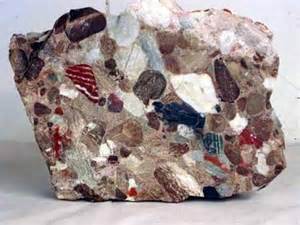
The process of layers become stuck together forming sedimentary rocks
a)
sticking
b)
pressuring
c)
cementation
d)
deposition
41.

The waste and remains of plants and animals
a)
organic matter
b)
fossil fuels
c)
fossils
42.

Decay or decomposition means to
a)
break into smaller parts
b)
make into larger parts
c)
destroy something
d)
fix something
43.

Preserved parts or traces of animals and plants that lived in the past
a)
natural gas
b)
imprints
c)
photos
d)
fossils
44.
A mark or depression made by pressure
a)
fossil fuel
b)
imprint
c)
coal
45.
Which of the following is not a fossil fuel
a)
Coal
b)
Electricity
c)
Oil
d)
Natural Gas
46.
a flammable liquid made from remains of marine organisms
a)
oil
b)
natural gas
c)
coal
d)
energy
47.

Which rock layer is the youngest?
a)
L
b)
M
c)
N
d)
P
48.
What is an example of a fossil?
a)
A rock with an imprint of a leaf.
b)
A seashell found at the beach.
c)
A leaf print in a sidewalk.
d)
A broken piece of a rock.
49.

Which rock layer is the oldest?
a)
1
b)
2
c)
3
d)
They are all the same age.
50.
Why might a seashell fossil be found in the middle of a desert?
a)
The fossil was moved there by an animal.
b)
The fossil was moved there by a human.
c)
The landscape changed over time.
d)
It was formed in the desert.
51.

Which fossil formed most recently?
a)
cow skull
b)
dinosaur bone
c)
trilobite
d)
clamshell
52.

What likely caused the layers to shift?
a)
volcano
b)
weathering
c)
erosion
d)
earthquake
53.

A scientist says that layers Y and M are the same age. How does he know this?
a)
They are found in the same type of rock.
b)
They are the lowest layers.
c)
They have the same type of fossil.
d)
They are near each other.
54.

Which sentence is NOT true?
a)
Layer 1 is about 500 million years old.
b)
There are 3 layers older than Layer 4.
c)
Layer 9 is the oldest layer.
d)
Layer 7 has the youngest fossil.
55.
How can you determine the ages of rock layers?
a)
by looking at the fossils in the layers
b)
by looking at the types of rock in the layers
c)
by digging through all of the layers
d)
by counting the number of fossils
56.

Which layer or layers prove that this area was once covered by water?
a)
1
b)
2
c)
3
d)
2 and 3
57.

Which rock layer is the same age as Layer Z?
a)
X
b)
M
c)
Q
d)
R
58.

How old is the fossil in layer 7?
a)
about 1 million years old
b)
about 205 million years old
c)
about 500 million years old
d)
about 300 million years old
59.

Which rock layer is youngest?
a)
A
b)
B
c)
C
d)
D
60.
Which type of rock results from melting and cooling of magma?
a)
Igneous
b)
Metamorphic
c)
Sedimentary
d)
Extrusive
61.
Which type of rock forms from extreme heat and pressure?
a)
Igneous
b)
Sedimentary
c)
Organic
d)
Metamorphic
62.
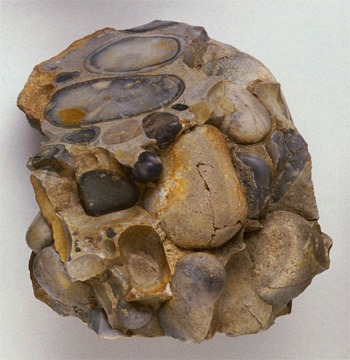
This rock was formed by smaller pieces of rock that settled at the bottom of a lake millions of years ago. What type of rock is this?
a)
Sedimentary
b)
Igneous
c)
Metamorphic
63.
What are the 3 major types of rocks?
a)
Igneous, Metamorphic, Sedimentary
b)
Metamorphic, Igneous, Cementation
c)
Brown, Red, Gray
d)
Streak, Hardness, Breakage
64.

Each rock type can follow only one pathway of the rock cycle.
a)
True
b)
False
65.
How light reflects off of a mineral is called the mineral's
a)
luster
b)
streak
c)
cleavage
d)
fracture
66.
A mineral's resistance to being scratched is called?
a)
streak
b)
luster
c)
hardness
d)
heft
67.

Which layer formed first?
a)
Rock Layer W
b)
Rock Layer X
c)
Rock Layer Y
d)
Rock Layer Z
68.

Put the layers in order from oldest to youngest.
a)
a, b, c, d, e
b)
b, c, d, a, e
c)
b, c, d, e, a
d)
e, d, c, b, a
69.

Put the layers in order from oldest to youngest.
a)
c, e, d, b, a
b)
a, b, c, d, e
c)
a, c, e, d, b
d)
b, d, e, c, a
70.

Which rock layer in the diagram seems to be the oldest?
a)
F
b)
E
c)
B
d)
A
71.
How does sedimentary rock usually form?
a)
Vertically
b)
Diagonally
c)
Folding
d)
Horizontally
72.

Which layer is oldest?
a)
A
b)
W
c)
G
d)
Z
73.
Remains, imprints or traces of once-living organisms
a)
water
b)
superposition
c)
fossils
74.

Correctly sequence the layers of rocks oldest to youngest
a)
A,B,C,D
b)
D,C,B,A
75.

Correctly sequence the layers of rocks oldest to youngest
a)
A,D, C, B, E
b)
E, B,C D, A
c)
B,E,C, D, A
100 %

