
 Worksheets
Rocks and Minerals Review
Total questions: 70
Worksheet time: 58mins
Name
Class
Date
1.
The color of a mineral in powder form is called the mineral's
a)
hardness
b)
specific gravity
c)
luster
d)
streak
2.
How light reflects off of a mineral is called the mineral's
a)
luster
b)
streak
c)
cleavage
d)
fracture
3.
Why is coal not a mineral?
a)
It's not a solid
b)
It is man-made
c)
It is not inorganic
d)
It is made of carbon
4.

The following image shows what mineral property?
a)
Hardness
b)
Streak
c)
Cleavage
d)
Density
5.
Diamond has a hardness of ___ on Mohs Hardness Scale.
a)
1
b)
5
c)
8
d)
10
6.
Dull, silky, waxy, pearly, and earthy are terms that best describe which property of minerals?
a)
luster
b)
color
c)
streak
d)
cleavage
7.

By definition, a mineral has which of the following characteristic(s)?
a)
definite chemical composition
b)
crystal structure
c)
naturally occuring
d)
all of the above
8.
How do you test the hardness of a mineral?
a)
Throw it against a wall
b)
Step on it
c)
Scratch Test
d)
Kick it until it breaks
9.
A mineral's resistance to being scratched is called?
a)
streak
b)
luster
c)
hardness
d)
heft
10.
Large crystals are going to form
a)
when lava erupts from a volcano
b)
when a shallow sea evaporates
c)
when magma underground cools off
d)
all of the above
11.
The ________ measures how hard a mineral is.
a)
Miller Scale
b)
Dishong Scale
c)
Curly Scale
d)
Mohs Scale
12.

__________ is if a mineral breaks apart in a jagged or rough layer.
a)
cleavage
b)
luster
c)
fracture
13.
Minerals are identified by observing their ___________.
a)
physical properties
b)
name
c)
location
14.
The five characteristics that all minerals share are:
a)
Definite Chemical Composition, Color, Density, Igneous, and Solid
b)
Definite Chemical Composition, Crystal Structure, Inorganic, Naturally Occurring, and Solid
c)
Cleavage, Faces, Hardness, Metamorphic, and Streak
d)
Cleavage, Crystal Structure, Density, Igneous, and Solid
15.
What is an igneous rock?
a)
Rock that forms when melted, or molten rock from deep below Earth's surface cools and hardens.
b)
A solid material made up of one or more minerals.
c)
Rock that forms when existing rocks are changed by heat, pressure, or chemicals beneath the Earth's surface.
16.
What is metamorphic rock?
a)
Rock that forms when melted, or molten rock from deep below Earth's surface cools and hardens.
b)
A solid material made up of one or more minerals.
c)
Rock that forms when existing rocks are changed by heat, pressure, or chemicals beneath the Earth's surface.
17.
What is a rock?
a)
Rock that forms when melted, or molten rock from deep below Earth's surface cools and hardens.
b)
A solid material made up of one or more minerals.
c)
Rock that forms when existing rocks are changed by heat, pressure, or chemicals beneath the Earth's surface.
18.
In order for a metamorphic rock to form, _______ is needed.
a)
Pressure
b)
Heat
c)
Heat and Pressure
d)
Weathering
19.
Is magma below or above ground
a)
above
b)
below
20.
What are Igneous Rocks that form as magma cools underground called
a)
extrusive rocks
b)
intrusive rocks
21.
A slow cooling igneous rock will have _____ crystals
a)
large
b)
small
c)
average
d)
black
22.
Hot molten rock that forms beneath Earth' surface
a)
felsic
b)
magma
c)
rock cycle
d)
stratification
23.
What type of rock forms when sand, particles of rock, bits of soil, and remains of once-living things are cemented?
a)
igneous
b)
sedimentary
c)
minerals
d)
metamorphic
24.
Which type of rock results from melting and cooling of magma?
a)
Igneous
b)
Metamorphic
c)
Sedimentary
d)
Extrusive
25.
Which type of rock forms from extreme heat and pressure?
a)
Igneous
b)
Sedimentary
c)
Organic
d)
Metamorphic
26.
A metamorphic rock changes into an igneous rock by what two processes?
a)
Melting and cooling
b)
Extreme heat and pressure
c)
Compaction and cementation
d)
Weathering and erosion
27.
Wind, water, and ice breaking down rock is called
a)
Erosion
b)
Deposition
c)
Compaction
d)
Weathering
28.
What is the MAIN way rocks are classified?
a)
Their color and shapes
b)
How they form
c)
Mineral bands
d)
Where they form
29.
True/False: Igneous rocks can only turn into metamorphic rocks.
a)
True
b)
False
30.
The process in which dissolved minerals crystallize and glue sediment together.
a)
compaction
b)
deposition
c)
organic rock
d)
cementation
31.

When sediments are pressed together tightly, this is called ____________.
a)
Compaction
b)
Cementation
c)
Weathering
d)
Erosion
32.

This rock was molten magma that slowly cooled under the ground. What type of rock is this?
a)
Sedimentar
b)
Igneous
c)
Metamorphic
33.

This rock cooled on the outside of a volcano and contained air bubbles when it was forming. What type of rock is this?
a)
Sedimentary
b)
Igneous
c)
Metamorphic
34.

After lots of time, pressure, and heat, you get this kind of rock. What type of rock is this?
a)
Sedimentary
b)
Igneous
c)
Metamorphic
35.

Each rock type can follow only one pathway of the rock cycle.
a)
True
b)
False
36.

This rock was formed by lots of fossils that settled on top of each other over time. What type of rock is this?
a)
Sedimentary
b)
Igneous
c)
Metamorphic
37.
Fossils are often found in ____________ because it is formed from the remains of once living things.
a)
metamorphic
b)
magma
c)
igneous
d)
sedimentary
38.
The name rock is given when it is broken down into smaller pieces.
a)
texture
b)
weathering
c)
sediment
d)
erosion
39.
True or False: Once a rock is sedimentary, it cannot become an igneous rock.
a)
True
b)
False
40.

The process when rocks break into smaller pieces due to exposure to natural elements is called
a)
erosion
b)
weathering
c)
sediments
41.
From your knowledge of Earth's crust, where would you most likely find igneous rocks like basalt?
a)
Within mountain ranges
b)
In my backyard
c)
On the ocean floor
d)
Sandy Beaches
42.
What is molten rock that erupts onto or above the Earth’s surface?
a)
grain
b)
lava
c)
magma
d)
sediment
43.
Two ways to describe types of igneous rocks are _____
a)
Extrusive and Intrusive
b)
Foliated and Non-Foliated
c)
Clastic and Biochemical
d)
Black and Gray
44.
What process is used to form sedimentary rocks?
a)
Lava cools and hardens to form a rock.
b)
Weathering, Erosion, Deposition, Compaction, Cementation
c)
Extreme heat and pressure from inside the Earth turn rocks into new rocks.
d)
Magma trapped under the Earth's surface cools and solidifies.
45.
What is deposition?
a)
Dropping off sediment
b)
Movement of sediment
c)
Breaking down of sediment
46.
Weathering involves the movement of rocks and minerals by agents such as water, wind and gravity.
a)
True
b)
False
47.
The process of carrying away weathered bits of rocks is called
a)
weathering
b)
erosion
c)
deposition
48.
The process of moving weathered rock and depositing it in another location is called?
a)
weathering
b)
erosion
c)
deposition
49.
A small stream or other source of flowing water cannot form a canyon?
a)
True
b)
False
50.
The process of slowly breaking rocks into smaller pieces is called
a)
weathering
b)
erosion
c)
deposition
51.
Deposited material at the end of a river is called?
a)
landform
b)
delta
c)
canyon
52.
Glaciers shape and carve away the land beneath them and can drastically reshape the landscape over hundreds or even thousands of years.
a)
True
b)
False
53.
A natural land feature on Earth's surface is called
a)
landform
b)
delta
c)
canyon
54.
Weathering and erosion are the same thing.
a)
True
b)
False
55.
Wind blowing sand from one location to another is called
a)
Weathering
b)
Erosion
c)
Deposition
56.
Deltas forming at the mouths of rivers is called?
a)
Weathering
b)
Erosion
c)
Deposition
57.
A crack in a sidewalk is probably caused by root wedging?
a)
True
b)
False
58.
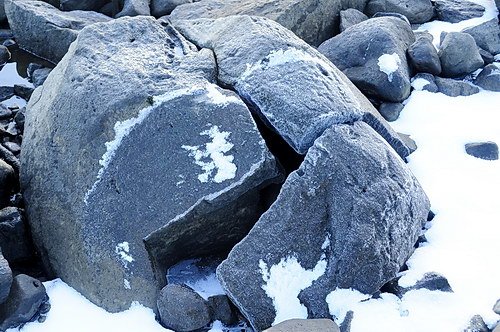
How does freezing water cause the weathering of rocks? The freezing water—
a)
keeps the rocks in place.
b)
makes the rocks last longer.
c)
expands cracks and breaks rocks.
d)
causes rocks to fall in landslides.
59.

A cliff formed near the ocean. Which statement best describes how this cliff formed?
a)
Warm air melted the rock.
b)
Sun rays evaporated the rock.
c)
Ocean waves washed away rock.
d)
Plant roots pushed away the rock.
60.

Over long periods of time, deposition may change the Earth’s surface by _____.
a)
forming new land features.
b)
breaking down large rocks into smaller ones.
c)
washing away beaches.
d)
moving topsoil.
61.

What is the process that picks up and moves weathered rocks?
a)
Deposition
b)
Landslide
c)
Weathering
d)
Erosion
62.
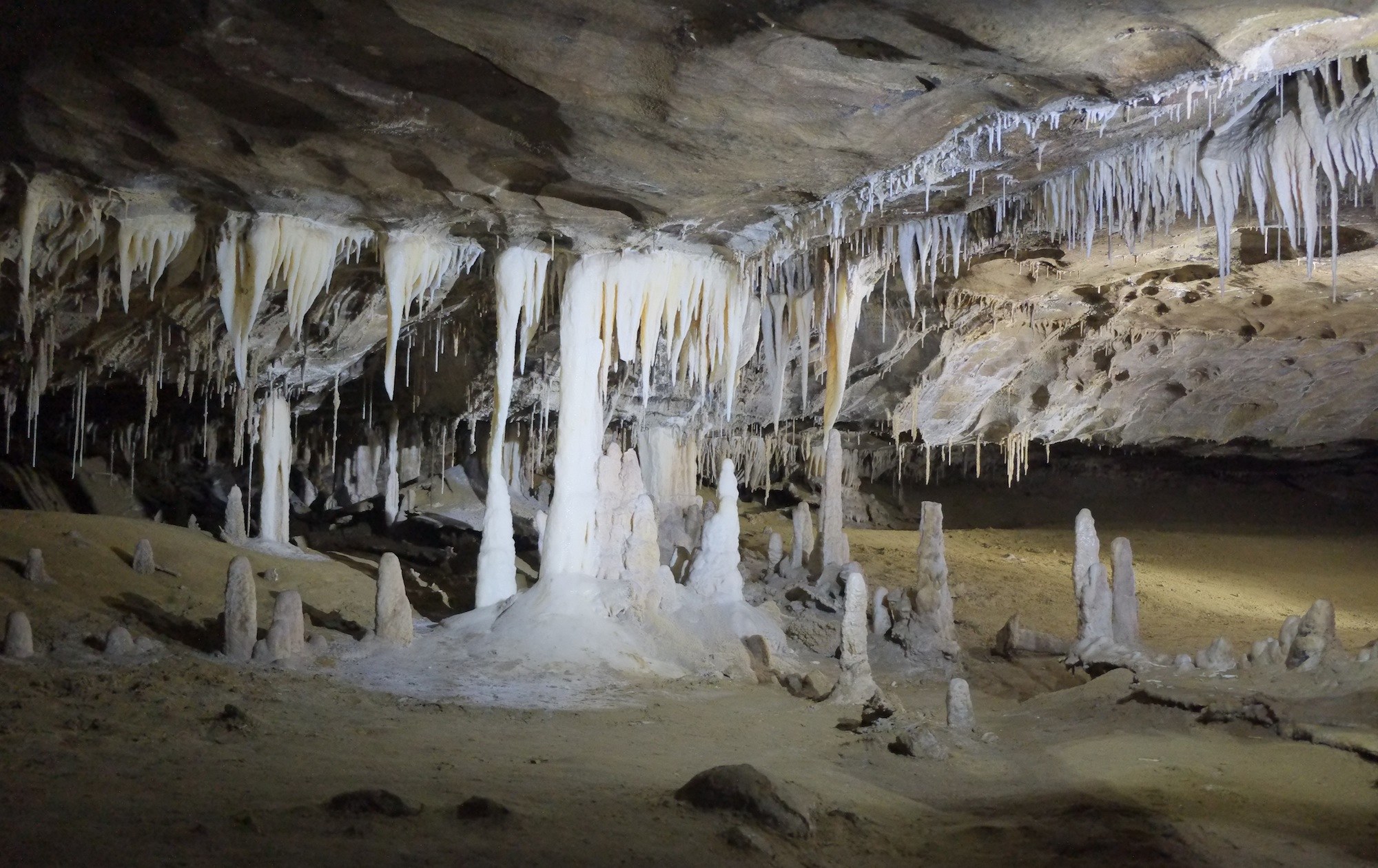
Deposition changes the Earth’s surface because bits of broken rock and soil _____.
a)
stop rivers from flowing.
b)
make rich farmlands.
c)
are dropped in new places.
d)
move very slowly.
63.

Wind blows sand onto rocks and slowly breaks down the rock
a)
Mechanical Weathering
b)
Chemical Weathering
c)
Erosion
d)
Deposition
64.

Acid rain melts the features of a statue
a)
Mechanical Weathering
b)
Chemical Weathering
c)
Erosion
d)
Deposition
65.

Salt water eats away at rock
a)
Mechanical Weathering
b)
Chemical Weathering
c)
Erosion
d)
Deposition
66.
Breaking a rock down into smaller pieces (sediment) using chemicals
a)
Mechanical Weathering
b)
Chemical Weathering
c)
Erosion
d)
Deposition
67.
What is the major cause of weathering and erosion?
a)
wind
b)
ice
c)
glaciers
d)
moving water
68.
Which factors are the most important for determining the rate of weathering?
a)
Erosion and deposition
b)
Climate and type of rock
c)
Humidity and climate
d)
Humidity and temperature
69.
When a large amount of dirt and rock move downhill, this is known as a
a)
mudflow
b)
landslide
c)
creep
d)
lahar
70.

These gravestones have slowly broken down and turned a blackish color due to the action of:
a)
ice wedging
b)
abrasion
c)
acid rain
d)
mechanical weathering
100 %

