
 Worksheets
Astronomy Unit Review
Total questions: 72
Worksheet time: 53mins
Which statement best describes the geocentric model
of our solar system?
The Earth is located at the center of the model
The Sun is located at the center of the model.
All planets revolve around the Sun.
All planets except the Earth revolve around the Sun.

Base your answer to the following question on the diagram below and on your knowledge of Earth
science. The diagram represents Earth in its orbit around the Sun. Locations A through D represent four
positions of Earth in its orbit. Earth is closest to the Sun (perihelion) at position A, and farthest from
the Sun (aphelion) at position C.
At all four positions, the northern end of Earth's axis points toward
Betelgeuse
the Sun
the Moon
Polaris
Which event occurred approximately 4.6 billion years ago?
evolution of the earliest fish
evolution of stromatolites
formation of the oldest known Earth rocks
formation of Earth and our solar system
Energy is produced within a star's core by the process of
nuclear fusion
insolation
conduction
radioactive decay
Earth, the Sun, and billions of stars are contained within
a single constellation
a giant cloud of gas
the solar system
the Milky Way galaxy
Planets that are closest to the Sun are identified as
low-density Jovian
low-density terrestrial
high-density terrestrial
high-density Jovian
One factor responsible for the strength of gravitational attraction between a planet and the Sun is the
degree of tilt of the planet's axis
planet's period of rotation
amount of insolation given off by the Sun
distance between the planet and the Sun
Which event takes the most time?
one revolution of Earth around the Sun
one revolution of Venus around the Sun
one rotation of the Moon on its axis
one rotation of Venus on its axis
Which star has a surface temperature most similar to
the surface temperature of Alpha Centauri?
Procyon B
Sirius
Polaris
Betelgeuse
What is the name of the phenomenon that most likely created our universe?
The big boom theory
The giant bang theory
The cosmic explosion theory
The big bang theory
What does a star mainly consist of? (Tick 2 boxes.)
helium
iron
carbon
hydrogen
___________ survive the trip through the atmosphere of our planet and hit the ground.
Meteors
Meteoroids
Meteorites
Comets
A(n) ____________ is a solar system body that consists of frozen gases, rocks and dust.
comet
meteoroid
asteroid
meteor
What happens in the core of a star?
hydrogen and helium atoms are created
nuclear fusion
hydrogen atoms cool helium atoms down
other stars born
Pick the odd one out.
Mars
Earth
Venus
Neptune
Pick the odd one out.
Jupiter
Mercury
Saturn
Neptune
What is the result of the Earth revolving around the Sun?
The existence of seasons
day-night transitions
Coriolis effect
It keeps the axis of our planet tilted.
Which statement is not true about the motions of the Earth?
It rotates around its axis.
It rotates around the Moon.
It revolves around the Sun.
It revolves around the bulge of the galaxy.

How would you call this lunar phase?
last quarter
full moon
first quarter
new moon

How do you call this phenomenon?
lunar eclipse
ring of fire
solar eclipse
24-hours long night

A solar eclipse might be observed from Earth when the Moon is at which position?
1
2
3
4

What 2 things do we use to classify stars?
temp and pressure
size and color
luminosity and temp
temp and color
On an HR diagram, where does a star spend the majority of its life?
as a red giant
as a dwarf
as a supernova
in the main sequence
What does a super massive star end up as at the end of its life?
black hole
red giant
blue giant
supernova

Which star has the lowest luminosity?
1
2
3
4

Which star has the lowest temperature?
1
2
3
4
Galaxies are composed of (best answer)
stars
stars and gas
stars, dust, and gas
stars, dust, planets and gas held together by gravity
As the solar system formed, two types of planets were produced. Which statement is a fact that helps account for the difference in composition between terrestrial and the Jovian (gas) planets
The farther from the Sun, the cooler the temperature is.
Large planets have less stable orbits than small planets
Metallic elements have lower melting points than nonmetallic elements

What type of type of star is the our sun
Dwarf star
Main sequence star
Giant star
Super giant Star

Which star size above would the sun be?
1 - Dwarf Stars
2 -Main sequence stars
3 - Giant Stars
4 - Super giant stars

What number represents a supernova
1
2
3
4

A student observed the Moon on a Tuesday evening. She drew a picture of its shape in her science notebook. Approximately how long will she have to wait before she can see the Moon the same shape and position again?
365 days
29 days
7 days
1 week
The Moon’s surface has many more craters than the Earth’s. What best explains the difference in the number of craters on the surface of the Moon and the Earth?
The Moon rarely gets impacted by meteorites.
The Earth’s atmosphere protects it from impacts.
The Moon’s gravity attracts more meteorites than Earth's.
The Earth rotates on its axis more quickly than the Moon.
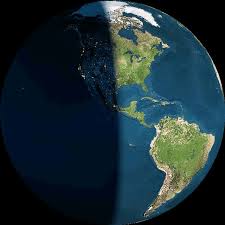
Day and night is caused by the -
orbit of Earth around the Sun
orbit of Earth around the Moon
rotation of Earth on its axis.
rotation of the Moon on its axis
Why do we see different phases of the Moon?
The Moon follows the Sun around Earth.
The Moon orbits around Earth.
The Moon rotates around the Sun.
The Moon changes shape each night.
Which planet is the third planet from the Sun?
Uranus
Mercury
Neptune
Earth

When the Sun, Moon, and Earth are in the positions in the model, what will occur?
a lunar eclipse
a solar eclipse
night time
full moon
Which is the sixth planet from the Sun?
Earth
Uranus
Saturn
Neptune
Which of the following facts describe the physical characteristics of Earth? Click all that apply.
rocky surface
weathering and erosion occurs
no atmosphere
brightest object in the sky
liquid water

Earth experiences day and night because it -
always faces the Sun
rotates on its axis once each day
orbits on its axis once each day
orbits around the Sun
The surface of Earth constantly changes while the surface of the Moon has remained the same for millions of years. Why is there less change on the surface of the Moon?
Earth's gravity is not as strong as Moon's gravity.
Earth orbits the Sun at a faster rate.
Earth is closer to the Sun.
Earth has wind and water and the Moon does not.
Which toy moves the same way that Earth moves on its axis?


The first major optical space telescope to be put into space was the
Hubble Telescope
Mir
James Webb Space Telescope
Voyager

A small robotic space probe that can move about on the surface of a planet or moon is
Orbiter
Rover
Space Station
Apollo

Unmanned space vehicles that take instruments into space to collect data are called
Satellite
Space Shuttle
Rocket
Space Probe
Scientists at NASA are planning a human mission to the space station. Which of these spacecraft would they use to deliver astronauts to the space station?
Space Shuttle
Rover
Space Probe
Satellite

A telescope that uses a curved mirror to gather and focus light from distant objects is called a ____________
reflecting telescope
refracting telescope
spectroscope
optical looking device
2. It is a space technology that orbits the earth, the moon and other celestial objects.
Rocket
Space Shuttle
Space craft
Satellite

3.
Rocket
Satellite
Space Craft
Space shuttle
7. What is the ISS?
International Space Security
International Security System
International Space System
International Space Station
8. What is the first space craft launched in space?
hubble
thaicom 1
R-7 ICBM
Sputnik
9. A tool for viewing and observing.
satellite
space craft
space shuttle
telescope

