
 Worksheets
Chemistry and Energy Review 1
Total questions: 73
Worksheet time: 40mins
Glucose is a sugar represented by the formula, C12H22O11. What is it?
Element
Compound
Mixture
Molecule
What is the basic structural unit of matter
atom
matter
element
nucleus
A collection of atoms of one type that cannot be broken down into simpler substances by ordinary chemical or physical means
element
subatomic particle
electron
matter
This is the positively charged subatomic particle contained in the nucleus of an atom
proton
neutron
electron
matter
a subatomic particle, contained in the nucleus of an atom, having the same mass as a proton but no electrical charge
proton
neutron
electron
matter
This is the negatively charged subatomic particle that orbits the nucleus of an atom
proton
neutron
electron
matter
This an arrangement of the elements according to their atomic numbers so that elements with similar properties are in the same column and properties repeat from row to row
Periodic Table of Elements
Atomic Theory
Isotopes
Subatomic Particles
One or two letters that represent the name of an element
element name
element symbol
atomic number
atomic mass
Found beneath an element's chemical symbol.
element name
element symbol
atomic number
atomic mass
One of several forms of a single element, which contains the same number of protons, but different numbers of neutrons
isotope
ion
orbital
nucleus

What is the chemical symbol for Gold?
Al
Ag
Ar
Au

What is the chemical symbol for Sodium?
S
So
N
Na
Which of the following is a pure substance?
O2
Al2CO5
C6H12O6
SiO2
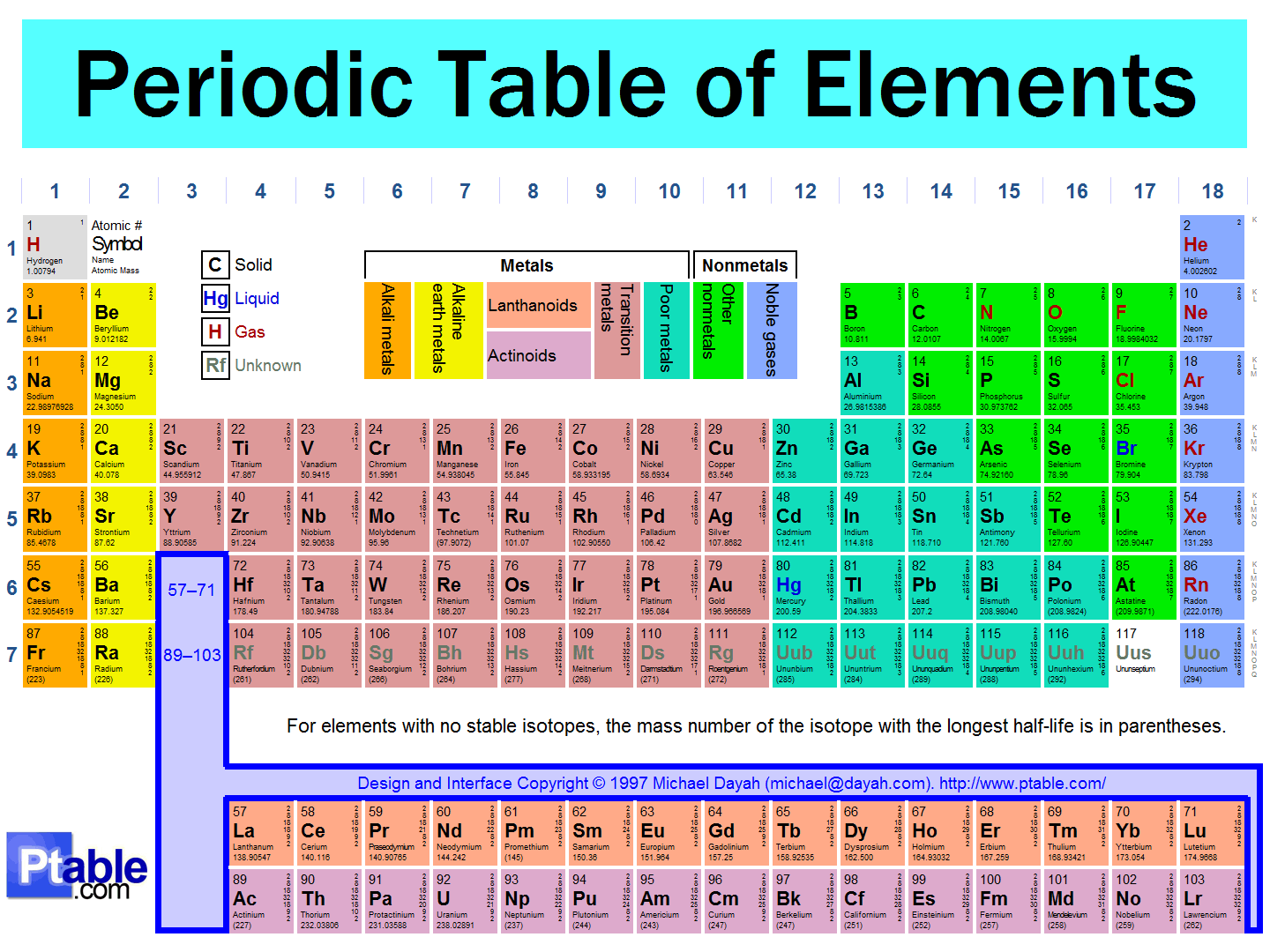
The vertical (up and down) columns in the Periodic Table are called families. They can also be called which of the following?
groups
towers
periods
atomic numbers
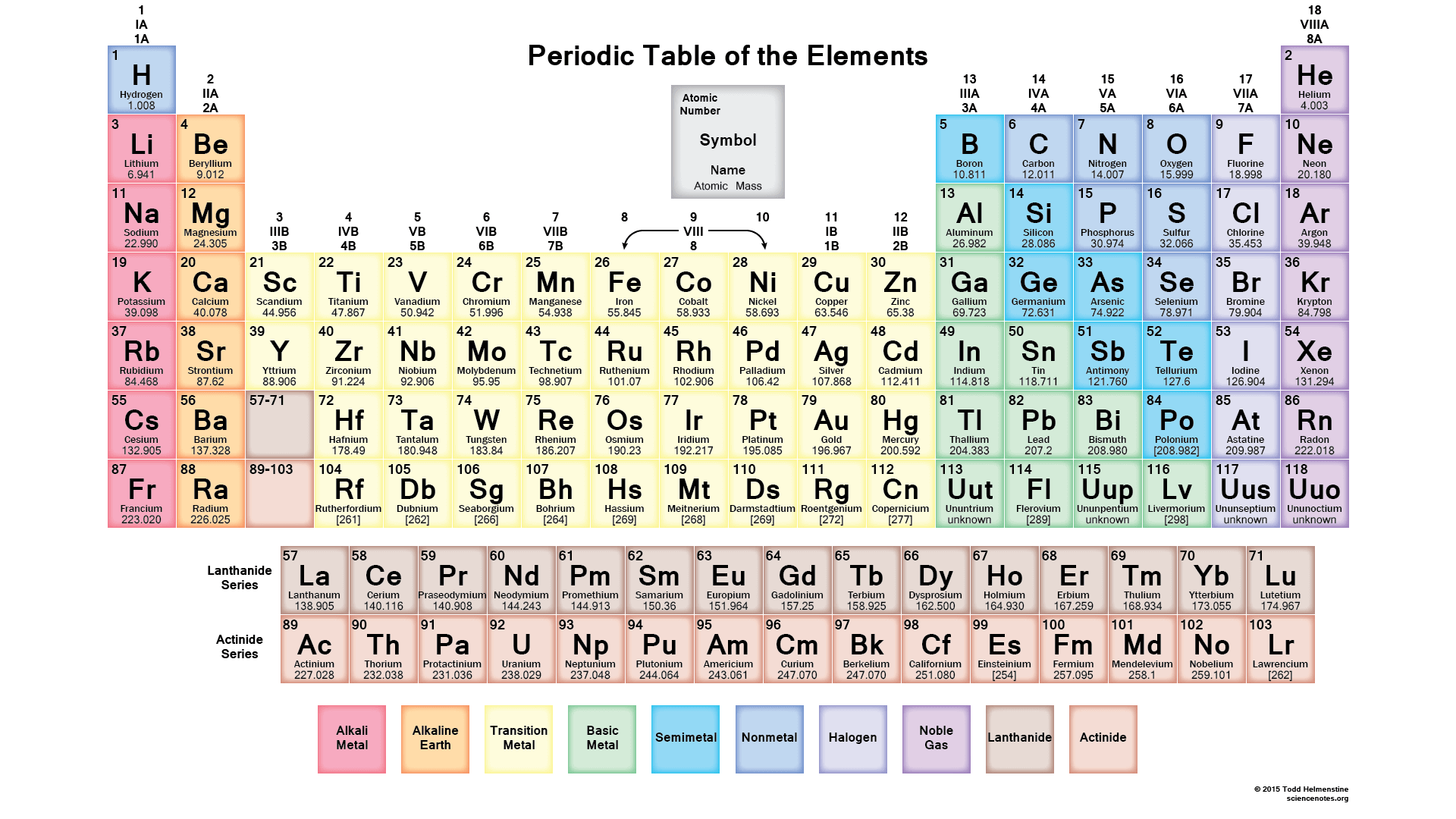
The atomic number can also tell you which of the following?
only the number of electrons
only the number of protons
only the number of neutrons
the number of both electrons and protons in an atom.
What is the name of group number 2?
transition metals
halogens
metaloids
alkaline earth
What is the big group of metals called found in the middle of the Periodic Table?
transition metals
nonmetals
noble gases
halogens
What group number are the halogens?
18
1
2
17
What group number are the noble gases?
17
18
14
15

The mass of an atom is found it its _____.
electron cloud
nucleus
atomic number
empty space
The air outside is considered a homogeneous mixture.
True
False

What is a change in which a new substance is NOT formed?
physical change
chemical change
color change
physical property

What is a combination of 2 or more substances that keep their identities?
physical property
mixture
physical change
chemical change

What is a mixture in which all the parts are EVENLY mixed?
energy
beaker
solution
salad

Which is NOT an example of a physical change?
wetting paper
burning a match
coloring a picture
mixing food coloring and water
Why is water known as universal solvent?
It is found anywhere.
It gives life to living things.
It covers the greater part of the earth.
It dissolves almost all the substances on Earth.

Are jello packets considered a solute or solvent?
solute
solvent
Is Brass a homogeneous mixture or a heterogeneous mixture?
Heterogeneous
Homogeneous
All atoms are most stable with (or would "prefer") how many electrons in their valence shell?
1
2
8
18
What groups are the most reactive metals?
2 and 3
1 and 18
1 and 2
16 and 17
What groups are the most reactive non metals?
1 and 2
16 and 17
2 and 17
1 and 16
Why are halogens so reactive?
They want to get rid of their only valance electron
They only need one more electron
They are non reactive, they have a full shell
As of 2018, how many elements are there?
100
110
115
118
What did Dmitri Medeleev invent?
Children
Periodic Table
Russian currency
Calculator
What are the three main groups of the periodic table?
groups
metal
nonmetals
metalloids
periods

How well a substance can be hammered into sheets.
Malleability
Conductivity
Luster
Magnetic
How well a substance allows heat or electricity to flow through it.
Malleablility
Conductivity
Luster
Ductile
How well a substance reflects light.
Malleability
Conductivity
Luster
Ductile
any characteristic of matter that you can observe without changing the identity of the substances that make it up
physical property
chemical property
periodic table
conglomerate
a characteristic of matter you observe as it reacts or changes into a different substance
physical property
chemical property
periodic table
conglomerate
the mass per unit volume of a substance
mass
weight
volume
density
the ability of one material to dissolve in another
solubility
boiling point
melting point
state of matter
the temperature at which a solid changes to a liquid
solubility
boiling point
melting point
state of matter
the temperature at which a liquid changes to a gas
solubility
boiling point
melting point
state of matter
the ability to be drawn out or pulled into wires
magnetism
malleability
ductility
electrical conductivity

