
 Worksheets
7.6DE Aqueous Solutions
Total questions: 78
Worksheet time: 1hrs 15mins
You can make a solution more concentrated by adding more __________.
solution
Avery is conducting a science experiment. When water is added to a solution it is called a ______________
dilution
concentration
heterogeneous solution
dissociation

Aria is making lemonade. She adds sugar to the water. The sugar is a
solute
solution
science

solute
solvent

solvent
solution
solute

solvent
solute
In Michael's science experiment with salt water, NaCl (salt) would be considered the ______.
Solution
Solute
Solvent
Solvation
Kool-Aid - Powder, sugar, and water
Identify the solvent
water
powder
sugar
powder and sugar
What is a solvent
A liquid that will dissolve a solid solute
Another word for solution
A thing that make drinks change colour
Usually the solid about to be dissolved
Define Concentration
It is the ratio of the amount of a "solute" compared to the amount of a "solvent" in a solution.
It is the ratio of the amount of a "solvent" compared to the amount of a "solution" in a "solute"
It is the ratio of the amount of a base substance compared to an acid substance in a solution.
It is the ratio of the number of "moles" in a solution compared to the "molarity".
What does it mean when a solution is dilute?
low or weak concentrated solution
high or strong concentrated solution
solution that will react with dark metals
solution that will react with light metals
What is the main difference between a solution and a mixture?
Solutions can only be liquids, while mixtures can be in any state of matter
Solutions are always clear, while mixtures are cloudy
Solutions are homogeneous, while mixtures can be heterogeneous
Mixtures can be separated by physical means, while solutions cannot
Matter is separated into two categories:
elements and solutions; mixtures and energy
elements and atoms; molecules and compounds
pure substances and mixtures
solids and liquids; gases and plasma
Which answer choice correctly outlines the differences between pure substances and mixtures?
pure substances cannot be separated physically while mixtures can be separated physically.
pure substances can be separated physically while mixtures cannot be separated physically
pure substances and mixtures both can be separated physically.
Neither pure substances and mixtures cannot be separated physically.
A is a combination of two or more substances that are not chemically bonded and can be separated by physical means. (a)
There are two types of mixtures (a) (b)
A _ is a mixture that is made up of two or more substances that are uniform(same) throughout.
(a)
Which of the following answer choices IS NOT an example of a homogeneous mixture?
coffee
lemonade
blood
reese's peanut butter cup ice cream
Air, gasoline, milk, and salt water are examples of homogeneous mixtures. (a) (b) (c) (d)
Which of the following answer choices all listed as homogeneous mixtures? Choose all that apply.
solution
solvent
solute
molecule
Mr. Devers poured water in a cup to drink. He started to drink the liquid then he added some yellow lemonade powder as he mixed both together. What would the yellow lemonade powder be called in this mixture?
solute
solvent
pure substance
molecule
Water that dissolves salt in salt water is called (a) ?

The white power is the (a) and the water is the (b)
________ mixture is a mixture that is made up of two or more substances that are not uniformed throughout.
pure substances
homogeneous
heterogeneous
elements
Which of the following answer choices are examples of heterogeneous mixtures? Choose all that apply.
fruit salad
soil
cereal in milk
blood
Choose only examples of heterogeneous mixtures. Choose all that apply.


Which of the following cannot be separated physically? Choose all that apply.
oxygen
carbon
bananas in oatmeal
nitrogen
What does soda, air, milk, and brass have in common?
all are examples homogeneous mixtures
all are examples heterogeneous mixtures
air and brass are homogeneous and milk and soda are heterogeneous mixtures
Neither are examples of homogeneous or heterogeneous mixtures.
(a) anything that has mass and takes up space.
A group of atoms that are bonded together are called______?
volume
matter
atoms
molecules
(a) (b) Matter that cannot be separated physically are and substances can be separated physically are.
liquids
solids
gases
gatorade
air
coffee
pizza
chocolate chip brownie
salad
metals
non-metals
metalloids

A student is preparing solutions for a laboratory experiment by dissolving solid solutes in liquid solvents. Which action will increase the rate of solubility
lowering the temperature of the solvent
stirring the solute in the solution
increasing the pressure on the solution
increasing the particle size of the solute
What is the effect of agitation on the rate of dissolving?
It decreases the rate of dissolving
It has no effect on the rate of dissolving
It increases the rate of dissolving
It changes the color of the solute
to stir, shake or disturb something.
solubility
agitation
surface area
rate of dissolution
The maximum amount of a substance that can dissolve in a liquid.
solubility
agitation
dilution
concentration
A solution where water is the main liquid.
surface area
dissolution
aqueous solution
agitation
The amount of a particular substance in a given amount of a mixture.
Concentration
Dissolution
Dilution
Agitation
When you make a solution less strong by adding more liquid.
Dilution
Solubility
Concentration
Aqueous Solution
The process of mixing a substance into a liquid so that it is dissolved.
Concentration
Dissolution
Solubility
Solvent
The amount of area covered by the surface (outside) of an object.
Rate of Dissolution
Surface Area
Concentration
Agitiation
How fast a substance dissolves in a liquid.
Rate of Dissolution
Surface Area
Aqueous Solution
Solubility
What are the factors that affect the rate of dissolution?
pH, viscosity, and conductivity
Time, density, and mass
Temperature, surface area, agitation, concentration, and the nature of the solute and solvent.
Pressure, color, and volume
How does temperature affect the rate of dissolution?
Temperature affects the rate of dissolution by increasing or decreasing the kinetic energy of the solvent molecules, which affects the frequency of collisions with the solute.
Temperature decreases the frequency of collisions between solvent and solute
Temperature only affects the solute, not the solvent
Temperature has no effect on the rate of dissolution
Explain the effect of surface area on the rate of dissolution.
Surface area has no effect on the rate of dissolution.
The rate of dissolution decreases with an increase in surface area.
The rate of dissolution increases with an increase in surface area.
The rate of dissolution remains constant regardless of surface area.
What is the impact of stirring on the rate of dissolution?
Stirring causes the substance to solidify instead of dissolve.
Stirring decreases the rate of dissolution.
Stirring increases the rate of dissolution.
Stirring has no impact on the rate of dissolution.
Define solubility and explain its relationship with the rate of dissolution.
Solubility is the ability of a substance to solidify in a solvent, while the rate of dissolution refers to how quickly a solute solidifies in a solvent.
Solubility is the ability of a substance to dissolve in a solvent, while the rate of dissolution refers to how quickly a solute dissolves in a solvent.
Solubility is the ability of a substance to evaporate in a solvent, while the rate of dissolution refers to how quickly a solute evaporates in a solvent.
Solubility is the ability of a substance to condense in a solvent, while the rate of dissolution refers to how quickly a solute condenses in a solvent.
Which factor has the greatest influence on the rate of dissolution: temperature, surface area, or stirring? Justify your answer.
Humidity
Temperature
Pressure
Color
What happens to the rate of dissolution when the temperature is increased? Why?
The rate of dissolution is not affected by temperature.
The rate of dissolution decreases when the temperature is increased.
The rate of dissolution remains the same when the temperature is increased.
The rate of dissolution increases when the temperature is increased.
How does increasing the surface area of a solute affect the rate of dissolution? Provide an example.
Increasing the surface area of a solute only affects the color of the solution.
Increasing the surface area of a solute has no effect on the rate of dissolution.
Increasing the surface area of a solute increases the rate of dissolution.
Increasing the surface area of a solute decreases the rate of dissolution.
Why does stirring increase the rate of dissolution? Explain with a suitable example.
Stirring increases the rate of dissolution by adding more solute to the solvent.
Stirring increases the rate of dissolution by decreasing the contact between the solute and the solvent.
Stirring increases the rate of dissolution by increasing the contact between the solute and the solvent.
Stirring increases the rate of dissolution by changing the temperature of the solvent.
How does the solubility of a substance affect its rate of dissolution? Provide an example.
The solubility of a substance directly affects its rate of dissolution. The more soluble a substance is, the faster it will dissolve.
The rate of dissolution is determined by the color of the substance
The less soluble a substance is, the faster it will dissolve
The solubility of a substance has no effect on its rate of dissolution
What is the impact of temperature on the rate of dissolution? Explain with an example.
The rate of dissolution decreases with an increase in temperature.
The rate of dissolution increases with an increase in temperature.
Temperature has no impact on the rate of dissolution.
The rate of dissolution remains constant with an increase in temperature.
How does agitation affect the rate of dissolution? Provide a suitable example.
Agitation has no effect on the rate of dissolution.
Agitation decreases the rate of dissolution by reducing the surface area of the solute that is exposed to the solvent.
Agitation increases the rate of dissolution by increasing the surface area of the solute that is exposed to the solvent.
Agitation causes the solute to solidify and prevents dissolution.
Why does the rate of dissolving increase as the temperature increases?
The solute molecules move faster at higher temperatures
The solute particles become smaller at higher temperatures
The solvent molecules become slower at higher temperatures
What is the effect of agitation on the rate of dissolving?
What is the effect of agitation on the rate of dissolving?
It decreases the rate of dissolving
It has no effect on the rate of dissolving
It increases the rate of dissolving
It changes the color of the solute
How does agitation help in dissolving a solute more quickly?
It increases the temperature of the solvent
It increases the weight of the solute
It brings fresh solvent into contact with undissolved solid
It changes the shape of the solvent
Why does a solute with a larger surface area dissolve faster?
It has more solute surface area in contact with the solvent
It has fewer solute particles in contact with the solvent
It has a higher temperature compared to other solutes
It has a different color compared to other solutes

What is the difference in dissolving time between a sugar cube and a teaspoon of granular sugar?
The sugar cube dissolves faster
The teaspoon of granular sugar dissolves faster
Both dissolve at the same rate
The dissolving time depends on the temperature of the solvent
What can increase the rate of dissolving even further?
Using a solute with a larger particle size
Using a solute with a smaller particle size
Decreasing the temperature of the solvent
Decreasing the agitation of the mixture
The finer the particles or the more surface area that is exposed, the slower the rate of dissolving.
True
False
Joe set up an experiment to determine if the temperature of the solvent has an affect on the rate of dissolution. Identify the trial that will dissolve the quickest.
You want to make chocolate milk using Hershey's syrup. How could you speed up the rate of the syrup dissolving in your milk?
Put the syrup in the fridge to cool before putting it in the milk
Put the syrup in the milk and let it sit
Increase the amount of syrup you put into the milk
Warm up the syrup before putting it into the milk
What combination would dissolve a solid solute the fastest?
high temperature, no stirring
no heat, no stirring
sugar cube, no heat
high temperature, stirring
How does cold water affect the speed of dissolving?
Cold water slows down dissolving.
Cold water speeds up dissolving.
Cold water has no effect on dissolving.
Cold water has no effect on dissolving.
John has three cups of sugar particles. Cup 1 has large sugar particles, Cup 2 has medium-sized particles, and Cup 3 has small sugar particles. If John pours each cup in water, which cup of sugar particles will dissolve the fastest?
Cup 1 will dissolve the fastest.
Cup 2 will dissolve the fastest.
Cup 3 will dissolve the fastest.
They will dissolve at the same rate.
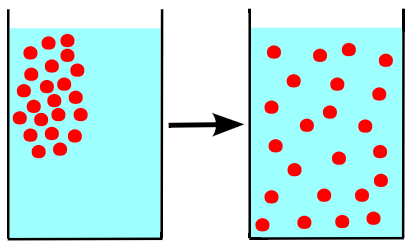
Which would dissolve faster?
stirring sugar and water 30 times per minute
stirring sugar and water 10 times per minute
What is the rate of dissolving?
How fast a solute dissolves in a solvent
The amount of solute that can dissolve in a solvent
The temperature at which a solute dissolves
The size of the solute particles

