wayground logo

Free Printable Worksheets

NEW

Font size

S
M
L
XL
Worksheets

Moon Phases, Tides & Eclipses

Total questions: 70

Worksheet time: 55mins

Name
Class
Date
1.
During the phases of the Moon, the Moon appears to change shape.  This change in appearance is due to the Moon...
a)
physically changing size and shape.
b)
moving closer and then farther away from Earth.
c)
reflecting a different amount of light due to alignment with Earth and the Sun.
d)
having craters on its surface.
2.
What part of the moon do we see from Earth?
a)
all of it
b)
the same side
c)
none of it
d)
only one quarter
3.
The moon seems to change shape from day to day in a cycle that lasts about a month as it goes through _.
a)
revolutions
b)
phases
c)
rotations
d)
eclipses
4.
As the moon's shape appears to get smaller, we say that the moon is _.
a)
swelling
b)
waxing
c)
waning
d)
disappearing
5.
About how long does it take the moon to make one complete cycle around the earth?
a)
65 days
b)
8 days
c)
365 days
d)
28 days
6.
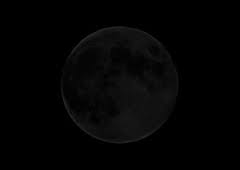
Which moon phase is when you can't see the moon at all?
a)
Waning crescent
b)
Full moon
c)
Waxing gibbous
d)
New moon
7.
What causes the phase of the Moon to change each night?
a)
The Moon changes its acutal shape throughout the course of the month.
b)
The alignment between the Earth, Moon, and Sun determines the amount of light reflected by the Moon.
c)
The season of the year determines the phase of the Moon.
d)
The closer the Moon is to Earth, the more light the Moon reflects.
8.
Phases of the moon in which the moon appears to be getting larger are referred to as _.
a)
waxing
b)
waning
c)
new
d)
eclipse
9.
The cycle of the moon lasts about a _.
a)
day
b)
year
c)
week
d)
month
10.
Which of the following words describe the phases of the moon?
a)
none, quarter, half, three quarters, full
b)
new, crescent, quarter, gibbous, full
c)
dark, light, half, quarter, blue
d)
first quarter, second quarter, third quarter, fourth quarter
11.
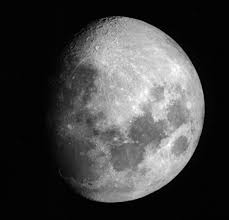
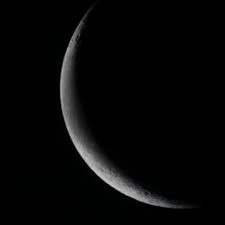
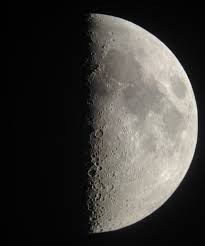
Name the moon phase
a)
waning crescent
b)
waxing crescent
c)
waning gibbous
d)
waxing gibbous
12.
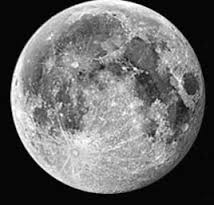
Name the moon phase
a)
waning crescent
b)
waxing crescent
c)
waning gibbous
d)
waxing gibbous
13.
Name the moon phase
a)
waning crescent
b)
waxing crescent
c)
waning gibbous
d)
waxing gibbous
14.
Name the moon phase
a)
waning crescent
b)
waxing crescent
c)
waning gibbous
d)
waxing gibbous
15.
Name the moon phase
a)
waning crescent
b)
waxing crescent
c)
waning gibbous
d)
waxing gibbous
16.
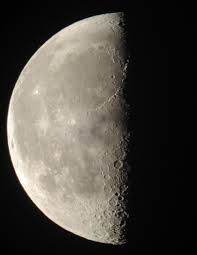
Name the moon phase
a)
First Quarter
b)
Last Quarter
c)
New Moon
d)
Full Moon
17.
Name the moon phase
a)
First Quarter
b)
Last Quarter
c)
New Moon
d)
Full Moon
18.
Name the moon phase
a)
First Quarter
b)
Last Quarter or (third quarter)
c)
New Moon
d)
Full Moon
19.
Name the moon phase
a)
First Quarter
b)
Last Quarter
c)
New Moon
d)
Full Moon
20.
Name the moon phase that would come AFTER this moon.
a)
waning crescent
b)
waxing crescent
c)
waning gibbous
d)
waxing gibbous
21.
What moon phase came right BEFORE this one?
a)
First Quarter
b)
Last Quarter
c)
New Moon
d)
Full Moon
22.
What is the difference between a gibbous moon and a crescent moon?
a)
The gibbous shows more than half of the bright side of the moon.
b)
The crescent shows more than half of the bright side of the moon.
c)
The gibbous shows less than half of the bright side of the moon. 
23.
How many phases does the moon go through?
a)
4
b)
8
c)
10
d)
16
24.
Name the moon phase that would come AFTER this moon.
a)
waning crescent
b)
waxing crescent
c)
waning gibbous
d)
waxing gibbous
25.
Name the moon phase
a)
First Quarter
b)
Last Quarter
c)
New Moon
d)
Full Moon
26.
CHALLENGE
When the moon is lined up exactly between the sun and Earth, it is called a ______ ______. 
a)
Solar Eclipse
b)
Lunar Eclipse
27.

What type of eclipse is this an example of?

a)

Lunar Eclipse

b)

Solar Eclipse

28.

What type of eclipse is this an example of?

a)

Lunar Eclipse

b)

Solar Eclipse

29.

What type of eclipse is this an example of?

a)

Lunar Eclipse

b)

Solar Eclipse

30.

What type of eclipse is this an example of?

a)

Lunar Eclipse

b)

Solar Eclipse

31.

The order for a solar eclipse is Sun, Moon, Earth.

a)

True

b)

False

32.

The moon phase for a solar eclipse is a full moon.

a)

True

b)

False

33.

A solar eclipse happens during the day.

a)

True

b)

False

34.

A solar eclipse is visible in large areas (big umbra).

a)

True

b)

False

35.

You are only able to view a solar eclipse with solar glasses.

a)

True

b)

False

36.

The order for a lunar eclipse is Sun, Moon, Earth.

a)

True

b)

False

37.

The moon phase for a lunar eclipse is a full moon.

a)

True

b)

False

38.

A lunar eclipse is visible in large areas (big umbra).

a)

True

b)

False

39.

You are unable to view a lunar eclipse with your eyes.

a)

True

b)

False

40.

A _________________ is the blocking of the Sun's light that occurs during a new moon when the moon's shadow falls on earth.

a)

solar eclipse

b)

lunar eclipse

c)

umbra

d)

penumbra

41.

A _______________ is the blocking of sunlight to the moon; occurs when the moon passes through earth's shadow.

a)

solar eclipse

b)

lunar eclipse

c)

umbra

d)

penumbra

42.

A __________________ is an eclipse visible from Earth from inside the Moon's umbra; occurs when the Sun's entire disk--except for the corona----is blocked by the new moon.

a)

total solar eclipse

b)

total lunar eclipse

43.

A __________ is an eclipse in which the entire disk of the full moon is covered by earth's umbra.

a)

total solar eclipse

b)

total lunar eclipse

44.

An ____________ is the inner, darker part of a shadow.

a)

penumbra

b)

umbra

45.

A __________ is the lighter, outer part of a shadow cone.

a)

penumbra

b)

umbra

46.

What causes an eclipse of the sun?

a)

When the sun is between moon and earth

b)

When the moon is in between earth and sun

c)

When the earth is in between moon and sun

d)

When sun, moon and earth creates a right angle position

47.

What causes an eclipse of the moon?

a)

When the sun is between moon and earth

b)

When the moon is in between earth and sun

c)

When the earth is in between moon and sun

d)

When sun, moon and earth creates a right angle position

48.

An eclipse occurs when one object in space moves in the ___________ of another.

a)

reflection

b)

shadow

c)

orbit

d)

rotation

49.

A lunar eclipse occurs at which moon phase?

a)

quarter moon

b)

new moon

c)

crescent moon

d)

full moon

50.

A lunar eclipse occurs about

a)

once in 3 years

b)

twice a year

c)

once a month

d)

once in 5 years

51.

Since some light is filtered through Earth's atmosphere during a lunar eclipse, the moon will appear

a)

red

b)

orange

c)

blue

d)

yellow

52.

During a lunar eclipse

a)

Earth's shadow covers the moon

b)

the sun's shadow covers the moon

c)

the moon covers the sun

d)

Earth's shadow covers the sun

53.

A lunar eclipse can only occur during

a)

a gibbous moon

b)

a new moon

c)

a full moon

d)

a crescent moon

54.

What is being shown in the diagram?

a)

Solar Eclipse

b)

Lunar Eclipse

c)

Full Moon

d)

Supernova

55.

What is shown in the diagram?

a)

Solar Eclipse

b)

Lunar Eclipse

c)

New Moon

d)

Nebula

56.
A[n] ___________ tide occurs when the sun, Earth, and the moon are nearly in a line. 
a)
spring
b)
high
c)
low
d)
neap
57.
What is a difference between spring and neap tides?
a)
Spring tides occur when the earth and sun are IN LINE with the new or full moon. 
b)
Spring tides occur when moon in 3rd or 1st quarter phases
c)
Spring tides are LOWER than neap tides
d)
Spring tides occur in Spring and neap tides can occur in any season
58.
Which body has the greater effect on Earth's tides?
a)
Sun
b)
Saturn
c)
Moon 
d)
Venus
59.
What do we call tides that have a smaller range that happen when the sun and moon are at right angles to each other?
a)
Neap Tide
b)
Spring Tide
c)
Larger Change
d)
Smaller Change
60.
What type of tides would this arrangement of earth-moon-sun create?
a)
neap tide
b)
spring tide
c)
new moon tide
d)
full moon tide
61.
What type of tide would this arrangement of earth-moon-sun create?
a)
full moon tide
b)
new moon tide
c)
neap tide
d)
spring tide
62.
What causes tides?
a)
gravity
b)
wind
c)
spring
d)
neap
63.
At the same time the sea is drawn to the moon, another tidal bulge takes place on other side of Earth.  True or False?
a)
True
b)
False
c)
Maybe
d)
I don't know!
64.

Tides are caused by what force from the sun and moon?

a)

gravitational

b)

strong

c)

tidal force

d)

armed forces

65.

As the moon revolves around the earth, the water follows the motion and causes...

a)

sea levels

b)

waves and currents

c)

moon phases

d)

high tides and low tides

66.

High tides and low tides each happen _____ times per day.

a)

4

b)

2

c)

1

d)

24

67.

Neap tides happen at _________ and _________ phases of the moon.

a)

first quarter and new moon

b)

last quarter and full moon

c)

waxing and waning

d)

1st quarter and 3rd quarter

68.

During a neap tide, the sun, moon, and earth are at a ___________ angle.

a)

360 degree

b)

23.5 degree

c)

45 degree

d)

90 degree

69.
darkest, innermost part of the shadow
a)
penumbra
b)
umbra
70.
lighter, outer part of the shadow
a)
penumbra
b)
umbra