
 Worksheets
EOY review
Total questions: 67
Worksheet time: 2hrs 14mins

What do all waves transfer?
Matter
Heat
Electricity
Energy
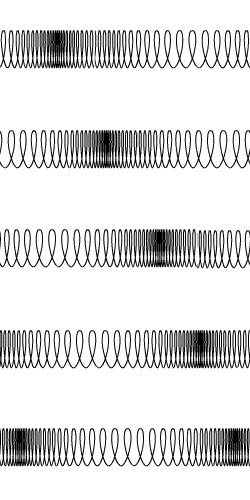
What type of wave is this?
Longitudinal
Transverse
Electromagnetic
x ray
Analog signals are:
continuous
discrete
_____ signals use 0s and 1s
digital
analog
_____ signals have greater resolution.
digital
analog
____ signals are more reliable.
digital
analog


A runner races in the 100 meter dash. It takes her 10 seconds to finish. What is her average speed?
10 m/s
1000 m/s
100 seconds
10 seconds
Speed -
A measure that gives rate of change and position
A measure that dissolves to one unit
A measure of distance an object travels per unit of time.
A measure of distance an object travels per unit of measurement.

When a car goes around a corner at 20 mph, why do we say it accelerates?
The car is accelerating because of the velocity is constant
Cars always accelerate when they are in motion
The car is accelerating because it's changing direction
The car accelerates because it's going 20 mph
Acceleration only takes place when things speed up.
true
false
The type of heat transfer that creates currents in water is called
conduction
radiation
convection
Material that does not transfer heat easily
Conductor
Convection
Radiation
Insulator
Material that transfer heat easily
Conductor
Radiation
Convection
Insulator

This picture shows ________ energy
Potential
Kinetic

This picture shows ________ energy
Potential
Kinetic

This picture shows _____ energy.
mechanical
chemical
thermal
electrical
electromagnetic

This picture shows _____ energy.
mechanical
chemical
thermal
nuclear
electromagnetic
The ability to do work and cause change.
force
motion
energy
mechanics
Which of these are parts of the atom?
Protons, ProAthletes, Neutrons
Neutrons, Protons, Electrons
Mitochondria, Electrons, Protons
Oxygen
Which of these has a negative charge?
Proton
Neutron
Electron
Oatmeal
Which charge does a proton have?
Neutral
Negative
No charge- battery is dead
Positive
any characteristic of matter that you can observe without changing the identity of the substances that make it up
physical property
chemical property
periodic table
conglomerate
a characteristic of matter you observe as it reacts or changes into a different substance
physical property
chemical property
periodic table
conglomerate
the amount of matter in an object
mass
weight
volume
density

Why does Light bend when it goes from air to water?
Because it collides with the water molecules as it enters water
Because speed of light changes from air to water
Because water is denser than air it is easier for the light to move from particle to particle
Because as it enters the water Light reflects from molecule to molecule


How do you find the net force of this image.
Add up all the arrows
Add a green arrow and the orange arrow.
Subtract all the arrows.
Add the green arrows and subtract the orange arrow.
What is Force?
A pull exerted on an object
A push exerted on an object
A push or pull exerted on an object
Nothing

In an endothermic reaction, energy is _________.
absorbed
released
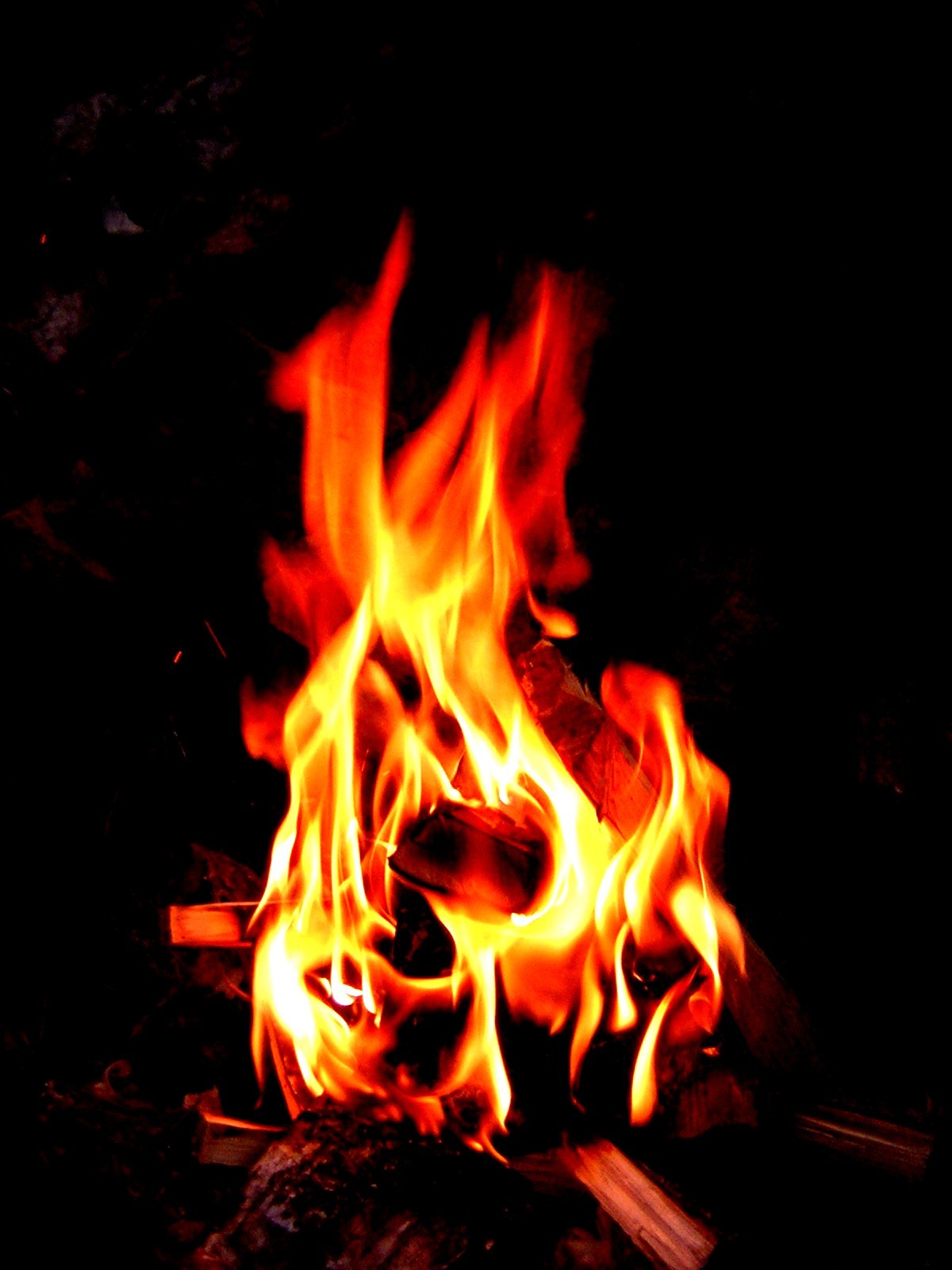
_____ reactions usually feel hot!
endothermic
exothermic
Which of the following is true as you go from a solid to a gas?
The atoms decrease in speed
The atoms move closer together
The atoms increase in speed
The atoms do not change

Look at the picture. Which state of matter is in beaker A?
Solid
Liquid
Gas
Blue thingys
Look at the picture. Which state of matter is in beaker C?
Solid
Liquid
Gas
Blue thingys

What kind of waves can move through a vacuum?
Electromagnetic waves
Mechanical waves
In general, the more energy a wave has the greater the amplitude.
True
False
The amount of energy that is transferred by a wave in an amount of time is
qual to the wave’s speed.
equal to the wave’s frequency.
proportional to the wave’s speed.
proportional to the wave’s frequency.
If a solid that has a mass of 25 grams melts, it should result in a _______ with a mass of _______ grams.
liquid; 0
liquid; 25
solid; 25
gas: 0

The law of conservation of mass says substances can neither be _______ nor ___________.
Built; torn down
Blended together; separated
Created; destroyed
Condensed; extracted
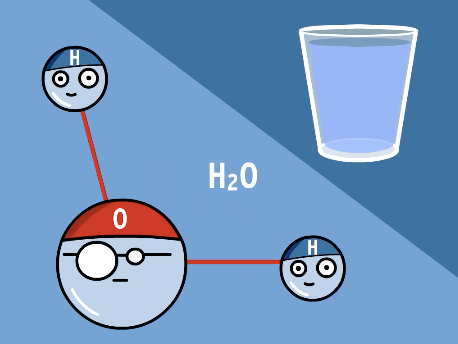
4 grams of hydrogen and 32 grams of oxygen will combine to form:
36 grams of water
28 grams of hydroxide
32 grams of oxygen
36 grams of deuterium
Materials made by humans through chemically changing natural resources are called?
Nonrenewable Resources
Synthetic Materials
Renewable Resources
Natural resources are?
Resources that exist within the environment without humans having to intervene, or put them there.
Resources that exist within the environment through due to human actions.
Organic substrates found deep within the earth's lithosphere

What kind of mixture is shown in the picture?
Homogeneous
Heterogeneous

What kind of mixture is shown in the picture?
Homogeneous
Heterogeneous

