wayground logo

Free Printable Worksheets

NEW

Font size

S
M
L
XL
Worksheets

Unit 7 - Investigating Organisms and Environments

Total questions: 71

Worksheet time: 3hrs 39mins
Name
Class
Date
1.
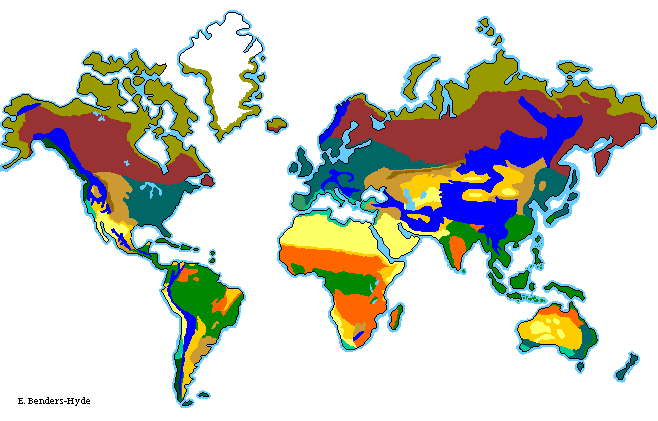
A large ecosystem is called a ______
a)
Ecosystem
b)
Habitat
c)
Biome
d)
Niche
2.
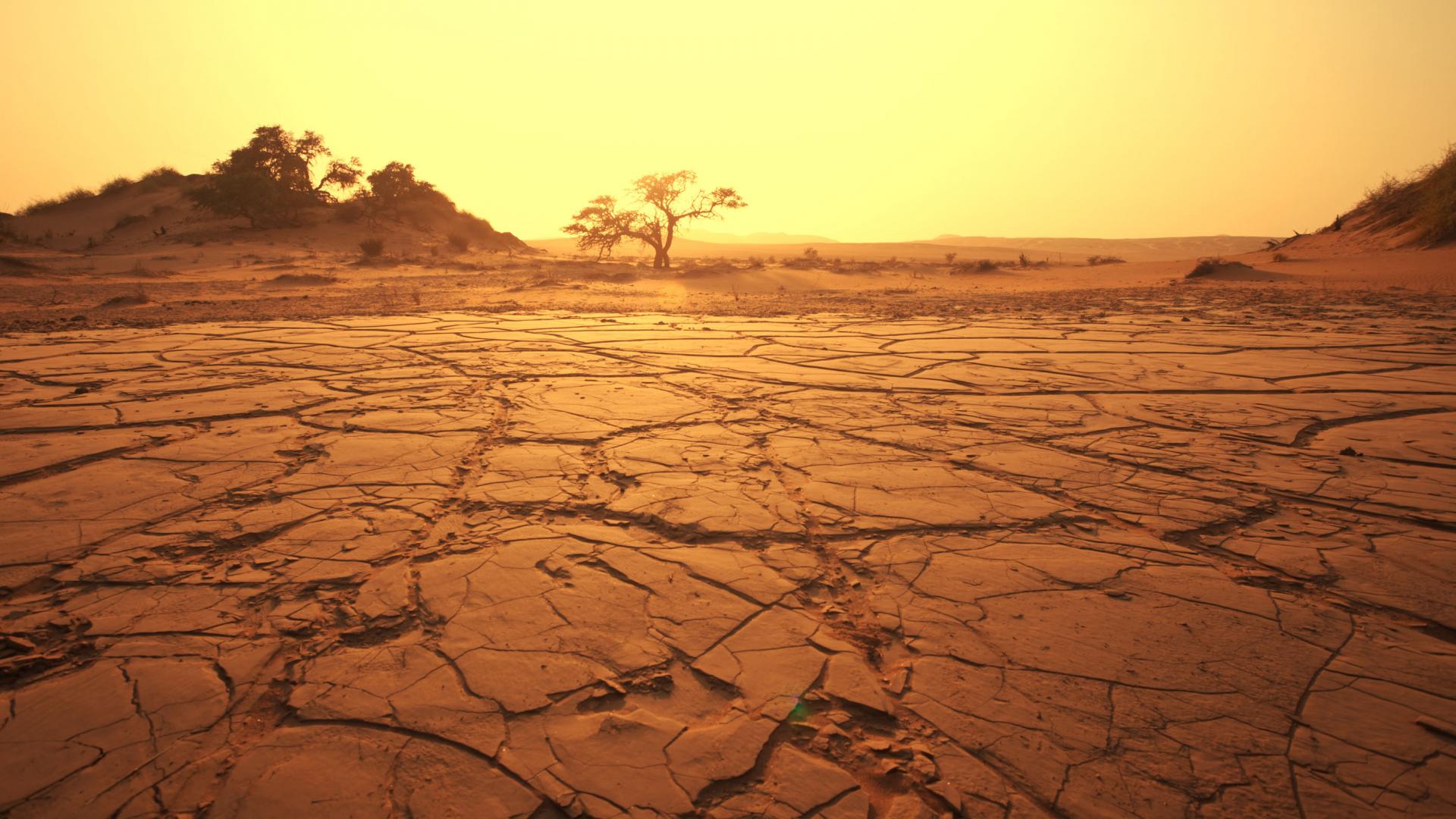
Which biome is the driest?
a)
Desert
b)
Tundra
c)
Taiga
d)
Rainforest
3.
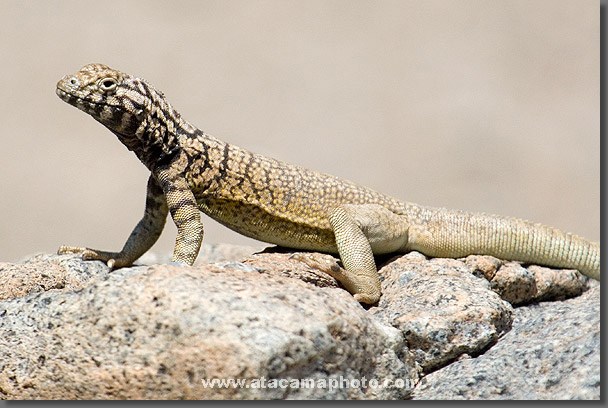
Which biome is home to cacti, scorpions, coyotes, kangaroo rats, and lizards?
a)
Desert
b)
Grasslands
c)
Temperate Forest
d)
Taiga
4.
The rainforest has the greatest variety of different organisms that live there. In other words, the rainforest has the greatest ______.
a)
speciation
b)
biodiversity
c)
climate
d)
succession
5.
When biodiversity goes up...
a)
sustainability stays the same
b)
sustainability goes down
c)
sustainability goes up
d)
sustainability is unaffected
6.
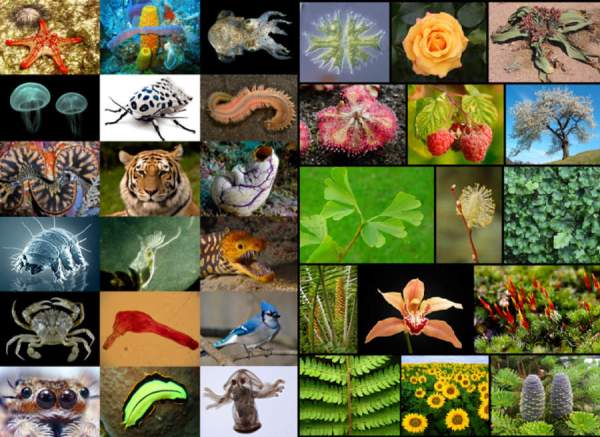
What does biodiversity mean?
a)
Only one species in an area.
b)
The different amount of species in an area
c)
All abiotic life
d)
Nitrogen fixation
7.
All living and nonliving things in an environment and the many ways they interact are called ______
a)
ecosystem
b)
community
8.
Where does the energy from an ecosystem come from?
a)
Trees
b)
Sun
c)
Plants
d)
Water
9.
Which biome is more biodiverse?
a)
Desert
b)
Sand
c)
Tundra
d)
Rainforest
10.
 Which biome is more likely to survive a change in the environment?
a)
High (rich) biodiversity
b)
Low (poor) biodiversity
11.

Biodiversity is important for the ____________ of systems in nature.

a)

harmony

b)

stability

c)

peace

d)

happiness

12.

Which factor will negatively affect biodiversity?

a)
b)
c)
d)

All of the above

13.
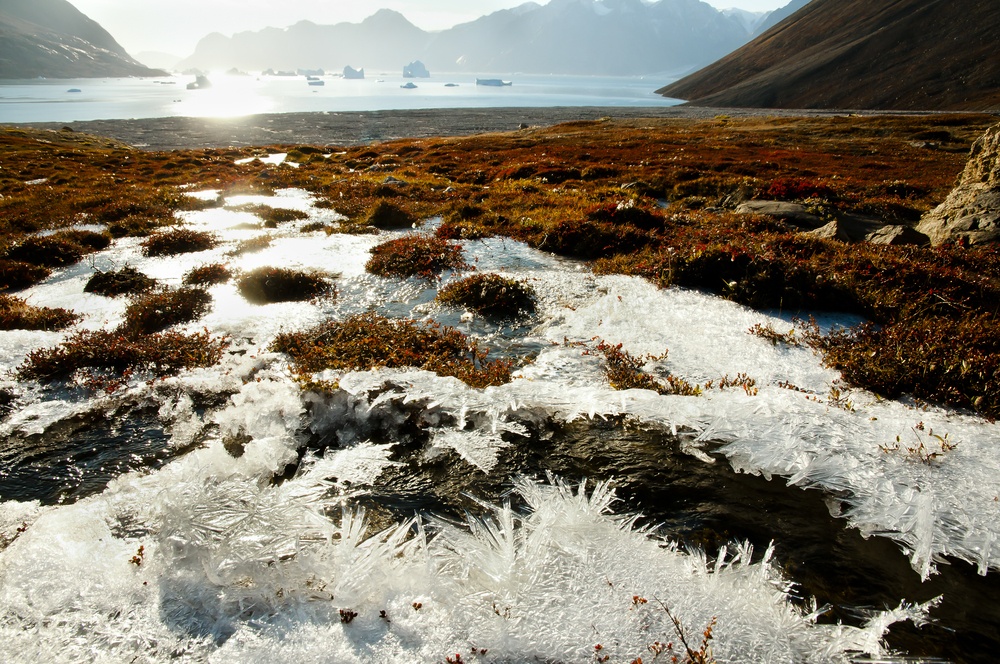
Which Biome has permafrost?
a)
Temperate Forest
b)
Rainforest
c)
Taiga
d)
Tundra
14.
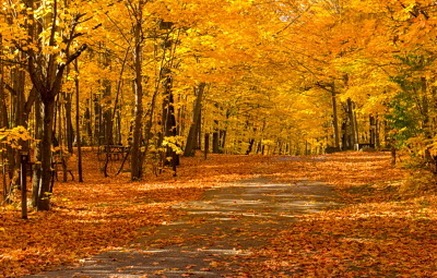
Which biome has deciduous trees (which lose their leaves)?
a)
Temperate Forest
b)
Rainforest
c)
Grasslands
d)
Taiga
15.
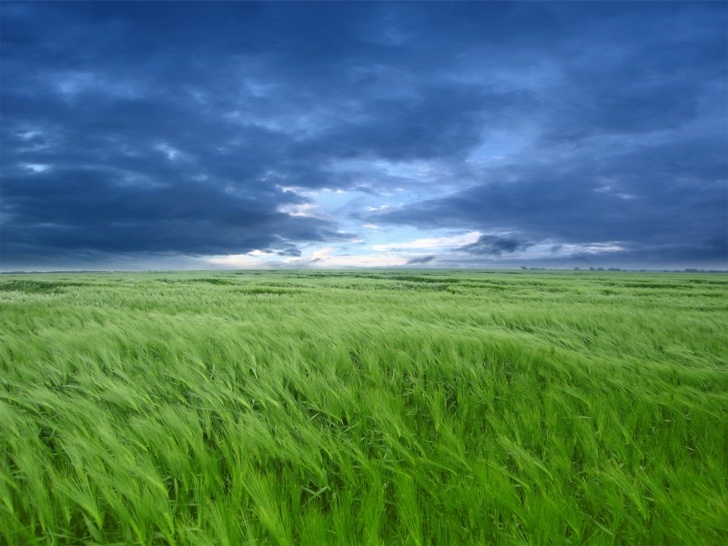
Which biome has wide-open fields of grass?
a)
Taiga
b)
Grasslands
c)
Temperate Forest
d)
Rainforest
16.
Which biome has the most variety of plants and animals?
a)
Temperate Forest
b)
Rainforest
c)
Tundra
d)
Grasslands
17.
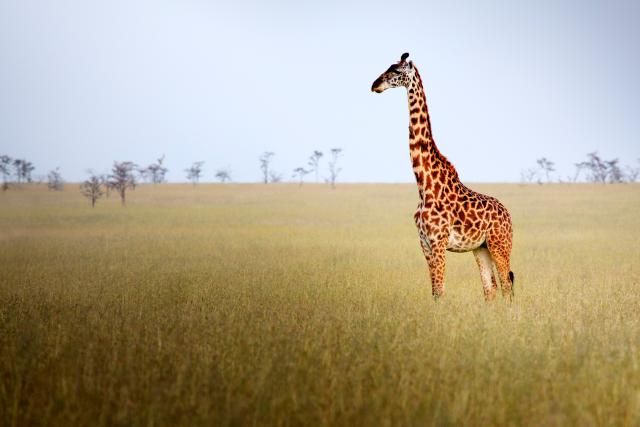
Which biome is home to lions, zebras, wildebeests, giraffes, and elephants?
a)
Grasslands
b)
Tundra
c)
Rainforest
d)
Temperate Forest
18.
Which biome is home to cacti, scorpions, coyotes, kangaroo rats, and lizards?
a)
Desert
b)
Grasslands
c)
Temperate Forest
d)
Taiga
19.
Which biome is home to jaguars, anacondas, leopards, gorillas, and poisonous tree frogs?
a)
Grasslands
b)
Temperate Forest
c)
Rainforest
d)
Tundra
20.
In which biome does an organism have to be able to conserve water to survive?
a)
Rainforest
b)
Taiga
c)
Desert
d)
Temperate Forest
21.
lichens, mosses, grasses, and other low-growing plants are common vegetation in this biome due to the permafrost, low rainfall, and very cold temperatures
a)
Desert
b)
Taiga
c)
Tundra
d)
Grasslands
22.
True of False?  
Animals that live in the desert have adapted to live with little water since the desert gets little rainfall.
a)
True
b)
False
23.
The earth's coldest biome is the....
a)
Antartica
b)
Grasslands
c)
Tundra
d)
Freshwater
24.
The climate in a tropical rain forest can be described as
a)
cold and wet 
b)
warm and dry 
c)
cold and dry 
d)
warm and wet 
25.
Which biome is characterized by low temperatures and low amounts of rainfall?
a)
Tundra
b)
Desert
c)
Temperate Deciduous Forest
d)
Tropical Rainforest
26.
The rainforest has the greatest variety of different organisms that live there. In other words, the rainforest has the greatest ______.
a)
speciation
b)
biodiversity
c)
climate
d)
succession
27.

High biodiversity = more _____

a)

stable

b)

unstable

28.

-located near the equator

-warm all year long

-receives lots of rainfall.

-many species of trees and plants

These characteristics best describe what major biome?

a)

Desert

b)

Grassland

c)

Rainforest

d)

Tundra

29.
Biodiversity refers to
a)
extinct species
b)
the variety of species on Earth
c)
nonrenewable resources
d)
the rate of species decline
30.
Sustainability refers to
a)
how many species are present in an ecosystem
b)
when a species goes extinct
c)
how long a species lives
d)
the ability to maintain ecological process over long periods of time.
31.
The higher the biodiversity, the more sustainable an ecosystem is.
a)
True
b)
False
32.
Which best explains why producers are at the beginning of all food chains?
a)
They turn dead animals into nutrients
b)
They provide shelter for smaller animals
c)
The transfer energy from the sun into food
33.
A drought has hit this grassland biome. How will this effect the rabbit population?
a)
The rabbits will increase in number.
b)
The rabbit population will stay the same.
c)
The rabbit population will decrease.
d)
The rabbit population will become extinct immediately.
34.
In a grassland ecosystem, lions prey on wildebeest. The population of lions has declined steadily because of illegal hunting. What will most likely happen to the population of wildebeest?
a)
The wildebeest population will increase
b)
The wildebeest population will decrease
c)
The wildebeest population will remian the same
35.
Field mice eat corn. Which would most likely happen if the field mouse population grew?
a)
There would be more corn to feed the field mice.
b)
There would be less corn due to the mice eating it.
c)
The habitat would get overpopulated because the mice woudl eat too much.
36.
In this tundra food web, if grasses were removed what would happen to the sustainability of the ecosystem?
a)
There would be an overpopulation of arctic hares and lemmings.
b)
Polar bears would move to a new ecosystem
c)
The ecosystem would collapse because it lost its main producer
d)
Wildflowers would die out from the ecosystem
37.
Humans are not affected by the biodiversity of ecosystems.
a)
True
b)
False
38.

Which is a biome with extremely low precipitation, extreme daily temperate variation, and sparse vegetation?

a)

Tropical Rainforest

b)

Taiga

c)

Tundra

d)

Desert

e)

Temperate Deciduous Forest

39.

Which is a biome with low annual rainfall and dominated by grasses?

a)

Tropical Rainforest

b)

Taiga

c)

Tundra

d)

Grassland

e)

Desert

40.

Which type of biome consists of moderate precipitation, cold and warm summers, and trees that drop their leaves?

a)

Tropical Rainforest

b)

Taiga

c)

Tundra

d)

Temperate Deciduous Forest

e)

Desert

41.

Which of the following biomes is best characterized by a permanently frozen ground, stunted trees, and various kinds of mosses and lichens?

a)

Tropical rainforest

b)

Taiga

c)

Tundra

d)

Deciduous forest

e)

Desert

42.

Which of the following statements about biodiversity is TRUE? (7.10B)

a)

More biodiversity →Less chance for an ecosystem to sustain itself

b)

More biodiversity →Better chance for an ecosystem to sustain itself

c)

More biodiversity →Less species in an ecosystem

d)

More biodiversity →More pollution in an ecosystem

43.

A scientist observed three very different ecosystems. Her observations are recorded in the table. Which ecosystem would be best able to sustain itself? (7.10B)

a)

Ecosystem “B” has too many different species to sustain itself.

b)

Ecosystem “C” has the best chance of sustaining itself because it has few species.

c)

Ecosystem “B” has the best chance of protecting itself from outside stress, compared to Ecosystem “A” and Ecosystem “C”.

d)

Ecosystem “A” has the best chance of protecting itself from outside stress, compared to Ecosystems “B” and Ecosystem “C”.

44.

Biodiversity contributes to the sustainability of an ecosystem because — (7.10B)

a)

all the organisms in the ecosystem have genetic material

b)

there is an increased chance for organisms to survive changes

c)

organisms are allowed to respond to internal and external stimuli

d)

the flow of energy in an ecosystem remains constant

45.

The Earth is losing certain species at an alarming rate. Why might this be a concerning issue? (7.10B)

a)

There would be more food for other species.

b)

It is not an issue.

c)

It can affect the water cycle.

d)

Species are connected so others could be affected.

46.

Which of the following best describes the relationship between biodiversity and a sustainable ecosystem? (7.10B)

a)

Having a less diverse ecosystem keeps abiotic factors from affecting the food chain.

b)

As biodiversity increases, sustainability decreases

c)

Increased biodiversity increases the sustainability of an ecosystem

d)

An ecosystem with low biodiversity is better able to recover from natural disasters.

47.

Sharks feed on a wide variety of prey animals and have low mortality rates. It is important that an ecosystem containing sharks contain a high degree of biodiversity. If an ecosystem containing sharks does not contain a high degree of biodiversity - (7.10B)

a)

the sharks will consume all of the members of key species and the ecosystem will no longer be sustainable

b)

the sharks will consume only the adult members of key species and the ecosystem will remain sustainable

c)

the sharks will consume only a few of the members of key species and the ecosystem will remain sustainable

d)

the sharks will consume only the immature members of key species and the ecosystem will no longer be sustainable

48.

The food webs model relationships among the organisms in two ecosystems. Which ecosystem would be more likely to survive if a disease killed the grasses? (7.10B)

a)

The forest ecosystem, because most of the animals can eat other organisms

b)

The grassland ecosystem, because several predators compete for food

c)

The forest ecosystem, because it has three top predators

d)

The grassland ecosystem, because it has many herbivores

49.

An organism that eats another organism to get energy

a)

Producer

b)

Consumer

c)

Decomposer

d)

Prey

50.

A diagram that shows how food chains are connected in an ecomsystem.

a)

food web

b)

food chain

c)

parasitism

d)

mutualism

51.

An organism that makes its own food through the process of photosynthesis.

a)

decomposer

b)

carnivore

c)

producer

d)

herbivore

52.

An organism that breaks down dead organisms and puts the nutrients back into the soil.

a)

consumer

b)

producer

c)

decomposer

d)

omnivore

53.

A diagram that shows how energy flows in one path through an ecosystem.

a)

predator

b)

food web

c)

decomposer

d)

food chain

54.

An animal that gets its energy from eating only plants.

a)

producer

b)

herbivore

c)

carnivore

d)

omnivore

55.

An animal that is hunted and eaten by another animal.

a)

predator

b)

prey

c)

carnivore

d)

herbivore

56.

An animal that gets its energy from eating only other animals.

a)

decomposer

b)

omnivore

c)

herbivore

d)

carnivore

57.

An animal that gets its energy from eating both plants and animals.

a)

decomposer

b)

producer

c)

omnivore

d)

prey

58.

An animals that hunts and eats other animals.

a)

herbivore

b)

omnivore

c)

predator

d)

prey

59.
What is the difference between biotic and abiotic?
a)
Biotic are non-living things
b)
Abiotic are living organisms
c)
Biotic is life,
Abiotic is non-living
d)
Biotic is non-living, Abiotic is living
60.
What does biodiversity mean?
a)
Only one species in an area.
b)
The different amount of species in an area
c)
All abiotic life
d)
Nitrogen fixation
61.
What is a pioneer organism? It is the ______ organism in _________ succession. 
a)
is the first , in primary succession
b)
is the last in secondary succession, 
62.

Secondary succession (thnk soil) forms after a catastrophic event like a forest fire and has a ___________ growth rate than primary succession because soil already exists.

a)

extremely slower

b)

slower

c)

faster

63.

What is ecological succession?

a)

A series of predictable changes that occur in a community over time.

b)

It is the number of fish increasing.

c)

It is the seasons of the year.

d)

It is that rain follows cloud formation.

64.

What is a pioneer species?

a)

Pioneer means first- so it must be the first thing to grow where nothing has grown before.

b)

Pioneer means last -it's the last thing in an ecosystem

c)

Pioneer has to do with covered wagons and traveling west during the 1800s.
65.

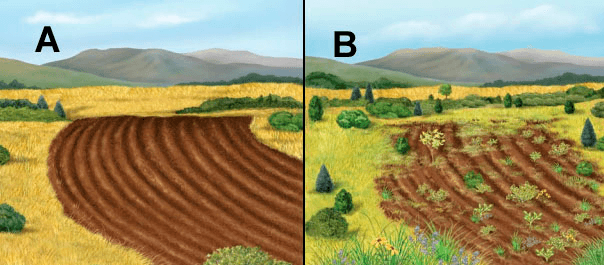
What type of succession is shown going from figure A to figure B?

a)

primary succession

b)

ecological succession

c)

secondary succession

d)

intermediate species

66.

What is the role of the pioneer species in Primary Succession?

a)

To kill any remaining organisms from before the disturbance

b)

To break down rock and rebuild soil

c)

To provide food for large animals

d)

To put fresh oxygen into the air

67.

What is the role of the pioneer species in Primary Succession?

a)

To kill any remaining organisms from before the disturbance

b)

To break down rock and rebuild soil

c)

To provide food for large animals

d)

To put fresh oxygen into the air

68.

What type of succession is shown going from figure A to figure B?

a)

primary succession

b)

ecological succession

c)

secondary succession

d)

intermediate species

69.
What is the order of succession shown in this figure?
a)
A, B, C, D
b)
B, A, D, C
c)
C, D, A, B
d)
D, A, B, C
70.
The picture shows what type of succession?
a)
primary
b)
secondary
c)
tertiary
d)
quadanary
71.
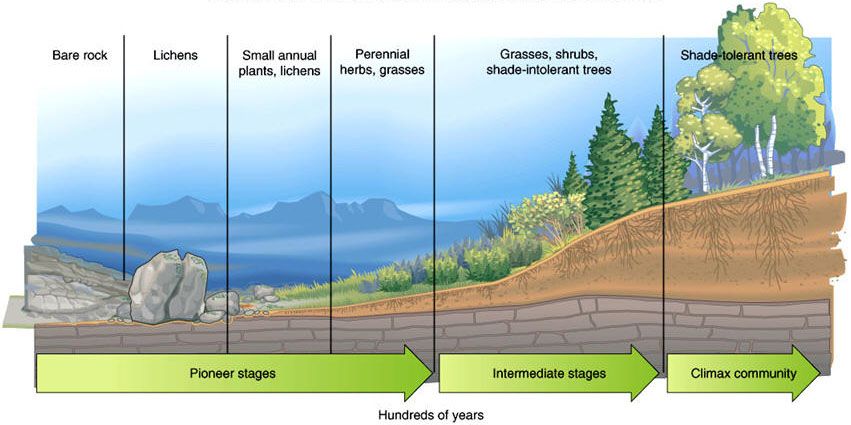
After a volcanic eruption, lava covers the land. What is the order that plants grow to repopulate the area?
a)
Lichens → Shrubs → Grasses → Trees
b)
Lichens → tree → shrubs→Grasses
c)
Grasses → Lichens → Shrubs → Trees
d)
Lichens → Grasses → Shrubs → Trees