wayground logo

Free Printable Worksheets

NEW

Font size

S
M
L
XL
Worksheets

Spring Semester Review

Total questions: 65

Worksheet time: 57mins

Name
Class
Date
1.

Abiotic can be defined as?

a)

An organism that is alive

b)

Non-living parts of the environment

c)

Living Parts of the environment

d)

A new kind of Pokemon that lives with Pikachu

2.

Biotic can be defined as

a)

the living parts of an environment

b)

non-living parts of an environment

c)

rocks and water

d)

snakes and water

3.

Temperature is a _________factor

a)

Biotic

b)

Abiotic

c)

living

d)

cool

4.
Which organism do the owl and the weasel compete for in the food web?
a)
Hawk
b)
Spider
c)
Grasshopper
d)
Shrew
5.
When a population grows past the ecosystem's carrying capacity, what happens to the population?
a)
Continues to grow
b)
The population starts to die off to return to carrying capcity
c)
The population will go extinct due to lack of resources
d)
The population grows then finds a new carrying capacity
6.
An animal that is hunted and eaten for food is a __________.
a)
predator
b)
prey
c)
population
7.

Which of the following is the best definition for Short Term Environmental changes?

a)

Short-term environmental changes tend to not affect the environment and the organisms living in it since it happens rather quickly.

b)

Short-term environmental changes do not have a significant effect on the environment.

c)

Short-term environmental changes, like droughts, floods, and fires do not give populations time to adapt to the change and force them to move or become extinct. The changes happen rather quickly and there is no time for adaptations to occur which can lead to massive die-off.

d)

Short-term environmental changes, like pollution, deforestation, and ice age give populations time to adapt to the change and force them to move or become extinct.

8.

Where do plants get the Carbon dioxide they need for photosynthesis?

a)

the ground

b)

the air

c)

in their roots

d)

from the Sun

9.

The positive particles of an atom are

a)

electrons

b)

positrons

c)

neutrons

d)

protons

10.

The central region of an atom where its neutrons and protons are is its

a)

nucleus

b)

electron cloud

c)

core

d)

center

11.
A particle that moves around the nucleus is a(n)...
a)
Proton
b)
Neutron
c)
Electron
d)
Quark
12.

An atom with atomic number 6 would have how many protons

a)

6

b)

12

c)

3

d)

cannot be determined

13.

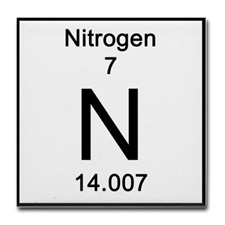
What is the number of protons that the element in this image contain?

a)

14

b)

7

c)

15

d)

18

14.
What is the atomic mass of "F"
a)
9
b)
18
c)
17
d)
19
15.
Beryllium has how many protons?
a)
4
b)
9.0122
c)
2
d)
13.0122
16.
What does the atomic mass tell you?
a)
Basically,the number of electrons and protons
b)
The number of neutrons
c)
Basically, the number of protons and neutrons
d)
The number of protons.
17.

The nucleus of an atom contains which subatomic particles?

a)

protons and electrons

b)

protons and neutrons

c)

electrons and neutrons

d)

protons, electrons, and neutrons

18.
An atom that has gained or lost electrons is called ...
a)
a winner
b)
an isotope
c)
an ion
d)
a loser
19.
Isotopes are atoms of the same element that have the same number of __________ but different number of __________ . Therefore, isotopes of the same element have different masses. 
a)
protons, neutrons
b)
protons, electrons
c)
neutrons, protons
d)
electrons, protons
20.

what is the biggest group on the table

a)

metals

b)

nonmetals

c)

metaloids

d)

halogens

21.

how many groups/families are on the table

a)

15

b)

16

c)

17

d)

18

22.

A grouping of elements based on similar chemical properties, arranged by columns in the periodic table; also known as a group

a)

family

b)

period

c)

row

d)

isotope

23.

A row on the Periodic Table of Elements

a)

family

b)

period

c)

row

d)

isotope

24.

What do all elements in the same family on the periodic table have in common?

a)

They have the same atomic number.

b)

They have the same mass number.

c)

They have the same number of valence electrons.

25.
Which is the correct formula for:
 three hydrogen (H)
one sulfur (S)
four oxygen (O)
a)
H3SO4
b)
HSO4
c)
H4S3O
d)
H2O
26.
How many Elements are in the compound C2H8O ?
a)
2
b)
1
c)
3
d)
0
27.
How many total atoms are in the compound C2H8O ?
a)
11
b)
2
c)
8
d)
1
28.
How many Sodium (Na) are in 6NaCl?
a)
1
b)
12
c)
6
29.
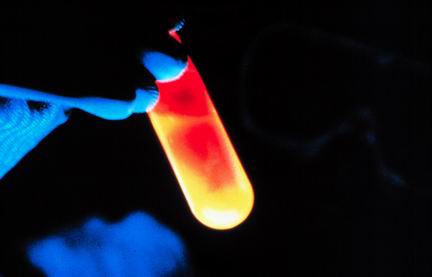
Evidence of a chemical reactions is anything that shows - 
a)
a new substance has formed
b)
a solid dissolved in a liquid
c)
interaction between 2 gases
d)
a change in the state of matter
30.
Which of the following is NOT evidence that that a chemical reaction has occurred?
a)
produces light/heat
b)
production of a gas
c)
formation of a precipitate
d)
melting
31.
What are the products of the chemical reaction pictured?
a)
CH4 and CO2
b)
CH4 and O2
c)
CO2 and H2O
d)
O2 and H2O
32.
What is the left part of a chemical equation called?
H2 + O → H2O
a)
Reactants
b)
Products 
c)
Yields 
d)
Chemical Equation 
33.
2H2 + O2 ----> 2H2O What is the product?
a)
------>
b)
2H2O
c)
2H2+ O2
34.

The Law of Conservation of Mass says that matter can neither be __________ or __________.

a)

created; destroyed

b)

recycled; renewed

c)

subtracted; added

d)

joined; separated

35.

Our sun is what kind of star?

a)

Blue giant

b)

Red giant

c)

Main sequence

d)

White dwarf

36.
The category that contains the most stars is...
a)
Main Sequence
b)
Supergiants
c)
Giants
37.

The H-R Diagram classifies stars based on what two criteria?

a)

Brightness and temperature

b)

Brightness and age

c)

Temperature and hobbies

d)

Temperature and color

38.

Looking at the Main Sequence category, state a relationship between brightness and temperature.

a)

as brightness increases, temperature decreases

b)

as temperature increases, brightness also increases

c)

as brightness increases, temperature also increases (and vice versa)

d)

no relationship found

39.

A star is moving away from Earth

a)

Blue shift

b)

Red Shift

c)

Stationary

40.

A star is moving towards Earth

a)

Red shift

b)

Blue Shift

c)

Neutral

41.
A gigantic explosion that causes the death of a large star is called
a)
pulsar
b)
red giant 
c)
supernova
d)
black hole
42.

A ________ is an object so dense with so much gravity that even light cannot escape.

a)

neutron star

b)

white dwarf

c)

black hole

d)

black dwarf

43.
All stars begin their life in a
a)
Main Sequence
b)
Nebula
c)
Vacuum
d)
Black Dwarf
44.
After the main sequence, a low mass star becomes a
a)
black dwarf
b)
protostar
c)
red giant
d)
supergiant
45.
After the main sequence, a high mass star becomes a
a)
black dwarf
b)
protostar
c)
red giant
d)
supergiant
46.

One possible outcome that is left after a supernova is a super dense core called a:

a)

Neutron Star

b)

White Dwarf

c)

Red Giant

d)

Black Dwarf

47.
As the moon's shape appears to get smaller, we say that the moon is _.
a)
swelling
b)
waxing
c)
waning
d)
disappearing
48.
About how long does it take the moon to make one complete cycle around the earth?
a)
65 days
b)
8 days
c)
365 days
d)
28 days
49.
Phases of the moon in which the moon appears to be getting larger are referred to as _.
a)
waxing
b)
waning
c)
new
d)
eclipse
50.
The cycle of the moon lasts about a _.
a)
day
b)
year
c)
week
d)
month
51.
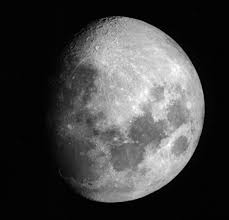
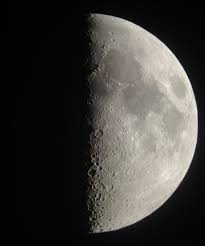
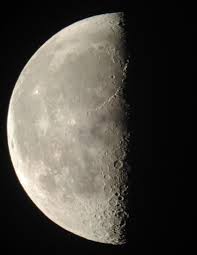
Name this moon phase
a)
Waxing Gibbous
b)
Waxing Crescent
c)
Waning Crescent
d)
Waning Gibbous
52.
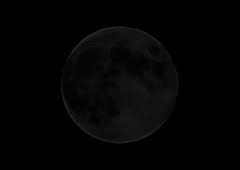
Name this moon phase
a)
Waning Crescent
b)
Waxing Crescent
c)
Waning Gibbous
d)
Waxing Gibbous
53.
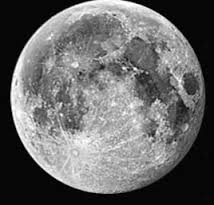
Name this moon phase
a)
waning crescent
b)
waxing crescent
c)
waning gibbous
d)
waxing gibbous
54.
Name this moon phase
a)
First Quarter
b)
Last Quarter
c)
New Moon
d)
Full Moon
55.
Name this moon phase
a)
First Quarter
b)
Last Quarter
c)
New Moon
d)
Full Moon
56.
Name this moon phase
a)
First Quarter
b)
Last Quarter
c)
New Moon
d)
Full Moon
57.
Name this moon phase
a)
First Quarter
b)
Last Quarter
c)
New Moon
d)
Full Moon
58.
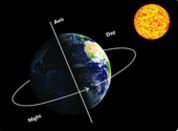
Why do we experience the changing of  seasons on Earth?
a)
Earth's tilt & rotation
b)
Earth's tilt & revolution
c)
Earth's rotation & rovolution
d)
Earth's tilt & resolution
59.
How long does it take the Earth to revolve once around the sun?
a)
29 1/2 days
b)
24 hours
c)
30 days
d)
365 1/4 days
60.
Day & night are caused by the ______________ of Earth on its axis
a)
revolution
b)
orbit
c)
rotation
d)
tilt of the axis
61.

A[n] ______________ tide occurs when the sun is at right angles to the line between Earth and the moon.

a)

high

b)

neap

c)

low

d)

spring

62.

A[n] ___________ tide occurs when the sun, Earth, and the moon are in a straight line.

a)

spring

b)

high

c)

low

d)

neap

63.
What is the formula for density?
a)
density = mass x volume
b)
density = mass / volume
c)
density = mass + volume
d)
density = mass - volume
64.

How much of the moon is always lit from outer space?

a)

all of the moon

b)

half of the moon

c)

1/4 of the moon

d)

none of the moon

65.

Anna sees a new moon on Monday, what moon phase is she most likely to see one week later?

a)

first quarter

b)

Full moon

c)

Last quarter

d)

new moon