
 Worksheets
8th Grade Unit 1 Review
Total questions: 69
Worksheet time: 1hrs 9mins
the basic structural unit of matter
atom
matter
element
nucleus
a collection of atoms of one type that cannot be broken down into simpler substances by ordinary chemical or physical means
element
subatomic particle
electron
matter
the positively charged subatomic particle contained in the nucleus of an atom
proton
neutron
electron
matter
a subatomic particle, contained in the nucleus of an atom, having the same mass as a proton but no electrical charge
proton
neutron
electron
matter
a negatively charged subatomic particle that orbits the nucleus of an atom
proton
neutron
electron
matter
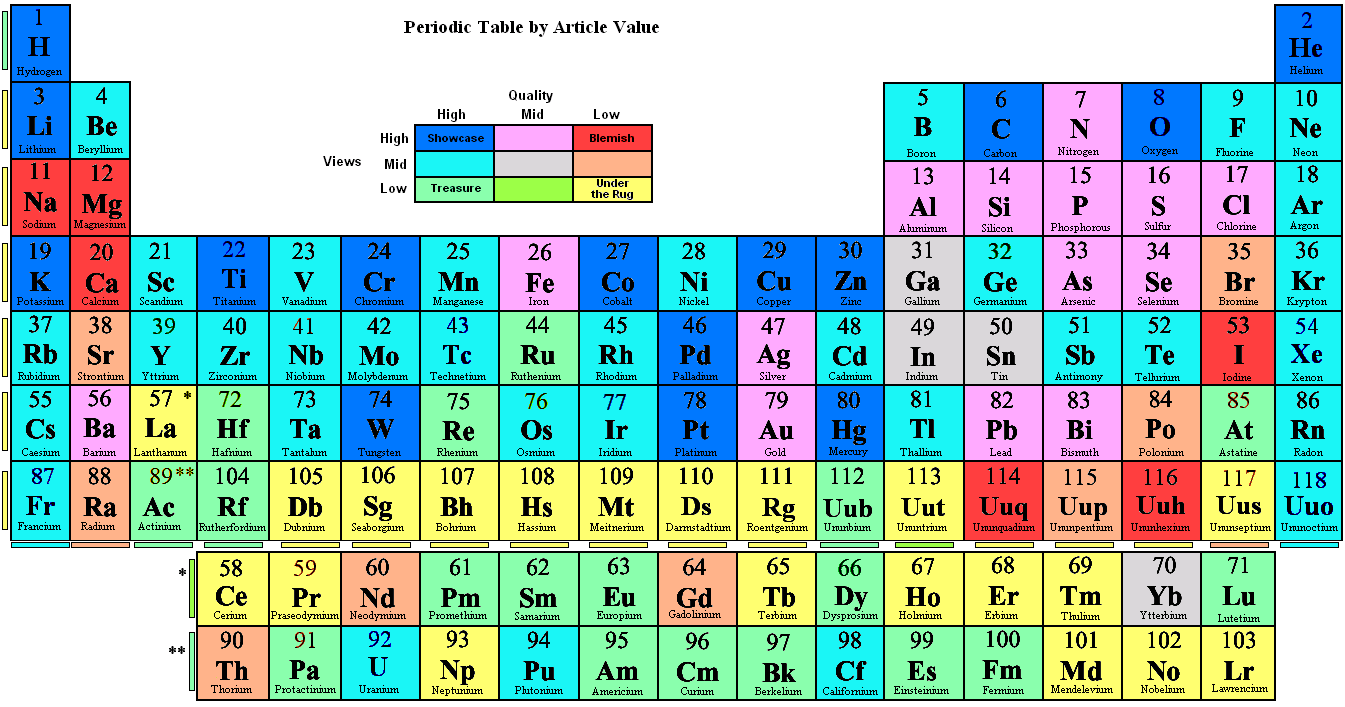
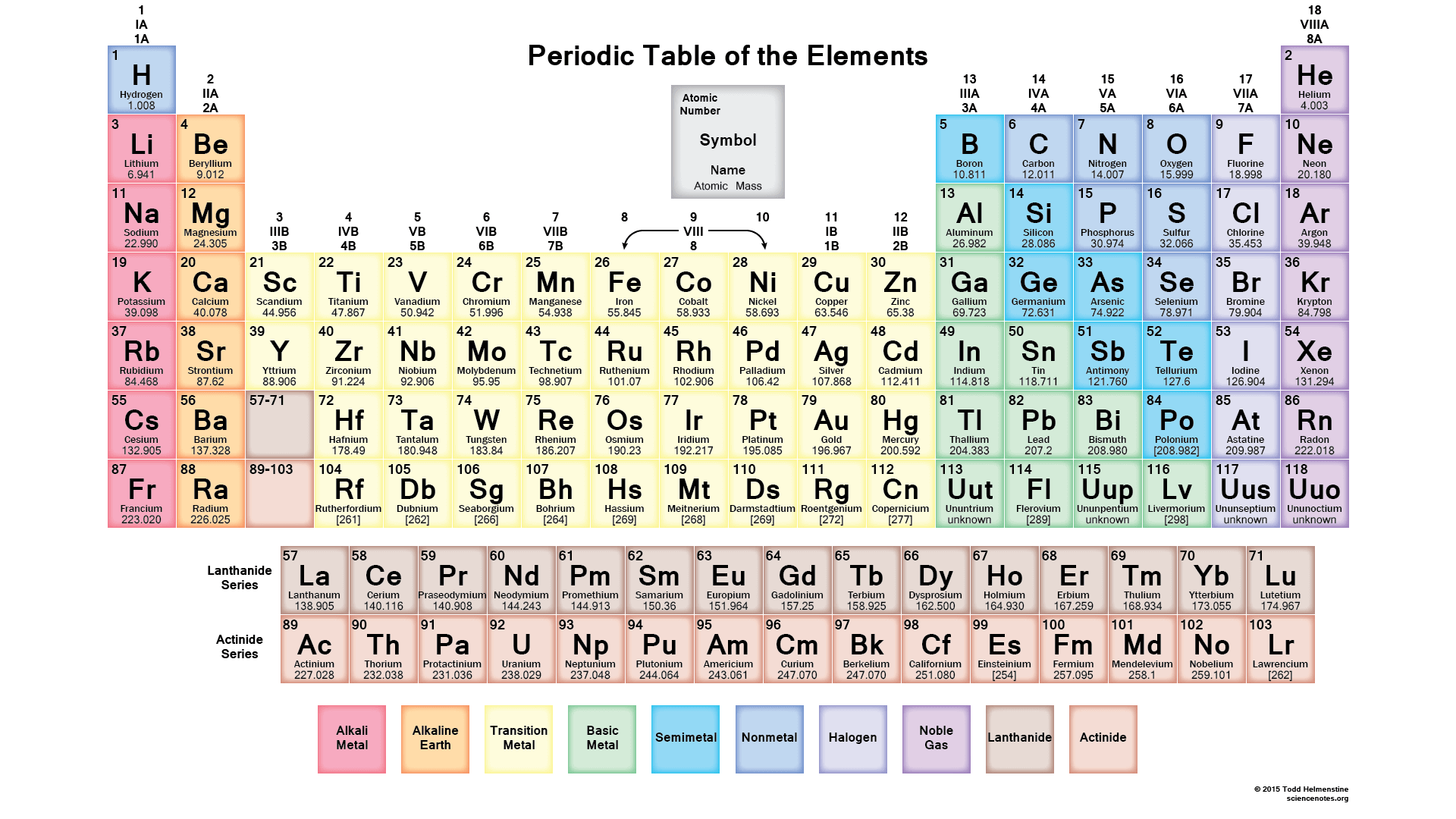
an arrangement of the elements according to their atomic numbers so that elements with similar properties are in the same column and properties repeat from row to row
Periodic Table of Elements
Atomic Theory
Isotopes
Subatomic Particles
one or two letters that represent the name of an element
element name
element symbol
atomic number
atomic mass
a unique number for each element that equals the number of protons in an atom of that element
element name
element symbol
atomic number
atomic mass
the mass of an atom, calculated by adding the number of protons and neutrons in the nucleus of the atom
element name
element symbol
atomic number
atomic mass
a grouping of elements based on similar properties, arranged by columns in the periodic table; also known as a group
family
period
row
isotope
a row on the Periodic Table of Elements
family
period
row
isotope
an atom or group of atoms that has gained or lost one or more electrons and is now either positively or negatively charged
isotope
ion
orbital
nucleus




What is a valence electron?
electrons in the second energy level
electrons in the outermost energy level
the atomic number
electrons in the first level
The innermost energy level has a maximum of how many electrons?
1
2
6
8

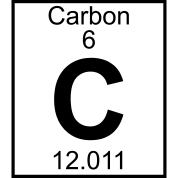
What is this element?
Beryllium (atomic #4)
Boron (atomic #5)
Carbon (atomic #6)
Nitrogen (atomic #7)

How many valence electrons?
2
3
4
5
Which Bohr model represents Neon?


Which of the following is true about an ATOM?
the number of PROTONS and the number of NEUTRONS are equal
the number of PROTONS and the ATOMIC MASS are equal
the number of PROTONS and the number of ELECTRONS are equal
the number of protons, neutrons, and electrons are ALWAYS equal

What is the ATOMIC NUMBER of Nitrogen?
14
7
21
15

What is the ATOMIC MASS of Nitrogen rounded to the NEAREST WHOLE NUMBER?
14
21
7
15

How many NEUTRONS does an atom of Nitrogen have? (Remember A=P=E M-A=N)
21
7
14
15

How many PROTONS does an Atom of Nitrogen have? (Remember A=P=E M-A=N)
14
7
15
21

How many ELECTRONS does an Atom of Nitrogen have? (Remember A=P=E M-A=N)
21
15
7
14

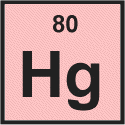
How many VALENCE ELECTRONS does this Element have?
2
8
10
12
The element Lithium has 3 protons, 3 electrons, and a mass number of 7. How many NEUTRONS are in this atom? (Remember: A=P=E M-A=N)
3
7
4
10

In a Bohr Model, how many Electrons can the FIRST ENERGY LEVEL hold?
2
8
1
10
Na2CO3

You know that a chemical reaction has occurred if
there is a precipitate (new solid)
there is a color change.
there is a temperature change.
All of these answers are evidence.
In chemical reactions, what does the Law of Conservation of Matter mean?
Matter is not created or destroyed.
The total mass of the reactants is greater than the total mass of the products.
The total mass of the reactants is less than the total mass of the products.
Matter is not changed.
What is a synthetic material?
Any material that is man made
Any material that is only made from natural resources
Any material that is made of recycled materials
Any material that is found in nature.
A _____________________ is a natural resource that we can replace faster than we use it up.
renewable resource
nonrenewable resource
synthetic material
man made product
Read the following statements. Select each answer choice that is a true statement about synthetic materials. Please select 4 answers.
Synthetic materials are made from natural resources
Synthetic materials are made by chemically changing natural resouces to create a material with different characteristics.
Some examples of synthetic materials are plastics, medicines, and new fuels.
A synthetic substance cannot be chemically identical to a naturally-occurring substance
Making and using synthetic materials have both positive and negative impacts on society.
Why do all bonds form?
so the number of protons equals the number of electrons
so an atom can become unstable
to fill the outermost energy level
An atom with 3 valence electrons "wants" a full shell, so it can either gain 5 or lose 3. Which is more likely to occur?
Gain 5
Lose 3
Nothing
How many Aluminum atoms are in Al2O3?
3
5
2
1
How do covalent bonds form?
By donating and receiving valence electrons between atoms.
Scientists still aren't sure.
Opposite slight charges attract each atom in the compound.
Sharing valence electrons between atoms
When an atom loses an electron, it becomes a
positive ion
negative ion
neutral ion
neutral atom

