
 Worksheets
Atoms, Elements, Periodic Table
Total questions: 77
Worksheet time: 26mins

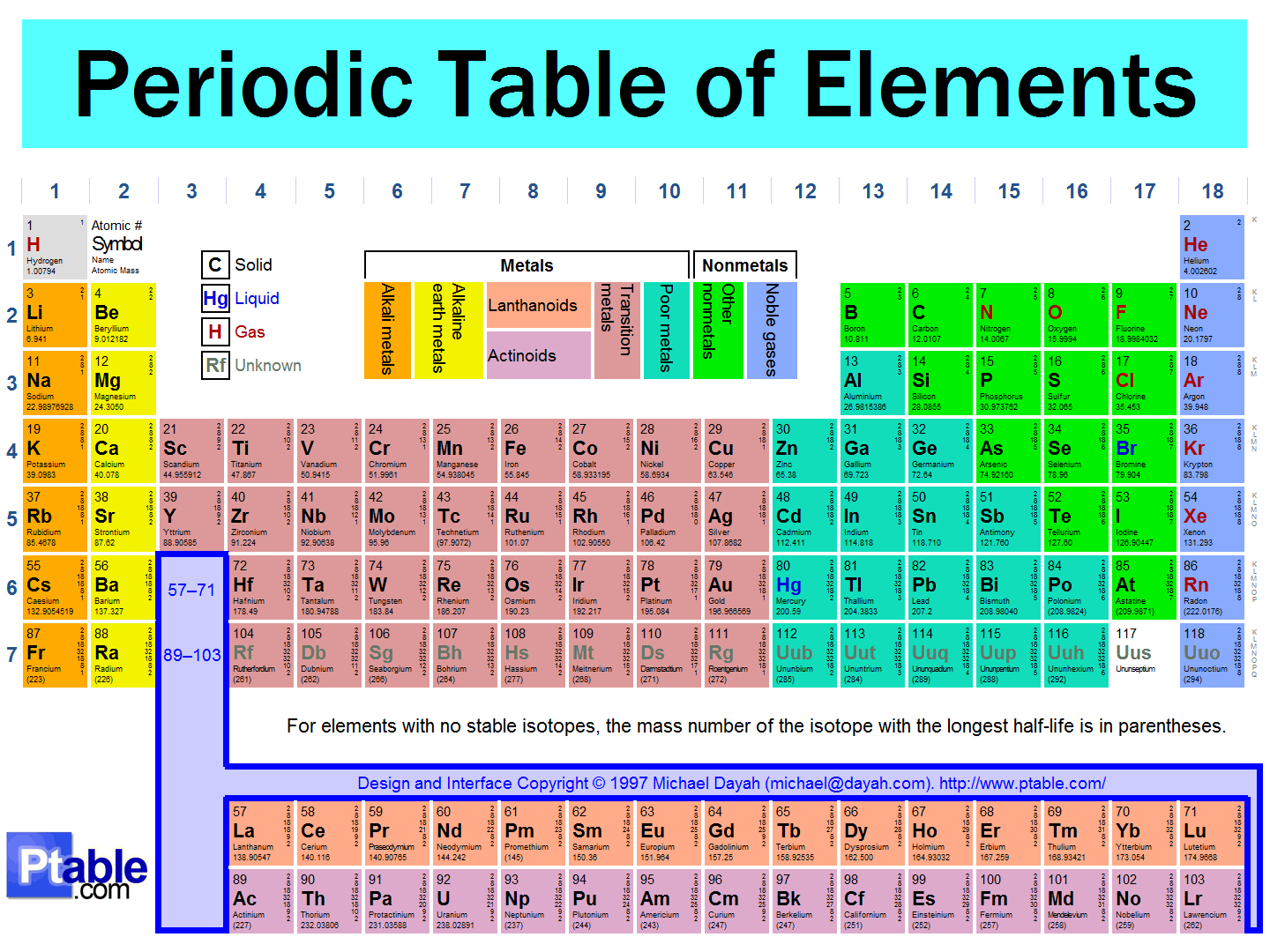
Copper is a common metal. Which of the following properties does this metal most likely have?
High conductivity, high malleability, and low luster
Low conductivity, low malleability, and low luster
High conductivity, high malleability, and high luster
Low conductivity, high malleability, and high luster
What is the organizational system or chart for elements?
Atomic weight
Families
Periodic table
Atomic number
What do you call the horizontal row of elements in a periodic table of elements?
Group
Family
Period
Column
How many groups and periods does a Periodic Table have?
There are 17 groups or families and 7 periods.
There are 18 groups or families and 7 periods.
There are 7 groups or families and 18 periods.
There are 18 groups or families and 6 periods
Which of the following are the three major groups of elements in the periodic table?
Metals, non-metals, metalloids
Metals, conductors, metalloids
Metals, conductors, insulators
Non-metals, conductors, insulators
What are Group 1 elements known as?
Alkali metals
Transition elements
Alkaline earth metals
Inner transition elements
The following elements belong to the same group EXCEPT?
Argon
Calcium
Helium
Krypton

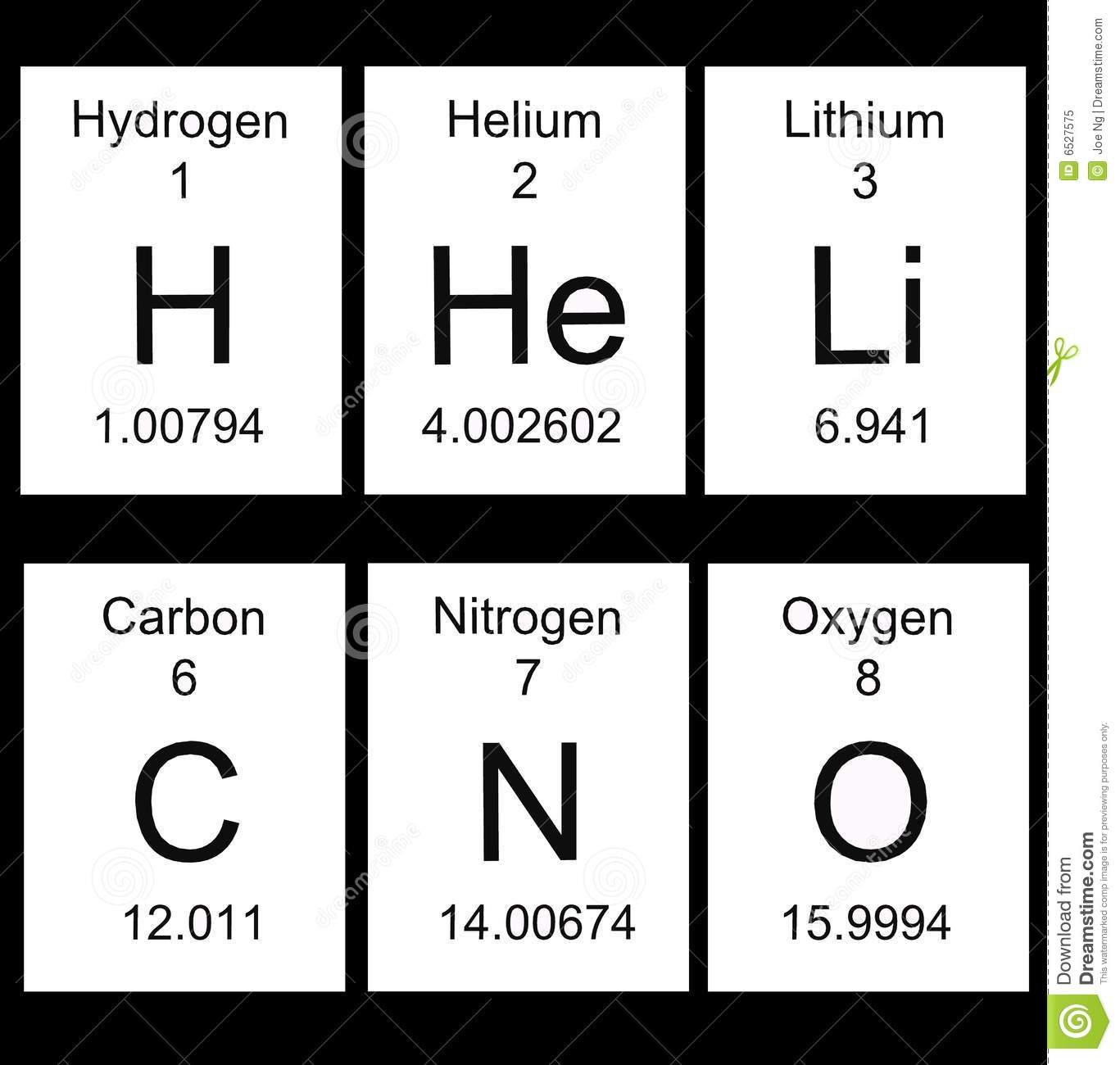
What does the C represent?
atomic mass
atomic number
element name
chemical symbol

What does the 6 represent?
atomic mass
atomic number
element name
chemical symbol

What does 12.011 represent?
atomic mass
atomic number
element name
chemical symbol
The Modern Periodic Table of Elements is arranged by
atomic mass
atomic number
valence electrons
number of isotopes
Which group of the periodic table is Neon a part of?
answer choices
alkali metals
alkaline earth metals
halogens
noble gases
Which is a halogen?
Helium
Chlorine
Oxygen
Neptune
I am a nonmetal
I am in period 2
I am in group 16
Ba
Si
O
S
I am a metal
I am in group 2
I am in period 6
I am…
Mo
Re
S
Ba

What part of the Periodic Table tells you the number of protons in an atom?
The atomic number
The atomic mass
The classification
The row
Which element is not a metal?
H (Helium)
Ti (Titanium)
Al (Aluminum)
Pb (Lead)
Which is a metal?
Helium (He)
Chlorine (Cl)
Potassium (K)
Neptune (Np)
What happens to the atomic number of elements as you move from left to right on the Periodic Table?
Increases
Decreases

Which elements have the most similar chemical properties (will be the most similar?)
K and Na
K and Ca
K and Cl
K and S

What is the atomic mass of Neon?
10
20.18
10.18
Ne

How many neutrons are in Beryllium?
4
9
5
2

What element is represented in this Bohr Model?

How many valence electrons does Oxygen have?
2
4
6
8


Electrons have....
A positive charge
No charge
A negative charge
A nucleus


The yellow elements are called
Good conductor of heat and electricity
Metal
Nonmetal


having characteristics of metals and nonmetals
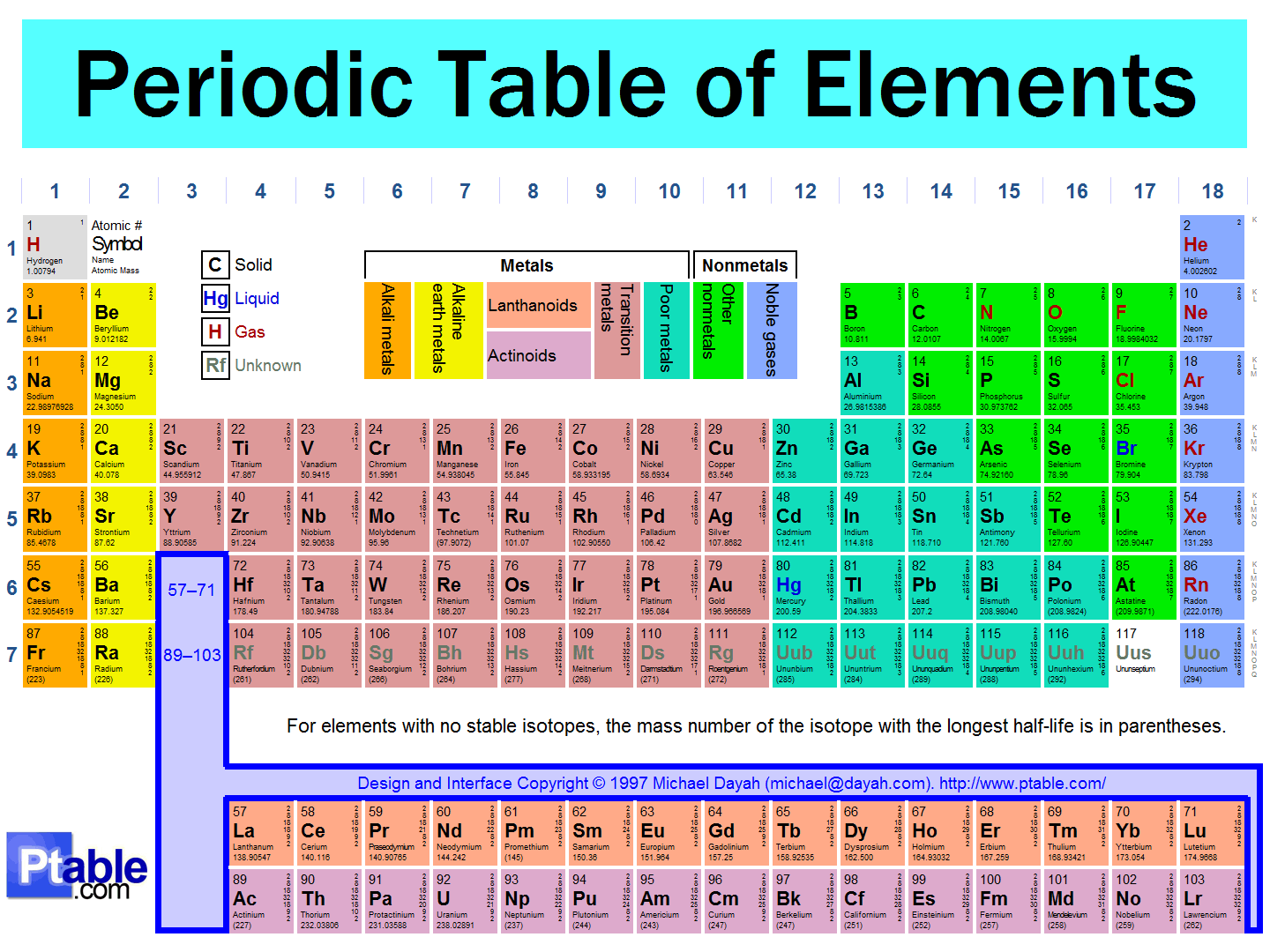
The vertical (up and down) columns in the Periodic Table are called
groups
towers
periods
atomic numbers
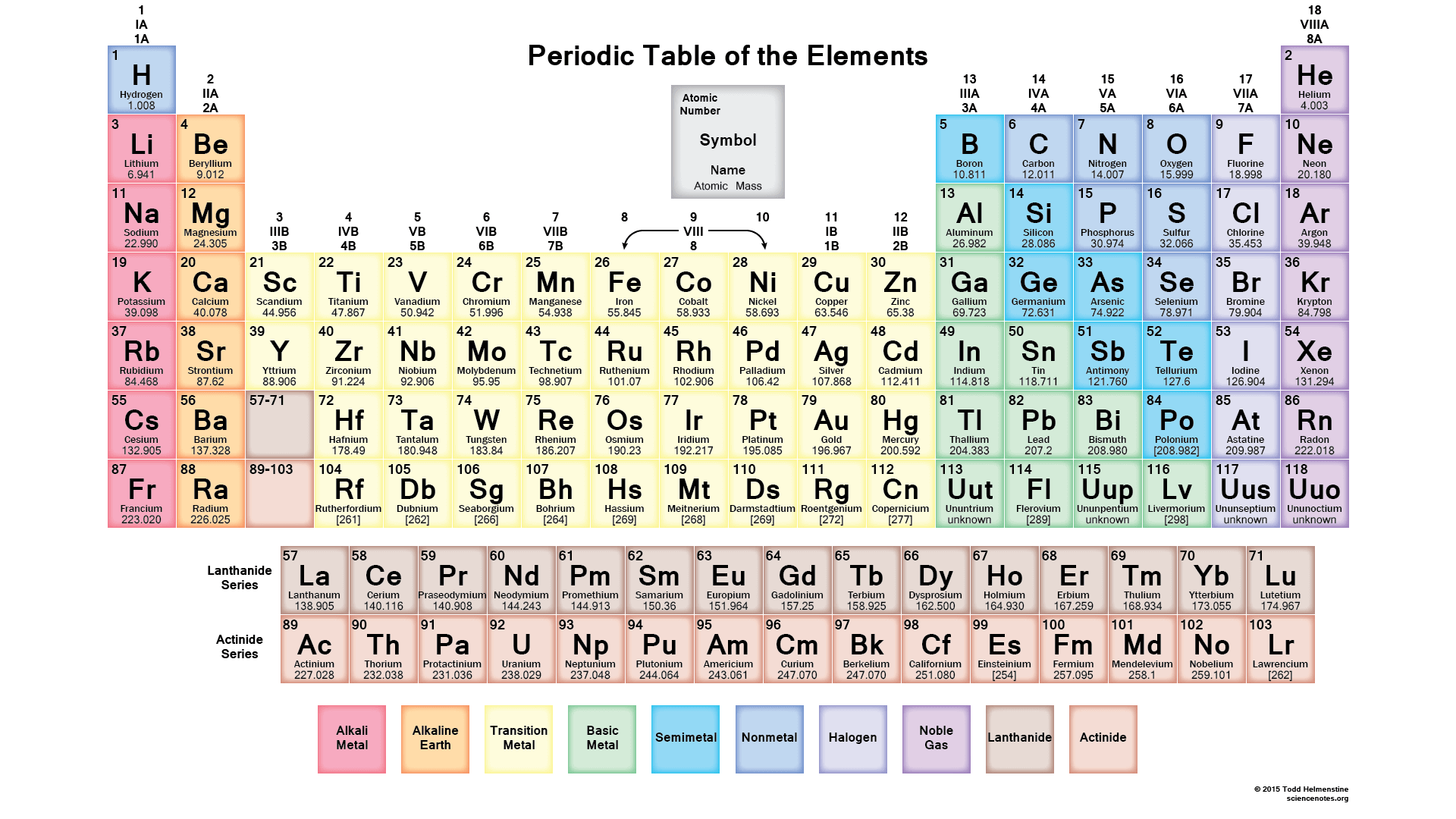
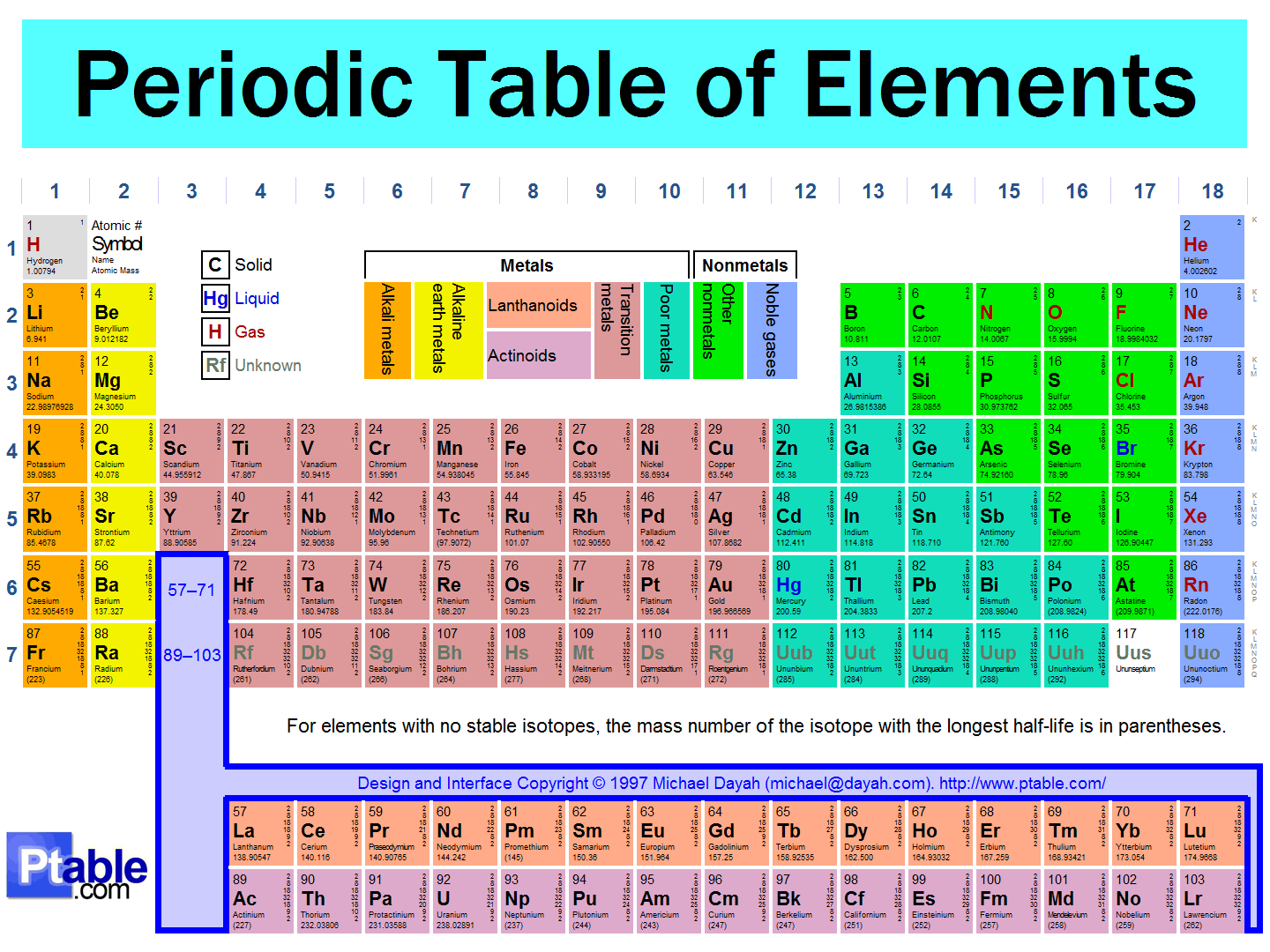
The horizontal (side to side) rows in the Periodic Table are called
groups
families
periods
atomic numbers

18.84
18.99
What are the elements in group 1 (the far left) of the periodic table called?
Alkali metals
Alkaline earth metals
Halogens
Noble gases
Which element is H?
Which element is He?
Which element is C?
Which element is N?
Which element is O?
Which element is Li?
Lillianium
Which element is Be?
Which element is B?
Which element is F?
Ferrufinon
Francoisium
Which element is Ne?
Nelsonion
Nutine
Nemonium
Neon
Which element is Mg?
Which element is Al?
Which element is Si?
Which element is Kr?
Which element is Br?
Which element is Sc?
Which element is As?
Which element is Fe?
Which element is Pb?

In this picture of the periodic table, what do the red elements in Group 1 represent?
In this picture of the periodic table, what do the orange elements in Group 18 represent?
In this picture of the periodic table, what do the purple elements in Group 2 represent?
In this picture of the periodic table, what do the blue and green elements represent?
In this picture of the periodic table, what do the yellow and orange elements represent?
Nonmetals
Metalloids
Metals
In this picture of the periodic table, what do the khaki/greenish-tan (staircase) elements represent?
Nonmetals
Metalloids
Metals
In this picture of the periodic table, what do the yellow elements in Group 17 represent? SELECT 2 ANSWERS.
Halogens
Noble Gases
Metals
Nonmetals

