
 Worksheets
Leaf and flower anatomy; evolution of plants; photosynthesis
Total questions: 30
Worksheet time: 17mins
Name
Class
Date
1.

Name the tissue on the leaf cross section label #2
a)
upper epidermis
b)
lower epidermis
c)
palisade
d)
mesophyll
2.

Name the tissue on the leaf cross section label #3
a)
lower mesophyll
b)
guard cells
c)
palisade
d)
photosynthesis
3.

Name the tissue on the leaf cross section label #6
a)
stomata
b)
guard cell
c)
vascular bundle
d)
vein
4.

Name the tissue on the leaf cross section label #7
a)
stomata
b)
guard cell
c)
vascular bundle
d)
vein
5.

What is are the tissues specialized for in #10?
a)
To transport water and nutrients to parts of the plant.
b)
To transport gases to part of the leaf
c)
to transport nutrients to part of the leaf
d)
to transport wax and oil
6.

What are the guard cells SPECIALIZED to do?
a)
Cellular respiration
b)
Photosynthesis
c)
Transpiration
d)
Allowing for gas exchange between leaf and environment.
7.

In plants, what is one of the draw backs (negative side effects) of releasing oxygen gas and taking in carbon dioxide?
a)
Cellular respiration
b)
Photosynthesis
c)
Transpiration- water is lost when guard cells open up
d)
Allowing for gas exchange between leaf and environment.
8.

Which tissue of the plant is specialized to divide (grow) quickly?
a)
flower
b)
leaf
c)
roots
d)
stem
9.

Which organ of the plant is specialized and most efficient (best) to perform photosynthesis?
a)
flower
b)
leaf
c)
roots
d)
stem
10.

What is the order of evolution of plant groups?
a)
mosses, ferns, pine trees, flowering trees
b)
ferns, pine trees, flowering plants, mosses
c)
flowering plans, mosses, ferns, pine trees
11.
Water moves from the roots to the leaves to the atmosphere. This is called
a)
nitrogen cycle
b)
carbon cycle
c)
transpiration
12.

Which number represents the female reproductive system of the flower?
a)
5
b)
8
c)
9
13.

What is the main purpose of flowers?
a)
Make food for the plant.
b)
sexual reproduction
c)
smell pretty
d)
look pretty
14.

What is the purpose of pretty color and scents in flowers?
a)
Attract pollinators so that seeds are spread.
b)
for food for pollinators
c)
to make honey
d)
to kill insects
15.

Green pigment inside plant cells that helps to absorb sunlight
a)
pollen
b)
phloem
c)
Chlorophyll
d)
Chloroplasts
16.

Ferns are a type of
a)
Vascular Seedless Plant
b)
Nonvascular Plant
c)
Angiosperm
d)
Gymnosperm
17.

Nonvascular plants include all of the following characteristics EXCEPT
a)
live low to the ground
b)
have no true roots, stems, or leaves
c)
are pioneer plants
d)
have tubes to transport water and nutrients
18.
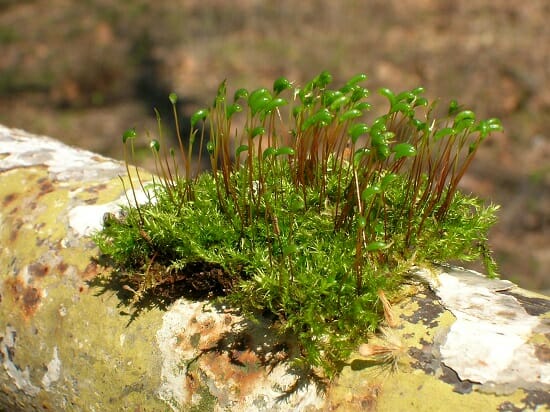
Nonvascular plants...
a)
take in water through its roots
b)
take in water through xylem
c)
take in water through diffusion
d)
take in water through their stoma
19.
What is gymnosperm?
a)
plants with plumbing and seeds that form in cones
b)
plants with plumbing and seeds that develop into fruit
c)
plants with NO plumbing and NO seeds
d)
plants with plumbing and NO seeds
20.
Example of a gymnosperm
a)
b)
c)
d)
21.

The embryo inside a seed gains nutrients from the ____________ until the plant can make its own food.
a)
fruit
b)
leaves
c)
pollen
d)
cotyledon
22.
Process by which green plants prepare their own food
a)
Germination
b)
Pollination
c)
Transpiration
d)
Photosynthesis
23.
Which is the reproductive adaptation found only in angiosperms?
a)
spore capsule
b)
cone
c)
flowers
d)
seeds
24.
The female reproductive part of an angiosperm.
a)
Stamen
b)
Pistil
c)
Spore
d)
Sepal
25.
Which of the following is NOT a job of the roots?
a)
transpiration
b)
anchoring plant to ground
c)
absorb water and nutrients from soil
d)
store extra food
26.

When a seed sprouts and begins the early growth of a young plant.
a)
germination
b)
pollination
c)
seed dispersal
d)
fertilization
27.
Which is a product of photosynthesis?
a)
oxygen gas
b)
carbon dioxide gas
c)
chlorophyll
d)
water
28.
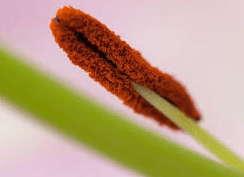
The part of a flower that produces the male reproductive cells.
a)
anther
b)
style
c)
stigma
d)
filament
29.
What helps plants from losing too much water and drying out?
a)
cell walls
b)
a waxy cuticle
c)
chloroplasts
d)
a seed coat
30.
Which is one of the two layers of the leaf that is responsible for carrying out photosynthesis?
a)
upper epidermis layer
b)
palisade layer
c)
cuticle
d)
lower epidermis layer
100 %

