
 Worksheets
Anatomy Final Review
Total questions: 79
Worksheet time: 3605secs
Name
Class
Date
1.
Which of the cells below is responsible for maintaining homeostasis in the blood supply to the brain by forming the blood brain barrier?
a)
ependymal cells
b)
astrocytes
c)
microglial cells
d)
schwann cells
2.
Oligodendrocytes form the myelin sheath in the
a)
Autonomic nervous system
b)
Central Nervous System
c)
Parasympathetic Nervous System
d)
Peripheral Nervous System
3.

Which lobe of the brain is highlighted?
a)
Frontal lobe
b)
Parietal lobe
c)
Occipital lobe
d)
Temporal lobe
4.

What is the PRIMARY role of the cerebellum?
a)
Language
b)
Attention
c)
Mental imagery
d)
Motor control
5.
Which of the following is NOT a part of the brainstem?
a)
Cerebellum
b)
Medulla oblongata
c)
Midbrain
d)
Pons
6.

1
a)
dendrites
b)
synapse
c)
axon
d)
soma
7.

6
a)
dendrites
b)
synapse
c)
axon
d)
soma
8.

2
a)
dendrites
b)
synapse
c)
axon
d)
soma
9.

What bones are these?
a)
Carpals
b)
Metacarpals
c)
Phalanges
d)
Metatarsals
10.
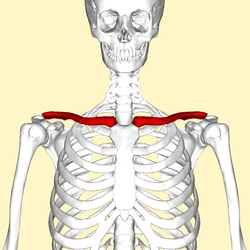
What bones are these?
a)
Sternums
b)
Scapulae
c)
Clavicles
d)
Hyoids
11.
What portion of the sternum articulates with the clavicles
a)
Manubrium
b)
Body
c)
Xiphoid process
12.

Name the bone shown in green.
a)
Ischium
b)
Pubis
c)
Calcaneus
d)
Ilium
13.

Name the bone shown in green.
a)
Femur
b)
Tibia
c)
Patella
d)
Fibula
14.

Name the bone shown in green.
a)
Femur
b)
Tibia
c)
Humerus
d)
Fibula
15.

Name the bone shown in green.
a)
tibia
b)
humerus
c)
radius
d)
ulna
16.

Is this the axial or appendicular skeleton?
a)
Axial
b)
Appendicular
17.

Is this the axial or appendicular skeleton?
a)
Axial
b)
Appendicular
18.
Bone formation is ...
a)
ossification
b)
bone resorption
c)
fracture repair
19.
Bone forming cells are called...
a)
osteoblasts
b)
osteocytes
c)
osteoclasts
d)
osteons
20.
Multinucleated cells that break down the calcified matrix of bone.
a)
osteoblasts
b)
osteoclasts
c)
osteons
d)
osteocytes
21.

Which letter represents the vertebral foramen?
a)
A
b)
B
c)
C
d)
D
22.
A muscle tissue that has no visible striations and has spindle shaped cells.
a)
cardiac
b)
smooth
c)
skeletal
d)
dense regular
23.
Which of these best describes cardiac muscle tissue?
a)
movement is involuntarily and cells possess striations
b)
attached to the skeleton
c)
single nucleus & spindle shaped cells
d)
movement is voluntary and cells cells possess striations
24.

What part of an osteon is number 4 pointing to?
a)
Lamellae
b)
Central Canal
c)
Osteocyte
d)
Canaliculi
25.

What part of an osteon is number 2 pointing to?
a)
Lamellae
b)
Central Canal
c)
Lacunae
d)
Osteocyte
26.

What part of an osteon is number 3 pointing to?
a)
Lamellae
b)
Central Canal
c)
Osteocyte
d)
Canaliculi
27.
What is appositional bone growth?
a)
The bone grows in length and width
b)
The bone does not grow at all
c)
The bone grows out in width
d)
The bone grows in both length and width
28.

Doing push-ups requires the use of several muscles, including:
a)
triceps brachii and pectoralis major
b)
gastrocnemius and hamstring
c)
gluteous maximus
d)
Soleus
29.

This muscle elevates the scapula by attaching at the upper medial border.
a)
Pectoralis Minor
b)
Serratus Anterior
c)
Trapezius
d)
Levator Scapulae
30.

Which muscle is #11?
a)
trapezius
b)
serratus anterior
c)
latissimus dorsi
d)
deltoid
31.
Energy is created for muscles in the...
a)
Myoglobin
b)
Mitochondria
c)
Fibre
d)
Fascia
32.
moving a part away from the midline
a)
abduction
b)
adduction
c)
inversion
d)
pronation
33.

What is #4 (orange section)?
a)
distal phalanges
b)
intermediate phalanges
c)
proximal phalanges
d)
carpals
34.

Letter E represents....
a)
Periosteum
b)
Endosteum
c)
Medullary Cavity
d)
Spongy Bone
35.

Letter D represents...
a)
Compact bone
b)
Spongy Bone
c)
Endosteum
d)
Periosteum
36.
What type of joint is located in your elbow?
a)
Hinge
b)
Gliding
c)
Ball and Socket
37.
How do Calcium and Phosphorus relate to the skeletal system?
a)
Calcium and Phosphorus are made by the skeletal sytem
b)
Calcium and Phosphorus are stored in the skeletal system
c)
Calcium and Phosphorus are toxic to the skeletal system
d)
There is no connection between the skeletal system, Calcium and Phosphorus
38.

a)
Mandible
b)
Parietal
c)
Temporal
d)
Sphenoid
39.

a)
Zygomatic
b)
Temporal
c)
Parietal
d)
Lacrimal
40.
Homeostasis in the human body is often maintained by a:
a)
neutral feedback loop
b)
solar feedback loop
c)
positive feedback loop
d)
negative feedback loop
41.
The "cause" for something to happen is the
a)
response
b)
effect
c)
stimulus
d)
homeostasis
42.
The "effect" of a given stimulus is the...
a)
response
b)
stimulus
c)
cause
d)
result
43.
Maintaining a constant internal state in a changing environment.
a)
Homeostasis
b)
Active Transport
c)
Mitosis
d)
Photosynthesis
44.
Contains the esophagus, trachea, lungs, heart and aortaPleural cavity: surrounds the lungs
Mediastinum: area between the lungs, containing the heart, aorta, trachea, esophagus and thymus gland
Mediastinum: area between the lungs, containing the heart, aorta, trachea, esophagus and thymus gland
a)
abdominal cavity
b)
thoracic cavity
c)
cranial cavity
d)
spinal cavity
45.
divides the body into upper and lower halves
a)
ventral
b)
medial
c)
transverse plane
d)
mid-sagital plane
46.
refers to the middle
a)
lateral
b)
medial
c)
caudal
d)
proximal
47.
sides of the body
a)
medial
b)
lateral
c)
proximal
d)
distal
48.
divides the body into right and left sides
a)
mid-sagittal plane
b)
sagittal plane
c)
transverse plane
d)
medial
49.

Which body cavity is located above the diaphragm and is surrounded by the rib cage?
a)
abdominal
b)
pelvic
c)
thoracic
50.

Which body cavity contains organs including the stomach, spleen, liver, gallbladder, and pancreas?
a)
abdominal
b)
pelvic
c)
thoracic
51.

Which region is represented by #5?
a)
umbilical region
b)
central region
c)
lumbar region
d)
iliac region
52.

Which region is represented by #8?
a)
epigastric region
b)
hypogastric region
c)
iliac region
d)
hypochondriac region
53.
These are very large bony processes (bumps) that serve as muscle attachment sites and are found only on the femur.
a)
tuberosity
b)
fossa
c)
foramen
d)
trochanter
54.

a)
unipolar
b)
bipolar
c)
multipolar
d)
tripolar
55.

a)
unipolar
b)
bipolar
c)
multipolar
d)
tripolar
56.

a)
unipolar
b)
bipolar
c)
multipolar
d)
tripolar
57.

a)
Occipital
b)
Parietal
c)
Temporal
d)
Sphenoid
58.
Which organ controls balance and coordination?
a)
Brainstem
b)
Cerebellum
c)
Cerebrum
d)
Spinal cord
59.
What two chemicals are necessary for muscle contraction to occur?
a)
Niacin and Potassium
b)
Calcium and ATP
c)
Sodium and Potassium
d)
Ach and Potassium
60.
When you are cold, you shiver and your blood vessels contract, which warms you up. When you are hot, you sweat and your blood vessels expand, which cools you down.
a)
Positive Feedback Response
b)
Negative Feedback Loop
61.
Rapid growth during puberty causes your body to release more and more growth hormones. As you grow, more and more growth hormones are released until puberty is reached, and then the hormones stop.
a)
Positive Feedback Response
b)
Negative Feedback Loop
62.
Soleus
a)
Front of lower leg
b)
Back of lower leg (Near Knee)
c)
Back of lower leg (Near FOOT)
d)
Inside upper leg
63.
What does the sarcoplasmic reticulum do?
a)
Conducts action potentials
b)
Stores calcium
c)
Stores sodium ions
d)
Helps the muscle relax
64.
What is necessary for the myosin to release the actin?
a)
ATP
b)
ADP
c)
Calcium
d)
Sodium
65.

Identify this type of muscle
a)
smooth
b)
cardiac
c)
skeletal
66.

Identify this type of muscle
a)
smooth
b)
cardiac
c)
skeletal
67.
The functional unit of the muscle cell is the:
a)
Sarcomere
b)
Osteon
c)
Myofilament
d)
Muscle fiber
68.
A suture:
a)
located between the bones of the skull
b)
found in the epiphysis lines of long bones
c)
metopic suture of the frontal bone
d)
Are freely moveable
69.
There are __________ lumbar vertebrae.
a)
12
b)
5
c)
7
d)
6
70.
Sarcomeres are the repeating contractile units that make up
a)
myofibrils
b)
muscle fibers
c)
fascicles
d)
muscles
71.
Which of the following statements is true?
a)
Fast fibers have a small diameter.
b)
Fast fibers contain loosely packed myofibrils
c)
Fast fibers have large glycogen reserves.
d)
Fast fibers have many mitochondria.
72.
Which is faster?
a)
continous propagation
b)
saltatory propagation
73.
Which is happens in unmyelinated neurons?
a)
continous propagation
b)
saltatory propagation
74.

The olecranon process is part of which bone?
a)
Femur
b)
Humerus
c)
Ulna
d)
Radius
75.
Synovial joints are freely movable.
a)
True
b)
False
76.
thinner than average bone density is also known as osteopenia
a)
true
b)
false
77.
What muscle is located front of upper leg?
a)
Quadriceps
b)
Hamstrings
c)
Sartorius
d)
Gluteus Maximus
78.
The action potential is conducted into a skeletal muscle fiber by
a)
sarcoplasmic reticulum
b)
transverse tubules.
c)
neuromuscular junctions.
d)
motor end plates.
79.
these nerves carry information to the CNS
a)
efferent nerves
b)
bones
c)
dendrites
d)
afferent nerves
100 %

