
 Worksheets
Electricity and circuits
Total questions: 82
Worksheet time: 2hrs 36mins
Name
Class
Date
1.
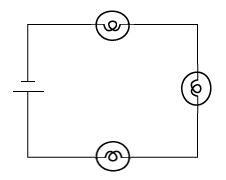
The picture shows an electrical circuit. This circuit is a series circuit because:
a)
It has 3 light bulbs.
b)
The same current flows through all three light bulbs.
c)
It uses a single battery.
d)
The electrical current has more than one path to flow through
2.
In a parallel circuit if one light bulb goes OUT; then they ALL go out. TRUE OR FALSE?
a)
TRUE
b)
FALSE
3.
What is a switch's function in a circuit?
a)
to make the current hotter or colder
b)
turn on and off the flow of current
c)
the pathway that current flows
d)
to add more power to the circuit
4.
wood is a _____?
a)
conductor
b)
insulator
5.
Silver is a _____?
a)
insulator
b)
conductor
6.
A material in which electrons are able to move easily
a)
Circuit
b)
Insulator
c)
Resistance
d)
Conductor
7.

What kind of circuit is this?
a)
series
b)
parallel
8.

What type of circuit is show in the image?
a)
Series Circuit
b)
Parallel Circuit
9.
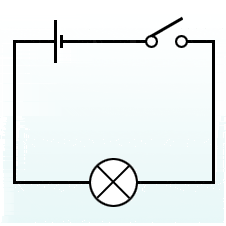
this circuit is .....?
a)
open
b)
parallel
c)
closed
d)
The cutest little circuit evah!
10.
When all parts of the circuit are connected it is a ______ circuit.
a)
open
b)
closed
11.
When you flip a light switch on and off you are closing and opening a circuit.
a)
true
b)
false
12.
A circuit must be closed for electrons to travel.
a)
true
b)
false
13.

Would would best complete this circuit?
a)
A wire
b)
A switch
c)
A battery
d)
A light bulb
14.
Electricity is the flow of _________.
a)
Protons
b)
Neutrons
c)
Electrons
15.
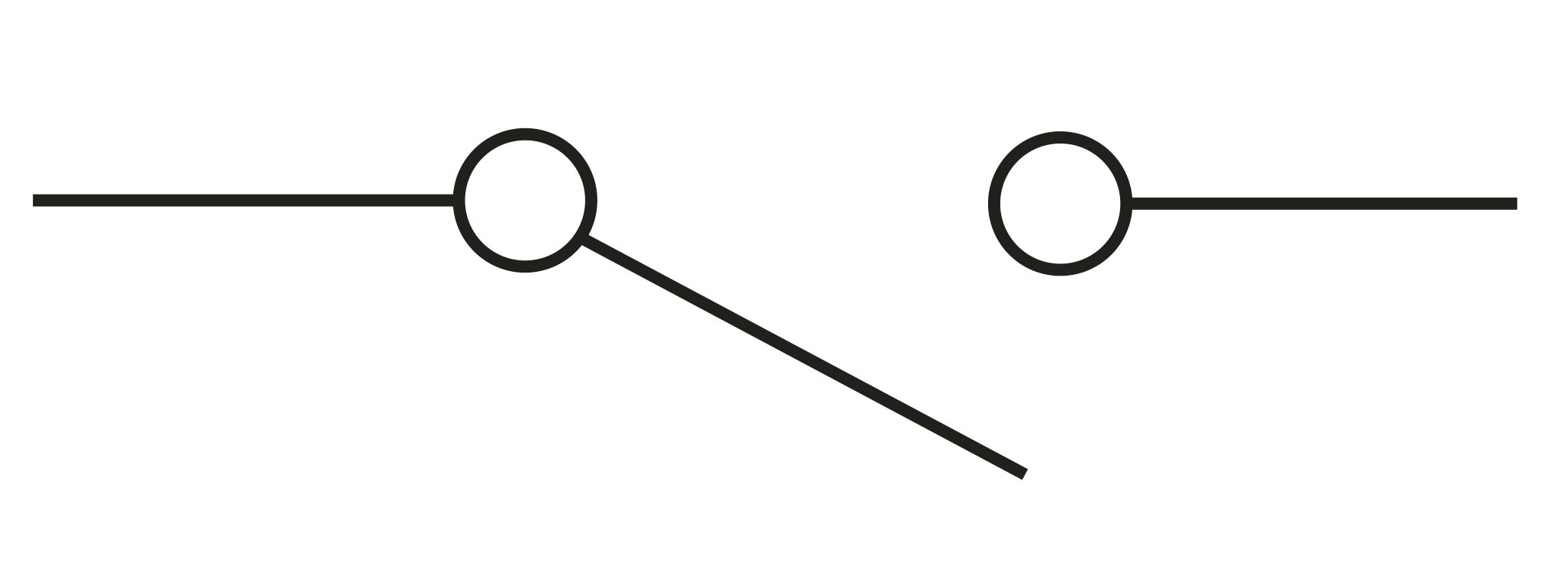
this is the symbol for a _____?
a)
switch
b)
light
c)
battery
d)
wires
16.

A fifth grade class constructed this circuit. Which of these objects most likely made the light glow when connected to points X and Y?
a)
plastic straw
b)
cotton string
c)
aluminum foil
d)
rubber eraser
17.

A class prepared some electrical circuits using battery, connecting wires, and three light bulbs. Which of these circuits can make the three bulbs light?
a)
A
b)
B
c)
C
d)
D
18.
An electrician is wearing rubber gloves for protection. The purpose of the rubber gloves is to --
a)
keep the electrician dry
b)
create an electrical circuit
c)
produce electricity
d)
protect the electrician
19.
Which of these substances conducts electricity the best?
a)
wood
b)
brick
c)
copper
d)
plastic
20.
What material would be safest to use as an insulator to cover electrical wires?
a)
rubber
b)
tin
c)
aluminum
d)
water
21.
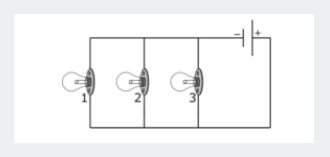
If bulb 1 burns out, what will occur?
a)
bulbs 2 and 3 will go out
b)
bulbs 2 and 3 receive more volts
c)
bulbs 2 and 3 will stay lit
d)
nothing will happen
22.
What BLOCKS THE FLOW of electricity through it?
a)
Conductors
b)
Insulators
c)
Resistors
23.

What type of circuit is this?
a)
series
b)
parallel
24.

What is the power source for this circuit?
a)
Battery
b)
Electric socket
c)
Wires
d)
Magic
25.

What type of circuit is this?
a)
series
b)
parallel
26.
tiny particles that have a negative charge
a)
protons
b)
neutrons
c)
electrons
d)
circuits
27.
What is one problem with using a series circuit?
a)
It has a lot of series.
b)
If one light goes down, they all go down!
c)
It doesn't work properly.
d)
There are no problems.
28.
What is a benefit of using a parallel circuit?
a)
It gets confusing.
b)
There are no problems.
c)
If one light goes out, it does not affect the others.
d)
If one light goes out, they all go out.
29.

What is this symbol for?
a)
light bulb
b)
switch
c)
battery
d)
resistor
30.

An outlet in a wall and a battery are examples of __________.
a)
Power source
b)
Load
c)
Energy pathway
d)
ALL of them
31.

A wire is an example of _____.
a)
Battery source
b)
Energy pathway
c)
Load
d)
All of them
32.

___________ wires keep electrons on course & protect us from the dangerous flow of electricity.
a)
Insulated
b)
Conducted
33.

From this picture which is the conductor and which is the insulator?
a)
Conductor: yellow wire, Insulator: black wire
b)
Insulator: yellow wire, Conductor: black wire
34.

A _______ controls whether an electric device is ON or OFF.
a)
electrical switch
b)
electric circuit
35.
Magnetism created by an electric current
a)
electricity
b)
electromagnetism
c)
wind energy
36.
When the switch is closed, the light
a)
comes on
b)
stays off
c)
burns out
37.
Two batteries in a circuit make the lights in the circuit brighter than one battery.
a)
true
b)
false
38.

What can we do to make this circuit pictured complete?
a)
connect wire to the terminal
b)
disconnect the wire from the lightbulb
c)
screw in the lightbulb
d)
replace the battery
39.
The ____________ is the energy that flows from the battery, through the wire in it’s path through the circuit.
a)
Electric Current
b)
Conductor
c)
Electromagnet
d)
Insulator
40.

) What would happen if an extra battery cell is added?
a)
A)The lights will glow dim
b)
The wire will glow
c)
The lights will glow brighter
d)
None of the above
41.
Two types of circuits are
a)
parallel and magnetic
b)
electromagnetic and series
c)
series and parallel
42.
An example of a parallel circuit is
a)
the wiring in a house
b)
a flashlight
c)
a single circular path
43.
measure of electric current
a)
watt
b)
ohm
c)
volt
d)
amp
44.
measure of resistance
a)
watt
b)
ohm
c)
volt
d)
amp
45.
measure of power
a)
watt
b)
ohm
c)
volt
d)
amp
46.
provides more than one path for the electrons to follow
a)
series circuit
b)
parallel circuit
c)
insulator
d)
conductor
47.
What causes lightning?
a)
A similarity in electrical charge.
b)
Electrons flowing through a conductor.
c)
A difference in electrical charge.
d)
Raindrops conducting electricity from the clouds to the ground.
48.
A flow of electrons through a conductor is called:
a)
A river
b)
A spark
c)
An electron flow
d)
A current
49.
What are the three components of a circuit?
a)
Pathway, Source, and Battery.
b)
Energy source, Conductor, and Receiver.
c)
Battery, Bulb, and Plastic.
d)
Wire, Electron, and Charge.
50.

In the following diagram, the lightbulb is:
a)
Pathway
b)
Energy source
c)
The conductor
d)
The energy reciever
51.

What types of charges attract?
a)
Positive and Positive
b)
Positive and Neutral
c)
Negative and Neutral
d)
Positive and Negative
52.

What is this?
a)
magnet
b)
electromagnet
c)
series circuit
d)
parallel circuit
53.

How are electromagnets different from magnets?
a)
magnets can be turned on/off
b)
you can turn an electromagnet on/off
c)
magnets are more powerful
d)
magnets have a North and South pole
54.
When socks get stuck to towels in your dryer, this is an example of________________
a)
current electricity
b)
static electricity
55.
The difference between attract and repel is that to attract is to pull something closer and repel is to push something away.
a)
True
b)
False
56.
What types of charges attract?
a)
Positive and Positive
b)
Positive and Neutral
c)
Negative and Neutral
d)
Positive and Negative
57.
The accumulation of excess electric charge on an object is called
a)
Static electricity
b)
Electric discharge
c)
Resistance
d)
Circuit
58.
Electric charges that are alike _______ each other.
a)
Attract
b)
Repel
59.
What charge does a proton have?
a)
negative (-)
b)
positive (+)
c)
neutral or no charge (0)
60.
What charge does an electron have?
a)
negative (-)
b)
positive (+)
c)
neutral or no charge (0)
61.
If a substance has a higher number of electrons than protons on its surface, what type of charge does it have?
a)
A positive charge.
b)
A negative charge.
c)
A neutral charge
d)
No charge at all
62.
What is the major difference between static electricity and current electricity?
a)
Current electricity involves a continuous flow of neutrons; static electricity is a sudden transfer of protons
b)
Current electricity can be deadly; static electricity is almost always safe
c)
In current electricity, there's a single transfer of electrons; in static electricity, there's a steady flow of electrons
d)
Current electricity involves a flow of electrons; static electricity involves a single transfer of electrons
63.
How do electrons differ from protons?
a)
They are the same thing
b)
Electrons hold a negative charge and protons hold a positive charge.
c)
Electrons are positively charged and protons are negatively charged.
d)
Protons are neutral
64.
What happens when you touch a metal doorknob after rubbing your shoes on the carpet?
a)
The doorknob sends a burst of electric current into your body
b)
Millions of electrons go from your finger into the doorknob
c)
The doorknob sends millions of electrons into your finger
d)
our finger becomes negatively charged
65.
Which of the following is caused by static electricity?
a)
a stove getting hot when it is turned on
b)
a magnet being attracted to a refrigerator
c)
a lightning strike during a storm
d)
a light bulb coming on when a switch is turned on
66.
True or False, Lighting is a form of static electricity.
a)
True
b)
False
67.
Electrical charge built up on the surface of an object is called _________________.
a)
static electricity
b)
current electricity
c)
lightning
d)
electrons
68.
Why can you get a shock if you touch a metal doorknob after walking across a wool carpet?
a)
You have gained electrons; the doorknob has no electrons.
b)
You have gained neutrons; the doorknob has fewer electrons.
c)
You have lost electrons; the doorknob has many electrons.
d)
You have gained electrons; the doorknob has many electrons.
69.
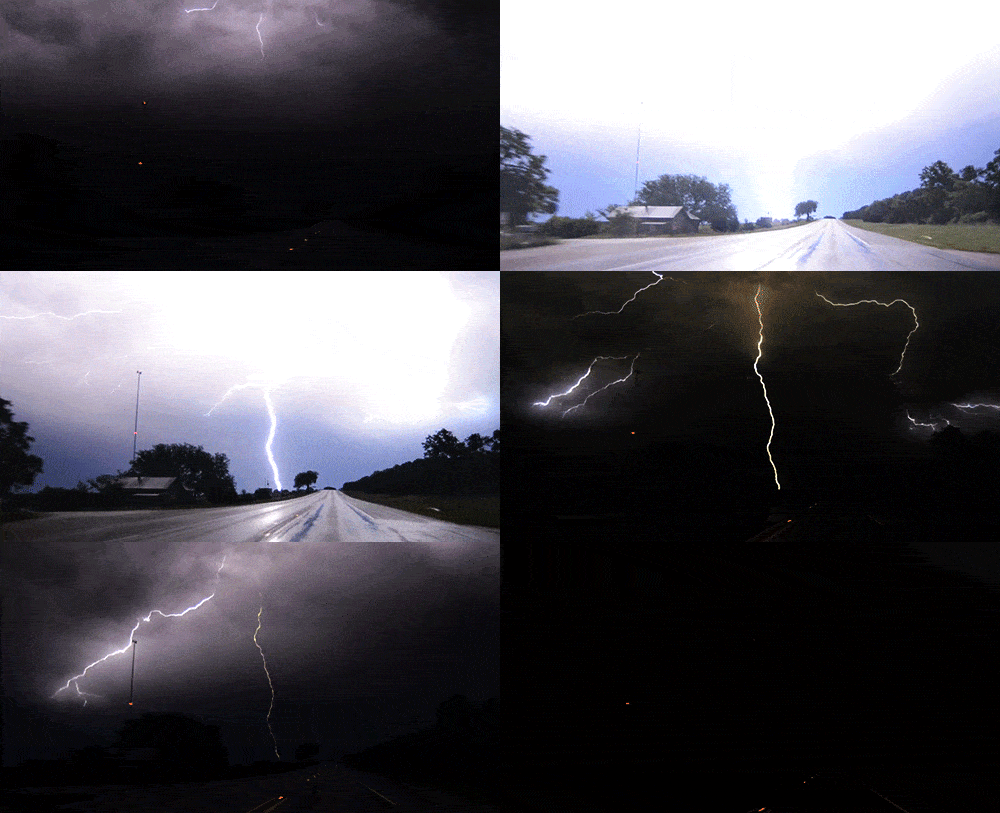
Lightning occurs because ___.
a)
the negative charges at the bottom of clouds are attracted to the positive charges on the ground.
b)
the positive charges at the bottom of clouds are attracted to the negative charges on the ground.
c)
the positive and negative charges inside clouds are attracted to each other
d)
All of these reasons are correct.
70.

Walking across a carpet is an example of charge being transferred by
a)
friction.
b)
induction.
c)
contact.
d)
static electricity
71.
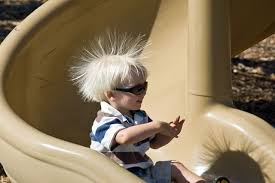
What method of static charging is shown in this picture
a)
Polarization
b)
Friction
c)
Induction
d)
Conduction
72.
If two charges repel each other, the two charges must be
a)
Positive and neutra
b)
Positive and negative
c)
positive and neutral
d)
negative and negative
73.
An object becomes charged when the atoms in the object gain or lose
a)
electrons
b)
protons
c)
neutrons
d)
all of the above
74.
If you rub a glass rod with a piece of silk, the rod becomes positively charged. This means that
a)
friction destroyed electrons in the rod.
b)
the silk has become negatively charged.
c)
protons have moved to the rod.
d)
glass attracts more protons.
75.

Two things with opposite charges will
a)
attract one another.
b)
repel one another.
76.
Electrons are found...
a)
In the atom's nucleus.
b)
In the cloud around the nucleus.
77.

The girl's hair and the comb are attracting one another. The hair and the comb have
a)
opposite charges
b)
like charges
78.

Where do electrons go when you rub a balloon on your hair?
a)
Onto the balloon
b)
Into your hair
c)
They don't go anywhere (they remain stationary)
d)
Into the air
79.

How do like charges act on each other?
a)
Like charges repel
b)
Like charges attract
c)
Like charges build up
d)
Like charges are neutral
80.

How do unlike charges act on each other?
a)
Unlike charges attract
b)
Unlike charges repel
c)
Unlike charges are neutral
d)
Unlike charges build up
81.

What will you likely see during an electrical discharge?
a)
A rainbow
b)
A spark
c)
Red
d)
Moisture
82.

How might you cause negative charges to build up on your body?
a)
Laughing too much
b)
Rubbing you hands together
c)
Rubbing your feet on carpet
d)
Combing your hair
100 %

