
 Worksheets
Chapter 5: Water on Earth
Total questions: 78
Worksheet time: 1hrs 15mins
Name
Class
Date
1.
What is the energy source for the water cycle?
a)
the sun
b)
the earth
c)
water
d)
the moon
2.
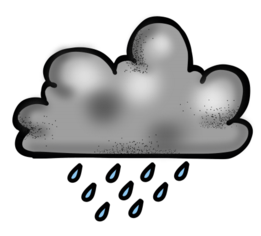
What part of the water cycle does this picture show?
a)
condensation
b)
precipitation
c)
evaporation
3.
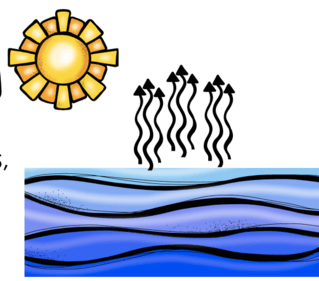
What part of the water cycle does this picture show?
a)
condensation
b)
precipitation
c)
evaporation
4.
What is evaporation?
a)
The part of the water cycle when the sun heats up water, turning it from a liquid into water vapor or steam. It rises from the ground into the air.
b)
The part of the water cycle when the water vapor in the air gets cold. The water turns back into a liquid and forms clouds.
c)
The part of the water cycle when clouds get heavy and can no longer hold the liquid water. This causes the water to fall from the sky to the earth as rain, snow, sleet, or hail.
5.
What is condensation?
a)
The part of the water cycle when the sun heats up water, turning it from a liquid into water vapor or steam. It rises from the ground into the air.
b)
The part of the water cycle when the water vapor in the air gets cold. The water turns back into a liquid and forms clouds.
c)
The part of the water cycle when clouds get heavy and can no longer hold the liquid water. This causes the water to fall from the sky to the earth as rain, snow, sleet, or hail.
6.
What is precipitation?
a)
The part of the water cycle when the sun heats up water, turning it from a liquid into water vapor or steam. It rises from the ground into the air.
b)
The part of the water cycle when the water vapor in the air gets cold. The water turns back into a liquid and forms clouds.
c)
The part of the water cycle when clouds get heavy and can no longer hold the liquid water. This causes the water to fall from the sky to the earth as rain, snow, sleet, or hail.
7.

When water condenses, the water vapor in the air gets ___________ and changes back into liquid.
a)
cold
b)
hot
c)
warm
d)
solid
8.
When water condenses, the liquid water forms ______________.
a)
water vapor
b)
steam
c)
air
d)
clouds
9.

Precipitation happens when clouds of water droplets are too ______________.
a)
cold
b)
light
c)
heavy
d)
hot
10.
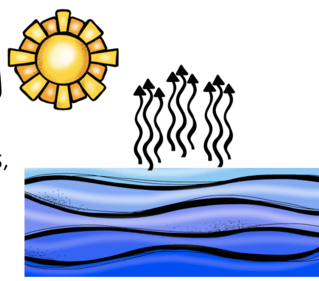
Evaporation happens when the sun ___________ water and turns it into vapor.
a)
cools
b)
heats up
c)
freezes
d)
lights up
11.
Which of these is an example of precipitation?
a)
snow
b)
air
c)
clouds
d)
vapor
12.

Does evaporation happen before or after condensation?
a)
before
b)
after
c)
during
13.

Does precipitation happen before or after condensation?
a)
before
b)
after
c)
during
14.

What part of the water cycle does this picture show?
a)
condensation
b)
precipitation
c)
evaporation
15.
Plants use water to ______.
a)
release as a waste product.
b)
keep predators away.
c)
make their own food.
d)
attract pollinators.
16.
Approximately what percentage of Earth's water is freshwater?
a)
97%
b)
71%
c)
30%
d)
3%
17.
Approximately what percentage of Earth's water is salt water?
a)
97%
b)
71%
c)
30%
d)
3%
18.
The streams and small rivers that feed into a main river are called ______.
a)
watersheds
b)
tributaries
c)
divides
d)
wetlands
19.
The water in ponds and lakes is ______.
a)
moving
b)
deep
c)
still
d)
salty
20.
Which of the following is true as you descend through the water column in the ocean?
a)
temperature decreases
b)
pressure decreases
c)
light increases
d)
density decreases
21.
What causes surface currents to move in circular paths?
a)
strong winds
b)
salinity
c)
the Coriolis effect
d)
the Global Ocean Conveyor
22.
What term describes a volcanic mountain that rises from the ocean floor but does not reach the surface?
a)
continental slope
b)
seamount
c)
mid-ocean ridge
d)
volcanic island
23.
Water that fills the cracks and spaces in underground soil and rock layers is called a(n) ______.
a)
salt water
b)
rain water
c)
groundwater
d)
water vapor
24.
A deep canyon in the ocean floor is called a(n) ______.
a)
abyssal plain
b)
seamount
c)
trench
d)
continental shelf
25.
Lakes can disappear due to ______.
a)
condensation
b)
eutrophication
c)
transpiration
d)
photosynthesis
26.

Where is groundwater sent/released?
a)
to our buildings, houses, and water transplant places
b)
to the sky
c)
to the sun
d)
to the Earth's surfaces
27.

After the rain falls down onto Earth's surface, what most likely happens? What is it called?
a)
1. The remains of the water is soaked into the ground.
2.Groundwater
2.Groundwater
b)
1. Groundwater
2. The remains of the water is soaked into the ground.
2. The remains of the water is soaked into the ground.
c)
1. Groundwater
2. Transpiration happens to the plants.
2. Transpiration happens to the plants.
d)
1. The liquid turns into an gas or an water vapor
2. Evaporation
2. Evaporation
28.

What is it called when plants give off water vapor as a waste product?
a)
condensation
b)
evaporation
c)
sublimation
d)
transpiration
29.

What is the water cycle?
a)
the 3 forms of water
b)
the movement of water on, above, or below the surface of the Earth
c)
when water melts
d)
when clouds form
30.
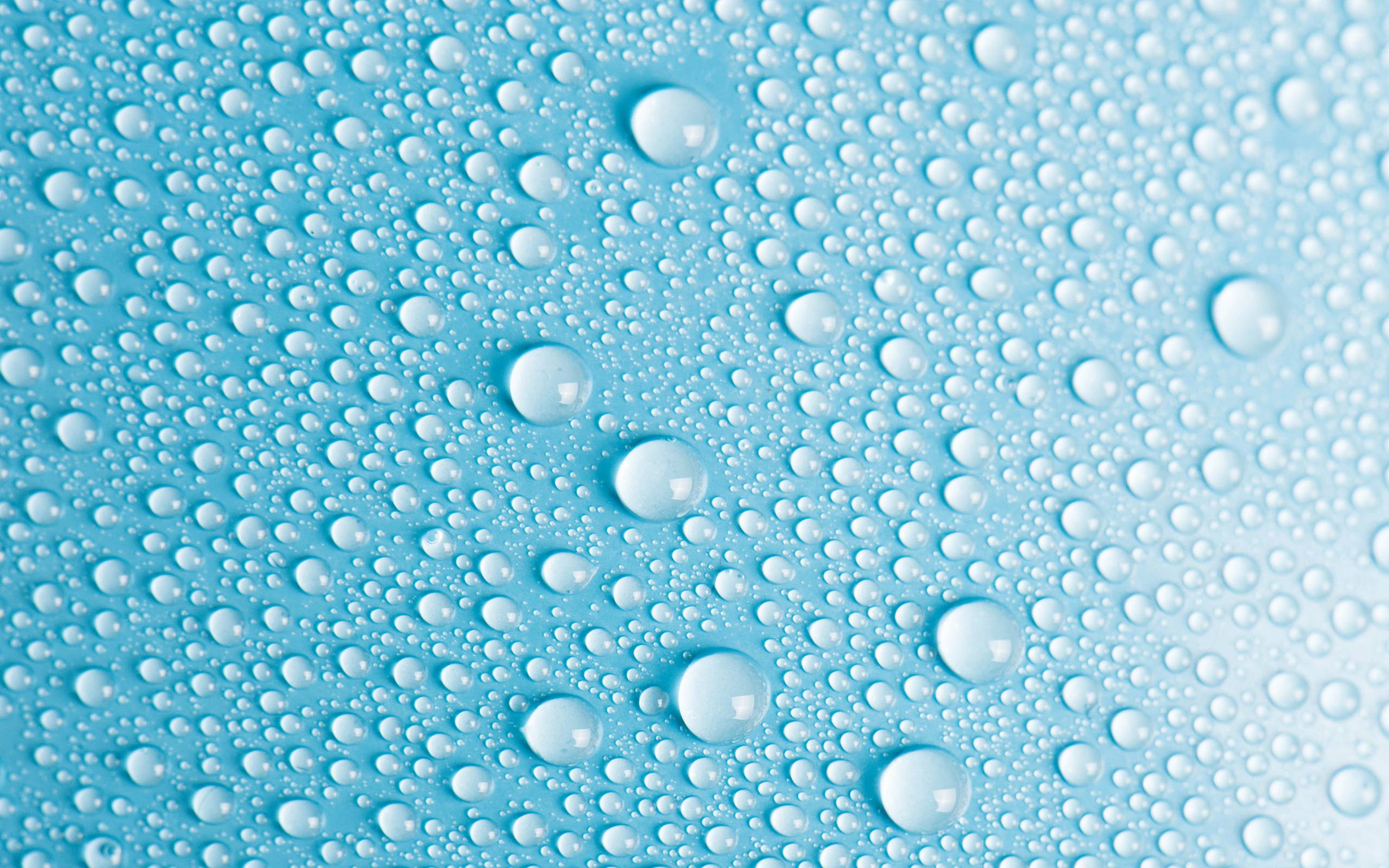
When water _________, dew forms.
a)
melts
b)
evaporates
c)
condenses
d)
precipitates
31.

Which best explains why runoff is important?
a)
It returns water to other locations on Earth
b)
It increases the chance of flooding
c)
It makes evaporation occur faster
d)
It increases condensation
32.

Snow, sleet, hail, and rain are all examples of ________________.
a)
evaporation
b)
condensation
c)
accumulation
d)
precipitation
33.
Where is most water found on Earth?
a)
In glaciers
b)
In lakes
c)
In rivers
d)
In oceans
34.

Which stages does liquid water from the ocean turn into water vapor?
a)
condesantion
b)
evaporation
c)
precipitation
d)
run off
35.

Which stage does the #2 show in the diagram?
a)
condensation
b)
evaporation
c)
precipitation
d)
run off
36.

Which stage does the #3 show in the diagram?
a)
condensation
b)
evaporation
c)
precipitation
d)
run off
37.

What does the #4 show in the diagram?
a)
condensation
b)
evaporation
c)
precipitation
d)
run off
38.
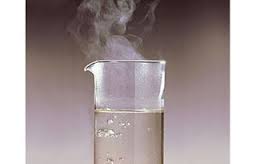
What is water doing when it is changed to water vapor?
a)
evaporating
b)
condensing
c)
precipitating
d)
runoff
39.
When clouds form - what process is occurring?
a)
Meteorology
b)
Condensation
c)
Collection
d)
Runoff
40.
If the Earth did not rotate on its axis, there would be no ______.
a)
Greenhouse effect
b)
Coriolis effect
c)
Global warming
d)
Convection
41.
Where is ocean water the most dense?
a)
The surface
b)
The middle
c)
The bottom
d)
Lake Michigan
42.
______ is the weight of the water pressing on an object.
a)
temperature
b)
water pressure
c)
desalination
d)
density
43.

(TRUE or FALSE) As you go deeper in the ocean, the water is warmer and less salty.
a)
True
b)
False
44.
______ is the amount of salt found in water.
a)
Temperature
b)
Salinity
c)
Pollution
d)
Clarity
45.
What is the cause of most ocean surface currents?
a)
gravity
b)
the wind
c)
the moon
d)
upwellings
46.
Due to the Coriolis Effect, water in the southern hemisphere moves ______.
a)
clockwise
b)
counter-clockwise
c)
both
d)
neither
47.
Two types of ocean currents are ______.
a)
local and global
b)
sea and land
c)
surface and deep
d)
warm and cold
48.
Deep-ocean currents are driven by ______.
a)
differences in soil
b)
differences in the water’s density,
c)
differences in nutrients
d)
None of the Above
49.
Throughout the year, there is usually some wind blowing at the beach during the day and night. What is the cause of these winds?
a)
air flowing down mountains to the ocean
b)
differences in the humidity over land and ocean
c)
differences in the temperature of land and ocean
d)
air flowing from the upper parts of the atmosphere
50.
When we go to beach, we walk on the ____________.
a)
continental slope
b)
continental shelf
c)
abyssal plain
d)
seamount
51.

What does label A represent in the picture?
a)
continental slope
b)
continental shelf
c)
abyssal plain
d)
sea mount
52.

What does label C represent in the picture?
a)
continental slope
b)
continental shelf
c)
abyssal plain
d)
sea mount
53.

What does label D represent on the picture?
a)
continental slope
b)
continental shelf
c)
abyssal plain
d)
mid ocean ridge
54.
What do you call an underwater mountain?
a)
trench
b)
abyssal plain
c)
seamount
55.
Plants make their own food using the process of __________________.
a)
Photosynthesis
b)
consumer
c)
food web
d)
producer
56.
What do you call a scientist who studies the ocean for a living?
a)
An oceanist
b)
An oceanologist
c)
An oceanographer
d)
An oceanthropist
57.
(TRUE or FALSE) The Gulf Stream is a surface current.
a)
TRUE
b)
FALSE
58.
(TRUE or FALSE) The temperature of the ocean is different depending on where you are.
a)
TRUE
b)
FALSE
59.
In general, surface currents that flow from the tropics toward the poles carry ______________ water.
a)
warm
b)
cold
c)
fresh
d)
oxbow lake
60.
In the northern hemisphere, the Coriolis effect causes currents to do which of the following?
a)
curve counterclockwise
b)
curve clockwise
c)
reverse direction
d)
sink
61.
The Gulf Stream ____________ nearby land areas.
a)
cools
b)
causing freezing in
c)
warms
d)
causes rain in
62.
A surface current affects the ________________ of nearby land.
a)
climate
b)
daily temperature
c)
winds
d)
toast
63.
______________currents affect water down to a depth of several hundred meters.
a)
Surface
b)
Deep
c)
Transition
d)
Kendrick Lamar
64.

The current that Marlin and Dorry take in "Finding Nemo" is a warm water current known as the ____________________
a)
East Australian Current (EAC)
b)
Antaractic Subpolar Current (ASC)
c)
California Current (CCD)
d)
Canary Atlantic Middle Current (CAM)
65.
________ is a climate event that occurs when surface waters in the eastern Pacific are colder than normal.
a)
La Nina
b)
El Nino
c)
Coriolis Effect
d)
trade winds
66.
____________ is an abnormal warming climate event that occurs every 2 to 7 years in the Pacific Ocean.
a)
El Nino
b)
La Nina
c)
Curse of the goat
d)
Curse of the Bambino
67.
Scarlett, Liam, and Henry were building sandcastles at the beach when they spotted huge streams of water moving through the ocean. Excited, they started guessing what these powerful streams are called. ____________ are large streams of moving water that flow through the oceans.
a)
La Niña
b)
El Niño
c)
Currents
d)
Climate
68.
______ is the pattern of temperature and precipitation typical of an area over a long period of time.
a)
Climate
b)
Weather
c)
A season
d)
The Coriolis Effect
69.
What are two factors that affect the density differences in the ocean?
a)
salinity and temperature
b)
salinity and pressure
c)
pressure and temperature
d)
salinity and El Nino
70.
(TRUE or FALSE) As you go deeper in the ocean, the water is colder and less salty.
a)
True
b)
False
71.
The land area that feeds a stream or main river is called a(n) ______.
a)
watershed
b)
divide
c)
tributary
d)
reservoir
72.
Compared to lakes, ponds are usually ______.
a)
larger
b)
shadier
c)
deeper
d)
shallower
73.
As water moves through the water cycle, the total amount of water on Earth ______.
a)
increases
b)
decreases
c)
stays the same
d)
fluctuates with the seasons
74.
Predict the effect ocean currents have on the climate of coastal areas.
a)
Ocean currents have no effect on climate.
b)
Ocean currents always cool a coastal area and create a cool climate.
c)
Ocean currents warm the land constantly and create a warm climate.
d)
Ocean currents can warm or cool the air above them and influence the climate.
75.
The sun and warm winds heat water on the ocean's surface. Infer the cause for a stream of cold water to move slowly across the ocean floor.
a)
The surface wind patterns push cold water down to the ocean floor.
b)
The Coriolis Effect spins the cold water to the ocean floor.
c)
The differences in water density cause the cold water to sink to the ocean floor.
d)
The differences in water pressure cause the cold water to sink to the ocean floor.
76.
How can water be scarce in some places when almost 3/4 of the Earth is covered by water?
a)
Most of Earth's water is salty water.
b)
Most of Earth's water is underground.
c)
Most of Earth's water is in the atmosphere.
d)
Most of Earth's water is frozen at the poles.
77.
How do humans cause or increase eutrophication?
a)
Structures built along the edges of ponds and lakes block sunlight.
b)
Recreational vehicles, including boats, release hazardous materials into ponds and lakes.
c)
Power boats remove algae from the surfaces of ponds and lakes.
d)
Fertilizer from farms runs off into ponds and lakes.
78.
What causes deep ocean currents to curve?
a)
the Coriolis effect
b)
global wind patterns
c)
pockets of warm ocean water
d)
obstacles on the ocean floor
100 %

