
 Worksheets
EOT1 G7 Quiz 2
Total questions: 79
Worksheet time: 1hrs 12mins
name of the positively charged particle in an atom
(a)
name of the neutral particle in an atom
(a)
name of the center of an atom which contains protons and neutrons
(a)
name of the negatively charged particle in an atom
(a)
the number of protons and electrons in an atom are (a)
What is a small particle that is the building block of matter?
proton
atom
nucleus
electron
Two or more atoms joined together are called___.
combination
duet
molecule
atomic group
Each proton has a ______________ electrical charge.
negative
positive
neutral
shocking
Each neutron has an electrically _________________ charge.
positive
neutral
negative
shocking
The nucleus of an atom contains protons and _________________.
electron
neutrons
haptons
wontons
What does the Greek word for atoms mean?
unbelievable
uncuttable/indivisible
unstoppable
interchangable


Which statement correctly describes the location and charge of the neutrons in an atom?
The neutrons are inside the nucleus and have a positive charge.
The neutrons are outside the nucleus and have a neutral charge.
The neutrons are outside the nucleus and have a negative charge.
The neutrons are inside the nucleus and have a neutral charge.
99.9% of the atom's mass is found where?
nucleus
protons
electron cloud
neutrons
Which one describes purity or pure element?
it has two or more different types of atom
it has one and the same type of atoms all throughout
it is made up of sub-atomic particles
it is a matter and has the different subatomic particles
Gold is divided into 24 parts, with each single unit called a karat. The higher the karat, the purer the gold. How much is the concentration of gold in a 10 K neclace?
99.5 %
75 %
50 %
41.7 %
Gold is divided into 24 parts, with each single unit called a karat. The higher the karat, the purer the gold. How much is the concentration of gold in a 14 K neclace?
99.5 %
75 %
58.3 %
41.7 %
If a diamond has 1000 parts, it is said to be pure diamond. If the diamond is mixed with parts of other atoms, what is the concentration of a diamond if it has at least 800 parts?
50 %
60 %
70 %
80 %
When there is more than one product they are mixed up together, this means that the product produced is ______.
pured
compound
impured
atom
Some reactions would lead to impurity because it has two or more products during the reaction. Why do you think it is hard to produce pure product?
Select two correct responses.
because some different types of atoms of compounds are mixed up
because reactants are made up of two different compounds reacting together
atoms do not react each chemically
atoms are attracted to each other
A substance that contains more than one substance
A mixture
A pure substance
An element
A substance that only contains one type of atom
A mixture
An element
A compound
A substance that contains two or more different types of atoms chemically joined together
A mixture
An element
A compound
Teacher Rickie has a 1kg piece of metal. It contains 700g of gold and 300g of silver. What is the silver purity of this piece of metal?
70%
30%
50%
What is the average percentage of salt in seawater?
1.0%
2.35%
99%
3.5%
Fall here tends to be dry and cool.
Weather
Climate
The temperature is currently 3oC.
Weather
Climate
Our warmest month is August.
Weather
Climate
The nighttime low is expected to be -5oC
Weather
Climate
Which one of the following are not used to measure or describe the weather?
Temperature
Wind Direction and Speed
Mountain
Precipitation

Use the table to answer the question. Each location has an average annual temperature above 18ºC (64ºF). Which location is most likely to have a tropical climate?
Location A
Location B
Location C
Location D

Which location has the driest climate?
Location A
Location B
Location C
Location D

Use the table to answer which location has the wettest climate?
Location A
Location B
Location C
Location D
Which of the following is a major factor in Earth's current global warming?
stronger hurricanes
burning of fossil fuels
increase in volcanic activity
increase in Sun's brightness
What substances make up most of the atmosphere?
nothing except sometimes clouds
gases such as nitrogen, oxygen, argon, and water vapor
tiny particles of pollution from cars and other machines
greenhouse gases such as carbon dioxide and methane
What is the difference between weather and climate?
Climate is determined by temperature
Weather is determined by temperature
Climate is at a set time weather is over long period of time
Weather is at a set time climate is over long period of time
Which of the following are the 2 main factors that determine climate?
Preciptiation and humidity
Temperature and Air Pressure
Wind conditions and Humidity
Temperature and Precipitation

Why do latitudes closer to the equator have warmer climates?
Closer to the equator is lower in elevations.
Closer to the equator receive more solar energy.
Closer to the equator are nearer to ocean currents
Closer to the equator get more wind.
The atmospheric condition of a place on a day to day basis is called
Weather
Climate
Temperate
Humidity
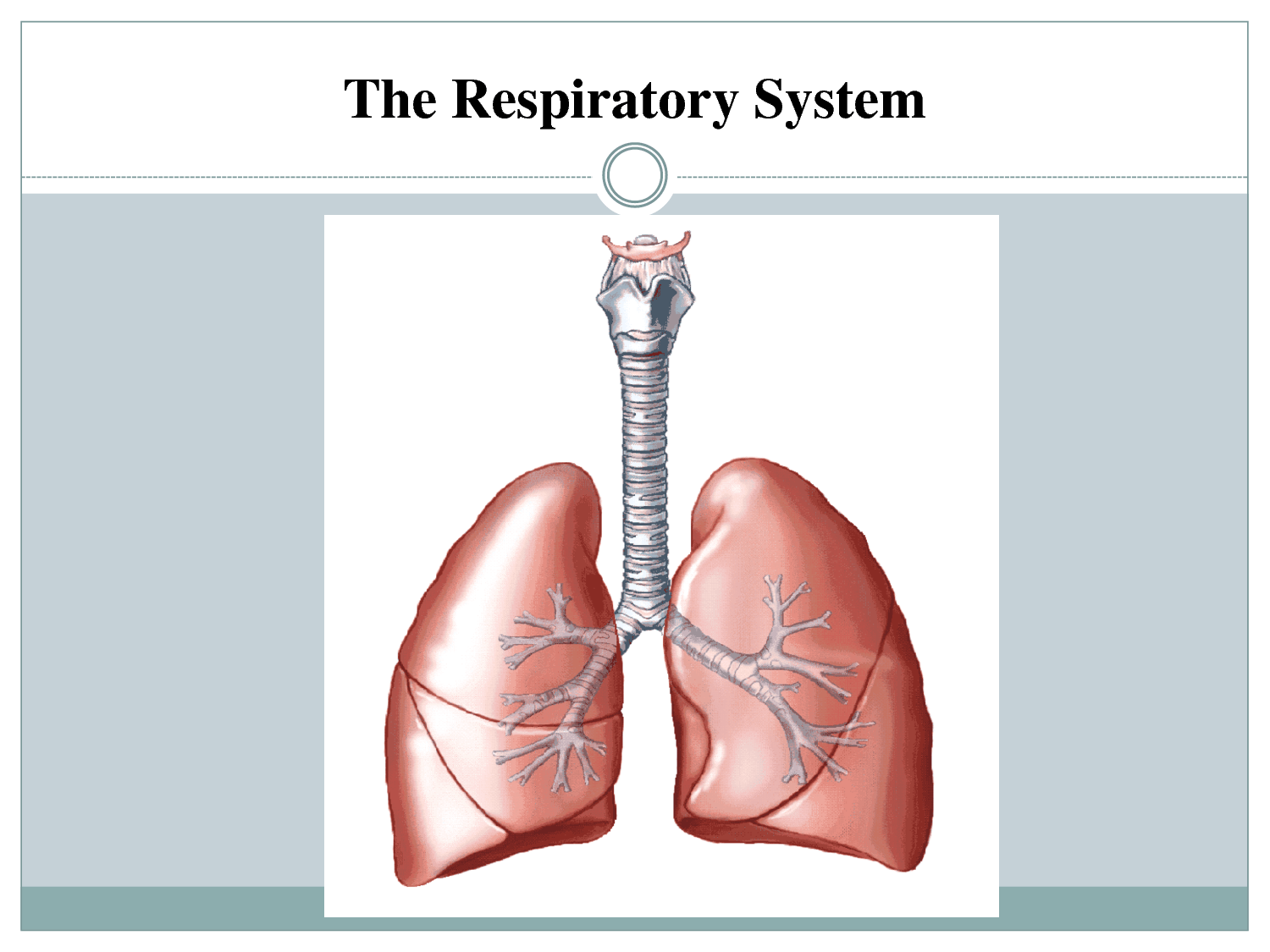
What is the main function of the respiratory system?
to provide oxygen and remove carbon dioxide from the body
o break down food and absorb nutrients
to remove oxygen from the body and deliver carbon dioxide
What are the main organs of the respiratory system that allow us to breathe and for gas exchange to happen?
diapragm
lungs
trachea
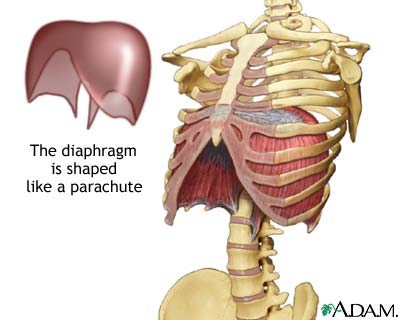
What is function of the dome-shaped diaphragm muscle?
This is where gas exchange happens.
Air passes through the diaphragm on the way to the lungs.
It attaches to the lungs and contracts and relaxes to help in breathing.
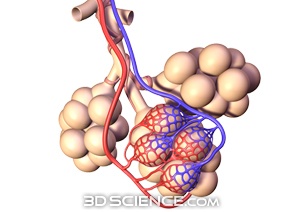
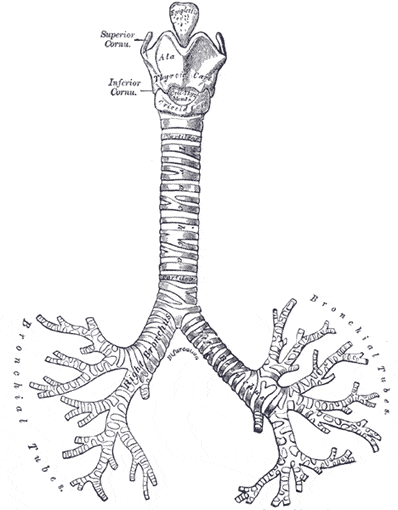
These are the two two main branches from the trachea (one to each lung)
bronchi
alveoli
capillaries
bronchioles
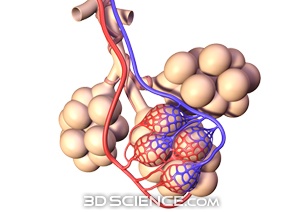
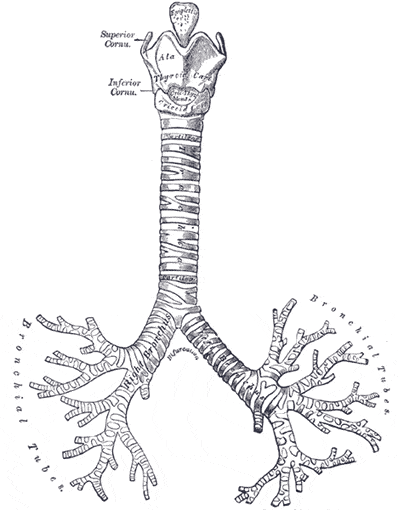

What type of cells carry oxygen in the blood?
red blood cells
white blood cells
Increase in the amount of chemicals within an organism over time
Biomagnefication
10% Rule
Energy Pyramid
Bioaccumulation
What are examples of toxins? (choose all that apply)
water
salt
pesticides
mercury
insecticides

In which organism would biomagnification be the most concentrated? (Remember the lab: Rabbits eat the grass, the snake eats the rabbit, the hawk eats the snake--the hawk is the apex predator) (a)

Which organism would have the most bioaccumulation? (a)
Pesticides and herbicides eventually show up in higher-level consumers (i.e. as you go up the food chain) due to (a)
Which statement best reflects the reality of human recycling and trash disposal.
Recycling and proper trash disposal are not my responsibility. We have sanitation workers.
Recycling and trash disposal are way too expensive. Polluting nature is just a sad reality we can't really do anything about.
If humans put their minds to it, we could solve most of our recycling and trash disposal problems. Maybe not all, but anything is better than doing nothing.
There really is no point in trying to recycle or dispose of trash properly. There is no way to solve the problem or make it better.

Why is an invasive species harmful to an ecosystem?
They help other organisms
They disrupt the food chain
They contribute to carbon dioxide emmisions
They are not that harmful

This refers to organisms that feeds on primary consumers
producer
primary consumer
secondary consumer
tertiary consumer
It is very easy to remove introduced species to a habitat once they have arrived.
TRUE
FALSE
This refer to the increasing concentration of a toxin as you go up the food chain
biomultiplication
biotoxin addition
bioaccumulation
biomagnification
Bioaccumulation and biomagnification describe the same process.
TRUE
FALSE
This refers to the where organisms usually live
habitat
house
vicinity
neighborhood
Which is an example of a producer?
elephant
worm
mushroom
sunflower
Organisms that can produce their own food are called
(a)
Corn --> Chicken --> Snake --> Hawk. This is an example of
food web
food chain
food process
eating process

A system comprising all the biotic and abiotic factors in an area and all the interacts among them
Ecosystem
Community
Population
Species
The place where an organism naturally lives and grows
Niche
Ecosystem
Habitat
Environment
Ecology is the study of:
only living things in an environment.
only the nonliving things in an environment.
how living things interact with each other and the nonliving things in the environment.
scientists who perform research on living things.
What is a species?
Different animals that compete for the same resources.
A group of similar organisms that can reproduce with each other.
A group of organisms that live together.
A group of organisms that are physically and functionally very different from each other.
Which type of scientist studies ecology?
environmentalist
botnist
biologist
ecologist
Although we rely on coal, oil, and natural gas to
produce energy, some environmental scientists have
proposed that we use less fossil fuel. One reason to
support this proposal is to
enable us to preserve rainforests in tropical
areas
help us to reduce the production of carbon
dioxide gas
allow us to decrease the use of fertilizers on
crops
encourage us to end research on wind and water
power sources

The study of how living things interact with one another and with their environment.
Biology
Lithology
Ecology
Farmacology

