
 Worksheets
Lunar Cycle, Tides, Eclipses, The Galaxy
Total questions: 77
Worksheet time: 3hrs 11mins
Name
Class
Date
1.
A[n] ______________ tide occurs when the sun is at right angles to the line between Earth and the moon.
a)
high
b)
neap
c)
low
d)
spring
2.
Differences in the moon's and sun's pull on different sides of the Earth cause _________.
a)
gravity
b)
lunar phases
c)
tides
d)
dabbing
3.
A[n] ___________ tide occurs when the sun, Earth, and the moon are nearly in a line.
a)
spring
b)
high
c)
low
d)
neap
4.
The bulge of water on the side of the Earth closest to the moon produces ___________.
a)
high tide
b)
low tide
c)
neap tide
d)
spring tide
5.
A neap tide is a tide with the greatest difference between low and high tides
a)
true
b)
false
6.
Tides are caused mainly by the differences in how much gravity from the moon and the sun pulls on different parts of the Earth.
a)
True
b)
False
7.
Changes in the positions of Earth, the moon, and the sun affect the height of high tides during a month.
a)
True
b)
False
8.
Tides are caused by
a)
strong winds that blow over ocean waters.
b)
the interaction of Earth, the moon and the sun.
c)
the shifting of the plates on the ocean floor.
d)
variations in the salinity of ocean water
9.

Which body has the greater effect on Earth's tides?
a)
Sun
b)
Saturn
c)
Moon
d)
Venus
10.

Wha type of tide would this arrangement of earth-moon-sun create?
a)
full moon tide
b)
new moon tide
c)
neap tide
d)
spring tide
11.

What type of tides would this arrangement of earth-moon-sun create?
a)
neap tide
b)
spring tide
c)
new moon tide
d)
full moon tide
12.
What causes tides?
a)
gravity
b)
wind
c)
spring
d)
neap
13.
The Moon has a greater influence on Earth tides than the Sun because...
a)
it is smaller than the Sun
b)
it revolves around the Earth
c)
it is closer to the Earth
14.
A lunar eclipse can occur only during the _________________.
a)
Full moon
b)
New moon
c)
Waxing moon
15.
A solar eclipse can occur only during the _________________.
a)
Full moon
b)
New moon
c)
Quarter moon
16.
Which type of eclipse occurs when the Moon comes directly between Earth and the Sun?
a)
Lunar eclipse
b)
Solar eclipse
17.
Which type of eclipse occurs when the Earth comes directly between the Sun and Moon?
a)
Lunar eclipse
b)
Solar eclipse
18.
During what phase of the moon can a lunar eclipse occur?
a)
3rd Quarter
b)
1st Quarter
c)
New Moon
d)
Full Moon
19.
For a solar eclipse to occur, what has to happen?
a)
The sun must be directly between Earth and the moon.
b)
The moon must be directly between Earth and the Sun.
c)
Earth must be directly between the Sun and the moon.
20.
When the Earth's shadow falls on the moon, the shadow causes what to happen?
a)
Lunar eclipse
b)
Solar eclipse
c)
Partial eclipse
21.
This type of eclipse occurs when the moon blocks the sunlight from reaching Earth?
a)
Solar eclipse
b)
Lunar eclipse
c)
Total eclipse
22.
If the Sun, Earth, and Moon are in perfect alignment, the Earth would have a _______ tide.
a)
Spring
b)
Neap
c)
Normal
23.
If the Sun, Earth, and Moon create a 90 degree angle, the Earth would have __________.
a)
Spring tides
b)
Neap tides
c)
Normal tides
24.

Which phase of the moon is represented in this diagram?
a)
new moon
b)
first quarter
c)
full moon
d)
last quarter/third quarter
25.
Waning phases are when the light is being:
a)
Gained
b)
Lost
26.
Waxing phases are when the light is being:
a)
Gained
b)
Lost
c)
Staying the same
d)
Neither
27.
Our galaxy is called the
a)
Earth Nebula
b)
The Hubble Galaxy
c)
The Milky Way
d)
The Snickers
28.
The Milky Way Galaxy is a
a)
spiral
b)
lenticular
c)
elliptical
d)
irregular
29.
Place these objects in order from smallest to largest.
a)
Planets, solar system, universe, galaxy
b)
Solar system, planets, galaxy, universe
c)
Planets, solar system, galaxy, universe
d)
Galaxy, solar system, planets, universe
30.
How many galaxies are in the known universe?
a)
Hundreds
b)
Thousands
c)
Millions
d)
Billions
31.
The Moon ________ around the Earth.
a)
moves parallel
b)
rotates
c)
doesn't move
d)
revolves
32.
As the moon's shape appears to get smaller, we say that the moon is _________.
a)
swelling
b)
waxing
c)
waning
d)
disappearing
33.
Phases of the moon in which the moon appears to be getting larger are referred to as _______.
a)
waxing
b)
waning
c)
new
d)
eclipse
34.

What moon phase would be seen from Earth when the moon is at position 5?
a)
new moon
b)
first quarter
c)
full moon
d)
third quarter
35.

What phase of the moon would be visible when the moon is at position 3?
a)
new moon
b)
first quarter
c)
full moon
d)
third quarter
36.
What phase of the moon would be visible when the moon is at position 1?
a)
new moon
b)
first quarter
c)
full moon
d)
third quarter
37.

Where does moonshine come from?
a)
Moon creates its own light
b)
From reflected sunlight
c)
From reflected earthshine
d)
From refracted starshine
38.

What causes the Moon to change phases throughout the month?
a)
Earth's shadow on the Moon
b)
Earth seeing the Moon from different angles
c)
Sun's shadow on the Moon
d)
Moon's shadow on the Earth
39.

What is a "gibbous" shape?
a)
Half circle
b)
Less than half circle
c)
More than half circle
d)
Full circle
40.

How much of the Moon's surface is lit by the Sun?
a)
100% (all of it)
b)
50% (half of it)
c)
25% (quarter of it)
d)
It changes between 0-100%
41.

From Earth, why do we always see the same side of the Moon?
a)
Moon doesn't rotate
b)
Earth's rotation is faster than Moon's
c)
Moon's rotation is same speed as its revolution
d)
Moon's rotation is faster than Earth's
42.

How many days does one cycle of lunar phases take?
a)
29.5
b)
365
c)
28-31
d)
7
43.

After the New Moon, is the Moon waxing or waning?
a)
Waxing
b)
Waning
c)
Neither
d)
Both
44.
Which phase of the moon is represented in this diagram?
a)
new moon
b)
first quarter
c)
full moon
d)
last quarter/third quarter
45.

What is it called when you are able to see half the moon and the light on the moon is decreasing?
a)
New moon
b)
1st quarter
c)
Full Moon
d)
3rd quarter
46.

The Moon orbits Earth in a ________________ direction
a)
clockwise
b)
counterclockwise
c)
upwards
d)
downwards
47.

At which position on the diagram above does the waxing gibbous phase of the moon occur?
a)
1
b)
2
c)
3
d)
4
48.

What phase is this?
a)
Full Moon
b)
First Quarter Moon
c)
Last Quarter Moon
d)
New Moon
49.

Name the phase of the moon for Position "a"
a)
First Quarter
b)
Last Quarter
c)
Waxing Gibbous
d)
Waning Gibbous
50.

Name the phase of the moon for Position "f"
a)
Waning Gibbous
b)
Waxing Gibbous
c)
Waning Crescent
d)
Waxing Crescent
51.
What causes the phase of the Moon to change each night?
a)
The Moon changes its acutal shape throughout the course of the month.
b)
The arrangement between the Earth, Moon, and Sun determines the amount of reflected light we see on Earth.
c)
The season of the year determines the phase of the Moon.
d)
Earth casts shadows on the moon.
52.
If there was a New Moon on December 30, approximately when would we have our next New Moon?
a)
January 14
b)
January 6
c)
January 30
d)
February 30
53.

The diagram shows the lunar phases with the moon shown in eight positions in its orbit. Which numbered position shows a new moon.
a)
Position 2
b)
Position 3
c)
Position 4
d)
Position 5
54.

The diagram shows the lunar phases with the moon shown in eight positions in its orbit. Which numbered position shows a new moon.
a)
Position 1
b)
Position 2
c)
Position 3
d)
Position 4
55.

The diagram shows the lunar phases with the moon shown in eight positions in its orbit. Which numbered position shows a new moon.
a)
Position 2
b)
Position 3
c)
Position 4
d)
Position 5
56.

a)
solar eclipse
b)
lunar eclipse
57.
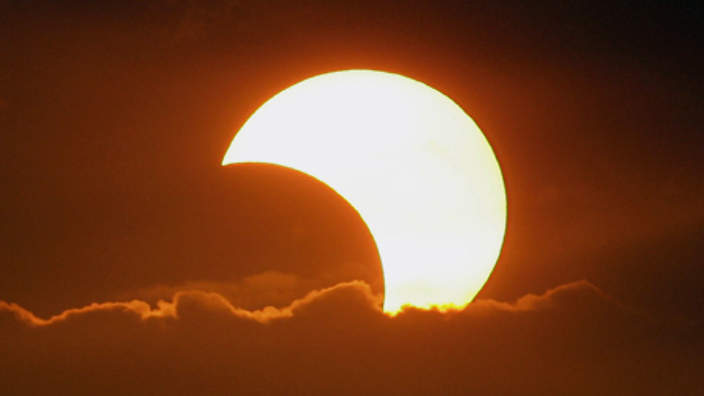
This image is an example of
a)
Lunar Eclipse
b)
Full Moon
c)
New Moon
d)
Solar Eclipse
58.

a)
solar eclipse
b)
lunar eclipse
59.

Name the moon phase
a)
waning crescent
b)
waxing crescent
c)
waning gibbous
d)
waxing gibbous
60.
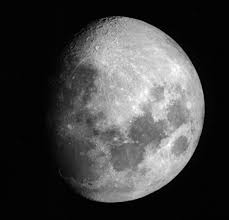
Name the moon phase
a)
waning crescent
b)
waxing crescent
c)
waning gibbous
d)
waxing gibbous
61.
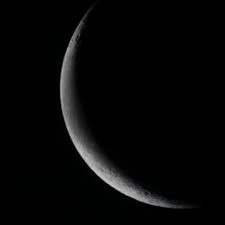
Name the moon phase
a)
waning crescent
b)
waxing crescent
c)
waning gibbous
d)
waxing gibbous
62.

Name the moon phase
a)
waning crescent
b)
waxing crescent
c)
waning gibbous
d)
waxing gibbous
63.

Name the moon phase
a)
waning crescent
b)
waxing crescent
c)
waning gibbous
d)
waxing gibbous
64.
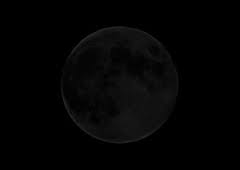
Name the moon phase
a)
First Quarter
b)
Last Quarter
c)
New Moon
d)
Full Moon
65.

Name the moon phase
a)
First Quarter
b)
Last Quarter
c)
New Moon
d)
Full Moon
66.
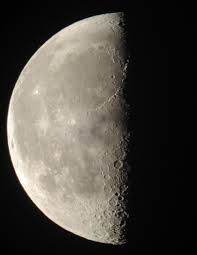
Name the moon phase
a)
First Quarter
b)
Last Quarter or (third quarter)
c)
New Moon
d)
Full Moon
67.
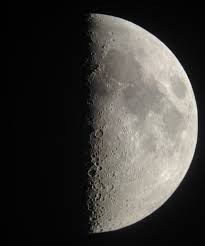
Name the moon phase
a)
First Quarter
b)
Last Quarter
c)
New Moon
d)
Full Moon
68.
How much of the moon is always lit?
a)
can't tell
b)
always changes
c)
half
d)
3/4
69.

Name the moon phase that would come AFTER this moon.
a)
waning crescent
b)
waxing crescent
c)
waning gibbous
d)
waxing gibbous
70.

What moon phase came right BEFORE this one?
a)
First Quarter
b)
Last Quarter
c)
New Moon
d)
Full Moon
71.
What is the difference between a gibbous moon and a crescent moon?
a)
The gibbous shows more than half of the bright side of the moon.
b)
The crescent shows more than half of the bright side of the moon.
c)
The gibbous shows less than half of the bright side of the moon.
72.
How many phases does the moon go through?
a)
4
b)
8
c)
10
d)
16
73.
As the moon's shape appears to get smaller, we say that the moon is _.
a)
swelling
b)
waxing
c)
waning
d)
disappearing
74.
Phases of the moon in which the moon appears to be getting larger are referred to as _.
a)
waxing
b)
waning
c)
new
d)
eclipse
75.
The cycle of the moon lasts about a _.
a)
day
b)
year
c)
week
d)
month
76.

Name the moon phase that would come AFTER this moon.
a)
waning crescent
b)
waxing crescent
c)
waning gibbous
d)
waxing gibbous
77.
The moon ____________ around the Earth.
a)
revolves
b)
rotates
c)
up
d)
down
100 %

