
 Worksheets
Weather & Climate
Total questions: 77
Worksheet time: 1hrs 16mins
Name
Class
Date
1.

What part of the water cycle does this picture show?
a)
condensation
b)
precipitation
c)
evaporation
2.

Which is the opposite of condensation?
a)
runoff
b)
evaporation
c)
precipitation
d)
transpiration
3.

Which best explains why runoff is important?
a)
It returns water to other locations on Earth
b)
It increases the chance of flooding
c)
It makes evaporation occur faster
d)
It increases condensation
4.

Snow, sleet, hail, and rain are all examples of ________________.
a)
evaporation
b)
condensation
c)
accumulation
d)
precipitation
5.

What is it called when plants give off water vapor as a waste product?
a)
condensation
b)
evaporation
c)
sublimation
d)
transpiration
6.

When the water vapor in the air changes back to liquid, what does it form?
a)
rain,hail,sleet, or snow
b)
water
c)
condensation
d)
snow and water
7.

What could happen when a drop of water falls back to earth?
a)
it goes underground then into oceans,lakes, or rivers
b)
it goes into your mouth
c)
it goes underground
d)
it goes to the beach
8.

What is the water cycle?
a)
the 3 forms of water
b)
the movement of water on, above, or below the surface of the Earth
c)
when water melts
d)
when clouds form
9.
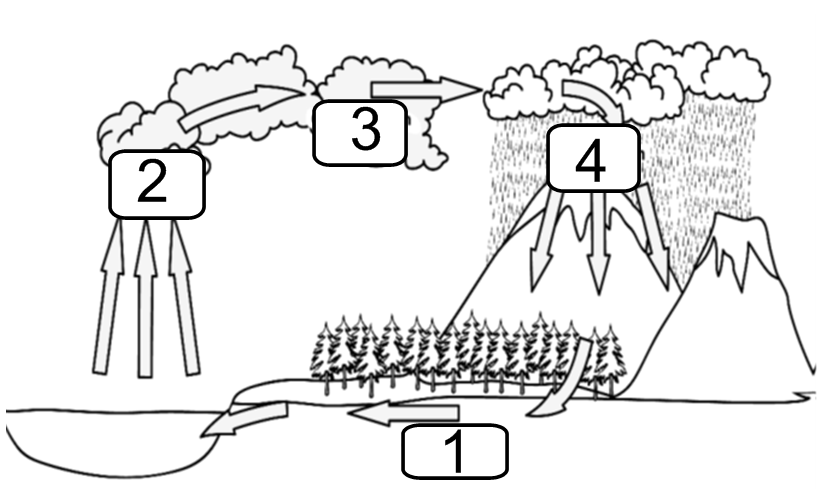
Which stage does #2 show in the diagram?
a)
condensation
b)
evaporation
c)
precipitation
d)
run off
10.
What is the process during which water cools and turns from a gas to a liquid?
a)
Codensation
b)
Runoff
c)
Precipitation
d)
Evaporation
11.

Which stage does #3 show in the diagram?
a)
condensation
b)
evaporation
c)
precipitation
d)
run off
12.
The water cycle is powered by what _______?
a)
sun
b)
moon
c)
stars
13.
The first step in the water cycle
a)
evaporation
b)
condensation
c)
precipitation
d)
there is no first step
14.
What is a huge, slow-moving mass of ice and snow called?
a)
well
b)
glacier
c)
river system
d)
geyser
15.
During transpiration, the extra water is moved out of the leaves through the ______ as water vapor.
a)
Chloroplasts
b)
Stomata
c)
Chlorophyll
d)
Air
16.
Some of the water that precipitates does not runoff into the rivers and is absorbed by the plants or gets evaporated. It moves deep into the soil. What is this process called?
a)
Sublimation
b)
Transpiration
c)
Runoff
d)
Infiltration
17.
What kind of heat transfer happens when the sun is heating your body?
a)
Conduction
b)
Radiation
c)
Convection
d)
Density
18.
What heat transfer happens when you burn your hand by touching a fire?
a)
Radiation
b)
Conduction
c)
Convectio
d)
I don't know!!!!!!!!!!!
19.
Ironing a shirt is an example of...
a)
condensation
b)
conduction
c)
convection
d)
radiation
20.
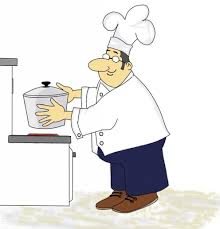
The man goes to take the hot pot off the stove with his bare hands.
a)
conduction
b)
convection
c)
radiation
21.

What happens when ice cubes melt in a glass?
a)
Heat travels from the ice to the warmer water.
b)
No energy is transferred.
c)
Heat is transferred from the warmer water to the ice cubes.
d)
The water warms up due to the humidity
22.
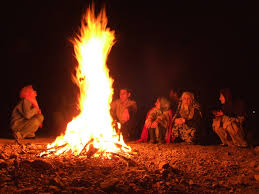
A group of friends gather around a fire to stay warm.
a)
conduction
b)
convection
c)
radiation
23.
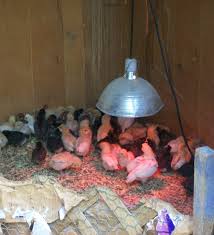
The baby chickens are kept warm from the heat lamps demonstrates this type of heat transfer.
a)
conduction
b)
convection
c)
radiation
24.
Carole owns a two story house with a heating and cooling unit on each floor. In the winter she mostly uses the downstairs unit because the volume of warm air __________ and __________ warming the whole house through __________.
a)
expands, rises, convection
b)
expands, sinks, conduction
c)
contracts, rises, conversion
d)
contracts, sinks, contraption
25.
During a heat transfer demonstration, students observed water being pumped around a closed loop in an engine. The moving water carries heat from the hot engine to the radiator. Which type of heat transfer is involved when the cooler water absorbs heat while in contact with the hot engine?
a)
Convection
b)
Conduction
c)
Insulation
d)
Radiation
26.
Where the warm and cold air meet and stall, clouds and fog form, and it may rain or snow. It could bring many days of clouds and precipitation.
a)
Warm Front
b)
Cold Front
c)
Occluded Front
d)
Stationary Front
27.

Identify the type of front that is shown in the image.
a)
Occluded Front
b)
Cold Front
c)
Stationary Front
d)
Warm Front
28.

Identify the type of front that is shown in the image.
a)
Occluded Front
b)
Cold Front
c)
Stationary Front
d)
Warm Front
29.
Which weather tool measures temperature?
a)
thermometer
b)
barometer
c)
psychrometer
d)
anememeter
30.
The boundary between two air masses is known as:
a)
front
b)
storm
c)
climate
d)
flood
31.

What does this symbol on a weather map indicate?
a)
High pressure system
b)
Low pressure system
c)
Cold front
d)
Warm front
32.

What does this symbol indicate on a weather map?
a)
High pressure system
b)
Low pressure system
c)
Cold front
d)
Warm front
33.
What kind of weather is usually associated with a high pressure system?
a)
Sunny weather
b)
Precipitation (rain, snow, etc.)
34.
This weather tool measures wind speed and direction
a)
thermometer
b)
barometer
c)
anemometer
d)
psychrometer
35.
Cold air (RISES/ FALLS) _________.
a)
RISES
b)
FALLS
36.
Hot air (RISES / FALLS) __________.
a)
RISES
b)
FALLS
37.
Which condition usually means cloudy, stormy weather?
a)
high pressure
b)
low pressure
38.
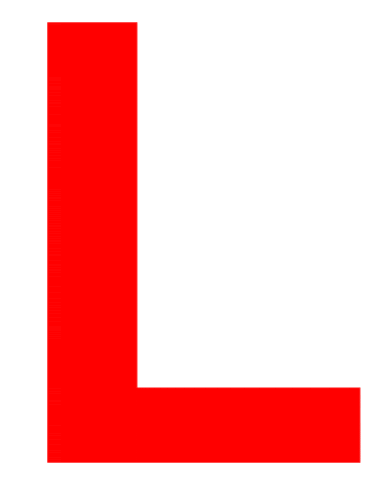
What does this symbol on a weather map indicate?
a)
High pressure system
b)
Low pressure system
c)
Cold front
d)
Warm front
39.

A _____ is a large, swirling, low-pressure system that forms over the Atlantic Ocean.
a)
blizzard
b)
cold front
c)
tornado
d)
hurricane
40.

A violently rotating column of air called a _____ when it comes in contact with the ground.
a)
hurrican
b)
tornado
c)
trade wind
d)
local wind
41.
Why do hurricanes inflict more damage than tornadoes?
a)
they are larger
b)
longer duration
c)
also associated with flooding and strong rains
d)
all of the rest
42.
Warm air moving upwards from the Gulf of Mexico is:
a)
continental tropical
b)
continental polar
c)
maritime tropical
d)
maritime polar
43.
Warm air mass that does not carry water:
a)
continental tropical
b)
continental polar
c)
maritime tropical
d)
maritime polar
44.
Cold air mass that is carrying water is:
a)
continental tropical
b)
continental polar
c)
maritime tropical
d)
maritime polar
45.
This type of front can bring strong storms
a)
cold
b)
warm
c)
stationary
d)
occluded
46.
This type of front results in the same weather for several days
a)
warm
b)
cold
c)
stationary
d)
occluded
47.
Which weather tool measures air pressure?
a)
thermometer
b)
barometer
c)
anemometer
d)
psychrometer
48.
Clouds are made up of tiny drops of ______ or ice. The moisture in the cloud affects the weather.
a)
dust
b)
water
c)
cloud particles
d)
precipitation
49.
This is sometimes called a thunderhead cloud. It looks very tall like mountains and heavy rain comes from it.
a)
Cumulus
b)
Cirrus
c)
Stratus
d)
Cumulonimbus
50.

what type of cloud is shown?
a)
cumulus
b)
cirrus
c)
stratus
51.

what type of cloud is shown?
a)
cumulus
b)
cirrus
c)
stratus
52.

Cumulonimbus clouds mean ...
a)
fair weather (nice)
b)
thunderstorms
c)
rain/storms coming
d)
long periods of rain
53.

Cirrus clouds mean ...
a)
fair weather (nice)
b)
thunderstorms
c)
rain/storms coming
d)
long periods of rain
54.
What are the two main factors that determine the climate of an area?
a)
precipitation and humidity
b)
temperature and air pressure
c)
wind conditions and humidity
d)
temperature and precipitation
55.
What are the 3 major climate zones in order from equator to the poles?
a)
polar, temperate, tropical
b)
tropical, temperate, polar
c)
temperate, polar, tropical
56.
What is the condition of the Earth's atmosphere at a certain time and place?
a)
climate
b)
temperature
c)
weather
d)
air pressure
57.
Which BEST describes why latitudes closest to the equator have warmer climates?
a)
they are at lower elevations
b)
they receive more solar energy
c)
they are nearer to ocean currents
d)
they get more winds that carry energy in the form of heat
58.
What is the weather conditions in an area over a long period of time?
a)
climate
b)
temperature
c)
elevation
d)
precipitation
59.
What causes some areas of Earth to receive less intense solar energy than others?
a)
the mass of earth
b)
the curve of earth
c)
the density of earth
d)
the elevation of earth
60.
What is the reference point used to measure elevation?
a)
lake level
b)
sea level
c)
zero
d)
elevation
61.
What causes warm air to rise?
a)
the fact that it's less dense than cold air
b)
The fact that it weighs more than cold air
c)
The fact that it has higher pressure than cold
d)
the fact that its more dense than cold air
62.
What causes wind to blow?
a)
Differences in longitude
b)
Shock waves from clouds
c)
Differences in air temperature and pressure
d)
The rotation of the earth
63.
Which term best describes how the earth's atmosphere is heated?
a)
Spirally
b)
Unevenly
c)
Circularly
d)
Kinetically
64.
How are the winds in the northern hemisphere different from winds in the southern hemisphere?
a)
Winds int he northern hemisphere are deflected right; winds int eh southern hemisphere are deflected left
b)
winds in the northern hemisphere are deflected south; winds in the southern hemisphere are deflected north
c)
winds in the northern hemisphere are deflected eart; winds in the southern hemisphere are deflected west
d)
winds in the northern hemisphere are deflected left; einds in the southern hemisphere are deflected right
65.

What kind of breeze is this & what time of day/night would it form?
a)
Land breeze - daytime
b)
Land breeze - nighttime
c)
Sea breeze - daytime
d)
Sea breeze - nighttime
66.
Which statement correctly defines wind?
a)
Wind is the movement of air from areas of low pressure to areas of high pressure
b)
Wind is the movement of air to a colder area in the atmosphere.
c)
Wind is the movement of air from areas of high pressure to areas of low pressure.
d)
Wind is the movement of air pushed around and bouncing off Earth's surface.
67.
Land and water absorb and release the sun’s heat in different ways. One result of this is a sea breeze. Which statement is true of sea breezes?
a)
They originate in the day and blow toward the land.
b)
They originate in the day and blow toward the water.
c)
They originate in the evening and blow toward the land.
d)
They originate in the evening and blow toward the water.
68.
The Coriolis effect causes ___________.
a)
the Earth to rotate on its axis
b)
continental deflection
c)
global winds and surface currents to move in a curved path instead of a straight line
d)
global winds and deep ocean currents to move in a curved path instead of a straight line.
69.
What impact does the Coriolis effect have upon global winds in the northern and southern hemispheres?
a)
Global winds blow counterclockwise in the northern hemisphere and clockwise in the southern hemisphere.
b)
Global winds blow clockwise in the northern hemisphere and counterclockwise in the southern hemisphere.
c)
Global winds flow clockwise in both the northern and southern hemispheres.
d)
The Coriolis effect has no impact upon global winds in the northern and southern hemispheres.
70.
The Coriolis effect causes ___________.
a)
the Earth to rotate on its axis
b)
continental deflection
c)
global winds and surface currents to move in a curved path instead of a straight line
d)
global winds and deep ocean currents to move in a curved path instead of a straight line.
71.

The curving of air to the right in the Northern hemisphere is caused by ___________ and is called the _________ effect.
a)
Earth's rotation...Coriolis
b)
Earth's revolution...Coriolis
c)
Earth's rotation...Doppler
d)
Earth's revolution...Doppler
72.
How do jet streams influence the weather?
a)
by creating clouds
b)
by increasing the moisture in the atmosphere
c)
by moving weather from one area to another very quickly
d)
by drying out the atmosphere
73.

What kind of air pressure does COLD air have?
a)
High pressure
b)
Low pressure
74.

What kind of air pressure does WARM air have?
a)
High pressure
b)
Low pressure
75.

During the day, warm air rises over the land then cools and falls over water in a continuous cycle.
a)
Land breeze
b)
Sea breeze
76.
Which statement correctly defines wind?
a)
Wind is the movement of air from areas of low pressure to areas of high pressure
b)
Wind is the movement of air to a colder area in the atmosphere.
c)
Wind is the movement of air from areas of high pressure to areas of low pressure.
d)
Wind is the movement of air pushed around and bouncing off Earth's surface.
77.

Why does warm air rise?
a)
Warm air is more dense than cooler air.
b)
Warm air has more pressure than cooler air.
c)
Warm air is less dense than cooler air.
d)
Warm air has a higher dew point than cooler air.
100 %

