wayground logo

Free Printable Worksheets

NEW

Font size

S
M
L
XL
Worksheets

Positions of the Earth, Moon, & Sun

Total questions: 78

Worksheet time: 2hrs 50mins

Name
Class
Date
1.
ATMOSPHERE
a)
the imaginary line running through the center of Earth. The ends of this are the north and south poles.
b)
the mixture of gases that surround Earth. It is made up four main layers the troposphere, stratosphere, mesosphere, & thermosphere
c)
patterns of temperature and other weather trends over the course of the year caused by Earth's tilt
d)
force that attracts objects toward the center of Earth
2.
EQUINOX
a)
the rise and fall in sea level as a result of the moon's gravity changing the shape of Earth's oceans
b)
the area of sunlight is at a maximum in one hemisphere and the minimum in the other hemisphere
c)
occurs during the first half of the moon cycle. Just a sliver is illuminated
d)
when sunlight shines equally on the northern and southern hemispheres. These dates mark the start of two seasons here in the northern hemisphere
3.
GRAVITY
a)
This phase occurs after the full moon and before last quarter
b)
during the first half and in between the quarter and full moon phase
c)
the last main phase which occurs after a full moon but before the new cycle begins
d)
force that attracts objects toward the center of Earth
4.
HEMISPHERE
a)
the path that a planet or satellite take around the sun
b)
half of a spherical or roughly spherical body (like a planet)
c)
patterns of temperature and other weather trends over the course of the year caused by Earth's tilt
d)
motion of one object around another
5.
LUNAR ECLIPSES
a)
when the moon becomes dark (or a reddish color) because it passes through Earth's shadow
b)
force that attracts objects toward the center of Earth
c)
a region of lighter shadow that may surround an umbra and is responsible for a partial eclipse
d)
patterns of temperature and other weather trends over the course of the year caused by Earth's tilt
6.

ORBIT

a)

the path that a planet or satellite take around the sun

b)

half of a spherical or roughly spherical body (like a planet)

c)

force that attracts objects toward the center of Earth

d)

when the moon becomes dark (or a reddish color) because it passes through Earth's shadow

7.
PENUMBRA
a)
when sunlight shines equally on the northern and southern hemispheres. These dates mark the start of two seasons here in the northern hemisphere
b)
the dark, central region of a shadow responsible for a total eclipse
c)
a region of lighter shadow that may surround an umbra and is responsible for a partial eclipse
d)
the area of sunlight is at a maximum in one hemisphere and the minimum in the other hemisphere
8.
REVOLUTION
a)
the moon is just a little sliver and almost in the new moon phase
b)
a region of lighter shadow that may surround an umbra and is responsible for a partial eclipse
c)
motion of one object around another
d)
the mixture of gases that surround Earth. It is made up four main layers the troposphere, stratosphere, mesosphere, & thermosphere
9.
ROTATION
a)
force that attracts objects toward the center of Earth
b)
the area of sunlight is at a maximum in one hemisphere and the minimum in the other hemisphere
c)
During this phase, we see a completely illuminated half on Earth
d)
the motion of spinning. It takes Earth 24 hours to do this
10.
SEASONS
a)
patterns of temperature and other weather trends over the course of the year caused by Earth's tilt
b)
when the moon passes directly between the Earth and the sun. The sun appears to darken because the moon's shadow falls onto part of the Earth
c)
the moon is just a little sliver and almost in the new moon phase
d)
the rise and fall in sea level as a result of the moon's gravity changing the shape of Earth's oceans
11.
SOLAR ECLIPSES
a)
the last main phase which occurs after a full moon but before the new cycle begins
b)
when the moon passes directly between the Earth and the sun. The sun appears to darken because the moon's shadow falls onto part of the Earth
c)
patterns of temperature and other weather trends over the course of the year caused by Earth's tilt
d)
motion of one object around another
12.
SOLSTICE
a)
the area of sunlight is at a maximum in one hemisphere and the minimum in the other hemisphere
b)
when sunlight shines equally on the northern and southern hemispheres. These dates mark the start of two seasons here in the northern hemisphere
c)
the last main phase which occurs after a full moon but before the new cycle begins
d)
when the moon passes directly between the Earth and the sun. The sun appears to darken because the moon's shadow falls onto part of the Earth
13.
TIDES
a)
when the moon becomes dark (or a reddish color) because it passes through Earth's shadow
b)
when sunlight shines equally on the northern and southern hemispheres. These dates mark the start of two seasons here in the northern hemisphere
c)
the rise and fall in sea level as a result of the moon's gravity changing the shape of Earth's oceans
d)
the imaginary line running through the center of Earth. The ends of this are the north and south poles.
14.
UMBRA
a)
when sunlight shines equally on the northern and southern hemispheres. These dates mark the start of two seasons here in the northern hemisphere
b)
During this phase, we see a completely illuminated half on Earth
c)
the dark, central region of a shadow responsible for a total eclipse
d)
the rise and fall in sea level as a result of the moon's gravity changing the shape of Earth's oceans
15.
New Moon
a)
the start of the moon's cycle. We do not see the moon because the half that is illuminated isn't visible from Earth.
b)
a region of lighter shadow that may surround an umbra and is responsible for a partial eclipse
c)
when the moon becomes dark (or a reddish color) because it passes through Earth's shadow
d)
the last main phase which occurs after a full moon but before the new cycle begins
16.
Waxing Crescent
a)
the area of sunlight is at a maximum in one hemisphere and the minimum in the other hemisphere
b)
This phase occurs after the full moon and before last quarter
c)
occurs during the first half of the moon cycle. Just a sliver is illuminated
d)
the imaginary line running through the center of Earth. The ends of this are the north and south poles.
17.
First Quarter
a)
when sunlight shines equally on the northern and southern hemispheres. These dates mark the start of two seasons here in the northern hemisphere
b)
the imaginary line running through the center of Earth. The ends of this are the north and south poles.
c)
It is half of a half, so technically only a quarter is illuminated. We will see the right side glowing in our hemisphere
d)
This phase occurs after the full moon and before last quarter
18.
Waxing Gibbous
a)
during the first half and in between the quarter and full moon phase
b)
It is half of a half, so technically only a quarter is illuminated. We will see the right side glowing in our hemisphere
c)
when sunlight shines equally on the northern and southern hemispheres. These dates mark the start of two seasons here in the northern hemisphere
d)
force that attracts objects toward the center of Earth
19.
Full Moon
a)
occurs during the first half of the moon cycle. Just a sliver is illuminated
b)
the mixture of gases that surround Earth. It is made up four main layers the troposphere, stratosphere, mesosphere, & thermosphere
c)
During this phase, we see a completely illuminated half on Earth
d)
It is half of a half, so technically only a quarter is illuminated. We will see the right side glowing in our hemisphere
20.
Waning Gibbous
a)
force that attracts objects toward the center of Earth
b)
the last main phase which occurs after a full moon but before the new cycle begins
c)
the path that a planet or satellite take around the sun
d)
This phase occurs after the full moon and before last quarter
21.
Last or Third Quarter
a)
a region of lighter shadow that may surround an umbra and is responsible for a partial eclipse
b)
This phase occurs after the full moon and before last quarter
c)
when sunlight shines equally on the northern and southern hemispheres. These dates mark the start of two seasons here in the northern hemisphere
d)
the last main phase which occurs after a full moon but before the new cycle begins
22.
Waning Crescent
a)
the moon is just a little sliver and almost in the new moon phase
b)
the dark, central region of a shadow responsible for a total eclipse
c)
when the moon passes directly between the Earth and the sun. The sun appears to darken because the moon's shadow falls onto part of the Earth
d)
a region of lighter shadow that may surround an umbra and is responsible for a partial eclipse
23.

In what direction does the moon revolve around Earth?

a)

counter clockwise

b)

clockwise

24.

What main moon phase would see from Earth at #3 according to this diagram?

a)

new moon

b)

full moon

c)

waxing crescent

d)

first quarter

25.

What main moon phase would see from Earth at #5 according to this diagram?

a)

new moon

b)

full moon

c)

last quarter

d)

first quarter

26.

From #1 to #5 the moon is...

a)

waxing

b)

waning

27.

What transition moon phase would we see when the moon is in spot #8?

a)

new moon

b)

waxing gibbous

c)

waning crescent

d)

waning gibbous

e)

full moon

28.

The term "gibbous" means that the moon...

a)

isn't a full circle but is also more than half

b)

is full. It's just another name to complicate things.

c)

it means that the moon is between 51 - 85% illuminated.

29.

The Earth spins on a tilted angle called a (an)

a)

axis

b)

umbra

c)

revolution

d)

angle of incidence

30.

Earth's rotation on its axis is what causes ______________________________.

a)

seasons

b)

moon phases

c)

day and night

d)

weather

e)

eclipses

31.

One complete rotation of Earth takes

a)

one day

b)

one year

c)

one summer

d)

one winter

e)

~28 days

32.

Earth does a complete revolution every _________.

a)

10 years

b)

12 hours

c)

24 hours

d)

365 days

33.
Which happens in one year’s time?
a)
The moon makes one complete revolution around Earth.
b)
Earth makes one complete revolution around the sun.
c)
Earth makes one complete spin on its axis.
d)
The sun makes one complete spin on its axis.
34.

Whenever we are facing the sun we can guarantee that we are experiencing _______________, regardless of where the Earth is in its revolution.

a)

day time

b)

night time

c)

summer

d)

leap year

35.

What would happen to Earth's length of day if the rotation speed increased?

a)

A day would be shorter than 24 hours.

b)

A day would be longer than 24 hours.

c)

A year would be shorter.

d)

A year would be longer.

36.

What would have to happen to make a year on Earth longer than the roughly 365 days?

a)

Earth's rotation would have to speed up.

b)

Earth's rotation would have to slow down.

c)

Earth's revolution would have to speed up.

d)

Earth's revolution would have to slow down.

e)

Earth would need to tilt at an angle greater than 45°.

37.

The "shortest day" of the year in North America is

a)

New Year's Day

b)

the summer solstice

c)

the winter solstice

d)

the spring equinox

38.

__________ is when the hours of daylight and darkness are relatively equal everywhere on Earth.

a)

The solstice

b)

Summer

c)

An eclipse

d)

The equinox

39.

Why does the equator stay warm all year long?

a)

Because the Sun's direct rays hit the equator all year.

b)

Because the equator is cold all year long.

c)

Because the climate in a year does not change.

d)

Because polar winds cycle through and heat it up consistently

40.

Which of the following best describes the tilt of the Earth when it is summer in the Southern Hemisphere?

a)

The Northern Hemisphere is tilted toward the sun

b)

The Northern Hemisphere is tilted away from the sun

c)

The Northern Hemisphere is tilted neither toward or away from the sun

d)

The Southern Hemisphere is titled away from the sun.

41.

The Earth is a tilted planet. What is Earth's degree of tilt?

a)

Approximately 30.5°

b)

Exactly 25°

c)

23.5°

d)

90° with respect to the sun

e)

About 3°

42.

What effect does the tilt of the Earth have?

a)

It changes the angle that the sun strikes the Earth in different latitudes from the equator.

b)

It causes the Earth to be farther away from the sun at different times of the year

c)

When the Earth is tilted away from the sun we have night

d)

When the Earth is tilted away from the sun we have day

43.
What season is it in the Southern Hemisphere when it is fall in the Northern Hemisphere?
a)
winter
b)
spring
c)
summer
d)
fall
44.
Where on Earth can you experience entire days of darkness?
a)
The equator
b)
The poles
c)
The Tropic of Cancer
d)
The Tropic of Capricorn
45.

The Moon gets its light from the

a)

It reflects the Earth's light

b)

It reflects the other stars' light

c)

It reflects the Sun's light

d)

It makes its own light

46.
The different phases of the Moon are caused by:
a)
The days of the months
b)
The angle at which we see the lit Moon as it revolves around the Earth
c)
The position of the Earth in its orbit around the Sun
d)
The tides of the ocean
47.

About how long does it take the Moon to complete its cycle?

a)

around 1 week

b)

around 1 month

c)

around 1 year

d)

around 1 day

48.

How much of the Moon is always reflecting light from the Sun?

a)

The entire moon is always illuminated

b)

Half of the Moon is always illuminated; it's just not always facing Earth

c)

Half of the Moon is illuminated only during the new moon

d)

Half of the Moon is illuminated only during the full moon

49.

Phases of the moon in which the moon appears to be getting larger (during the first half of the cycle) are referred to as ________.

a)

waxing

b)

waning

c)

new

d)

eclipse

50.

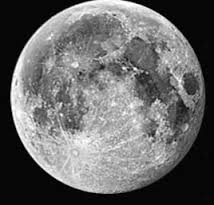
Identify the moon phase pictured here.

a)

First Quarter

b)

Last Quarter

c)

New Moon

d)

Full Moon

51.

As the moon's shape appears to get smaller (during the second part of its cycle), we say that the moon is _________.

a)

swelling

b)

waxing

c)

waning

d)

disappearing

52.

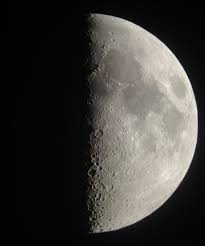
Identify the moon phase pictured here.

a)

First Quarter

b)

Last Quarter

c)

New Moon

d)

Full Moon

53.

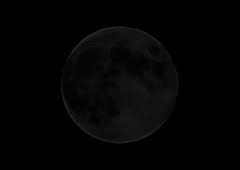
Identify the moon phase pictured here.

a)

First Quarter

b)

Last Quarter

c)

New Moon

d)

Full Moon

54.

Envisioning this diagram as the face of a clock, what phase is occurring at the 3 o'clock spot?

a)

new moon

b)

first quarter

c)

full moon

d)

third/last quarter

55.

A solar eclipse only happens during a ________ moon.

a)

new

b)

crescent

c)

gibbous

d)

full

56.

A lunar eclipse only happens during a ________ moon.

a)

new

b)

crescent

c)

gibbous

d)

full

57.

Where must you be to see a solar eclipse?

a)

in a corona

b)

in an orbit

c)

in the moon's shadow

d)

in the Earth's shadow

e)

in the sun's shadow

58.

What is the darkest inner part of the shadow cone called, where a total eclipse can be viewed?

a)

total

b)

umbra

c)

penumbra

d)

elliptical

59.

What is the larger outer lighter part of the shadow cone called, where a partial eclipse can be viewed?

a)

partial

b)

umbra

c)

penumbra

d)

elliptical

60.

During a solar eclipse...

a)

The sun is blocked by the moon

b)

The Earth is blocked by the moon

c)

The moon is blocked by the sun

d)

You are blocked by Mercury

61.

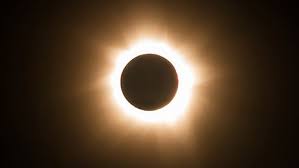
Which type of eclipse is shown in this picture?

a)

solar eclipse

b)

orbit eclipse

c)

lunar eclipse

d)

total eclipse

62.

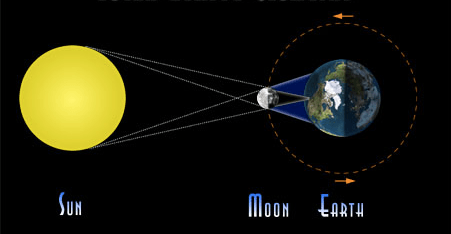
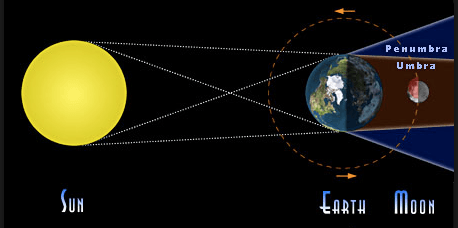
Which type of eclipse is shown in the diagram?

a)

solar eclipse

b)

lunar eclipse

c)

total eclipse

d)

partial eclipse

63.

How many high tides do coasts have each day?

a)

3

b)

4

c)

5

d)

2

64.

What type of tides would this arrangement of the Earth, moon, & sun create?

a)

neap tide

b)

spring tide

c)

new moon tide

d)

full moon tide

65.

Wha type of tide would this arrangement of Earth, moon, & sun create?

a)

full moon tide

b)

new moon tide

c)

neap tide

d)

spring tide

66.
The difference in levels of ocean water at high and low tides is the _________________.
a)
low tide
b)
tidal range
c)
high tide
d)
slack water
67.
What do we call the small tides that happen when the sun and moon are at right angles to each other?
a)
Neap Tide
b)
Spring Tide
c)
Larger Change
d)
Smaller Change
68.
What type of tide will occur at 9:30 a.m.?
a)
low 
b)
high 
c)
none
d)
high and low
69.
Which of the following is the correct order of the atmosphere layers from Earth to space?
a)
troposphere, stratosphere, mesosphere, thermosphere, exosphere
b)
troposphere, mesosphere, thermosphere, exosphere, stratosphere
c)
thermosphere, stratosphere, mesosphere, troposphere, exosphere
d)
troposphere, stratosphere, mesosphere, exosphere, thermosphere
70.

What is the function of the ozone layer?

a)

to allow UV rays to get to Earth

b)

to block UV rays from getting to Earth

c)

To keep oxygen in

d)

to allow meteors to get to Earth

71.

Which layer of the atmosphere is the hottest layer?

a)

troposphere

b)

thermosphere

c)

exosphere

d)

mesosphere

72.

Which layer do we live in?

a)

stratosphere

b)

thermosphere

c)

troposphere

d)

mesosphere

73.

In which layer does the weather occur?

a)

stratosphere

b)

thermosphere

c)

troposphere

d)

mesosphere

74.

According to this graph showing temperature (red line) and pressure (blue line) through the atmosphere's layers, what happens to the temperature as you go higher into the troposphere (the layer closest to Earth?)

a)

temperature decreases/it gets colder

b)

temperature increases/it gets warmer

c)

temperature stays the same

75.

Which layer of the atmosphere contains the Ozone layer?

a)

stratosphere

b)

thermosphere

c)

exosphere

d)

mesosphere

76.

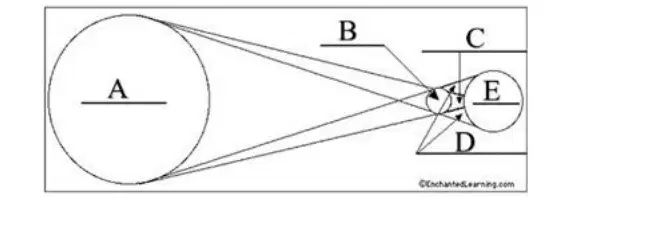
Which letter shows the penumbra?

a)

B

b)

A

c)

C

d)

D

77.

Which hemispheres does the United States belong to?

a)

Northern and Western

b)

Southern and Eastern

c)

Northern and Eastern

d)

Southern and Western

78.

Which line measures at 0 degrees latitude?

a)

Equator

b)

Prime Meridian

c)

Longitude

d)

Capricorn