wayground logo

Free Printable Worksheets

Font size

S
M
L
XL
Worksheets

Science 7th review

Total questions: 84

Worksheet time: 58mins

Name
Class
Date
1.

Plants and animal cells have...

a)

Mitochondria and chloroplasts

b)

Nucleus and chloroplast

c)

Cell wall and chloroplast

d)

Mitchochodria and cytoplasm

2.

Which organelle is the command center for eukaryotic (plant and animal) cells?

a)

Cell wall

b)

Nucleus

c)

Mitochondria

d)

Lysosome

3.

Which of the following are prokaryotic cells?

a)

Plant

b)

Animal

c)

Bacteria

d)

Plant and Animal

4.

What is the difference between a prokaryotic cell and a eukaryotic cell?

a)

Prokaryotes do not have a nucleus or organelles, but a eukaryotic cell does

b)

Eukaryotic cells do not have a nucleus or organelles, but prokaryotes do

5.

Which of the following is a eukaryotic cell?

a)

Bacteria

b)

Plant

c)

Plant and animal

d)

Animal

6.

How can you tell that this is a prokaryote or eukaryote cell?

a)

It is a prokaryote because it doesn't have a nucleus

b)

It is a eukaryotic cell because it has a cell wall and a nucleus

c)

It is eukaryotic because it does not a nucleus nor a cell membrane

d)

It is prokaryote because it has a cell wall

7.

What is the purpose of the nucleus?

a)

It is the command center, contains DNA, and cell division

b)

It protects the cell

c)

It stores energy for the cell

d)

It gets rid of waste in the cell

8.

What is the difference between mitochondria and chloroplast?

a)

Mitochondria produces energy and chloroplasts breaks down energy

b)

There is no difference. They are the same.

c)

Mitochondria breaks down energy from food and chloroplasts produce energy from sunlight.

d)

Mitochondria contains DNA and chloroplasts are green
9.
Which of the following organisms are LEAST closely related?
a)
organisms that share a domain
b)
organisms that share a family 
c)
organisms that share a genus 
d)
organisms that share a species 
10.
The scientific name for an organism is made from the:
a)
class and family name
b)
genus and species name
c)
domain and kingdom name
d)
kingdom and phylum name
11.

The 8 levels of classification, from most broad to most specific.

a)

Domain, Genus, Family, Order, Class, Phylum, Kingdom, Species

b)

Domain, Species, Kingdom, Genus, Phylum, Family, Class, Order

c)

Domain, Kingdom, Phylum, Class, Order, Family, Genus, Species

d)

Order, Kingdom, Species, Domain, Phylum, Family, Class, Genus

12.
Who first proposed binomial nomenclature as a way of classifying organisms?
a)
Carl Linnaeus
b)
Carl's Jr.
c)
Charles Darwin
d)
Henry Groseclose
13.
Cells that do not have a true nucleus are called....
a)
eukaryote
b)
prokaryote
c)
unicellular
d)
multicellular
14.
Cells that have a true nucleus are called....
a)
eukaryotes
b)
prokaryotes
c)
unicellular
d)
multicellular
15.
Which organisms are closely related? 
a)
American badger and leopard
b)
coyote and gray wolf
c)
european otter and leopard
d)
coyote and american badger
16.
Organisms in this smallest taxonomic group share many characteristics.
a)
domain
b)
kingdom
c)
species
d)
class
17.
Which organisms are most closely related?
a)
Equus caballas (Horse) & Equus burchellii (Zebra)
b)
Cyanea artica (Jellyfish) &
Ctenodiscus crispatus (Mud Starfish)
c)
Naja naja (cobra) & Glycine max (soya bean)
d)
Ophiocomina nigra (black brittle star) & Brassica nigra (black mustard)
18.
The science of describing, classifying, and naming living things is called:
a)
Geology
b)
Biology
c)
Taxonomy
d)
Chemistry
19.
An organism made up of more than one cell would be called:
a)
multicellular
b)
unicellular
c)
heterotroph
d)
autotroph
20.
An example of an unicellular organism would be:
a)
monkey
b)
bacteria
c)
spider
d)
human
21.
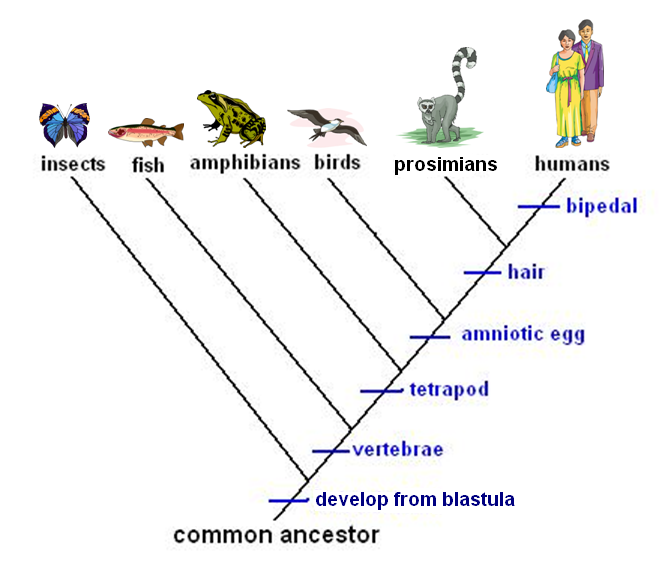
Which organisms pictured on the cladogram have hair?
a)
prosimians only
b)
prosimians and humans
c)
humans only
d)
prosimians and birds
22.
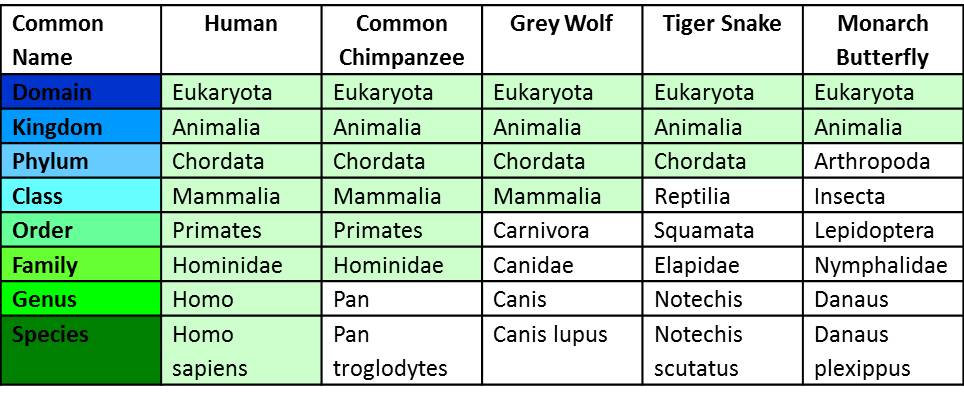
Which organism in the table is least closely related to the chimpanzee?
a)
human
b)
grey wolf
c)
tiger snake
d)
monarch butterfly
23.

Members of this kingdom are always multicellular and heterotrophic.

a)

Plantae

b)

Protista

c)

Animalia

d)

Achaebacteria

24.
What kingdom do unicellular, prokaryotic organisms that live in extreme environments?
a)
Animal
b)
Archaebacteria
c)
Eubacteria
d)
Plant
25.

I am prokaryotic and am found everywhere that's not extreme. What kingdom do I belong to?

a)

Eubacteria

b)

Archaebacteria

c)

Fungi

d)

Protista

26.
This organism is multicellular, heterotroph, that has a cell wall made of chitin.  What kingdom does it belong in?
a)
fungi
b)
plantae
c)
animalia
d)
eubacteria
27.
This organism is found in pond water.  It has a nucleus, is microscopic, unicellular and can perform photosynthesis.  What kingdom does it belong in?
a)
protista
b)
eubacteria
c)
archaebacteria
d)
plantae
28.
This organism is multicellular, autotroph, that has a cell wall made of cellulose.
a)
animalia
b)
plantae
c)
fungi
d)
eubacteria
29.
What do viruses need to reproduce?
a)
they need genetic material
b)
They need a host cell
c)
They need  bacteria
d)
They need insulin
30.
Cells with a nucleus and membrane-bound organelles are called ____________________.
a)
prokaryotes
b)
eukaryotes
c)
bacteria
d)
protists
31.
The basic unit of structure and function in a living things.
a)
chloroplast
b)
nucleus
c)
cell
d)
cell membrane
32.
Every living organism is made up of one or more cells
a)
True
b)
False
33.
A cell is...
a)
the basic unit of structure and function in living organism
b)
an organism
c)
a basic part of everything that we see
d)
found only in animals, not plants
34.
The nucleus is like the ____________ of the cell.
a)
foot
b)
hand
c)
stomach
d)
brain
35.
Pick the true statement about cellular organization:
a)
cells working together make tissues
b)
cells working together make organs
c)
tissues working together make organ systems
d)
organs working together make cells
36.
Which is the most complex of the choices below?
a)
cell
b)
tissue
c)
organ
d)
organ system
37.
What is the most basic unit of life?
a)
cell
b)
tissue
c)
organ
d)
organ system
38.
How do consumers get the energy they need to survive?
a)
photosynthesis
b)
eating other organisms
c)
decomposing dead materials
d)
chemosynthesis
39.
A _____ is something in the environment that causes an organism to respond.
a)
stimulus
b)
response
c)
cause
d)
effect
40.
It is hot outside. You start sweating. In this case, the hot weather is the...
a)
stimulus
b)
response
c)
cause and effect
d)
responder
41.
In order to perform photosynthesis, producers need...
a)
WiFi
b)
oxygen
c)
sunlight
d)
to eat other organisms
42.
Which of these is not true about all organisms?
a)
all living things have many cells
b)
all living things need water
c)
all living things respond to stimuli
d)
all living things reproduce
43.
What is another way of saying organism?
a)
living thing
b)
organ system
c)
tissue team
d)
critter
44.
The plural of stimulus is...
a)
stimuli
b)
stimuluses
45.
Which of these statements is true about plants?
a)
they are producers
b)
they need water and carbon dioxide
c)
they need sunlight
d)
all of these statements are true
46.
Which of these statements is true about animals?
a)
they are consumers
b)
they need water and oxygen
c)
they need to eat other living things for food
d)
all of these statements are true
47.
Which choice shows the levels of organization in order from LARGEST to smallest.
a)
organism, organ system, organ, tissue, cell
b)
cell, tissue, organ, organ system, organism
c)
organism, cell, organ system, tissue, organ
d)
cell, cell, cell, cell, cell
48.

Which of the following are subatomic particles? (Check all that apply)

a)

protons

b)

neutrons

c)

megatrons

d)

electrons

49.

Which subatomic particle has a negative charge?

a)

proton

b)

neutron

c)

electron

d)

cybertron

50.
Type of mixture that DOESN'T HAVE the same composition in every part.
a)
Homogeneous
b)
Heterogeneous
51.
Chicken noodle soup is an example of a
a)
homogeneous mixture
b)
heterogeneous mixture
52.
Based on THE DISTRIBUTION OF ITS COMPONENTS, we can divide mixtures in
a)
Homogeneous and Heterogeneous mixtures
b)
Pure substances and Mixtures
53.
What cannot be broken down into other substances?
a)
Compound
b)
Mixture
c)
Solids
d)
Element
54.
Which of the following an element?
a)
Carbonic Acid
b)
Copper
c)
Iron and Copper
d)
Water
55.
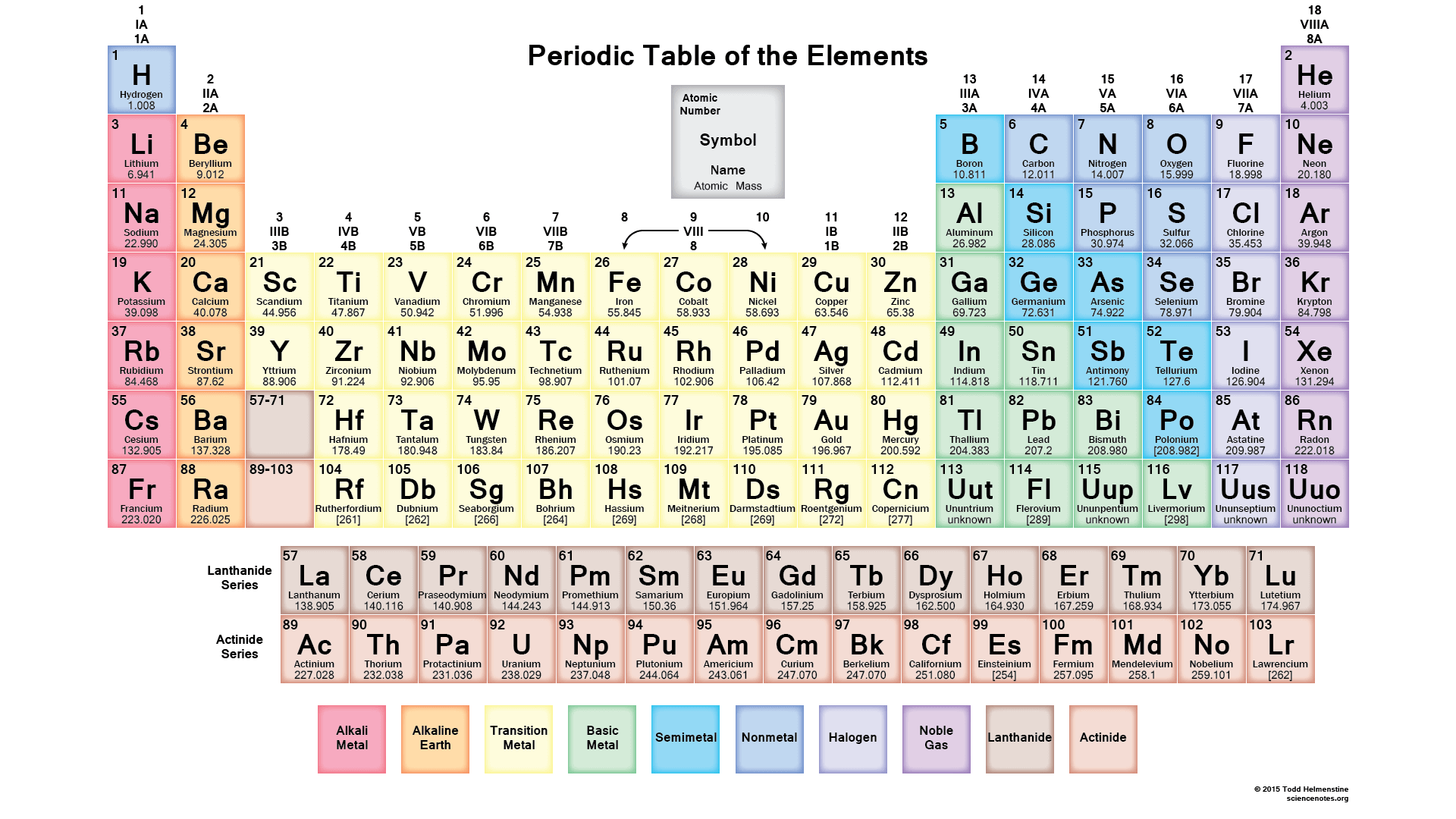
Sodium (Na) is found in group 
a)
1
b)
2
c)
3
d)
4
56.
Sodium (Na) is found in period 
a)
3
b)
2
c)
4
d)
1
57.

The vertical (up and down) columns in the Periodic Table are called

a)

groups

b)

towers

c)

periods

d)

atomic numbers

58.
The atomic number tells you what?  READ THE ANSWERS CAREFULLY
a)
only the number of electrons
b)
 only the number of protons
c)
only the number of neutrons
d)
the number of both electrons and protons in an atom.
59.
What does the atomic mass tell you? 
a)
Basically,the number of electrons and protons
b)
The number of neutrons
c)
Basically, the number of protons and neutrons
d)
The number of protons.
60.
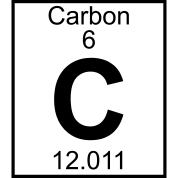
What does the 6 represent?
a)
atomic mass
b)
atomic number
c)
element name
d)
chemical symbol 
61.
What does 12.011 represent?
a)
atomic mass
b)
atomic number
c)
element name
d)
chemical symbol 
62.
What does the C represent?
a)
atomic mass
b)
atomic number
c)
element name
d)
chemical symbol 
63.
Is burning wood a chemical or physical change?
a)
chemical
b)
physical
64.
Which of the following is NOT an example of chemical change?
a)
sour milk
b)
burning wood
c)
breaking a pencil
d)
rust
65.
what is the definition of chemical change?
a)
any change that results in the formation of new chemical substances. 
b)
changing clothes
c)
matter cannot be created or destroyed, only change form
d)
changes affecting the form of a chemical substance, but not its chemical composition.
66.
what is the definition of physical change?
a)
any change that results in the formation of new chemical substances. 
b)
rusting
c)
changes affecting the form of a chemical substance, but not its chemical composition.
d)
any property that is measurable, whose value describes a state of a physical system
67.
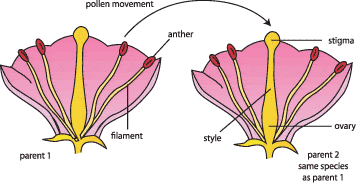
Pollination is the process by which the pollen grains are transferred from the ________ to the _________. 
a)
anther... ovary
b)
anther ... stigma
c)
stigma ... ovary 
d)
stigma ... filament
68.
Pollination can occur within the same flower. 
a)
True 
b)
False 
69.
Pollination can occur between flowers of the same plant. 
a)
True 
b)
False 
70.
Pollination can occur between flowers of the different plants of the same species. 
a)
True 
b)
False 
71.
I have large petals and are usually brightly coloured. How am I pollinated?
a)
By animals
b)
By birds 
c)
By insects 
d)
All of the above
72.
My flowers are not sweet-scented and I do not produce nectar. How am I likely dispersed?
a)
By wind 
b)
By insects 
c)
By water 
d)
By explosive action
73.

What is the male part of a flower?

a)

pistil

b)

petal

c)

stamen

d)

stigma

74.
Small grains that contain a plant's male reproductive cells.
a)
stamen
b)
pollen
c)
anther
d)
stigma
75.
Brightly colored parts of flowers that attract insects.
a)
petals
b)
pistils
c)
stamen
d)
filaments
76.
Pollen grains are produced by ...
a)
the stamen
b)
the carpel
c)
the pistil
d)
the leaves
77.
The female part of a flower is the ______.
a)
Leaves
b)
Stigma
c)
Pistil
d)
Flowers
78.
The transfer of pollen, containing the sperm cells, to the female part of the flower. 
a)
seed dispersal
b)
fertilization 
c)
germination
d)
pollination
79.
Stem
a)
a petal
b)
A flower
c)
Part of a flower
d)
supports the plant
80.

What is NOT a way that plants get pollinated?

a)

wind

b)

animals

c)

electricity

d)

water

81.

Which is NOT a way that plants attract pollinators?

a)

Color

b)

Shape/Structure

c)

Smell

d)

Magnetism

82.
 Where is the ovule found in a flower?
a)
Petals
b)
Style
c)
Nectary
d)
Ovary
83.

A flower benefits from a pollinator because the flower will be able to __________________.

a)

reproduce

b)

change color

c)

grow thistles

d)

speak

84.
Pollination can occur within the same flower. 
a)
True 
b)
False