
 Worksheets
Energy Flow
Total questions: 87
Worksheet time: 2hrs 35mins
All herbivores are _____.
producers
primary consumers
secondary consumers
tertiary consumers
If an organism uses photosynthesis to make its energy, it is a _____.
tertiary consumers
producer
primary consumer
secondary consumer
An owl who eats snakes is a _________.
tertiary consumers
primary consumer
producer
secondary consumer
A rat that eats seeds ins an example of a _________.
primary consumer
producer
secondary consumer
tertiary consumers
Any living thing, such as a fox, mouse, plant, bacteria, is an example of an ________.
organism
pet
abiotic factor
ecosystem
A snake that eats a mouse which feeds primarily on seeds is an example of a
tertiary consumers
primary consumer
secondary consumer
producer
All the living things in an ecosystem are the _______ of an ecosystem.
ecosystem
abiotic factors
biotic factors
plants
A _________ is a diagram of all of the food chains in a single ecosystem.
food web
food chain
energy pyramid
primary consumer
A diagram that shows one possibility of energy flow in an ecosystem.
food web
energy pyramid
food chain
secondary consumer
The sun, water, oxygen, and climate are all examples of _____.
biotic factors
abiotic factors
plants
producers
Trees, flowers, and seeds are all examples of _______.
producers
abiotic factors
a community
a food chain
As energy makes its way up the food pyramid only ______ of energy from one organism gets passed on to the next organism.
10%
20%
30%
40%


Animal that gets its energy and nutrition from eating plants.
Parasite
Herbivore
Carnivore
Ominvore

Animal that gets its energy and nutrition from eating meat.
Detritivore
Ominvore
Carnivore
Herbivore

Organisms that produce their own food mostly through photosynthesis (producers). Examples are plants and algae.
Ominvore
Detritivore
Heterotroph
Autotroph

Organisms that get their energy and nutrition from other organisms (consumers).
Heterotroph
Autotroph
Photosynthetic Organisms

Heterotrophs that get energy and nutrition from dead or decaying organisms or their waste products and recycle nutrients back to the ecosystem.
Producer
Trophic
Decomposer
Autotroph

The level in an Ecological pyramid that includes all the organisms that share the same place in a food chain.
Trophic Levels
Toxic Levels
KeKe Levels
Environmental Systems

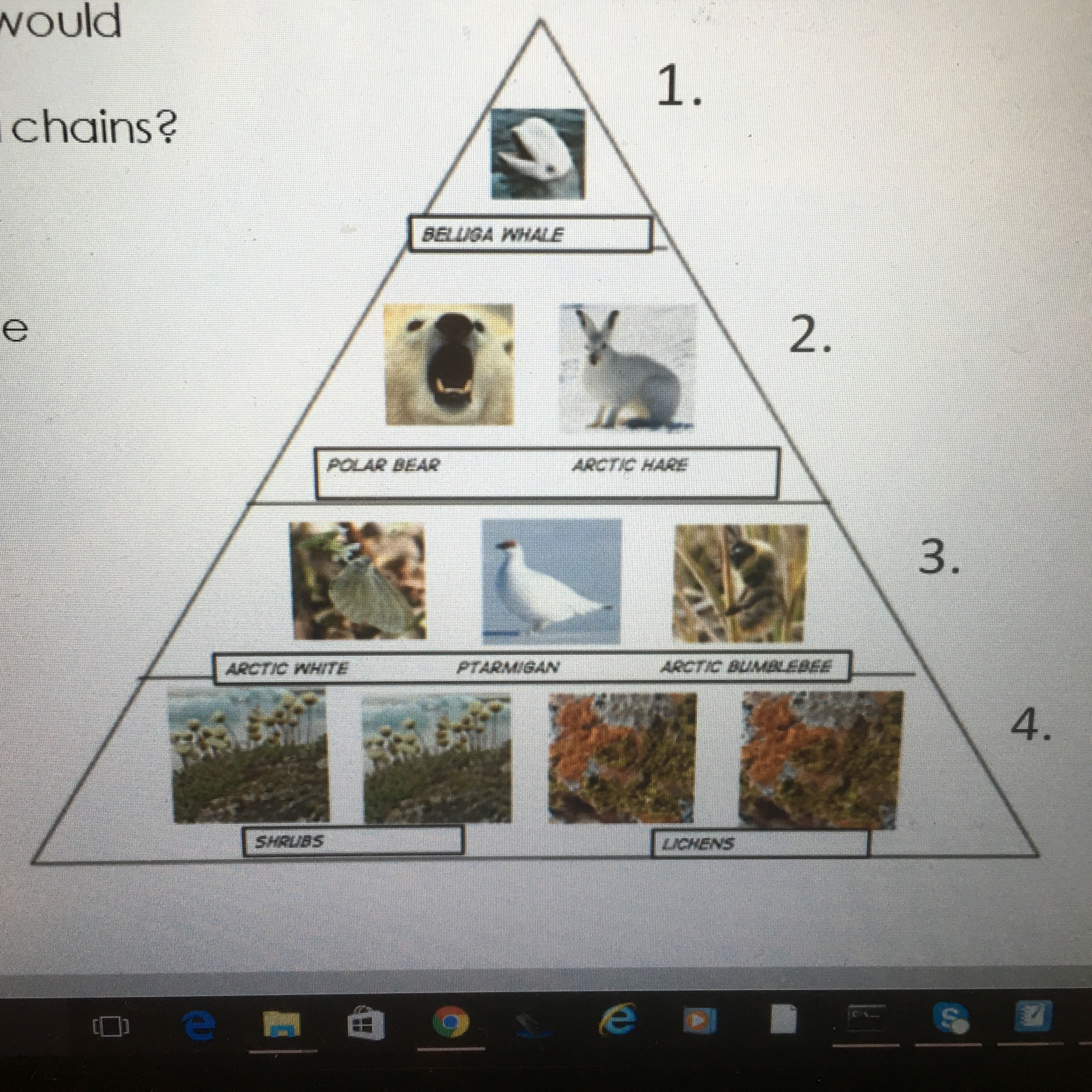
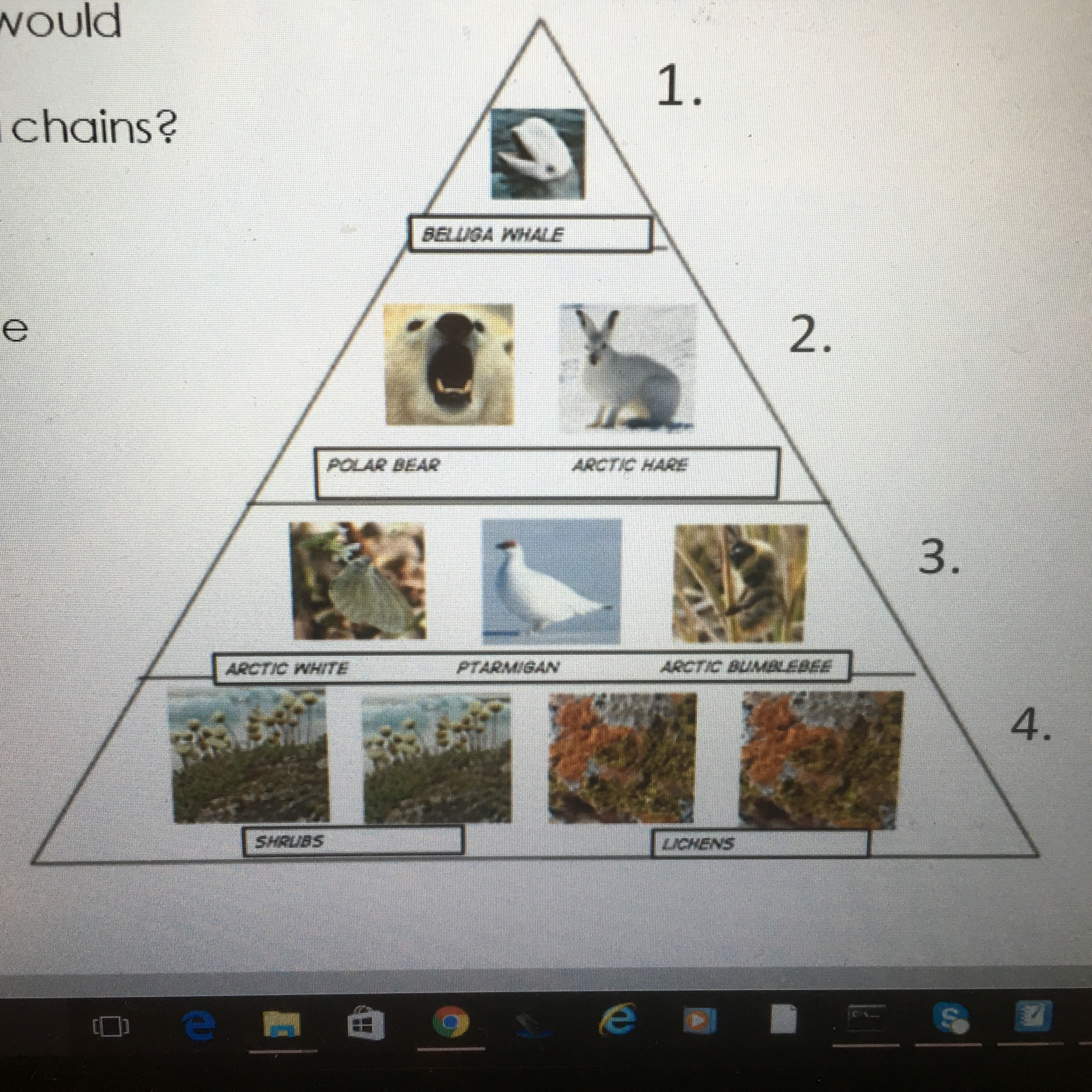
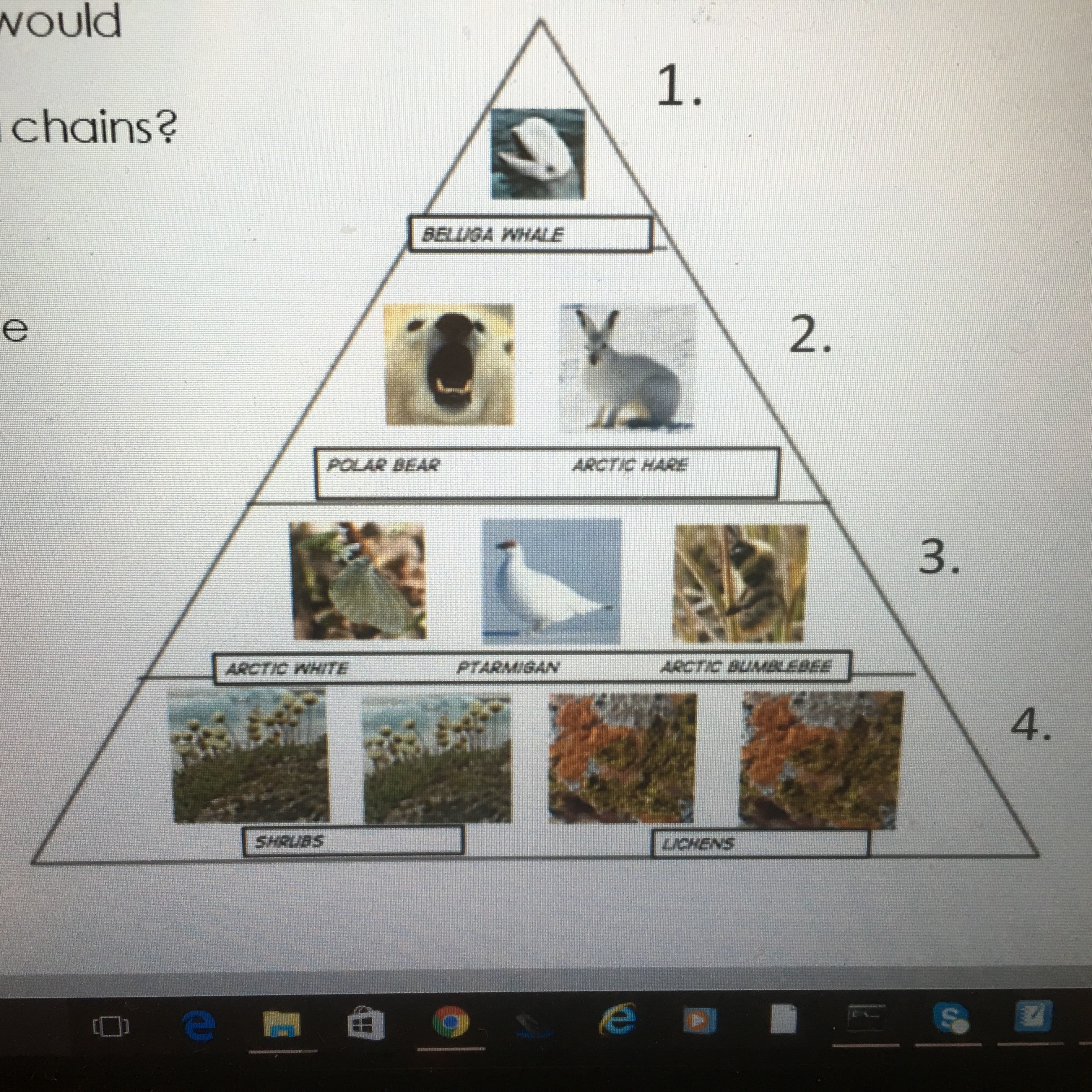
which number on the diagram below sows the level of secondary consumers?
3
2
1
in an energy pyramid, which way does the energy transfer?
from top of the pyramid to the bottom
from the bottom of the pyramid to the top
all of these
none of these


What is an invasive species?
A native (naturally found) species which are added to an area.
A non-native (not naturally found) species added to an area.
A keystone species in an environment
none of the above

Models the complex network of feeding relationships
trophic levels
food webs
food chains
An autotroph can also be called a
animal.
consumer.
heterotroph.
producer.

In the food chain pictured, what type of organism is the bird?
producer
primary consumer
secondary consumer
tertiary consumer

What would happen to the bird if the green fish died out?
the bird population would grow
the bird population would die out
the smaller fish will die out
What is the bottom layer of the an energy pyramid?
producer
tertiary consumer
Secondary consumer
primary consumer
the top layer of an energy pyramid a primary consumer?
true
false
What does an energy pyramid show?
Energy flow in a community
Longest lifespans
The stronger animal the higher it is on the pyramid
All tertiary consumers are scavengers
true
false
What would happen if their were no producers?
Every population would grow larger
Everything would die out
The animals would make their own food
What would happen if the primary consumers died out?
the producers would grow and the secondary and tertiary consumers would die
producers would die out
consumers would grow
Is a scavenger a primary consumer?
Yes
No
decomposers are producers.
true
false


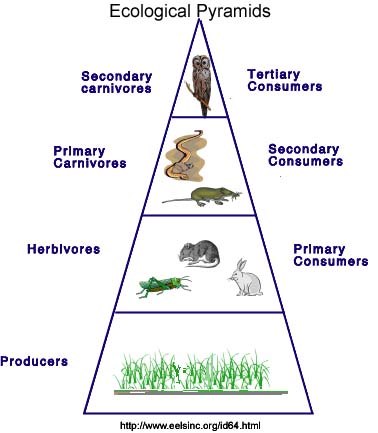

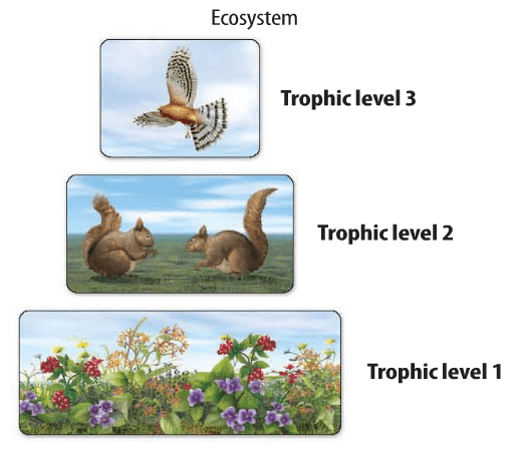
How does the energy flow in an energy pyramids?
up the pyramid
down the pyramid
Does the energy get lower or higher when it is transferred through each animal?
It gets higher
It gets lower
What does the decomposer do?
Eat dead animals
Eat dead plants
Return nutrients back to the
environment
All of the above
Can heterotrophs make their own food?
Yes
No
True or false ~ All organisms make their own food.
True
False
How are energy pyramids organized?
Tropic Levels
Tropical Levels
Animal Levels
Where do producers get their energy from?
The sky
The sun
The ground
What is a autotroph?
Makes its own food
Eat other animals
Eats plants
What is the process in which an animal makes it's own food?
Ground food making
Photosynthesis
It's just called "Animals making their own food"
Do consumers make their own food also?
Yes
No
What are heterotrophs?
An animal in which it makes it's own food
An animal in which it eats other animals

If the GRASS became diseased, which organisms would also be NEGATIVELY affected?
Rabbits only
Rabbits and snakes
Rabbits, snakes, and hawks
Rabbits and hawks (snakes benefit)
If the RABBITS became diseased, which organisms would also be NEGATIVELY affected?
Grass and hawks
Grass and snakes
Grass, snakes, and hawks
Snakes and hawks
If the RABBITS became diseased, which organisms would also be POSITIVELY affected?
Grass
Snakes
Nobody (all hurt)
Hawks
What happened after 12 months after the hawk population was MOSTLY killed off?
Snakes increased, Rabbits decreased, and Grass increased. Then everything balanced back out to almost normal.
Initially everything was stable, but the snake population killed all the rabbits and then died out themselves.
Everything went down significantly at first, then the hawks recovered.
Everything except the grass died off at first, then the rabbits recovered.
What does equilibrium mean?
Being in balance; staying the same for a long time.
When a species has a very high population
Changing gradually over time
Nearly dieing off before recovering again.

Which of the following is not true about predator-prey relationships?
Predators lower the size of prey populations
If a prey population grows, the predator population will grow too
Predators hunt/eat prey.
If a predator is removed, the prey population will die off.

Why are the lower levels of the energy pyramid bigger than the top levels?
The bottom is for larger animals.
The bottom levels don't need as much energy.
The top levels get energy (eat) the lower levels.
The top levels have fewer predators for they are smaller.

What is the effect of removing prey from a food chain?
All predators above them will die or suffer.
The prey's predator will die or suffer, but everybody else should be fine.
The prey will always, eventually, come back
The predators population will grow

