
 Worksheets
CFA 2 Review Periodic Table
Total questions: 87
Worksheet time: 50mins
Which of the following is classified as an element?
Na Cl
CO2
Na
H2O

Based on its location on the partial periodic table shown above, which element would you predict has chemical properties that are most similar to Argon?
Zinc (Zn)
Nitrogen (N)
Helium (He)
Chlorine (Cl)

The GRAY elements represent what group of elements?
metals
non metals
metalloids

The Periodic Table is arranged in order of increasing
Atomic mass
Atomic number (number of protons)
Date of discovery
Alphabetical ordr

The formula to calculate the number of neutrons in an element is
Atomic mass- atomic number
Atomic mass + atomic number
Atomic number-atomic mass
Number of electrons

The number of electrons in a stable element is
equal to the number of neutrons
equal to the number of protons
equal to the atomic mass
equal to the number of protons + neutrons

Why are protons and electrons attracted to each other?
They are both negatively charged.
They are both positively charged.
Protons have a negative charge and electrons have a positive charge.
Electrons have a negative charge and protons have a positive charge.

What happens when heat is removed from a liquid and it cools?
The energy content increases, and the speed of its particles remains the same.
The energy content decreases, and the speed of its particles decreases.
The energy content decreases, and the speed of its particles increases.
The energy content increases, and the speed of its particles increases.

Which of the following describes the elements in group 18?
High reactivity
All are metals
All are metalloids
All are inert and stable

Which shaded element will chemically combine most easily with Hydrogen (H) ?
Fluorine (F)
Sulfur (S)
Krypton (K)
Tin (Sn)

What property makes some of the shaded elements (metalloids) useful in electronic equipment such as computers?
They are brittle and can break into small pieces easily
They are gases at room temperature, so they are light in weight.
They have a complete set of valence electrons and do not react.
They can be made to conduct electricity under certain conditions.

The blue elements pictured
have properties of metals and non metals
are gases
are metals
are non metals

The yellow elements on the periodic table are
metalloids
metals
non metals

Which family on the Periodic Table has a full outer electron shell?
Noble gases (group 18)
Halogens (group 17)
Alkali metals (group 1)
Alkali earth metals (group 2)

Which family on the periodic table is the most reactive group of metals?
Noble gases (group 18)
Halogens (group 17)
Alkali metals (group 1)
Alkaline earth metals (group 2)

Which group on the periodic table are the most reactive non metals with 7 valence electrons?
Noble gases (group 18)
Halogens (group 17)
Alkali metals (group 1)
Alkali earth metals (group 2)

Is the cup of coffee an element, compound, homogeneous mixture, or heterogeneous mixture?
element
compound
homogeneous mixture
heterogeneous mixture

Is the sand an element, compound, homogeneous mixture, or heterogeneous mixture?
element
compound
homogeneous mixture
heterogeneous mixture

Is the chicken noodle soup an element, compound, homogeneous mixture, or heterogeneous mixture?
element
compound
homogeneous mixture
heterogeneous mixture

Is ketchup an element, compound, homogeneous mixture, or heterogeneous mixture?
element
compound
homogeneous mixture
heterogeneous mixture

Is trail mix an element, compound, homogeneous mixture, or heterogeneous mixture?
element
compound
homogeneous mixture
heterogeneous mixture

Is Hydrochloric acid (HCl) an element, compound, homogeneous mixture, or heterogeneous mixture?
element
compound
homogeneous mixture
heterogeneous mixture

Lemonade is a solution. Is lemonade an element, compound, homogeneous mixture, or heterogeneous mixture?
element
compound
heterogeneous mixture
homogeneous mixture

Is Carbon (C) an element, compound, homogeneous mixture, or heterogeneous mixture?
element
compound
homogeneous mixture
heterogeneous mixture

Is salt (NaCl) an element, compound, homogeneous mixture, or heterogeneous mixture?
element
compound
homogeneous mixture
heterogeneous mixture

Is Sufur (S) an element, compound, homogeneous mixture, or heterogeneous mixture?
element
compound
homogeneous mixture
heterogeneous mixture

Which of the following occurs when water forms?
One Oxygen atom gives an electron to each of two Hydrogen atoms.
Two Hydrogen atoms are destroyed to form atoms of water.
One Oxygen atom shares electrons with two Hydrogen atoms.
Two Hydrogen atoms each give an electron to an Oxygen atom.

Copper carbonate being heated is shown. Which statement best describes what happened in this experiment?
Copper oxide decomposed when heated, causing a chemical change.
Copper oxide reacted with the glass wool, causing a physical change.
Copper carbonate decomposed when heated, causing a chemical change.
Copper carbonate reacted with the glass wool, causing a physical change.

What can be determined by looking at this formula? (Check THREE answers)
It has one Oxygen atom.
It has two Hydrogen atoms.
It is a chemical mixture.
It is a chemical compound.
Which group of substances contains only compounds?
C, O2,, CH4
H, He, F
CO2, CaCO3, CH4
F, Fe, He

A combination of salt and sugar grains is best classified as a mixture because
the grains taste different from one another
both salt and sugar grains are in the same state of matter
no new chemical bonds are formed between the salt and sugar grains.
a new product is formed when the salt and sugar grains are combined

Using the Periodic Table, which 2 elements would have the same number of valence electrons?
Helium (He) and Fluorine (Fl)
Oxygen (O) and Nitrogen (N)
Neon (Ne) and Argon (Ar)
Phosphorus (P) and Silicon (Si)

Where are valence electrons found in an atom?
in the shell closest to the nucleus
in the nucleus
in the shell farthest away from the nucleus
in the neutrons

How many valence electrons do the elements in group 1 have?
1
2
8
18

Which two elements on the Periodic Table are more likely to have similar properties?
Na and Y
Na and Mg
Na and K
K and Ca

Which family on the Periodic Table is in the most reactive metals group?
Transition metals
Halogens
Noble gases
Alkali metals

Which family on the Periodic Table are the least reactive?
Halogens
Noble gases
Alkali metals
Transition metals

Francium is an element found in group 1 and period 7 on the periodic table. How many valence electrons does Francium have?
1
7
8
10

If a metal reacts violently with water, in which group is it likely to be found?
1
2
7
8

A covalent bond is a bond between a _____ and a ______ (on the right side of the periodic table)
metal, nonmetal
metal, metal
nonmetal, nonmetal

When two atoms share electrons, a chemical bond is formed. This type of bond is called:
covalent bond
ionic bond
crystal bond
polyatomic bond

A(n) _________ is an ion with a positive (+) charge.
anion
cation
ion
solute

What type of bond involves the sharing of electrons between atoms?
covalent bond
ionic bond
metallic bond
transfer bond
This type of bonding can be described as "I give, I get"
ionic
covalent
metallic

This type of bonding can be described as a "cooperation"
ionic
covalent
metallic

When a metal loses an electron(s) it becomes a ...
positive ion
negative ion
metalloid
nonmetal

When a non-metal gains an electron it becomes a...
positive ion
negative ion
metalloid
metal

In a covalent bond both non-metals _____ electrons.
transfer
share

Covalent bonds are between...
a metal and a nonmetal
a nonmetal and another nonmetal
a metal and another metal
any types of elements

How are covalent bonds formed?
by atoms sharing some of their electrons
by electron transfer from one atom to another
by atoms exchanging electrons
by atoms hanging out together

How are ionic bonds formed?
by atoms sharing some of their electrons
by electron transfer from one atom to another
by atoms exchanging electrons
by atoms hanging out together
Why do elements bond?
to become friends
to create a new element
to become stable
to reduce the number of atoms

Which type of bonding does this diagram represent?
covalent
ionic
metallic
none of these

What is a valence electron?
The same as the number of protons.
The electrons in the outermost energy level.
A type of chemical bond.
An electron closest to the atomic nucleus.

Group numbers on the periodic table help us determine
the size of an atom
the color of an element
the atomic number of an element
the number of valence electrons an atom has

Atoms that gain/take/borrow electrons become...
negatively charged
positively charged
neutral, not charged
unstable

Atoms that lose/give/loan electrons become...
negatively charged
positively charged
neutral, not charged
unstable

What would an atom with 3 valence electrons most likely do to become stable?
gain/take/borrow 5 more electrons from other atoms
lose/give/loan the 3 electrons to other atoms
nothing, it's already stable
nothing, atoms with 3 electrons can't become stable

A change in which NEW substances are formed.
Chemical change
Physical change
Casual change
Formal change

Is melting butter for popcorn a chemical or physical change?
chemical
physical

Is a rusting bicycle a chemical or physical change?
chemcial
physical


This picture represents...
An element (diatomic)
A solution
A mixture
A compound

A substance with two or more different types of atoms bonded together is called...
An element
An atom
A compound
A mixture

In this diagram, X represents...
A compound
A mixture
A solution
An element (monatomic)

This diagram represents...
An element
A molecule
A compound
A mixture of elements and compounds

In this diagram, W represents...
An element
A molecule
A compound
A mixture

What is an ion?
A Charged Atom
A Large Atom
A Small Atom
A Cute Atom


An atom becomes _________ when it gains electrons.
Positive
Negative
Neutral
Invinsible

An atom becomes _______ when it loses electrons.
Positive
Negative
Neutral
Invinsible

________ molecules are found in nature as single atom elements
polyatomic
monatomic
elemental
diatomic

______ molecules are found in nature as pairs of two atoms of the same type covalently bonded together.
Diatomic
Monatomic
Polyatomic
Network

Which of the following types of elements can exist in monatomic form? o
alkali metals
transition metals
halogens
noble gases

Which of the following types of elements can exist in nature as diatomic molecules? oo
alkali metals
transition metals
halogens
noble gases.

A mixture of two or elements at least one of which is a metal is called
an ion
an alloy
steel
a crystal
The yellow elements on the periodic table are
metalloids
metals
non metals
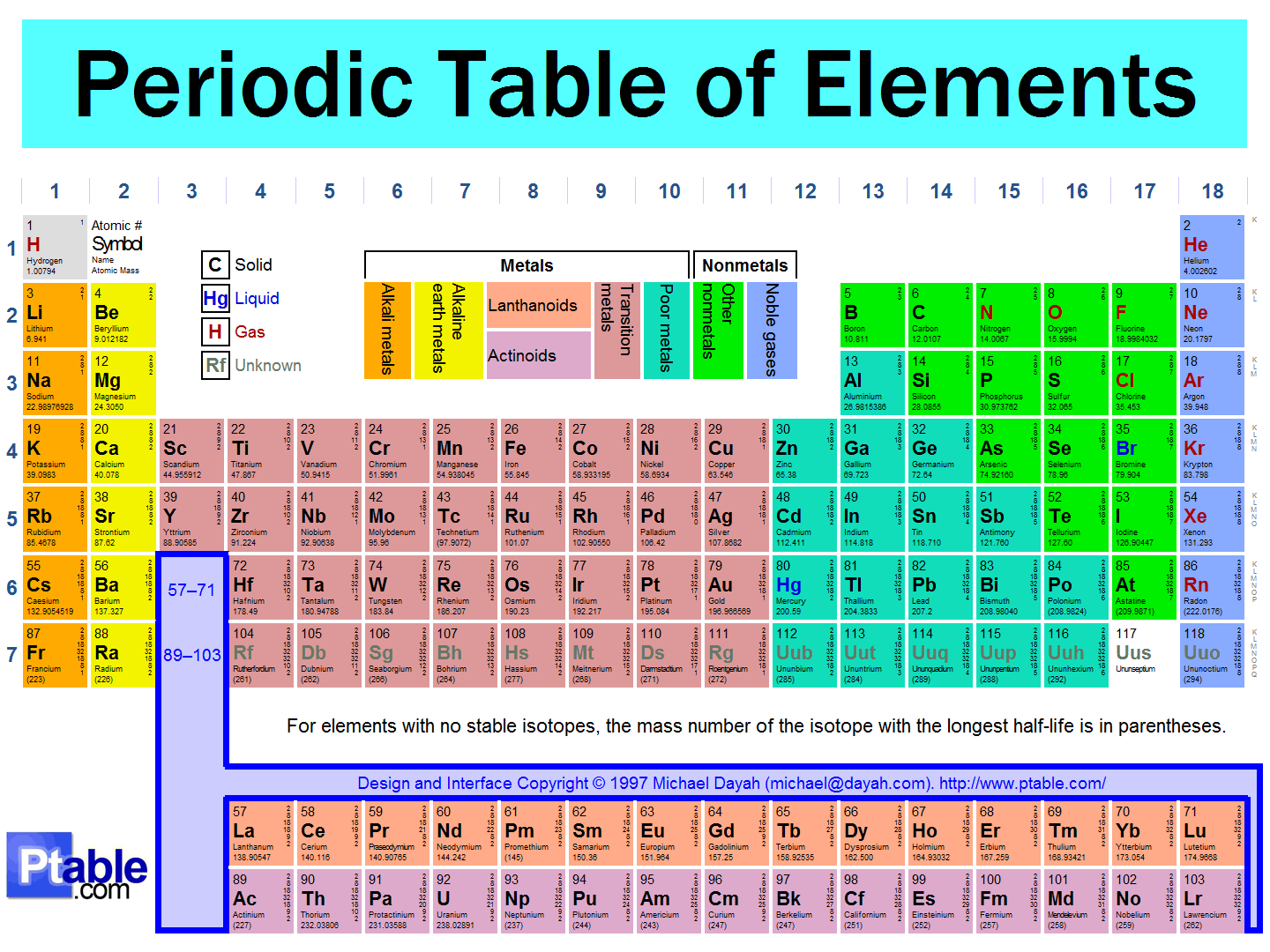
The horizontal (side to side) rows in the Periodic Table are called
groups
families
periods
atomic numbers
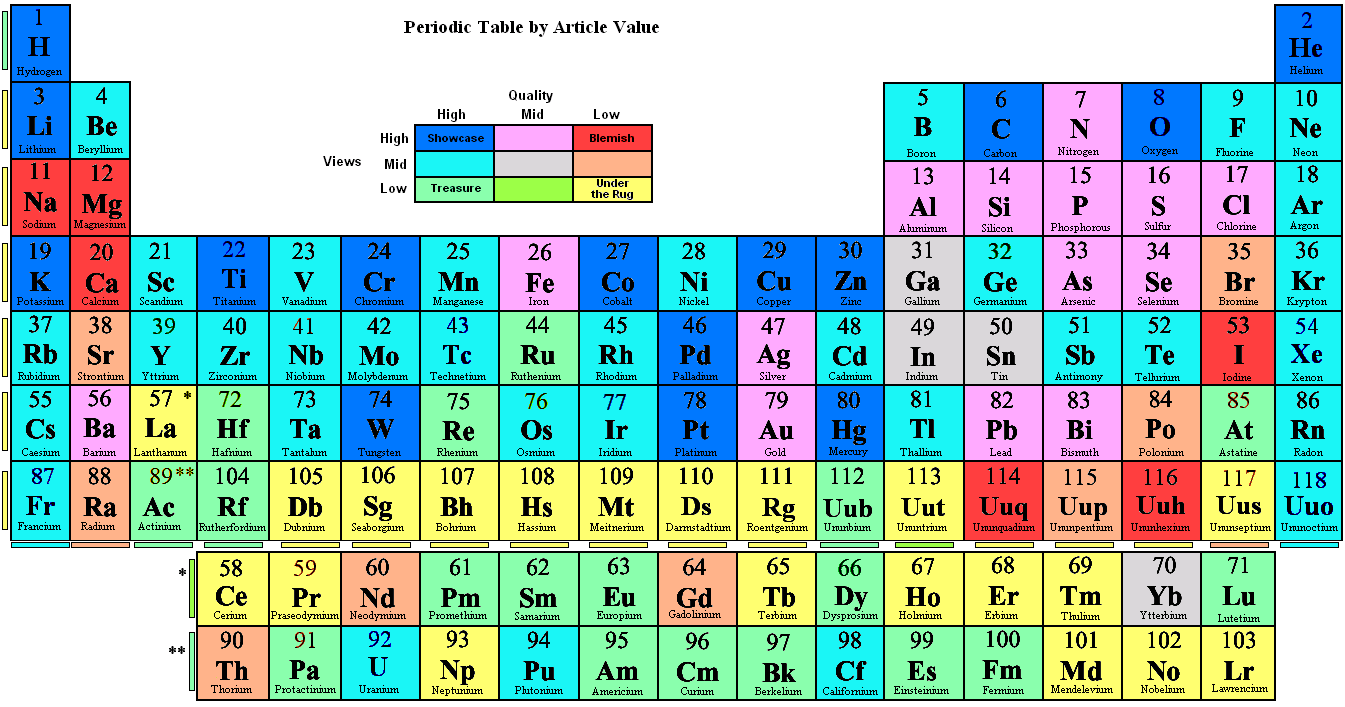

The vertical (up and down) columns in the Periodic Table are called
groups
towers
periods
atomic numbers
What do the horizontal rows → on the periodic table tell us?
The number of orbitals
The number of valence electrons (the electrons on the outer most shell)
What do the vertical columns ↕ on the periodic table tell us?
The number of orbitals
The number of valence electrons (electrons on the outer most shell)

