
 Worksheets
GS2 Semester 1 Review(NGSS 8th grade)
Total questions: 85
Worksheet time: 2hrs 56mins
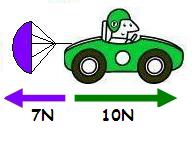
What is the net force?
3 N
3 N, right
17 N, right
3 N, left
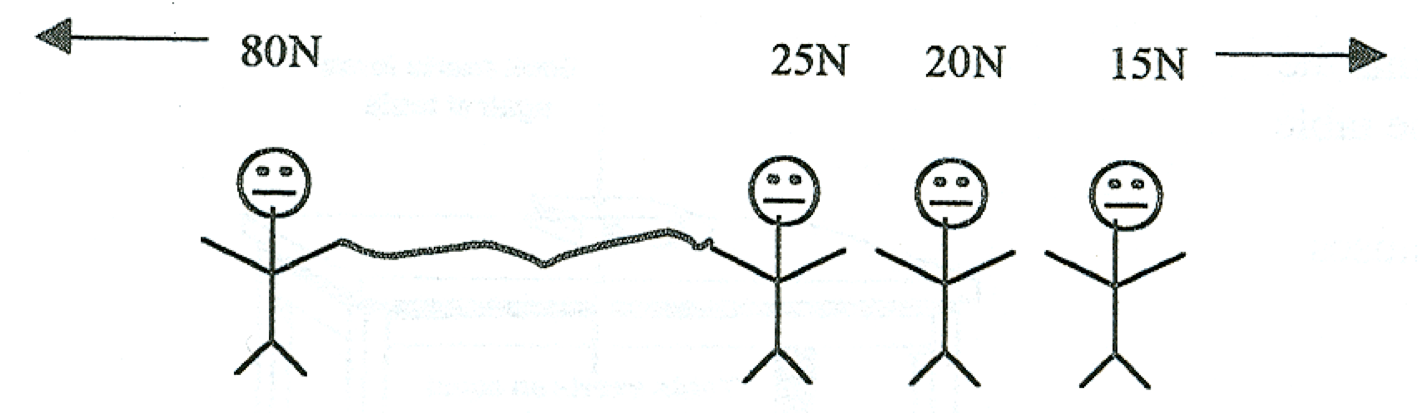


A ____________ is a push or a pull on an object.
friction
force
magnet
gravity
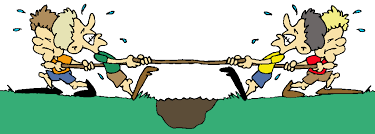
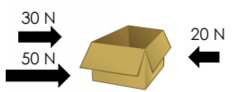

. Force exerted between the surfaces of two objects.
Friction
Inertia
Forces
Gravity
Object tendency to resist change
Friction
Inertia
Forcé
Gravity

Which one of Newton's laws is shown
3rd law
2nd law
1st law

Which one of Newton's laws are displayed
2nd law
1st law
3rd law

Which of Newton's laws is shown
1st law
3rd law
2nd law
Which is an example of Newton's First law of inertia?
A rocket taking off from Earth
A crash test dummy flies through the windshield in a collision
A small rock skips on a pond faster than a large rock
Which is an example of the law of acceleration?
A rocket taking off from Earth
A crash test dummy flies through the windshield in a collision
A small rock skips a pond faster than a large rock

Which is an example of the law of action/reaction?
A rocket taking off from Earth
A crash test dummy flies through the windshield in a collision
A small rock skips a pond faster than a large rock
Which example best describes Newton’s 3rd Law?
Paddling a canoe to make the boat move
A large truck takes longer to slow down than a car
Falling forward in a train that is slowing down quickly


A person not paying attention while skateboarding hits a rock. The skateboard stops...they don't.
The Law of Inertia (1st law)
The Law of Acceleration (2nd law)
The Law of Conservation of Momentum
Action Reaction Law (3rd law)
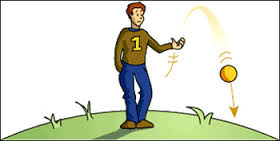
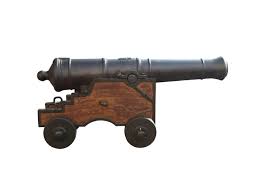

If the man pushes with an equal amount of force, which object will accelerate more?
Car because it has more mass
Lawnmower because it has less mass
Car because it has less mass
Lawnmower because it has more mass
When mass increases, Gravity _______________?
increases
decreases
stays the same
is not affected
When mass decreases, Gravity _______________?
increases
decreases
stays the same
is not affected
When the distance increases between 2 objects, the gravitational pull _________________.
decreases
increases
stays the same
is not affected
When the distance decreases between 2 objects, the gravitational pull _________________.
decreases
increases
stays the same
is not affected
Anything with ____________ also has a gravitational pull.
mass
size
depth
light
What is weight?
how much fat is on your body
how strong you are
how strongly your body is being pulled down by gravity
when you have to stand in line
Gravity is based on an object's
mass
size
roundness
brightness
Inertia tells us that we need ____________ to get an object moving or to make it stop.
a force
gravity
friction
strength
What keeps the planets in orbit around the sun?
gravity and inertia together
gravity
inertia
neither gravity or inertia
Why do the planets in our solar system orbit the sun?
because the sun is the brightest object
because the sun was there first
because the sun has the most mass
because nothing can orbit planets
What would happen to Earth if there were no inertia?
Earth would crash into the sun
Earth would fly out to space
Earth would collapse
Earth would orbit the moon
What would happen to Earth if there were no gravity?
Earth would crash into the sun
Earth would fly out to space
Earth would collapse
Earth would orbit the moon

Why does a compass needle, point towards the north?
The compass is a bar magnet.
North is up.
It deflects.
It lines up with the Earth's magnetic field.

This large crane magnet functions only when the electrical current is ON. The crane magnet is an example of what type of magnet?
NIB Magnet
Ceramic Magnet
Electromagnet
Disc magnet
How can the strength of an electromagnet be increased? (mark all that apply)
increase the current flowing through the coil
increase the number of coils
add an amplifier to it
put iron core inside the coil
The farther away two magnets are from each other, the force of attraction _________.
stays the same
increases
decreases
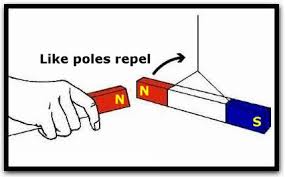
Which situation would have the most potential energy for the bar magnets? Think of the rules for electrons


when magnets are close together
when magnets are furthest apart
Energy stored because of gravity is called:
Gravitational Potential Energy
Kinetic Energy
Mechanical Advantage
Chemical Energy
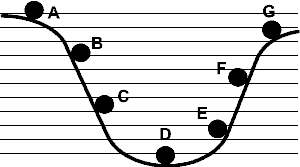
At which point does the ball has the greatest gravitational potential energy (GPE)?
A
G
D
C
G
Which would have the LEAST gravitational potential energy (GPE)?
A ball sitting on the ground
Moon viewed from the Earth
An airplane flying 30,000 feet above the ground
A rock sitting on top of Mt. Everest
How could you increase the gravitational potential energy of an object without changing its mass and gravity?
Make the object larger
Lower the object towards the ground
Raise the object farther off the ground
Allow the object to roll on the ground
What is potential energy?
The energy an object has due to its atomic structure.
The energy an object has due to its chemical composition.
The energy an object has due to its motion.
The energy an object has due to its position or condition.
What is kinetic energy?
The energy an object has due to its position or condition
The energy an object has due to its motion
The energy an object has due to its chemical composition
The energy an object has due to its atomic structure
When does an object have no kinetic energy?
When it's at rest.
When it's moving very slowly.
When the only force that's acting on it is gravity.
When it has no electrical charge.
Which object has the most potential energy?
A ball resting on the ground.
A ball being thrown at 100 miles per hour.
A ball on top of a refrigerator.
A ball resting on the edge of a cliff.
When does a yo-yo have the most potential energy?
When it's at its highest point.
When it's at its lowest point.
When it's moving between its highest and lowest points.
When it's moving at its top speed.
When is potential energy transformed into kinetic energy?
When an object at rest is lifted to a higher elevation.
When an object at rest remains at rest.
When an object at rest is put into motion.
When an object in motion is stopped and put at rest.
Why do objects at high elevations have more potential energy than objects at low elevations?
Because the thinner air at higher elevations means objects have a greater potential to move very fast
Because objects at high elevations are closer to the sun, which is the source of all energy on earth
Because objects at high elevations tend to move slower than objects at low elevations
Because gravity gives objects at high elevations the potential to fall much further
Which of the following best explains the relationship of speed and kinetic energy
the faster the object has, the less kinetic energy it has
the slower the object moves, the more kinetic energy it has
the faster an object moves, the more kinetic energy it has
the more kinetic energy the object has, the more potential energy it is releases


What relationship does the table represent?
Direct
Inverse
Neither

What relationship does the table represent?
Direct
Inverse
Neither

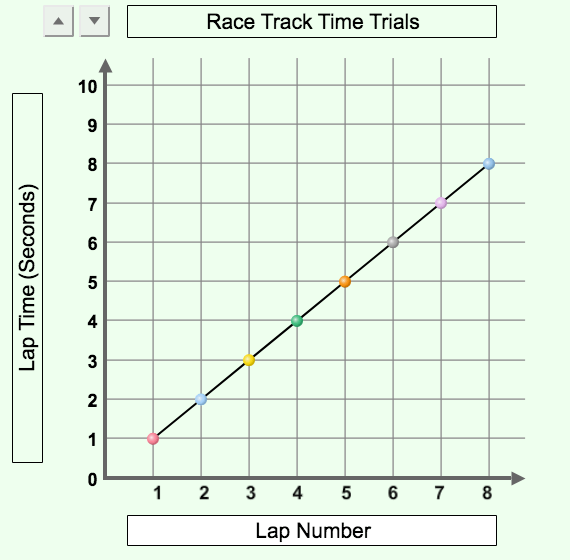
A car is timed around a race track for 8 laps. The laps are numbered in order. Look at the relationship between Lap Number and Lap Time (seconds).
What type of relationship is this?
Direct
Inverse
Diagonal
Horizontal
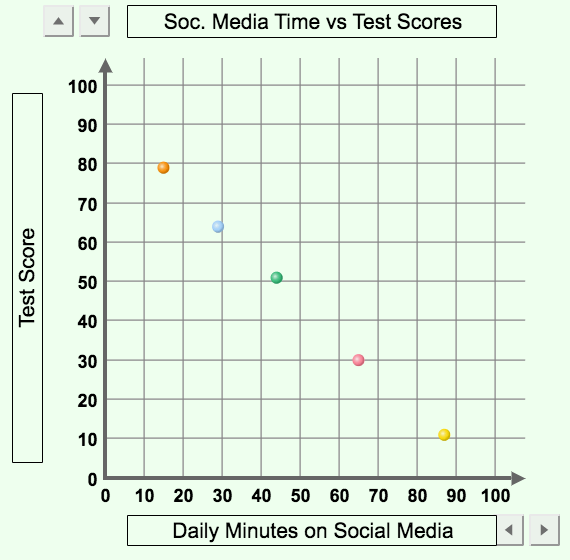
Look at the relationship between time spent on social media, and school test performance.
What type of relationship is being displayed?
Direct
Inverse
Diagonal
Quadrant
The connection between two variables that shows the same effect
Direct Relationship
Inverse Relationship
Examine
Extrapolation
The connection between two variables that shows the opposite effect
Inverse Relationship
Predict
Proportional
Relationship

This model is showing us a...
lunar eclipse
solar eclipse
phases of the moon
earth eclipse

This image is showing us a.....
solar eclipse
lunar eclipse
phases of the moon
earth eclipse
When the moon passes between the earth and the sun, this results in a.....
Waxing moon
lunar eclipse
solar eclipse
sun rise
When the earth is between the sun and the moon, this results in a...
waxing moon
solar eclipse
lunar eclipse
sun rise

If you look up at the sky and see this, you are witnessing a....
solar eclipse
total eclipse
lunar eclipse
jupiter

If you are looking up at the sky and see this, you are looking at a....
solar eclipse
total eclipse
lunar eclipse
jupiter
In order to have an eclipse, the Moon, Sun and Earth have to be?
Below each other
Above each other
In alignment



