wayground logo

Free Printable Worksheets

Font size

S
M
L
XL
Worksheets

8th Grade Science Final Review

Total questions: 88

Worksheet time: 1hrs 6mins

Name
Class
Date
1.
The inner planets are also called...
a)
terrestrial planets
b)
gas giants
2.
The inner planets are closer to the sun so
a)
they take longer to orbit the sun.
b)
they orbit the sun faster.
3.
Located between the inner and outer planets.
a)
Sun
b)
Asteroid belt
c)
Uranus
d)
Moons
4.
The greater mass a planet has, 
a)
the greater the gravitational force it has
b)
the less gravitational force it has
c)
gravitational force does not depend on mass
5.

Scientists use the light-year to describe the relationships between objects in space. What does a light-year measure?

a)

the distance that light can travel in one year

b)

the brightness of light that travels through space

c)

the number of years it takes light to travel to Earth

d)

the time it takes light to travel 1 million km

6.

Astronomers use the light-year to describe the relationship between objects in space. For example, the Andromeda galaxy is 2.5 million ly from Earth. Which of the following units is most similar to the light-year?

a)

gram

b)

second

c)

kilometer

d)

degrees Celsius

7.

A light-year (ly) is the distance that light travels in one year. If a star is 3 ly from Earth, how long does it take light from that star to reach Earth?

a)

3 min

b)

3 h

c)

3 y

d)

3 ly

8.

The sun is much larger than the moon. However, as viewed from Earth, the sun and moon appear to be the same size. Why do the sun and moon appear to be the same size when viewed from Earth?

a)

The moon is much hotter than the sun.

b)

The moon is much denser than the sun.

c)

The moon is much brighter than the sun.

d)

The moon is much closer to Earth than the sun.

9.

Which two objects in space are located farthest apart?

a)

Earth and Mars

b)

Earth and the sun

c)

Earth and the moon

d)

the Milky Way galaxy and the Andromeda galaxy

10.

Space exploration has advanced our knowledge of the universe. Which space journey would take the longest?

a)

a journey from Earth to the sun

b)

a journey from Earth to the moon

c)

a journey from Earth to a star in the constellation Centaurus

d)

a journey from Earth to the farthest planet in our solar system, Neptune

11.

During a trip to a planetarium, Greg learned that the outer planets are Jupiter, Saturn, Uranus, and Neptune.

Which statement describes the four outer planets?

a)

They do not have rings

b)

They do not have moons

c)

They are made mostly of gas.

d)

They have rocky surfaces and volcanoes

12.

Pam’s little sister drew this picture of our solar system.

Based on current information, why is the picture incorrect?

a)

Earth should be at the center

b)

There should be 8 planets, not 9.

c)

There should be 10 planets, not 9

d)

All of the planets should have moons

13.

Sidney made a diagram of our solar system.

Which statement is true of the four planets farthest from the Sun?

a)

They do not have moons

b)

They have no atmosphere.

c)

They are smaller than the inner planets.

d)

They travel farther around the Sun than the inner planets.

14.

Ajay made this drawing of our solar system.

What does the drawing show about the Sun and planets?

a)

their relative sizes

b)

their relative distances from the Sun

c)

how many moons each planet has

d)

whether or not they have an atmosphere

15.
Solid, rocky surface
a)
Inner planets
b)
Outer planets
c)
Both
d)
Saturn
16.
The order of the planets is:
a)
Mars,Venus,Earth,
Mercury,Saturn
Jupiter, Uranus, Neptune
b)
Earth,Venus,Mars
Jupiter, Neptune,
Mercury,Saturn,
Uranus
c)
Mercury,Venus,Earth
Mars,Jupiter,
Saturn,Uranus
Neptune
d)
Mercury, Earth, Venus, Mars, Saturn, Jupiter, Neptune, Uranus
17.
As distance between two objects increase the pull of gravity 
a)
Increases
b)
Decreases
c)
Stays the same
18.
Why do other stars appear so much smaller than the sun?
a)
They are much smaller
b)
They are so far away
c)
They are not as bright
d)
They are dwarf stars
19.
True or False
The Sun is the biggest star in the sky.
a)
True
b)
False
20.
What color of star is the coolest?
a)
Red
b)
Yellow
c)
Blue
d)
White
21.
What color of star is the hottest?
a)
Blue
b)
Red
c)
Yellow
d)
Orange
22.
The color of a star tells us its
a)
magnitude
b)
temperature
c)
size
d)
age
23.

What information do we need to calculate the absolute magnitude of a star?

a)

color and temperature of the star

b)

color and composition of the star

c)

apparent magnitude and distance from Earth of the star

d)

color and distance from Earth of the star

24.

What characteristic of stars is measured by luminosity?

a)

brightness

b)

size

c)

temperature

d)

distance from Earth

25.

Which one of these conclusions can be drawn based on the graph?

a)

Absolute magnitude is not related to the color of a star.

b)

Blue stars are farther from Earth than red stars.

c)

Blue stars are generally more luminous than red stars.

d)

A blue star will appear brighter from Earth’s surface than a red star.

26.

Of the following four stars, which star should Ashni label as the hottest?

a)

Wolf, red

b)

Ceti, yellow

c)

Cygni B, orange

d)

Vega, blue-white

27.
What is the Sun mostly made of?
a)
Stars
b)
Hydrogen and Helium
c)
Oxygen
d)
Carbon Dioxide
28.
Moving areas of magnetic activity with temperatures that are cooler than the area of the photosphere
a)
Photosphere
b)
Corona
c)
Sunspots
d)
Prominence
29.

Who was the person that popularized the geocentric model?

a)

Galileo

b)

Aristotle

c)

Copernicus

30.

What is the biggest difference between the Geocentric Model and the Heliocentric Model?

a)

the shape of the planets' orbits

b)

the movement of the moon

c)

the center of the solar system

31.
  What does "geo-" mean?
a)
Earth
b)
sun
c)
Center
32.
This image shows the:
a)
Geocentric Solar System
b)
Heliocentric Solar System
33.
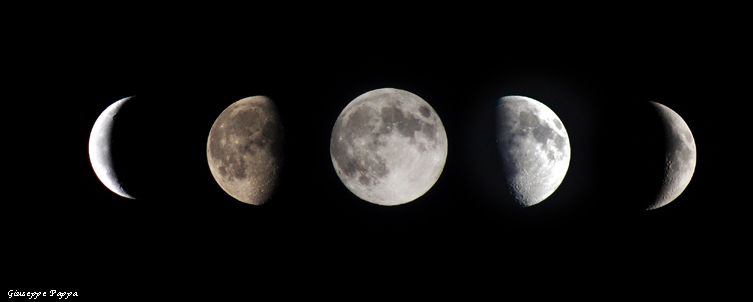
A solar eclipse only occurs during which moon phase?
a)
1st Quarter
b)
New Moon
c)
Full Moon
d)
3rd Quarter
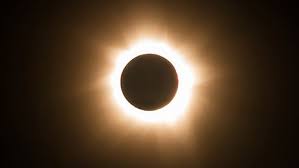
34.
a)
solar eclipse
b)
lunar eclipse
35.
In order to have an eclipse, the Moon, Sun and Earth have to be?
a)
Below each other
b)
Above each other
c)
In alignment
36.
Which type of eclipse occurs when the Moon comes directly between Earth and the Sun?
a)
Lunar eclipse
b)
Solar eclipse
37.
a)
solar eclipse
b)
lunar eclipse
38.
During a solar eclipse...
a)
The sun is blocked by the moon
b)
The Earth is blocked moon
c)
The moon is blocked by the sun
d)
You are blocked
39.
Why do the Sun and Moon appear to be the same size in the sky?
a)
The Sun is 400 times bigger, but the Moon is 100 times closer.
b)
The Sun is 100 times bigger, but the Moon is 400 times closer.
c)
The Sun is 400 times bigger, but the Moon is 400 times closer.
d)
The Moon is 400 times bigger, but the Sun is 400 times closer.
40.
An eclipse in space is when....
a)
one object passes through the shadow of another object.
b)
two shadows collide.
c)
the moon is in the waxing crescent phase.
d)
the Sun and Moon are side by side.
41.
What is the order during a lunar eclipse
a)
sun, moon, earth
b)
sun, earth, moon
42.
A[n] ___________ tide occurs when the sun, Earth, and the moon are nearly in a line. 
a)
spring
b)
high
c)
low
d)
neap
43.
Which body has the greater effect on Earth's tides?
a)
Sun
b)
Saturn
c)
Moon 
d)
Venus
44.
What causes tides?
a)
gravity
b)
wind
c)
spring
d)
neap
45.
Which body has the greater effect on Earth's tides?
a)
Sun
b)
Saturn
c)
Moon 
d)
Venus
46.
At the same time the sea is drawn to the moon, another tidal bulge takes place on other side of Earth.  True or False?
a)
True
b)
False
c)
Maybe
d)
I don't know!
47.

Tides are caused by what force from the sun and moon?

a)

gravitational

b)

strong

c)

tidal force

d)

armed forces

48.

As the moon revolves around the earth, the water follows the motion and causes...

a)

sea levels

b)

waves and currents

c)

moon phases

d)

high tides and low tides

49.
Frequency is a measure of...
a)
length of the wave
b)
height of the wave
c)
number of waves a second
d)
number of waves an hour
50.
Wave with the longest wavelength
a)
microwave
b)
radio
c)
gamma
d)
visible light
51.
The EM wave with frequency higher than infrared and lower than UV.
a)
radio
b)
visible light
c)
xray
d)
gamma
52.
When the wavelength increases the frequency will
a)
increase
b)
decrease
53.
EM waves  
a)
Must travel through a vacuum
b)
Can travel through a medium or a vacuum
c)
Are the same type of wave as mechanical waves
d)
Can only travel through a vacuum
54.
Predict which EM wave could cause more damage 
a)
Radio wave
b)
UV wave
c)
X-ray
d)
Gamma ray
55.
EM waves have the same speed but different:
a)
frequency & medium 
b)
wavelength & frequency
c)
medium & wavelength
d)
color & medium
56.
Which of these lists the EM waves from Highest to lowest frequency?
a)
Radio -  Micro - Gamma - Visible light - UV - Xrays - Infrared - Xrays
b)
Radio - Micro - Infrared - Visible light - UV - X - Gamma waves
c)
Gamma - Xray - UV - Visible light - Infrared - Micro - radio
57.
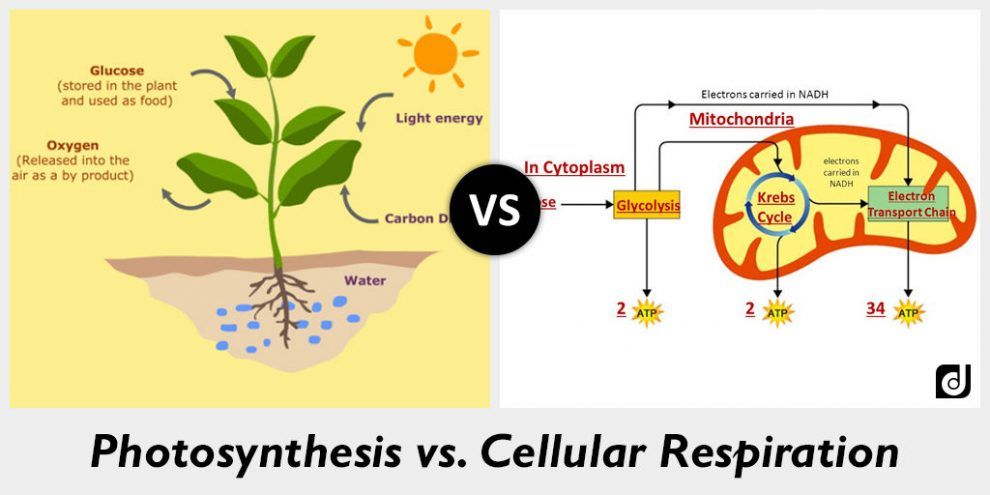
Which of the following is the correct equation for PHOTOSYNTHESIS?
a)
CO+ light + H2O --> O+ Sugar
b)
CO+ sugar + H2O --> O+ light
c)
O2 + light + H2O --> CO+ Sugar
d)
CO+ O2 + H2O --> Light+ Sugar
58.
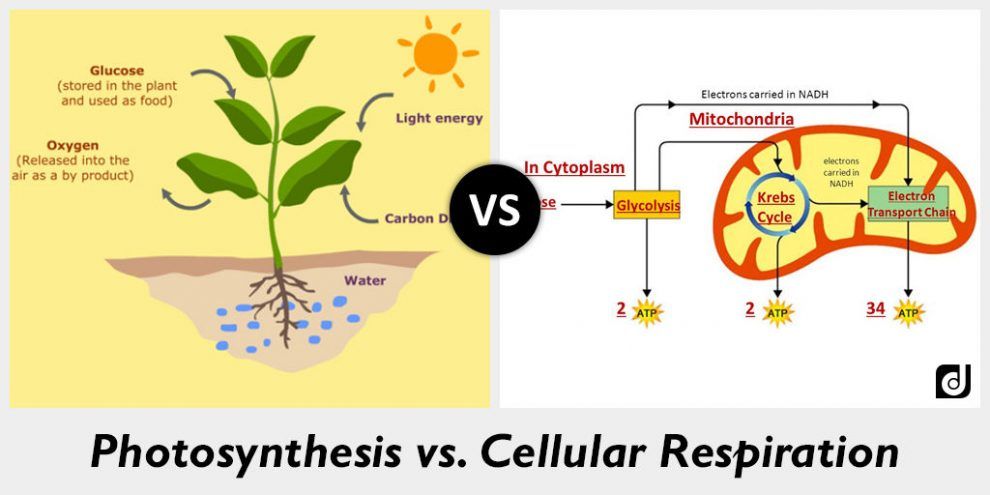
What process occurs when light energy is captured in autotrophs and converted into sugar?
a)
Photosynthesis
b)
Cellular Respiration
59.
What are the products of photosynthesis?
a)
water and carbon dioxide
b)
oxygen and glucose
c)
oxygen and carbon dioxide
d)
oxygen and water
60.
What is the pigment in chloroplasts that performs photosynthesis?
a)
Chlorosynthesis
b)
Chlorophyll
c)
ADP
d)
Electron Transport
61.
What do plants give off after photosynthesis?
a)
Oxygen
b)
carbon
c)
nitrogen
d)
hydrogen
62.
Plants need ________from the air for photosynthesis
a)
oxygen
b)
soil
c)
carbon dioxide
d)
sugar
63.
The main source of energy for all life comes from ____.
a)
the Earth
b)
the moon
c)
the sun
d)
the food we eat/make
64.
After photosynthesis, plants store their energy as _________ .
a)
chlorophyll
b)
pigment
c)
glucose (sugar)
d)
Oxygen
65.
What is the purpose of photosynthesis?
a)
make glucose
b)
make ATP
c)
make light
d)
release carbon dioxide
66.

What is cellular respiration?

a)

the breakdown of glucose to release ATP

b)

the breakdown of glucose to release carbon

67.
Where does cellular respiration take place in the cell?
a)
Cell Membrane
b)
Nucleus
c)
Mitochondria
d)
Vacuole
68.
What is the purpose of cellular respiration?
a)
to break down food
b)
to create energy in the body
c)
to release energy from food
d)
there is none; it's a waste of time
69.
What is the correct equation for cellular respiration?
a)
6O2 + C6H12O6 -> 6CO2 + 6H2O + Energy
b)
6O2 + C6H12O6 + Energy -> 6CO2 + 6H2O
c)
6CO2 + 6H2O -> 6O2 + C6H12O6 + Energy
d)
6CO2 + 6H2O + Energy -> 6O2 + C6H12O6
70.

What is one of the reactants of cellular respiration?

a)

energy

b)

oxygen

c)

carbon dioxide

71.
What is the purpose of cellular respiration?
a)
To turn energy from the sun into glucose
b)
To turn oxygen into glucose
c)
To turn ATP into glucose
d)
To turn glucose into energy in the form of ATP
72.
What is the purpose of photosynthesis?
a)
To use glucose to produce energy in the form of ATP
b)
To use energy from sunlight to produce glucose
c)
To use oxygen to produce glucose
d)
To produce energy for all cells in an animal's body
73.
All of the carbon in existence is continually recycled in the carbon cycle
a)
True
b)
False
74.
Which of the following removes carbon from the atmosphere?
a)
Combustion
b)
Respiration
c)
Photosynthesis
d)
Death
75.

Carbon molecules cannot be created or destroyed

a)

True

b)

False

c)

Not enough information to answer

76.

How is the carbon cycle similar to the water cycle?

a)

Both involve liquid substances falling to the Earth from the atmosphere?

b)

Neither process works at low temperature.

c)

Both involve the transfer of substances between animals, plants, and the Earth.

d)

Both involve the transfer of substances between the earth and outer space.

77.
The Law of Conservation of Mass states
a)
that matter exists in all states and reacts the same
b)
that matter can only be changed into new substances by introducing a catalyst
c)
that matter exists in the same state throughout any chemical change
d)
that matter cannot be created or destroyed and that the mass of the products must equal the mass of the reactants
78.

1. Which statement best represents a gas? (SC.8.P.8.1.)

a)

Particles move more slowly and are farther apart.

b)

Particles move more slowly and are closer together.

c)

Particles move more quickly and are farther apart.

d)

Particles move more quickly and are closer together.

79.

1. Which statement best identifies the movement of the particles in a liquid? (SC.8.P.8.1.)

a)

The particles of a liquid move freely.

b)

The particles of a liquid slide past each other.

c)

The particles of a liquid vibrate and barely move.

d)

The particles of a liquid do not move at all.

80.

1. Which statement best identifies a solid? (SC.8.P.8.1.)

a)

Particles barely move and are tightly packed.

b)

Particles barely move and are farther apart.

c)

Particles move more quickly and are farther apart.

d)

Particles move more quickly and are tightly packed.

81.

1. Marco accidentally broke a crayon while coloring. Which of the following best compares the broken crayon to the original crayon? (SC.8.P.9.1)

a)

The density of the crayon has decreased since the crayon is smaller.

b)

The crayon went through a chemical reaction since there are more pieces of the crayon.

c)

The crayon went through a chemical change because the shape of the crayon changed.

d)

The total mass of the broken crayon pieces are the same as the original crayon since matter was not lost.

82.

1. Brandon dissolved 10 grams of salt in 100 mL of water to form salt water. He then boiled the solution and the water boiled away. How much salt would be left in the beaker? (SC.8.P.9.1)

a)

1 gram

b)

10 grams

c)

90 grams

d)

110 grams

83.
What is the definition of "weight"?
a)
measure of the force of gravity on your body
b)
the time it takes to get on a ride 
c)
the amount of matter in an object
d)
the size of an object
84.
A measure of how much matter an object has is--
a)
weight
b)
gravity
c)
mass
d)
volume
85.
The weight of an object _________ as it moves away from the center of Earth.
a)
increases
b)
stays the same
c)
triples
d)
decreases
86.
The mass of an object ___________ as it moves away from the center of Earth
a)
stays the same
b)
decreases
c)
increases
d)
doubles
87.
Why would you weigh less on the moon compared to Earth?
a)
less air
b)
less sunlight
c)
more gravitational pull
d)
less gravitational pull
88.
Which box has a higher density?  
a)
Box A
b)
Box B
c)
cannot be determined
d)
they are the same