wayground logo

Free Printable Worksheets

Font size

S
M
L
XL
Worksheets

Atomic Theory and Periodic Trends Review

Total questions: 86

Worksheet time: 1hrs 17mins

Name
Class
Date
1.
As you move down a group, atomic radius increases because - 
a)
you add more and more neutrons
b)
you add more and more protons
c)
you add more and more shells (energy levels)
d)
you add more atomic mass
2.
The atom with the largest atomic radius in Group 18 is - 
a)
Ar
b)
He
c)
Kr
d)
Rn
3.
As you move across the periodic table from left to right, the atomic radius decreases.  This is because - 
a)
the number of protons increases, so attraction to electrons increases
b)
the number of energy levels increases
c)
the number of electrons increases
d)
the atomic mass increases
4.
The atom with the largest atomic radius in Period 4 (row 4) is - 
a)
K
b)
Kr
c)
Fe
d)
Fe
5.

What is the name of this group?

a)

alkali metals

b)

alkaline earth metals

c)

transition metals

d)

halogens

e)

noble gases

6.

What is the name of this group?

a)

alkali metals

b)

alkaline earth metals

c)

transition metals

d)

halogens

e)

noble gases

7.

How many valence electrons does this group have?

a)

1

b)

2

c)

7

d)

8

8.

What charge do ions of this group have?

a)

+1

b)

+2

c)

-2

d)

-1

e)

0

9.

Which element has an atomic radius that is LARGER than sodium?

a)

Lithium (Li)

b)

Hydrogen (H)

c)

Magnesium (Mg)

d)

Potassium (K)

10.

Which element has an atomic radius that is SMALLER than boron?

a)

beryllium (Be)

b)

aluminum (Al)

c)

carbon (C)

d)

Gallium (Ga)

11.

When oxygen becomes an ion, does it get larger or smaller?

a)

larger

b)

smaller

c)

depends on which isotope of oxygen it is

d)

oxygen forms several ions so it's impossible to tell

12.

The ionic radius of metals is

a)

larger than the metal atom

b)

smaller than the metal atom

c)

the same size as the metal atom

d)

trick question, metals don't form ions

13.

The ionic radius of noble gases is

a)

larger than the atom

b)

smaller than the atom

c)

the same size as the atom

d)

trick question, noble gases don't form ions

14.

The ionic radius of noble gases is

a)

larger than the atom

b)

smaller than the atom

c)

the same size as the atom

d)

trick question, noble gases don't form ions

15.

Based on the trends we learned, which has the highest electronegativity?

a)

phosphorus (P)

b)

sulfur (S)

c)

arsenic (As)

d)

selenium (Se)

16.

Based on the trends we learned, which has the lowest ionization energy?

a)

phosphorus (P)

b)

sulfur (S)

c)

arsenic (As)

d)

selenium (Se)

17.

Which element has two electron shells?

a)

Helium (He)

b)

Neon (Ne)

c)

Argon (Ar)

d)

Krypton (Kr)

18.

You discover a new element, Osbornium. It has an atomic number of 434 and an atomic mass of 2451.434. How many protons does it have?

a)

434

b)

2451

c)

2451.434

d)

2017

19.

Which of the following is a metal?

a)

Li

b)

Si

c)

S

20.
This particle is found in the nucleus and has no charge
a)
Neutron
b)
Proton
c)
Electron
d)
Orbital
21.
This particle is found in the nucleus and has a positive charge
a)
Electron
b)
Proton
c)
Neutron
d)
Neutral
22.
This is a negatively charged particle found outside the nucleus
a)
Electron
b)
Proton
c)
Neutron
d)
Orbital
23.
Rutherford's gold foil experiment provided evidence that...
a)
Negative and positive charges are spread evenly throughout the atom.
b)
Alpha particles have a positive charge.
c)
Gold is not a dense as previously thought.
d)
There is a dense positively charged nucleus at the center of an atom.
24.
J.J. Thomson provided evidence that an atom...
a)
is the smallest particle of matter
b)
contains negatively and positively charged particles
c)
has an overall negative charge
d)
has an overall positive charge
25.
What contribution did John Dalton make to atomic theory? 
a)
He discovered that every atom was positively charged. 
b)
He discovered that every element consisted of one type of atom.  
c)
He discovered that atoms had nuclei. 
d)
He discovered that atoms could be divided into smaller parts. 
26.
The positive particles of an atom are 
a)
Electrons 
b)
Positrons 
c)
Neutrons 
d)
Protons 
27.
Which is the correct sequence of the scientists who made major changes in the model of the atom?
1-JJ Thomson
2-Erwin Schrodinger
3-John Dalton
4-Niels Bohr
5-Ernest Rutherford
a)
2, 1, 4, 3, 5
b)
3, 1, 5, 4, 2
c)
5, 3, 2, 1, 4
d)
4, 3, 2, 1, 5
28.

The atomic mass of an element is the ___.

a)

average of the mass number and the atomic number for the element

b)

weighted average of the masses of the isotopes of the element

c)

total mass of the isotopes of the element

d)

total number of subatomic particles in the nucleus

29.

Chlorine has two naturally occurring isotopes, Cl-35 and Cl-37, The atomic mass of chlorine is 35.45. Which of these two isotopes of chlorine is more abundant?

a)

Cl-35

b)

Cl-37

c)

Cannot be determined from the information provided.

30.

The box for an element from the periodic table is shown. Which is the atomic mass?

a)

A

b)

B

c)

C

d)

D

31.

An element has three isotopes. Given the abundances and relative masses, calculate the average atomic mass and determine (from the periodic table) which element it is.


Abundances | Relative masses

0.005% | 234.04 amu

0.720% | 235.04 amu

99.275% | 238.05 amu

a)

Uranium (#92, Atomic Mass: 238.03 amu)

b)

Fluorine (#9, Atomic Mass: 19.00 amu)

c)

Mercury (#89, Atomic Mass: 200.59 amu)

d)

Polonium (#84 209 amu)

32.

Rubidium has two naturally occurring isotopes, 85Rb (relative mass 84.9118 amu) and 87Rb (relative mass 86.9092 amu). The abundance of 87Rb is 27.8%, If rubidium has an average atomic mass of 85.47 amu, what is the % abundance of 85Rb (in percent)?

a)

27.9%

b)

72.1%

c)

74.63%

d)

34.29%

33.
4.35% of all X atoms have a mass of 39.946 amu. 83.79% have a mass of 41.941 amu, 9.50% have a mass of 42.941 amu, and 2.36% have a mass of 43.939 amu. What is the average atomic mass of atom X?
a)
41.97 amu
b)
42.19 amu
c)
10.43 amu
d)
40.04 amu
34.
An isotope has three forms.  30% have a mass of 4 amu, 20% have a mass of 5 amu and 50% have a mass of 3 amu.  Average atomic mass will be closest to
a)
2 amu
b)
3 amu
c)
4 amu
d)
5 amu
35.
What atom matches this electron configuration?
1s2s2p3s2
a)
Neon
b)
Magnesium
c)
Aluminum
d)
Potassium
36.
What is this element? 
1s22s22p63s23p6
4s23d104p6
a)
Argon
b)
Krypton
c)
Selenium
d)
Bromide
37.
How many valence electrons does phosphorus have?
a)
5
b)
2
c)
8
d)
15
38.
What is the charge of an atom that has gained one electron?
a)
-1
b)
-2
c)
+1
d)
+2
39.
Which element is pictured?
a)
neon
b)
fluorine
c)
magnesium
d)
argon
40.
What is incorrect about this orbital diagram?
a)
Both arrows in the 2p box should be pointing up
b)
There is nothing incorrect with this diagram
c)
In the 2p box there should only be 1 electron in the first 2p box and one in the 2nd 2p box
d)
All the arrows should be pointing up.
41.
Electrons occupy orbitals of lowest energy first is part of what electron configuration rule?
a)
Hund’s Rule
b)
Aufbau Principle
c)
Pauli Exclusion Principle
42.
What is the Pauli Exclusion Principle?
a)
An atomic orbital can only hold a maximum of 2 electrons, each with opposite spins
b)
An atomic orbital can hold a minimum of 6 electrons, each with opposite spins
c)
An atomic orbital can hold a maximum of 6 electrons, each with the same spin
d)
An atomic orbital can hold a minimum of 2 electrons, each with opposite spins
43.
Which orbital shows a violation of Hund's Rule?
a)
A
b)
B
c)
C
d)
D
44.
Which orbital shows a violation of the Aufbau Principle?
a)
A
b)
B
c)
C
d)
D
45.
In an orbital diagram,  an arrow represents: 
a)
an electron
b)
an orbital
c)
an element
46.
This orbital diagram represents:  
a)
C
b)
B
c)
N
d)
O
47.

I have a positive charge, therefore where am I found in the atom?

a)

Outside of the nucleus

b)

In the nucleus

c)

In the electron cloud

d)

Atom's are neutral and don't have charged parts

48.

I spend my time outside of the nucleus, therefore my charge must be...?

a)

Postive

b)

Neutral

c)

Negative

49.

I contribute to an atom's mass...

a)

protons and electrons

b)

electrons and neutrons

c)

protons and neutrons

d)

protons, neutrons, and electrons

50.

Which subatomic particle has a negative charge?

a)

Proton

b)

Neutron

c)

Electron

d)

Atom

51.

Which subatomic particle has a neutral (no) charge?

a)

electron

b)

neutron

c)

electron

52.

How many neutrons are in one atom of Krypton?

a)

36

b)

48

c)

84

53.

In the notation 289115 Mc, the number 289 is the

a)

atomic mass

b)

atomic number

c)

number of neutrons

d)

number of electrons

54.

Why are ions formed?

a)

To make our lives difficult

b)

Because atoms want to be stable

c)

Because atoms have the same number of protons and electrons

d)

Because atoms gained neutrons

55.
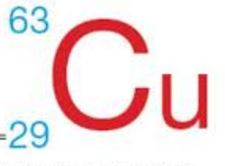
What is the atomic mass of Copper?
a)
63
b)
29
c)
34
d)
92
56.

How many neutrons are in a Gold atom?

a)

79

b)

196

c)

117

d)

275

57.

An atom with 10 protons, 8 neutrons, 8 electrons is a _______. (Choose all that apply)

a)

cation

b)

anion

c)

neutral atom

d)

ion

58.

An atom with 2 protons, 3 neutrons, and 4 electrons has a charge of ____.

a)

+2

b)

-2

c)

+3

d)

0

59.

Write the hyphen notation for the isotope that has 39 protons and 50 neutrons.

a)

Yttrium-11

b)

Tin-39

c)

Tin-89

d)

Yttrium-89

60.

Write the hyphen notation for the isotope that has 39 protons and 50 neutrons.

a)

Yttrium-11

b)

Tin-39

c)

Tin-89

d)

Yttrium-89

61.
What is the charge on a lithium atom that looses 1 electron?
a)
+1
b)
0
c)
-1
d)
-2
62.

A negatively charged ion that has gained electrons to satisfy the octet rule

a)

Anion

b)

Cation

c)

Neutral Atom

d)

Isotope

63.

A positively charged ion that has lost electrons to satisfy the octet rule

a)

Anion

b)

Cation

c)

Neutral Atom

d)

Isotope

64.

How many protons, neutrons, and electrons?

a)

proton = 16, neutron = 8, electron = 10

b)

proton = 8, neutron = 16, electron = 8

c)

proton = 8, neutron = 8, electron = 10

d)

proton = 6, neutron = 2, electron = 6

65.
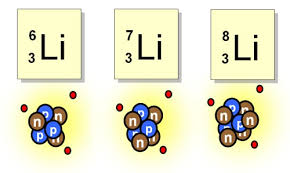
which atom has  4 neutrons?
a)
Li-6
b)
Li-7
c)
Li-8
d)
they have the same # of neutrons
66.
How many neutrons in C-14?
a)
6
b)
7
c)
14
d)
8
67.
If X is the symbol for an element, which of the following two symbols represent    isotopes of the same element?     I. 7735X  II. 7733X  III. 8137X  IV. 8135 X
a)
I and II
b)
III and IV
c)
I and IV
d)
I and III
68.

The ionic radius of metals is

a)

larger than the metal atom

b)

smaller than the metal atom

c)

the same size as the metal atom

d)

trick question, metals don't form ions

69.

Which element has the smallest ionization energy?

a)

Na

b)

P

c)

S

70.

Which element is a noble gas?

a)

Te

b)

I

c)

Xe

71.

Which element is a metalloid

a)

Pb

b)

Bi

c)

Po

72.

Which element has the smallest electronegativity?

a)

Cs

b)

Ni

c)

O

73.
An ion with a +1 charge tells you that it has...
a)
more protons
b)
more electrons
c)
more neutrons
74.
Subatomic particle that has a negative charge and is located outside of the nucleus.
a)
Electron
b)
Proton
c)
Neutron
d)
Voltron
75.

The mass number of an element is equal to ____.

a)

a constant number for the lighter elements.

b)

the total number of electrons in the nucleus.

c)

less than twice the atomic number.

d)

the total number of protons and neutrons in the nucleus.

76.
Value representing the number of protons in an element
a)
Atomic Mass
b)
Mass Number
c)
Valence Electrons
d)
Atomic Number
77.
Atoms of the same element with a different number of neutrons
a)
Ion
b)
Gluons
c)
Isotope
d)
Quarks
78.

Calculate the average atomic mass of element X when 34% of element X exists as X-272 and the 66% exists as X-274.

a)

185.64amu

b)

273.32amu

c)

272.68amu

d)

27.33amu

79.
Which answer choice describes the subatomic particles and their respective charges?
a)
p-    e+    n
b)
p+    e     n-
c)
p+    e-    n
d)
p-     e+    n
80.
Arrange in order of increasing ability to penetrate matter.
a)
Beta, gamma, alpha
b)
Alpha, gamma, beta
c)
Gamma, beta, alpha
d)
Alpha, beta, gamma
81.
What does it mean when an element is radioactive?
a)
atom emits radiation
b)
nucei unstable due to uneven p to n ratio
c)
nuclei changes to become stable
d)
all of the above
82.
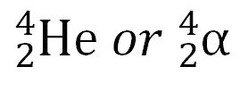
What do these symbols represent?
a)
alpha particle
b)
beta particle
c)
neutron
d)
gamma ray
83.
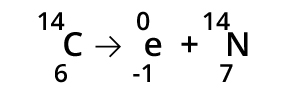
What type of nuclear equation is this?
a)
fusion
b)
fission
c)
alpha
d)
beta
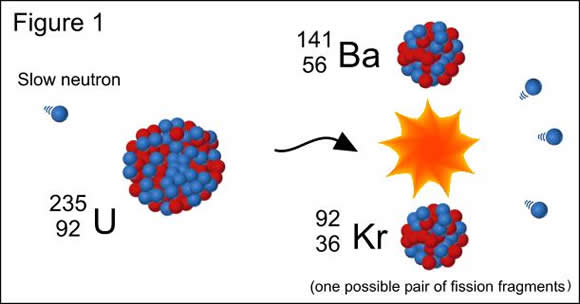
84.
Which nuclear process is shown in the picture?
a)
fission
b)
fusion
c)
alpha decay
d)
beta decay
85.
Classify this process.
a)
Nuclear fission
b)
Nuclear fusion
c)
Alpha decay
d)
Beta decay
86.
When nuclei decay, massive amounts of __________ is released.
a)
energy
b)
jello
c)
protons
d)
neutrons