wayground logo

Free Printable Worksheets

Font size

S
M
L
XL
Worksheets

6th Intro Test

Total questions: 92

Worksheet time: 1hrs 19mins

Name
Class
Date
1.
You should never ______ chemicals in the lab. 
a)
taste
b)
touch
c)
smell
d)
all of the above
2.
If you are not sure what to do during a lab activity:
a)
guess
b)
change lab partners
c)
ask a teacher
d)
just sit quietly and do nothing
3.
Keeping your work area neat and clean is important because:
a)
My teacher is a neat-freak
b)
I won't lose my supplies in the clutter.
c)
It keeps the room from looking messy.
d)
It helps prevent accidents.
4.
I can perform my own experiments with lab materials ___.
a)
I am sure it is safe to do so.
b)
Whenever I want to.
c)
When all of my group is ready.
d)
Never.
5.
Disrupting other students in the laboratory with horseplay in the lab is:
a)
helpful.
b)
allowed
c)
dangerous.
d)
the quickest way to do a job.
6.
What is the CORRECT procedure for students to follow if a chemical is spilled?
a)
Stand back and advise the teacher of the spill.
b)
Run madly out of the room.
c)
Splash large amounts of water onto the spill.
d)
Immediately ask to go to the restroom.
7.
At the end of the lab you see some leftover chemical that looks just like the stuff you were using.  You should:
a)
put the chemical back in the jar it came from.
b)
sweep it into your hand and throw it out.
c)
tell the teacher so you can dispose of it properly.
d)
tell your classmates that your lab partner is really messy.
8.
Helping to clean up the lab or classroom is the job of
a)
old students.
b)
transfer students.
c)
each and every student.
d)
only the teacher.
9.
When in the lab you should wear...
a)
open-toed shoes.
b)
sandals.
c)
closed-toes shoes.
d)
no shoes.
10.
You should report accidents to the teacher __.
a)
after the class is over
b)
immediately 
c)
the following day
d)
never
11.
Labs are individual activities and you should ignore your group members or be the only one working. 
a)
True
b)
False
12.
When should you look over the experiment instructions? 
a)
After starting the lab
b)
When your teacher tells you to
c)
Before starting the lab
d)
It doesn't really matter.  Instructions are silly!
13.
Which of the following are examples of dressing appropriately in the lab?
a)
Pulling long hair back
b)
Leaving long hair down to get in the chemicals. 
c)
Wearing sandals
14.
Bob and Lizzy are working in the lab.  They are goofing off and break a glass test tube.   Which rule did the break?
a)
Know the location of the safety equipment. 
b)
Do not eat or drink in the lab. 
c)
Read instructions. 
d)
No playing around!
15.
A possible explanation to a problem that has not yet been tested. 
a)
data
b)
theory
c)
hypothesis
d)
fact
16.
This variable in an experiment is the one being deliberately changed by the scientist. 
a)
dependent variable
b)
independent variable
c)
data
d)
control group
17.
Should experiments be repeated over and over to see if the results are the same each time?
a)
yes
b)
no
18.
The summary at the end of an experiment that explains the results. 
a)
conclusion
b)
procedures
c)
materials
d)
responding variable
19.
A series of steps used by scientists to solve a problem or answer a question. 
a)
scientific method
b)
recipe
c)
data collection
d)
metric system
20.
In a controlled experiment, how many independent variables can be worked with at a time? 
a)
one
b)
none
c)
two or more
d)
how ever many makes sense.
21.
Mr. S. sets up an experiment to see how the mass of a ball affects the distance it rolls off a ramp.  Identify the independent variable.
a)
distance traveled by the ball
b)
height of the ramp
c)
mass of the ball
d)
weight of the ball
22.
Mr. S. sets up an experiment to see how the mass of a ball affects the distance it rolls off a ramp.  Identify the dependent variable.
a)
height of the ramp
b)
 distance traveled by the ball
c)
mass of the ball
d)
weight of the ball
23.
A student is planning an experiment to find out how the height from which he drops a ball affects how high the ball bounces. The dependent variable is the _____.
a)
Diameter of the ball
b)
Force acting on the ball
c)
Height that the ball bounces
d)
Height from which the ball is dropped
24.
True or False: Your hypothesis can never be wrong.
a)
True
b)
False
25.

What is an observation?

a)

A scientific statement based on ideas

b)

Using your senses to notice what is going on around you

c)

To be unaware of your surroundings

d)

The question that you want an answer to.

26.
An experiment is performed on plants to see how different liquids affect plant growth. Each plant in the experiment is given a different liquid; water, apple juice, or milk. Each plant has the same amount of soil, sunlight, and listens to the same music. In this investigation, the independent variable is ...
a)
The type of plant
b)
The amount of sunlight
c)
The type of music
d)
The type of liquid
27.
An experiment is performed on plants to see how different liquids affect plant growth. Each plant in the experiment is given a different liquid; water, apple juice, or milk. Each plant has the same amount of soil, sunlight, and listens to the same music. In this investigation, what are the controlled variables?
a)
Type of plant, amount of music, and sunlight
b)
Water, apple juice, milk
c)
Plant growth
28.
What type of graph is this?
a)
Bar Graph
b)
Line Plot
c)
Pictograph
d)
Tally Chart
29.
How many more people have purple for a favorite color than red?
a)
3
b)
5
c)
7
d)
9
30.

What should be the title for this graph?

a)

Number of Favorite Cartoon Chracters

b)

How does the Cartoon Character affect the Number of People?

c)

Favorite Cartoon Characters

d)

The Effect of Cartoon Character on Number of People

31.
What is this tool called?
a)
Beaker
b)
Flask
c)
Graduated Cylinder
d)
Measuring Cup
32.
The base unit of metric length.
a)
Meter
b)
Liter 
c)
Kilogram
d)
milligram
33.
The correct abbreviation for milliliter is..
a)
ML
b)
Ml
c)
mL
d)
ml
34.
The basic unit of metric volume is called a_____.
a)
Kilogram
b)
milligram
c)
Liter
d)
milliliter
35.
The width of a kernel of corn would be about...
a)
4 cm
b)
4 mm
c)
4 m
36.
The appropriate abbreviation of centimeter is..
a)
cm
b)
Cm
c)
cM
d)
CM
37.
The abbreviation for gram is...
a)
G
b)
gg
c)
g
38.
m stands for....
a)
millimeter
b)
meter
c)
centimeter
d)
Liter
39.
What is the volume?
a)
 50.0 mL
b)
53.0 mL
c)
54.0 mL
40.
What is the length of the eraser?
a)
3 cm 
b)
2 cm 
c)
5 cm
d)
7 cm
41.
Which metric unit would be used to measure the weight of a peanut?
a)
kilogram
b)
gram
c)
ounce
d)
millilter
42.
What is the volume of liquid in this graduated cylinder?
a)
40.0 mL
b)
40.3 mL
c)
43.0 mL
d)
44.0 mL
43.
At which point should your eyes be when you read a graduated cylinder? (Hint: see the letter next to the eye)
a)
A
b)
B
c)
C
44.
Calculate the volume of the rock
a)
10.0 cm3
b)
16.0 cm3
c)
30.0 cm3
d)
40.0 cm3
45.
What is the volume of the fish?
a)
18.0 cm3
b)
6.0 cm
c)
38.0 cm3
46.
How much water should be added to raise the volume to 20mL?
a)
1.0 mL
b)
2.0 mL
c)
3.0 mL
d)
4.0 mL
47.
Which is the longest?
a)
meter
b)
kilometer
c)
centimeter
d)
milimeter
48.
gram and kilogram measures
a)
capacity
b)
length
c)
time
d)
mass
49.
What is the appropriate unit of measurement for the height of an apple?
a)
L
b)
cm
c)
m
d)
mm
50.
What is the length of the screw?
a)
5cm
b)
6cm
c)
5mm
d)
6m
51.
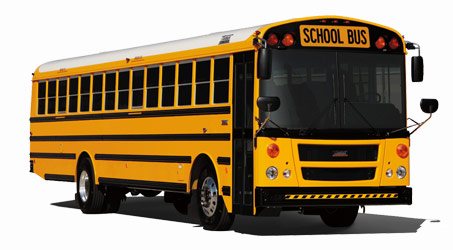
I would measure this bus in
a)
centimeters
b)
milimeters
c)
kilometers
d)
meters
52.
What does the volume of liquid measure in this cylinder?
a)
15 liters
b)
10 meters
c)
15 mililiters
d)
25 mililiters
53.
The thickness of a penny is about 
a)
1 milimeter
b)
2 grams
c)
1 centimeter
d)
2 mililiters
54.
2cm= ________mm
a)
200
b)
20
c)
2,000
d)
4
55.
How many millimeters (mm) = 1 centimeter (cm)?
a)
1
b)
10
c)
100
d)
1000
56.
What is used to protect your eyes from chemicals, broken glass, and fire?
a)
Fire blanket
b)
Eye wash
c)
Goggles
d)
Flask
57.
Which item measures more precisely?
a)
test tube
b)
beaker
c)
graduated cylinder
58.
a)
metric ruler
b)
triple beam balance
c)
pan balance
d)
beaker
59.
What does this measure?
a)
Mass
b)
Volume
c)
Temperature
d)
Length
60.
What does this measure?
a)
Mass
b)
Volume
c)
Temperature
d)
Length
61.
Which units are used to measure volume?
a)
Grams
b)
Liters
c)
Meters
d)
Seconds
62.
Which units are used to measure length?
a)
Grams
b)
Liters
c)
Meters
d)
Seconds
63.
Which units are used to measure time?
a)
Grams
b)
Liters
c)
Meters
d)
Seconds
64.
What is the volume of the blue liquid?
a)
6 mL
b)
7mL
c)
6.4 mL
d)
6.6 mL
65.
What is the mass of this object?
a)
142 grams
b)
412 grams
c)
140.2 grams
d)
140 grams
66.
What is the mass of this object?
a)
143 grams
b)
40.3 grams
c)
43 grams
d)
3 grams
67.
What is the volume of the blue liquid?
a)
24 grams
b)
25 grams
c)
24 mL
d)
24 mL
68.
The amount of space an object takes up is its'
a)
mass
b)
volume
c)
length
d)
density
69.
a)
206.0
b)
260.0
c)
200.6
70.
a)
232.5
b)
237.0
c)
750.
71.
What is the length of the item, in CM? 
a)
3 cm
b)
4 cm
c)
3.2 cm
d)
3.3 cm
72.
What is the length of the red line, in MM.
a)
23 mm
b)
2.3 mm
c)
32 mm
d)
3.2 mm
73.
What is this tool called and what would it be used to measure?
a)
Meter stick and distance
b)
Meter stick and mass
c)
beaker and volume
d)
graduated cylinder and volume
74.
What measures the amount of matter in an object?
a)
Distance
b)
Mass
c)
Time
d)
Volume
75.
Frank has a paper clip. It has a mass of 9g and a volume of 3cm3. What is its density?
a)
3 g/cm3
b)
1/3 g/cm3
c)
27 g/cm3
d)
39 g/cm3
76.
Why do some substances float on water?
a)
they are warmer than water
b)
they are cooler than water
c)
they are more dense than water
d)
they are less dense than water
77.

What is the formula for Volume?

a)

Mass/Volume

b)

Density x Volume

c)

Mass/Density

78.
Jack has a rock. The rock has a mass of 14g and a volume of 2cm3. What is the density of the rock?
a)
7 mL
b)
7 g/cm3
c)
28 g/cm3
d)
1/7 g/cm3
79.
What units can be used to express density?
a)
g/mL
b)
grams
c)
millimeters
d)
milliliters
80.
If an object has a density of .6 g/mL and you put it into water, will it sink or float?  
a)
sink
b)
float
81.
If an object has a density of .6 g/mL and you put it into water, will it sink or float?  
a)
sink
b)
float
82.
All class information including assignments, test announcements, and study materials can be found ?
a)
On myPISD
b)
On Google Classroom
c)
In a box in the classroom
d)
Nowhere
83.

What does the T in TAILS stand for?

a)

Title

b)

Tag Lines

c)

Tiny Numbers

d)

Tuba Doodles

84.

What does the A in TAILS mean?

a)

Another title

b)

Axis

c)

Automatic Numbers

d)

Antelopes

85.

What does the I in TAILS stand for?

a)

Intervals

b)

Inner Labels

c)

Itty bitty teeny tiny letters

d)

Ions

86.

What does the L in TAILS stand for?

a)

Lamprey

b)

Levels

c)

Lines

d)

Labels

87.

What does the S in TAILS stand for?

a)

Saturdays!

b)

Scale

c)

Sentence Structure

d)

Sideways labels

88.

What is on the Y Axis?

a)

Days of the Week

b)

Number of Boxes

89.

What is the problem with the Intervals on this graph?

a)

They are in dollars

b)

They are not even

c)

They are on the wrong Axis

d)

There should be higher numbers

90.
On which axis is the independent variable found?
a)
z-axis
b)
w-axis
c)
y-axis
d)
x-axis
91.

What is wrong with this graph?

a)

No Title

b)

The Top of the y-axis should be 10.

c)

The independent variable is on the y-axis.

d)

It should be a bar graph.

92.

How long do you have to turn in late work?

a)

3 days

b)

1 week

c)

1 month

d)

By the end of the unit test date