
 Worksheets
Photosynthesis and respiration
Total questions: 100
Worksheet time: 1hrs 1mins
The process in which plants and some other organisms use the energy in sunlight to make food.
photosynthesis
cellular respiration
osmosis
diffusion
The process that occurs when the chemical energy of "food" molecules, carbohydrates, fats, and proteins, is released and partially captured in the form of adenosine triphosphate (ATP).
photosynthesis
diffusion
osmosisi
cellular respiration
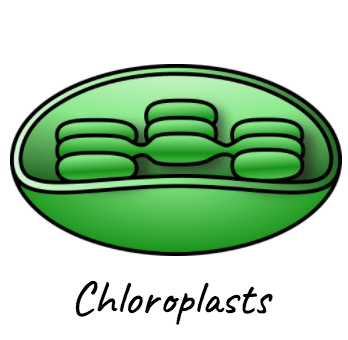
An organelle in plant and algae cells that converts energy from sunlight into chemical energy that the plant can use
chlorophyll
chloroplast
mitochondria
nucleus
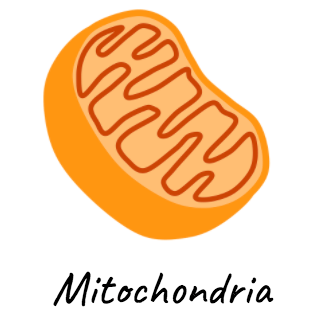
An organelle in eukaryotic cells that is the site of cellular respiration and generates most of the cell’s ATP
chlorophyll
chloroplast
mitochondria
nucleus

Why are many plants green?
plant cells are green
plants absorb green light
chlorophyll reflects green light
rigid cell walls are green
Only use photosynthesis
Only use cellular respiration
Use photosynthesis and cellular respiration


Which statement about photosynthesis is correct?
Plants get the energy they need for photosynthesis from water.
Plants get the energy they need for photosynthesis from soil.
Plants get the energy they need for photosynthesis from sunlight.
Plants do not require energy to perform photosynthesis.

During the day, plants take in _______ and give out _____ to make food through photosynthesis.
oxygen ... carbon dioxide
carbon dioxide ... oxygen
carbon dioxide ... carbon dioxide
oxygen ... oxygen

In plant , during respiration, _______________ is taken in and _______________ is removed.
oxygen ... carbon dioxide
carbon dioxide ... oxygen
carbon dioxide ... carbon dioxide
oxygen ... oxygen

What is the structure in leaves that allows gases to diffuse either into or out of plant cells to the atmosphere?
Chloroplast
Cuticle
Stomata
Phloem

The main function of stomata is to ________________
take in water
allows gas exchange
tells the guard cells to open or close
carry out photosynthesis
What are the major food-producing organs of plants and the sites of photosynthesis?
chloroplasts
roots
stems
leaves
What cells make up the top and bottom layers of a leaf and are flat, irregularly shaped cells?
mesophyll
epidermal
chlorophyll
chloroplast
What are the small openings on the bottom epidermal layer of most leaves?
mesophyll
epidermal
stomata
chlorophyll
What is the waxy covering produced by epidermal cells?
mesophyll
epidermal
cuticle
chlorophyll
Where does the first step of photosynthesis occur?
chlorophyll
mesophyll
chloroplasts
epidermal
What are the two types of mesophyll cells?
spongy
chlorophyll
palisade
mesophyll
What are the chemicals that can absorb and reflect light?
pigment
chlorophyll
chloroplast
mesophyll
What is the most common plant pigment?
green
chloroplast
chlorophyll
yellow
What do plants capture during the first step of photosynthesis?
sugars
light energy
oxygen
carbon dioxide
Why do plants appear green?
Chlorophyll absorbs green light
Because they are green
Chlorophyll reflects green light
Because of the water
What is made during the second step of photosynthesis?
sugars
chlorophyll
mesophyll
cuticle
What are two examples of plant structures where excess sugar is stored?
potatoes
pizza
carrots
french fries
Why is photosynthesis important?
Plants provide us with oxygen to breathe
Plants take in oxygen from the environment
Plants provide us with food
Plants take in carbon dioxide from the environment

Which of the following is NOT a producer in this food web?
grass
shrub
fungi
tree

In this food web, which 2 animals will compete for the same source of energy (food)?
grasshopper and rabbit
deer and insect-eating bird
shrew and squirrel
snake and grasshopper

Which animal in this food web gets its energy INDERECTLY from the tree?
deer
rabbit
grasshopper
hawk

The berries and plantain are best known as
producers
primary consumers
secondary consumers
decomposers

What will both the rat and goat compete for?
a rabbit
the owl
a tomato plant
nothing
How much energy is transferred from one organism to another?
only 10%
all of it, 100%
only 50%
20%
1 Which of the following correctly shows how energy flows through a food chain?
A) Sun --> carnivores --> producers --> herbivores
B) Sun --> producers --> herbiovres --> carnivores
C) Sun --> herbivores --> carniviores --> herbivores
D) Sun --> producers --> carnivores --> herbivores

2) Which organism in this food chain is a producer?
A) Plant
B) Beetle
C) Catfish
D) Hawk

3) Which organism in this food chain gets its energy, indirectly, from prairie grass?
A) Squirrel
B) Mountain Lion
C) Robin
D) Eagle
4) What is the role of a consumer in the flow of energy through a food chain?
A) Obtaining necessary nutrients from the soil
B) Transforming the Sun's energy to make food
C) Gaining energy by eating other living things.
D) Decomposing the remains of living things.
What is this equation:
C6H1206?
Water
Carbon Dioxide
Glucose
Energy

Which of the following allows us to describe energy movement in this Pyramid
As you go higher the energy increases
There is less energy at the producer level then consumer level
No energy is transferred
Energy is transferred but only in small amounts up the pyramid

What is NOT shown in the food chain?
Herbivore
Consumer
Decomposer
Producer
What do the arrows represent in the Food Chain?
The direction of energy flow through organisms
The order of the size of organisms
The importance of an organism
The energy increases as you move left to right

What is this equation above?
Cellular Respiration
Photosynthesis


Which living thing is a producer?
plankton
animals
plants
bacteria
Do all animals eat producers?
Yes
No
Does a consumer make their own food?
Yes
No
How do consumers get energy?
by running fast
by drinking water
by sleeping
by eating other organisms
There are three types of consumers. What are they? Click on all three.
herbivore
spores
carnivores
omnivores
I am the chef for the ecosystem because I am the only organism that can make my own food.
consumer
producer
decomposer
I rely on eating other organisms for the energy I need to function since I can not make my own food.
consumer
producer
decomposer
I am Mother Nature's recycler because I take dead things and turn them back into soil.
consumer
producer
decomposer
I am a consumer that eats only plants.
carnivore
omnivore
herbivore
I am a consumer that eats only meat.
carnivore
omnivore
herbivore
I am a consumer that eats both plants and animals.
carnivore
omnivore
herbivore
Which is an example of a producer?


What is an example of a consumer?


What is an example of decomposer?


What is an example of a properly ordered food chain?
fungi, grass, grasshopper, bird
grass, cow, bird
grain, mouse, snake, hawk
What is the primary role of chlorophyll in plants?
To absorb sunlight
To store energy
To transport nutrients
To provide structure
What gas do plants take in during photosynthesis?
oxygen
carbon dioxide
nitrogen
hydrogen
Fox squirrels are common in Texas. Fox squirrels primarily eat acorns and nuts from trees but also eat insects. Some predators of fox squirrels include owls, snakes, and bobcats.
Which diagram best represents how energy would flow to and from the fox squirrel?


The diagram below shows an energy pyramid. In a marine ecosystem, algae carry out photosynthesis. Barracuda eat snapper fish. Reef sharks eat barracuda.
Which organism would be at the top of the energy pyramid?
algae
reef shark
barracuda
snapper fish

The figure below shows a food chain that might exist in a meadow.
Which of the following best describes what the food chain represents?
how an organism might change over time
the movement of organisms throughout the ecosystem
the increase in size among organisms in the ecosystem
the path of energy transfer from producers to consumers

The food web below shows some of the feeding relationships among organisms in Arctic waters.
Which organism would be least affected by overfishing for cod in Arctic waters?
seals
shrimp
baleen whales
toothed whales
What happens to MOST of the energy an organism takes in?
It is used for life processes.
It is lost the the environment as heat.
It is stored in the organism's body.
It is transferred to other organisms.
An organism that eats other organisms
Predator
Autotroph
Consumer
Phytoplankton
An animal that eats other animals/meat
Carnivore
Predator
Consumer
Food web
An animal that eats both plants and animals
Omnivore
Parasite
Energy Pyramid
Phytoplankton
An animal that eats only plants
Herbivore
Parasite
Producer
Abiotic Factors
The process by which dead plants and animals are broken down
Abiotic factors
Carnivore
Decompose
Biome
A diagram that shows the amount of energy that moves from one feeding level to another in a food web
10% rule
Host
Energy pyramid
Omnivore
A series of steps in which organisms transfer energy by eating and being eaten
Energy pyramid
Biome
Food chain
Phytoplankton
An organism that can make its own food
Predator
Heterotroph
Producer
Prey

