
 Worksheets
Heat Transfer Challenge
Total questions: 100
Worksheet time: 2hrs 40mins

This is a lava lamp. When the light bulb heats the wax, the wax rises. When the wax cools, it falls. This cycle of rising/falling is an example of:
Conduction.
Convection.
Radiation.
Insulation
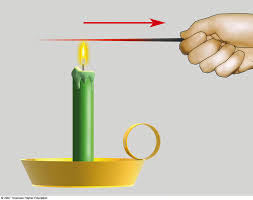
The candle will slowly heat the metal and transfer the heat directly to the mans hand.
Conduction
Convection
Radiation
Insulation
What waves can transfer heat through the vacuum of empty space?
Electromagnetic waves
Sine waves
Ocean waves


A chair is placed several feet from a fireplace. The fireplace has a glass screen. The side of the chair facing the fireplace gets warm because of
Conduction
Convection
Radiation
Insulation

Boiling Water
Conduction
Convection
Radiation

Curling Iron
Conduction
Convection
Radiation

Weather Patterns
Conduction
Convection
Radiation

Sun Bathing
Conduction
Convection
Radiation

Mantle
Conduction
Convection
Radiation

Microwaving Food
Conduction
Convection
Radiation

Cold Pack on Person
Heat is transferred from the cold pack to the person.
Heat is transferred from the person to the cold pack
The cold pack is getting warmer. The person is getting colder.
The cold pack is getting colder. The person is getting warmer.

Heat Lamps
Conduction
Convection
Radiation

Hand Warmer in a Hand
Heat is being transferred from the hand warmer to the hand.
Heat is being transferred from the hand to the hand warmer.
The hand is getting warmer. The hand warmer is getting cooler.
The hand warmer is getting warmer. The hand is getting cooler.

What type of heat transfer takes place when you touch a warm mug of hot chocolate?
Radiation
Convection
Conduction
None of the above

Conduction requires
Electricity
the electromagnetic spectrum and particles
air or water flow
direct contact

Heat transfer always moves ...
cold to hot
east to west
hot to cold
north to south
If you walk barefoot on hot asphalt, energy is transferred by which process?
Convection
Radiation
Conduction
Reflection

When air is heated, its density ___________.
increases
decreases
remains the same
In the process of convection, energy is transferred _________.
because of temperature differences in a solid
because of density differences in a liquid
by the diffusion of molecules throughout a fluid
by the vibration of molecules

Some dye in a beaker of water is gently heated. Why are the streaks of dye seen in the water?
The hot dye is a better conductor than the cool water.
The hot dye is a better convector than the cool water.
The hot water is less dense than the cool water.
The hot water is denser than the cool water.
The flow of heat due to a temperature difference is called...
Heat Transfer
Conduction
Convection
Radiation
When heat energy moves in a solid it is called....
Conduction
Convection
Radiation
Touching a hot stove is an example of...
Conduction
Convection
Radiation

This picture is an example of...
Conduction
Convection
Radiation
When heat energy moves in a liquids or gases it is called...
Conduction
Convection
Radiation
The rising and sinking in fluids is called a
Conduction
Convection Current
Radiation
Boiling water is an example of...
Conduction
Convection
Radiation
A radiator heating a cold room is an example of...
Conduction
Convection
Radiation

This picture is an example of...
Conduction
Convection
Radiation
A type of heat transfer that does not rely on physical contact of substances is called...
Conduction
Convection
Radiation

This picture is an example of...
Conduction
Convection
Radiation

This picture is an example of...
Conduction
Convection
Radiation
The higher the temperature the higher the...
Kinetic Energy
Potential Energy
Sound Energy
Chemical Energy
People sitting around a campfire are able to feel the heat from the fire.
How are the people able to feel the heat form the fire without touching the fire?
A. The heat from the fire travels through the ground & heats the ground around the people.
B. The heat from the fire is conducted through air molecules to the people.
C. The heat from the fire rises in the air and then settles around the people.
D. The heat from the fire radiates from the fire to the people.
You hold a bowl of hot soup that warms your hands; this is
A. Radiation
B. Conduction
C. Convection
D. Conviction
Steam from a hot bowl of soup warms your face as you lean over it; this is
A. Radiation
B. Conduction
C. Convection
D. Conviction
Why is it better to have a cooking pot with a plastic handle instead of a metal handle?
A. Plastic looks better than metal.
B. . Plastic is not a good conductor of heat
C. Plastic washes easier than metal.
D. Plastic is a good conductor of heat
Jim wakes up early in the morning and walks from his carpeted bedroom to the tiled kitchen. Which BEST describes why, despite being the same temperature, the tile floor feels cooler to his feet than the carpet?
A. Tile is a better conductor of heat and transfers heat away from his skin.
B. Carpet is a bad conductor of heat and transfers heat to his skin.
C. Tile is a poor conductor of heat and transfers heat to his skin.
D. The tile and carpet are the same temperature
Serenity wants to keep drinks cold during an afternoon sports game. Which container would MOST LIKELY keep her drinks cold for several hours?
A Plastic, because it will conduct heat.
B. Metal, because it will conduct heat.
C. Plastic, because it will insulate from heat.
D. Metal, because it will insulate from heat.

The butter on top of the pancake melted.
Conduction
Convection
Radiation

Laying under the sun to get tan.
Conduction
Convection
Radiation

An ice cube melts when you hold it in your hand.
Conduction
Convection
Radiation

You feel hot after reading for a long time under a lamp.
Conduction
Convection
Radiation
Which of the following describes Radiation?
The transfer of heat through liquids and gases
The transfer of heat through electromagnetic waves (rays)
The transfer of heat between two objects in direct contact with one another

What is something that prevents heat, electricity, sound, light...to pass through it?
insulator
conduction
heat transfer
conductor
Which term refers to the transfer of heat by circular movement of a fluid?
conduction
convection
radiation
Heat always moves from _______________.
cooler to warmer
warmer to cooler
right to left
up to down
Sunlight hitting the ocean's surface warms the top layer of water. This is an example of ___________.
conduction
convection
radiation
Solar energy is an example of __________.
conduction
convection
radiation
Contact with Earth's surface causes the atmosphere to be warmer closer to Earth's surface. This is due to ___________.
conduction
convection
radiation
Ocean currents begin at the equator because the sun's rays are warmest at the equator. This is an example of ____________.
conduction
convection
radiation
When warm air rises in the troposphere, it cools and water vapor condenses forming clouds and precipitation. This is an example of ________.
conduction
convection
radiation
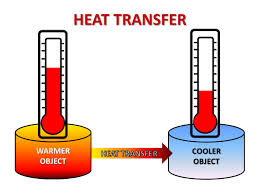
These are materials that are good conductors, except ...
iron, steel, aluminum
iron, brass, copper
gold, copper, silver
wood, rubber, plastic

Hot air balloon can fly in the sky because it uses helium as a gas to transfer heat to the hot air balloon. The method of heat transfer that is used is ...
(a)

Hands feel warm due to heat transfer from the flame by ...
(a)
The example of radiation is ...
clothes are dry due to heat from the sun
teaspoon becomes hot in a cup of hot tea
water boils in electric kettle
hot tea becomes cold after some time
What is the measure of heat?
Energy
Distance
Temperature
Radiation

A metal spoon in ice cream also gets cold due to
Radiation
Convection
Conduction
Magic

How does the sun transfer its energy?
Radiation
Convection
Conduction
Insulation

Which materials heat up more quickly in sunlight?
Light colour materials
Dark colour materials
Shiny materials
No difference
Holding a snowball
Conduction
Convection
Radiation
Putting cheese on a hot hamburger
Conduction
Convection
Radiation
A heat lamp keeping food warm.
Conduction
Convection
Radiation
The air is warmer near the ceiling of a room. The warm air rises because of ____________.
convection
radiation
conduction
The heat from a lamp allows a lizard to remain warm. This is an example of which type of heat transfer?
convection
radiation
conduction
In which direction will the heat flow while a person holds a cup of hot tea. (The cup is hotter than the person's hand.)
from hand to cup
from cup to hand
no heat will be transferred

Convection currents form when
there are no temperature differences.
there are temperature differences.
each surface is exactly the same temperature.
candy is given out for Halloween.
The total kinetic energy of the tiny particles that make up matter.
Thermal Energy
Energy Transfer
Temperature
Heat

