wayground logo

Free Printable Worksheets

Font size

S
M
L
XL
Worksheets

Atom & The Periodic Table Review

Total questions: 100

Worksheet time: 58mins

Name
Class
Date
1.
What cannot be broken down into other substances?
a)
Compound
b)
Mixture
c)
Solids
d)
Element
2.
Democritus called the tiniest particles of matter "atomos", which is Greek for _____
a)
empty space
b)
invisible
c)
very small
d)
indivisible
3.
The electron was discovered in 1897.  Who discovered it?
a)
Ernest Rutherford
b)
John Dalton
c)
J. J. Thomson
d)
Niels Bohr
4.
Rutherford referred to the center of the atom, where the mass was concentrated, as _____
a)
the kernel
b)
the nucleus
c)
the focus
d)
the heart
5.
Who drew on the work of Planck and Einstein to develop the planetary model of the atom?
a)
John Dalton
b)
Niels Bohr
c)
J. J. Thomson
d)
Ernest Rutherford
6.
Everything is made up of little tiny things called _____
a)
compounds
b)
molecules
c)
atoms
d)
solids
7.
From the diagram, which particles are indicated with the arrow?
a)
electrons and protons
b)
protons and neutrons
c)
electrons and neutrons
d)
photons and nucleons
8.
These particles orbit around the nucleus of an atom.  What are they called?
a)
electrons
b)
protons
c)
neutrons
d)
photons
9.
If a grapefruit's atoms were the size of blueberries, then the grapefruit would be the size of _____
a)
the Earth
b)
a house
c)
a city
d)
the solar system
10.
If an atom was the size of a football stadium, the nucleus would be _____
a)
too small to see
b)
barely visible
c)
the size of a marble
d)
the size of a house
11.
In terms of matter, the atom is almost entirely filled with _____
a)
orbiting electrons
b)
charged protons
c)
heavy neutrons
d)
empty space
12.

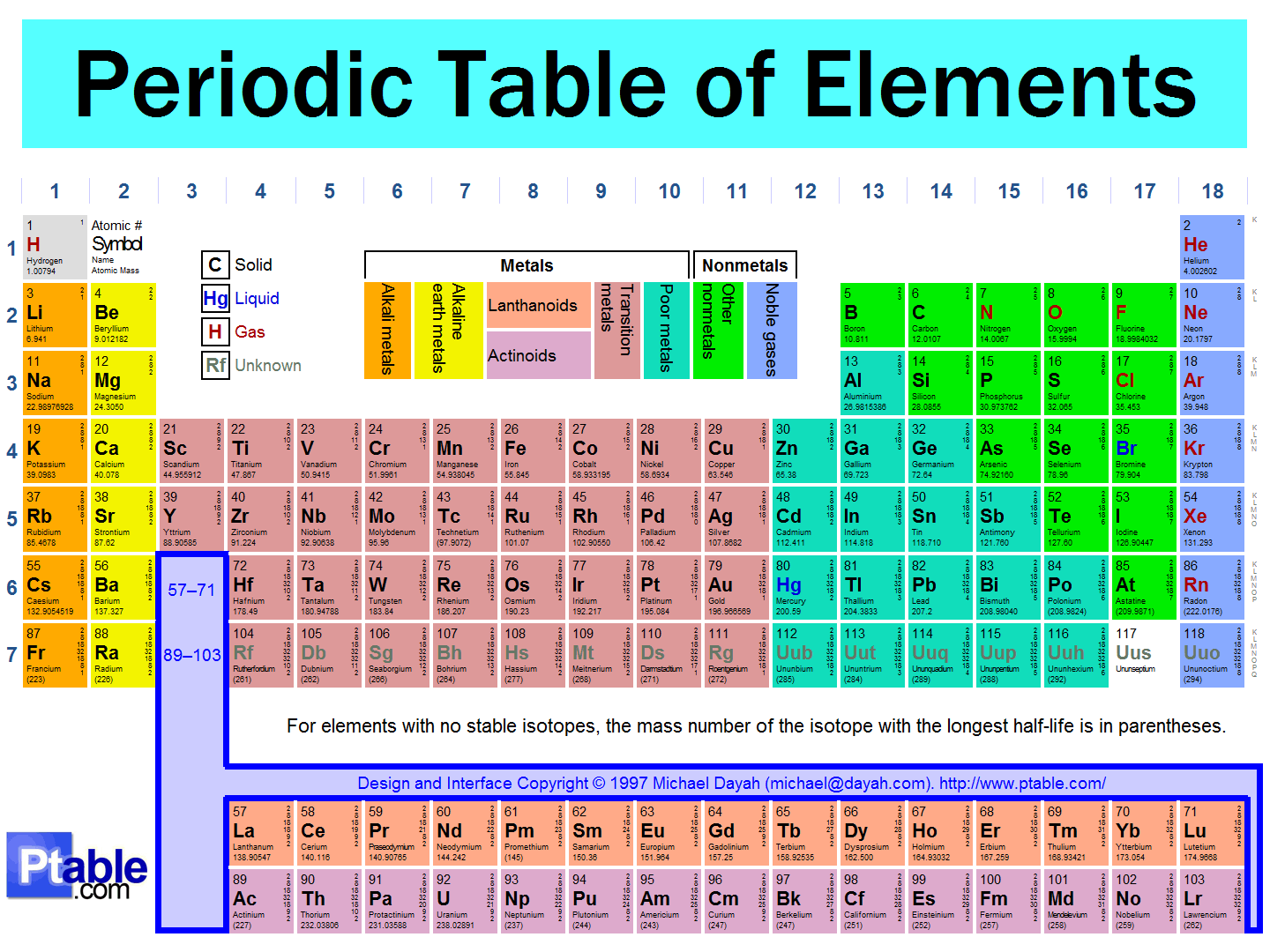
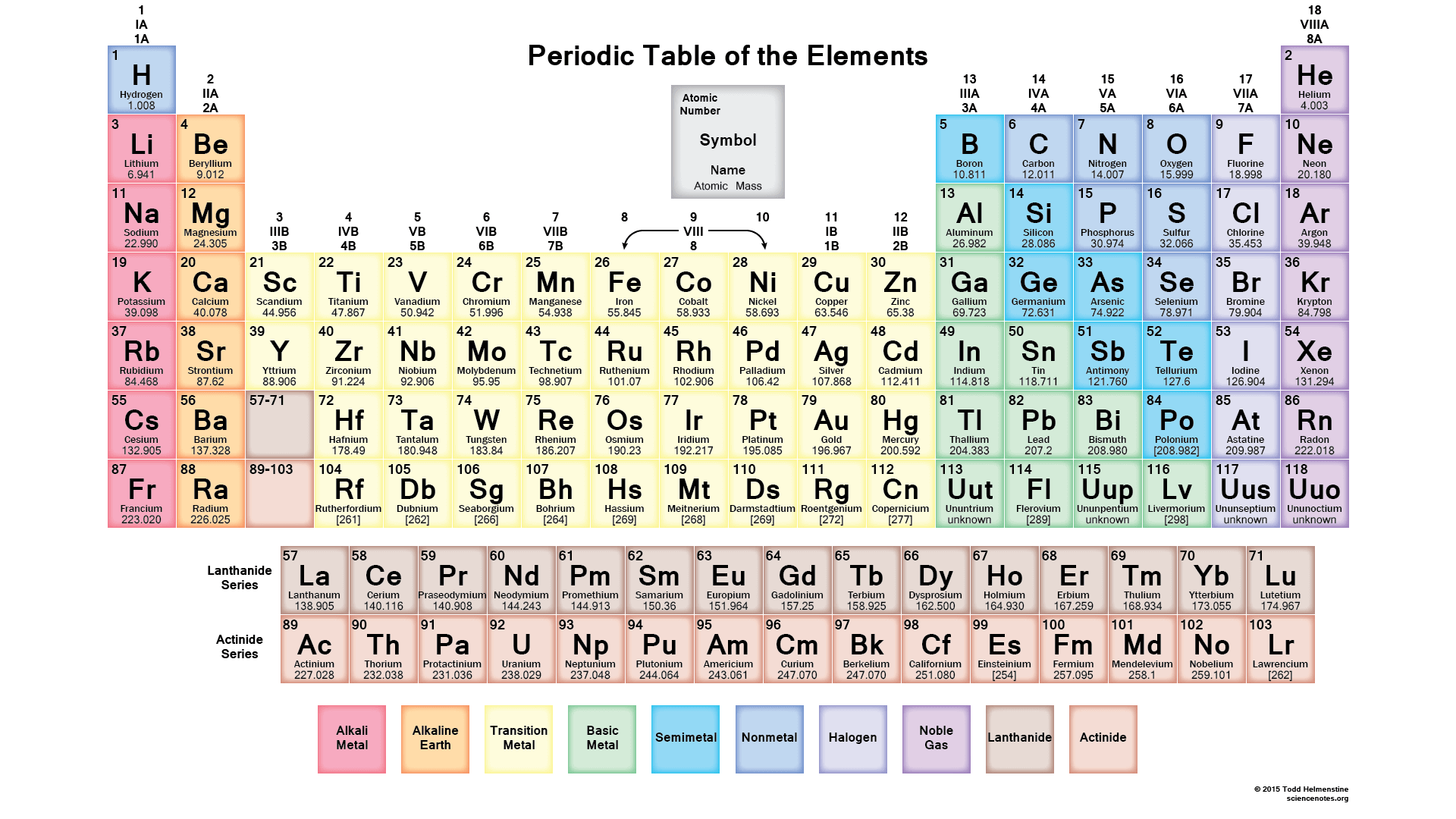
What is the atomic mass of Neon?

a)

10

b)

20.18

c)

10.18

d)

9.82

13.
How many protons are in Beryllium?
a)
4
b)
9
c)
5
d)
2
14.
How many neutrons are in a Gold atom?
a)
79
b)
196
c)
118
d)
275
15.
What is the atomic mass of Gold?
a)
79
b)
196.9665
c)
117
d)
275
16.
What is the atomic mass of Hydrogen?
a)
1
b)
2
c)
3
d)
0
17.
How many electrons does an Iodine atom have?
a)
53
b)
126
c)
73
d)
179
18.
What number is circled?
a)
Number of Neutrons
b)

Atomic Number

c)
Atomic Mass
d)
Number of Electrons
19.
How many neutrons does an Oxygen atom have?
a)
8
b)
16
c)
24
d)
7.999
20.
What is the number highlighted?
a)
Atomic number
b)
Atomic mass
c)
Number of protons
d)
Number of electons
21.
What is this number representing?
a)
Number of protons
b)
Number of Protons and Electrons
c)
Number of Protons and Neutrons
d)
Number of Electrons, Protons and Neutrons
22.

a subatomic particle, contained in the nucleus of an atom, having the same mass as a proton but no electrical charge

a)

proton

b)

neutron

c)

electron

d)

matter

23.

a negatively charged subatomic particle that orbits the nucleus of an atom

a)

proton

b)

neutron

c)

electron

d)

matter

24.

one or two letters that represent the name of an element

a)

element name

b)

element symbol

c)

atomic number

d)

atomic mass

25.

a row on the Periodic Table of Elements

a)

family

b)

period

c)

row

d)

isotope

26.

one of several forms of a single element, which contains the same number of protons, but different numbers of neutrons

a)

isotope

b)

ion

c)

orbital

d)

nucleus

27.

an atom or group of atoms that has gained or lost one or more electrons and is now either positively or negatively charged

a)

isotope

b)

ion

c)

orbital

d)

nucleus

28.

The vertical (up and down) columns in the Periodic Table are called

a)

groups

b)

towers

c)

periods

d)

atomic numbers

29.
The Modern Periodic Table of Elements is arranged by
a)
atomic mass
b)
atomic number
c)
valence electrons
d)
number of isotopes
30.
Sodium (Na) is found in period 
a)
3
b)
2
c)
4
d)
1
31.
Sodium (Na) is found in group 
a)
1
b)
2
c)
3
d)
4
32.
What does the atomic mass tell you? 
a)
Basically,the number of electrons and protons
b)
The number of neutrons
c)
Basically, the number of protons and neutrons
d)
The number of protons.
33.
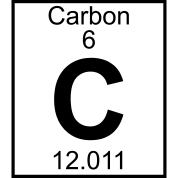
What does the 6 represent?
a)
atomic mass
b)
atomic number
c)
element name
d)
chemical symbol 
34.
These are found on the Periodic Table.
a)
Compounds
b)
Elements
c)
Mixtures
35.
GOLD
a)
Al
b)
Ag
c)
Ar
d)
Au
36.
CHLORINE
a)
C
b)
Ca
c)
Cl
d)
Cu
37.
CALCIUM
a)
C
b)
Ca
c)
Cu
d)
Cl
38.
CARBON
a)
C
b)
Ca
c)
Cl
d)
Cu
39.
COPPER
a)
C
b)
Ca
c)
Cu
d)
Cl
40.
SULFUR
a)
Su
b)
S
c)
Sf
d)
Si
41.
SILVER
a)
Au
b)
Ag
c)
Al
d)
Ar
42.
SILICON
a)
S
b)
Si
c)
Su
d)
Sc
43.
SODIUM
a)
S
b)
So
c)
N
d)
Na
44.
POTASSIUM
a)
P
b)
Ka
c)
K
d)
Pt
45.
Which of the following atomic symbols for bromine is written correctly?
a)
bR
b)
BR
c)
Br
d)
br
46.
What is the chemical symbol for mercury?
a)
Hg
b)
Mc
c)
My
d)
C
47.
How many elements are in the Noble Gas family?
a)
24
b)
13
c)
6
d)
18
48.
Which of these is not a noble gas?
a)
Helium
b)
Argon
c)
Nitrogen
d)
Krypton
49.
Where are the nonmetals located on the periodic table?
a)
top left corner
b)
bottom left corner
c)
top right corner
d)
bottom left corner
50.
________ are the COLUMNS on the periodic table and are organized by similar properties.
a)
Classifications
b)
Groups
c)
Periods
d)
Elements
51.
The blue atoms are called 
a)
metals
b)
nonmetals
c)
metalloids
d)
noble gases
52.
Which noble gas is found in signs or light displays?
a)
Krypton
b)
Helium
c)
Argon
d)
Neon
53.
Alkali metals are found in which group of the periodic table?
a)
Group 1
b)
Group 2
c)
Group 7
d)
group 8 
54.
Which of the following is NOT an alkali metal
a)
Li
b)
Cl
c)
K
d)
Cs
55.
What is another name for the elements in group 7?
a)
The Halogens
b)
The Noble gases
c)
The Oxides
d)
The Alkali Metals
56.
Which is the lightest alkali metal?
a)
Aluminium
b)
Hydrogen
c)
Lithium
d)
Potassium
57.
How many electrons can the first energy level hold?
a)
1
b)
2
c)
8
d)
0
58.

How many electrons can the second shell hold?

a)

Two

b)

Eight

c)

Five

d)

Three

59.

How many electron shells/energy levels does this atom have?

a)
1
b)
2
c)
3
d)
4
60.

All of the mass is located in the -

a)

Electron cloud

b)

APE

c)

MAN

d)

Nucleus

61.

The smallest subatomic particle

a)

Protons

b)

Neutrons

c)

Electrons

d)

Atoms

62.

What gives you the identity of an element?

a)

Mass

b)

Atomic number

c)

Protons

d)

Electrons

63.
A proton has a positive charge and a mass of ____ amu.
a)
0
b)
1
c)
.5
d)
2
64.

A neutron has a neutral charge and a mass of ____ amu.

a)
0
b)
1
c)
2
d)
.5
65.
An electron has a negative charge and a mass of ___ amu.
a)
0
b)
1
c)
.5
d)
2
66.
The valence electrons are the outermost electrons which determine an elements ________.
a)
mass
b)
kinetic energy
c)
reactivity
d)
half-life
67.
Octet comes from the prefix oct, meaning a set of _____ valence electrons.
a)
10
b)
6
c)
8
d)
7
68.
When drawing a bohr diagram, the first orbital can hold __ electrons, while the subsequent orbitals can hold __.
a)
1, 2
b)
2, 4
c)
2, 8
d)
4, 8
69.

Which element has an atomic number of 29?

a)

Iron

b)

Copper

c)

Nickle

d)

Silver

70.

Which element has the atomic mass of 6.941?

a)

Lithium

b)

Beryllium

c)

Chlorine

d)

Argon

71.

Which element is the Alkaline Earth Metal in period 5?

a)

V

b)

Ca

c)

Ba

d)

Sr

72.

Which element is the Halogen in period 3?

a)

Sc

b)

F

c)

Cl

d)

S

73.

Whcih element is a Lanthanide ?

a)

Ca

b)

Kr

c)

Eu

d)

He

74.
What element is represented in this Bohr Model? 
a)
Carbon
b)
Hydrogen
c)
Aluminum
d)
Lithium
75.
What group does this element belong to?
a)
Group 1: Alkali metals
b)
Group 18: Noble Gases
c)
Group 2: Alkaline-Earth Metals
d)
Group 17: Halogens
76.

This could be the dot diagram of

a)

Mg

b)

Cl

c)

C

d)

O

77.

What is the goal of the Lewis Dot Structure?

a)

To determine the electron position.

b)

To show the element's valence electrons & bonding capabilities.

c)

To find the atomic mass of an element.

d)

To search for the number of electrons in an individual atom.

78.

How many valence electrons should Magnesium have in its Lewis dot model?

a)

1

b)

2

c)

3

d)

4

79.

This is a correct dot diagram for nitrogen (N)

a)

true

b)

false

80.

How many electrons should Boron have around its Lewis dot model?

a)

1

b)

2

c)

3

d)

4

81.
How many valence electrons does chlorine (Cl) have?
a)
2
b)
5
c)
6
d)
7
82.
How many valence electrons does carbon (C) have?
a)
3
b)
4
c)
5
d)
6
83.

What kind of mixture is shown in the picture?

a)

Homogeneous

b)

Heterogeneous

84.

What kind of mixture is shown in the picture?

a)

Homogeneous

b)

Heterogeneous

85.
M&M's is an examples of a
a)
homogeneous mixture
b)
heterogeneous mixture
86.
Salad is an example of a
a)
homogeneous mixture
b)
heterogeneous mixture
87.
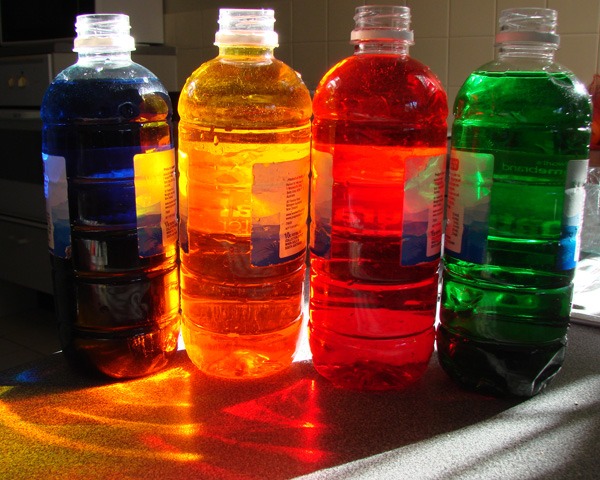
Coloured water is an example of a
a)
homogeneous mixture
b)
heterogeneous mixture
88.
Dishwasher soap is an example of a
a)
homogeneous mixture
b)
heterogeneous mixture
89.
Soil is an example of a
a)
homogeneous mixture
b)
heterogeneous mixture
90.
Which of the following is a pure substance? 
a)
Water
b)
Salad
c)
Chocolate milk
d)
All of them 
91.
Which of the following is a pure substance? 
a)
Soil 
b)
Salt
c)
Water and sand
d)
Vanilla ice cream with chocolate
92.
A pure substance...
a)
Looks the same from every part you look 
b)
Looks different from every part you look
93.
What is matter?
a)
Anything that has mass and occupies space
b)
Anything that has mass
c)
Anything that is made of air
d)
ALL of them 
94.

How many different atoms

are there in a compound?

a)

0

b)

1

c)

2 or more

d)

-1

95.

Which of the following best describes chicken noodle soup

a)

element

b)

compound

c)

mixture

d)

solution

96.

What is the chemical formula for water?

a)

NaCl

b)

CO2

c)

NH3

d)

H2O

97.

Example of a homogeneous mixture

a)

sweet tea

b)

pizza

c)

guacamole

d)

helium

98.

How would you separate sand and water?

a)

boil

b)

filter

c)

magnetic

d)

put it in the fridge

99.

Who created the first periodic table?

a)

Lothar Mayer

b)

Dmitri Mendeleev

100.

Which group has the magnetic elements iron, cobalt, and nickel?

a)

Transition Metals

b)

Alkaline Earth Metals