
 Worksheets
Ecostudent Challenge 100 Question Quiz
Total questions: 100
Worksheet time: 50mins

When should you avoid swimming in the ocean?
dawn, dusk, or at night as this is when sharks are most likely to feed
the ocean is never dangerous

Why should you leave shiny jewelry at home?
shiny jewelry might hurt your eyes in the sunlight
sharks may mistake it for the flash of a fish’s scales
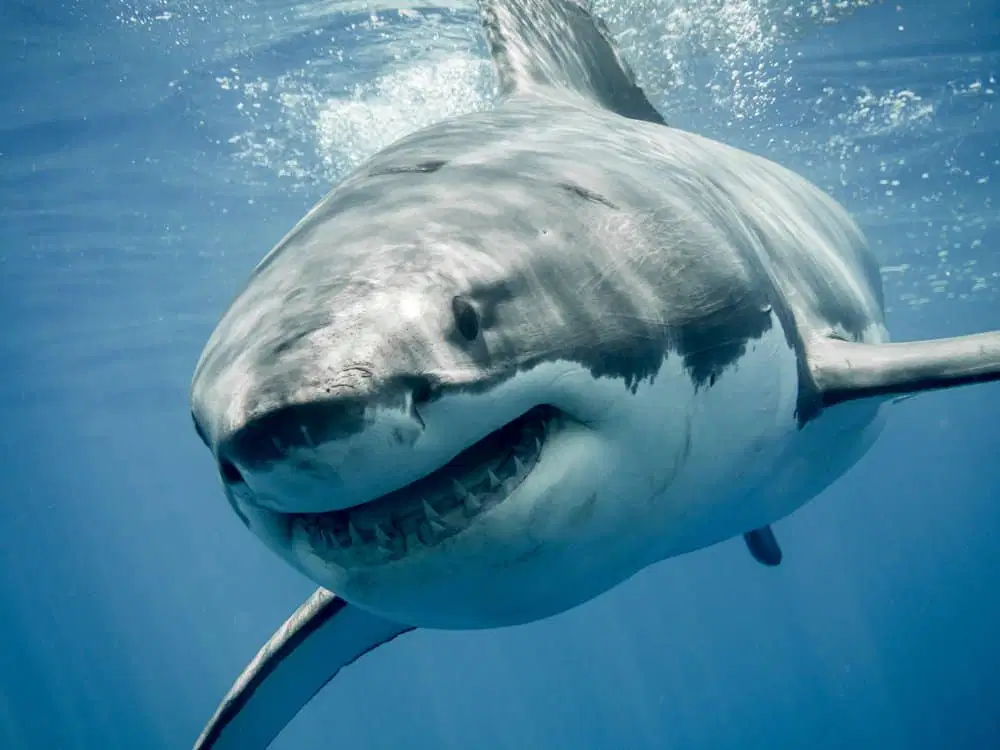
Great white sharks can detect a single drop of blood in how many gallons of water?
25 gallons
1 gallon

Giant manta rays have a wingspan of more than how many feet?
200 feet
20 feet

True or False- Manta rays are harmless to humans?
True- unlike stingrays, manta rays don’t have barbs or stingers at the end of their tails, rendering them harmless to swimmers and divers.
False, they are have a poisonous stinger at the end of their tail.
True or False- Manta rays have the largest brains of any species of fish. They can recognize their own reflection, and show signs of self awareness.
True- they have scored high on intelligence tests.
False- they are just basic aquatic organisms.
What are some areas of the world that manta rays have been found?
Only in rivers and lakes
Tropical, subtropical, temperate oceans, all across the globe!
Why are manta rays under threat of extinction?
They are not threatened by extinction
They are hunted for their gills and poor fishing practices.
Where does “runoff” come from that reaches the ocean and kills marine life?
the sky
Farming, sewage, chemical use.
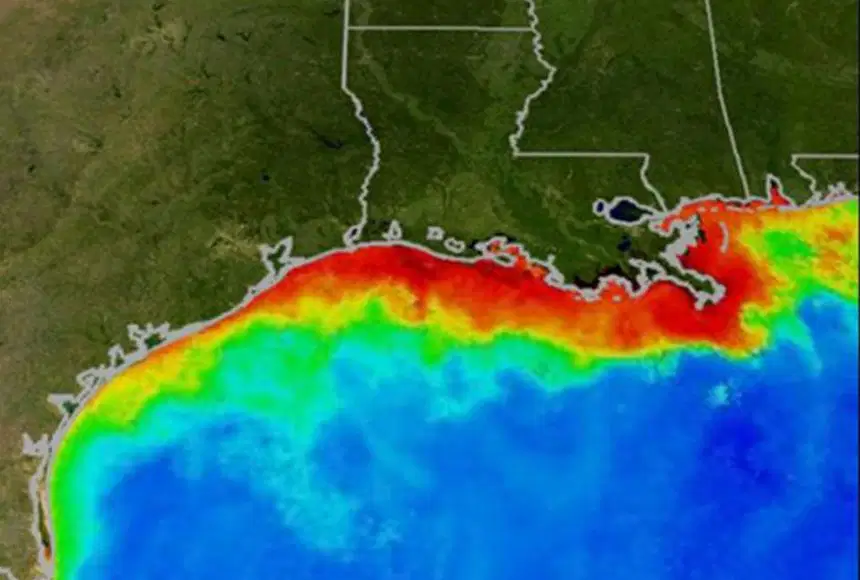
What is the area of the ocean that is depleted of oxygen and causes marine animals to suffocate?
A dead zone
a healthy area of water
What are some nutrients that are added to help grow crops, but eventually end up in the ocean?
Oxygen and Water
Nitrogen and phosphorus
What would you see in a dead zone?
The water is likely free of fish, shrimp and other normal species. You might see hundreds to thousands of dead fish on the beach.
Large populations of fish, shrimp and other species.
About how large is the dead zone in the Gulf of Mexico?
8,500 square miles
there is no dead zone there
What waterway do the chemicals travel down to the Gulf of Mexico?
Mississippi River
Allegheny River
What can you do to help shrink the dead zone?
Pour more chemicals into the water to help get rid of the other chemicals.
Support local farms that do not use excessive chemicals on their farms.
What are some large cities that have banned the plastic bag from stores?
Seattle, San Francisco, Boston
Plastic bags are not banned from any locations
When were plastic bags created?
1960’s
2000
How many plastic bags are used each year
FIVE Trillion
FOUR hundred
Plastic bags are used for an average of how many minutes?
1 year
12 minutes
How many years does it take to break down a plastic bag in a landfill?
500- 1,000 years
50- 100 years
What are plastic bags made from?
recycled tires
Oil- releasing their emissions into our air is contributing to climate change.
Americans use about 100 billion plastic bags every year, which requires how many gallons of oil
12 million gallons
1 gallon
Of the millions of plastic bags we use each year, what percentage is actually recycled?
1%
100%
It is estimated that at least (how many) mammals and birds die from plastic bags each year- the numbers of fish killed by plastic bags are unknown.
100 animals
100,000 animals
True or false- Paper coffee cups and plastic straws are recyclable.
True- you should always recycle everything.
FALSE- coffee cups have a plastic lining and plastic straws are too small for recycling centers.
What are some ways you can use less coffee cups and straws?
Stop drinking coffee and other things you enjoy
Use a thermos, reusable metal straws/ bamboo straws etc
True or false- recycling items need to be washed/ cleaned first.
True- they need to be squeaky clean
FALSE- they do not need to be perfectly clean, just make sure there isn’t a ton of left overs or liquid inside.
Where can you recycle plastic bags?
Plastic bags cannot be recycled
Many schools have recycling programs, plus grocery stores

How many plastic straws are used every day in the USA?
About 500 million every day!
500
In 2016, the World WildLife Foundation reported that plastic waste is expected to _____ within the next 15 years?
double in quantity
decrease to zero
What can you do to help protect the ocean and keep it clean?
Avoid single use plastics, reusable products, never litter, clean up the beach, give support (like with this competition!)
You can only help of you live near the ocean.
Sharks do not have a single bone in their body, what do they have?
Sharks have bones.
Cartilage, give them more flexibility, reduces weight and preserves energy!
Unlike humans who rely on their limited 5 senses, sharks can rely on another sense called:
Electroreception
Electronics

What sharks are considered to be the trashcans of the sea?
Garbageadons- they are 2 feet long and are green.
Tiger sharks- they are about 15 ft long and more than 1,300 pounds. They eat anything in their path.
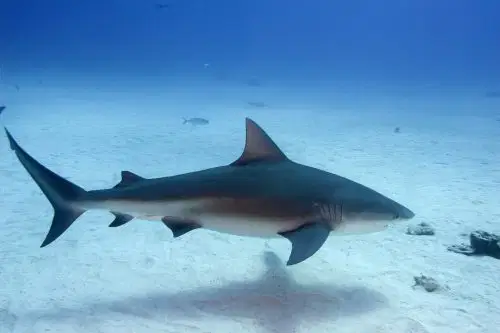
What is the one type of shark that can live in fresh water?
Bull shark
Agua shark
Great white sharks aren’t always at the top of the food chain, what has been known in recent years to be a predator of the great white?
Dolphins
Orca whales
Fossil evidence has shown that sea turtles once shared the planet with what?
Dinosaurs
Aliens
How long have sea turtles been on our Earth
About 110,000 years
About 110 million years
What is the largest species of sea turtles?
Leatherback turtle- they can grow to 7 ft in length and weigh more than 2,000 pounds.
Pennsylvania box turtle
There are seven species of sea turtle, how many of these are considered endangered?
One of the seven species
Six of the seven species
The frilled shark looks more like an eel than a shark. How many teeth does it have?
300 teeth, in 25 rows!
32 teeth, almost like humans
This shark has pinkish colored translucent skin and has a long snout that has protruding jaws filled with teeth.
Goblin shark
Axolotle Shark
This shark’s long snout is covered in sharp teeth, which cut into their prey like this common household tool.
Drillshark
Sawshark
Why are the hammerhead’s eyes so far off it’s body?
To see all around them except directly in front!
Hammerheads often travel in schools, of how many?
100 + travel together
Pennsylvania boasts more miles of streams than almost any other state- how many miles of streams and river miles?
The area of land over which all water drains downhill through a series of streams and rivers into a common outlet is a ______________
Approximately how many people live in the Ohio River Basin?
49. Where does water from the Allegheny River eventually flow into?
Monongahela River
There are three processes within a watershed that can protect water quality if pre- served, they are:
water capture, water storage, and water release.
What is the biggest watershed in PA?
The Susquehanna River
The Susquehanna River drains the largest watershed (48 percent) and supplies ___ percent of the freshwater flowing into the Chesapeake Bay
100
55
The Allegheny River has one of the most diverse fish communities of any water in the state. How many different species of fish?
When the rivers flourish and are filled with fish, what are two common predators found?
What had altered the landscape topography so much that the drainage patterns in Western Pennsylvania?
Glacial erosion and deposition
Once the Industrial Revolution hit in the early 1800’s, steel mills began to take over the city and ultimately the?
waterways
Mining for coal to fuel these massive mills led to polluted rivers through?
air pollution
acid mine drainage
The invention of what allowed for the shipment and dispersal of steel to other industries, but at the cost of the environment?
steamboats and railroads
Rachel Carson, a Pittsburgh native, was instrumental in uncovering ecological threats in 1962 through her book
What are some professional groups that work towards improved waterways?
Allegheny County Conservation District and the Western PA Coalition for Abandoned Mine Reclamation
Which river is commonly cited as the most polluted river in the United States.
The Erie River
The Ohio River
Powdermill Nature Reserve is the biological research station of the Carnegie Museum of Natural History, one of the four?
Carnegie Museums of Pittsburgh.
Forests of Allegheny
The Powdermill Avian Research Center bird banding program is the longest- running, year-round, professional bird banding operation in the?
country
city
The National Aviary is home to more than ______________________ birds
representing more than ______________________________ species
from around the world, many of them threatened or endangered in the wild.
500 and 150
5 and 15
The living parts of an ecosystem are _______________________
biotic
abiotic
All the living and nonliving things in an area interact to form an _______________.
diversity
environment
An ecosystem that has many kinds of living things has a lot of ______________________.
diversity
sunlight
Several kinds of plants and animals living in the same place form a ________________________.
community
country
The earth is home to over how many animal species?
2 million
2 thousand
What are the three types of fossil fuels?
air
coal, oil, natural gas
Trash in a stream is one kind of ____________________.
pollution
food
Fossil fuels have been an important source of energy since what major time in American history?
The Industrial Revolution
The American Revolution
Which of the three R’s means to only use the things you need?
reuse
reduce
Which of the three R’s means to turn something like a shoebox into something else?
reuse
reduce
Each ton of recycled paper can save how many trees?
1 tree
17 trees
Recycling one aluminum can saves how much energy?
enough to watch TV for three hours
it doesn't save any energy
What is the most common recycled product?
Paper
Foil
How can you use a garden to recycle?
to grow food
composting
What percentage of the earth is covered by oceans?
70%
7%
What is the largest ocean on Earth?
Pacific Ocean
Atlantic Ocean
How much of the ocean have we explored?
5%
100%
How much pollution enters the ocean each year?
1.4 billion pounds of trash
no pollution enters the ocean
What is the most common pollutant in the ocean?
plastics
paper
What is the biggest source of pollution in the ocean?
land sources- oil, dirt, farms, cars.
water sources- ships
How many seabirds are killed each year from pollution?
over 1 million each year
100 year year
Enough plastic is thrown away each year to circle the earth how many times?
four times
one time
The average American throws away about how many pounds of plastic a year?
185 pounds
18 pounds
How long does it take plastic to break down?
5-10 years
500-1000 years.
What can you use instead of plastic bags?
cloth bags
you can only use plastic bags
What is an example of a renewable resource?
wind energy/ solar energy/geothermal
resources can't be renewed
What is it called when you protect resources and use them wisely?
conservation
plant protection
Metal, paper, plastic and glass can be recycled?
true
false
What type of coal was commonly mined for in western Pennyslvania?
bituminous coal
clay
What type of resources are fossil fuels such as coal, oil and natural gas?
nonrenewable
not useable
Soil and fossil fuels are ___ because of how long it takes to form.
nonrenewable
renewable
Antarctica contains ____ of the worlds drinkable water
70%
7%
In 2012, the hole in the ozone layer was _______ than it had ever been in 10 years!
smaller
bigger
In what year was the first Earth Day celebrated?
1970
2023
Did you learn at least one fun fact you didn’t know before?
yes
no
What can you do to help the planet?
learn from these facts and try to make small changes in your life
there is nothing you can do

