
 Worksheets
Science Review 4th Grade
Total questions: 104
Worksheet time: 2hrs 30mins

Which pair of pictures shows nonflowering plants?
A
B
C
D
Which pair of pictures shows nonflowering plants?
A
B
C
D

The graph shows the best times to plant and harvest (pick) three different vegetables in northern regions of the United States. Which conclusion is best supported by the data?
Squash seeds sprout best in April and May
Squash and radishes can both be picked in August.
Lettuce is the only type of vegetable that can be planted in more than one month
Lettuce and radish seeds become mature plants in about the same length of time

The plants shown above can be classified together because ________ .
All of them are trees
All of them produce cones
all of them are non-flowering
all of them reproduce through spores

Based on this model, what is happening during the stage of the plant’s life cycle
labeled with the letter R?
The plant has matured and will begin to flower soon.
Seeds are produced in the fruit for for reproduction.
The seedling is beginning to develop into a mature plant.
The plant is beginning to germinate as it grows from the seed.
As part of her class’s investigation into plant growth and development, Samantha is
collecting data from the plants her class is growing. As part of her observations, she
makes note of the following:
● The plant has a stem with several branches growing out from it.
● There are many leaves on each branch.
● Flower buds are beginning to grow on the ends of the stems.
● The leaves look green and healthy.
Based on the student’s observations, what stage of development is she observing?
germination
mature plant
seed
seedling
Leaf shape, type of fruit, and the flower color are all examples of plant characteristics that are ________
part of the plant’s life cycle
sources of food for animals
inherited from the parent plant
influenced by the environment
Why do some plants produce fruit that contain seeds?
The fruit protects the seeds from animals that would eat them.
The fruit is eaten by animals who then spread the seeds through their droppings.
The seeds grow into seedlings within the fruit before being carried away by animals.
The seeds remain inside the fruit until it rots, then they can be carried away by the wind.
The Saguaro Cactus lives in the deserts of Arizona, southern California, and parts of
northern Mexico. They can grow to a height of over 70 feet and are covered in spines.
The roots of the Saguaro Cactus are shallow, only 4 to 6 inches deep and can spread
out as wide and the cactus is tall. Many desert bird species make holes in these cacti in
order to build their nests. The Saguaro cactus produces flowers in the spring that attract
bees, doves, and bats, who act as pollinators for the plant. The roots of the Saguaro Cactus are shallow and widely spread because ________ .
they need to absorb rainwater quickly before it evaporates
they prevent tall cactus from falling over in the strong desert wind
they can stabilize the cactus when birds dig holes in it to make nests
they cannot penetrate the hard desert rocks that lie just below the sand

Which of the following adaptations best explains how pine trees are able to prevent
water loss or damage from freezing temperatures?
Pine trees have thick bark.
Pinecones produce seeds.
Pine tree roots go deep underground.
Pine needles are thin and have a wax coating.

What state of plant development is best represented in the picture above?
flowering
mature plant
seed
seedling


Some plants have huge leaves to
capture sunlight
store water
to protect them from animals
protect themselves from cold weather

What is a structure and function that helps the lily pad survive in it's environment?
small leaves to keep it from getting too much sunlight
pretty flowers to attract predators
waxy leaves to protect it from predators
large, flat, round leaves to help it float and collect sunlight
What part of the plant absorbs water and
nutrients that help the plant grow and
survive?
stem
flowers
seeds
roots
Many plants have bright, colorful flowers.
How do the bright, colorful flower help the
plant survive?
They attract sunlight to the plant so it can make it's own food.
They make shade to help the plant grow.
They attract insects that will pick up and spread pollen, so they can reproduce.
The capture water to go to the plants roots.

How does the structure of this seed help
the plant survive and grow new plants in a
different location?
Sharp seeds protect it from being eaten.
The seeds make a beautiful flower.
The seed structure lets it travel by wind so it can reproduce
The seed structure allows it to stay safe with it's parent.
What part of the plant anchors the plant in place and soaks up water and nutrients from the soil?
Leaves
Sepals
Roots
Stem
All plants reproduce by flowers.
True
False
A flowering plant has a flower that sometimes turns into a
fruit
bird
butterfly
leaves
Plants can make new plants from
seeds
spores
cones
all of the above


Which model correctly shows the percentages of different gases in the air on Earth?


Which one can be classified as an invertebrate?
fish
butterfly
snake
frog

During which stage of a butterfly’s life cycle is it classified as a pupa?
M
N
O
P

What characteristic do all of the animals pictured above have in common?
They are all classified as insects.
They all come from the same habitat.
They enter the pupa stage of development in their life cycle.
They undergo a metamorphosis at some point in their life cycle.
Which of the following best describes the life cycle of an amphibian?
Young → Adult
Egg → Pupa → Adult
Egg → Young → Adult
Egg → Pupa → Larva → Adult
The Arctic fox is a species of fox that lives throughout the Arctic tundra of the Northern
Hemisphere. Eating mostly Lemmings (small rodents), the Arctic fox uses its extremely
sensitive hearing to hunt its prey, even when it is hiding under the snow. When it is
winter the Arctic fox’s coat is white to blend in with its snow-covered surroundings. In the
summer, the coat changes to brown.
Which of the following characteristics of the Arctic fox is influenced by its
environment?
Arctic foxes hunt lemmings.
Arctic foxes live in tundra habitats.
Arctic foxes have very sensitive hearing.
Arctic foxes change color with the seasons.
Which of the following statements best supports the claim that some animal characteristics are inherited from their parents?
Bats have sensitive ears that help them hunt prey at night.
Warmer water temperatures cause some crustaceans to grow smaller.
Marine animals, such as sharks, show scarring from injuries while hunting.
The Arctic hare’s fur changes color from white in the winter to brown in the summer.
Emperor Penguins are flightless, warm-blooded birds that live in the southern hemisphere, exclusively on the continent of Antarctica. They live their entire lives either on the ice of Antarctica or in the frigid ocean waters below the Antarctic Circle. They have waterproof feathers, streamlined bodies, and a large amount of stored body fat. They have sleek feathers and strong, aerodynamic wings. What is the best explanation for why the Emperor Penguin have sleek feathers and
strong wings even though they cannot fly?
The wings are used to circulate blood so that the penguins do not overheat.
The wings are used to help the penguins balance on ice and help the them glide through the water.
The wings are left over from a time in the prehistoric past when penguins could fly.
The wings are used to help the penguins slide on the ice.
Which of the following adaptations best explains how gray wolves are able to eat the meat from the prey they hunt and kill?
Gray wolves have excellent hearing that can help them track their prey.
Gray wolves have long, sharp teeth that help in ripping flesh from their kills.
Gray wolves have fur that helps them stay camouflaged in their forest habitats.
Gray wolves have sharp claws that help provide traction as they chase their prey.
Red-eyed tree frogs live in the hot, humid forests of Central America. The have bright, red eyes and green skin with patches of blue on the undersides of their legs. When fully adult, the tree frogs leave the the ponds where they lived as tadpoles, and spend their lives in the trees of their forest habitat. Their diet consists primarily of insects. Which of the following best explains why the red-eyed tree frog has green skin?
The green skin can be seen by other frogs and helps the frog attract a mate.
The green skin helps attract insects to the leaves where the frog can eat them.
The green skin absorbs less sunlight, preventing the frog’s skin from drying out.
The green skin serves as camouflage, allowing the frog to blend in with the green leaves.


Look at this cardinal and its beak, what does a cardinal most likely eat?
insects
seeds
nectar
worms

What is the function of a tortoise's long claws?
Swimming
Dig a burrow to stay cool & away from predators
Running

Adaptations help animals ___________.
survive
get food
protect themselves
all of the above

The Arctic Hare, like other animals, have a
fur coat that changes color depending on
the season. How does this structure help
the hare survive?
It help it to find food.
It helps to keep it warm.
It helps it hide from predators.
It helps it keep from getting dirty.
Which of the following is NOT a sensory organ?
Hand
Tongue
Skin
Eyes
Why do animals have sensory organs?
Help keep animals out of danger
Help animals find food and shelter
Receive signals from the environment
Survive in its environment
All of the above
Allows an animal to move around in its habitat
Locomotion
Defense
Obtaining Resources
Camouflage
A color or pattern that allows an animal to blend into its environment
Locomotion
Defense
Obtaining Resources
Camouflage
Joe is a tall boy with brown eyes, and short brown hair. Which of the following traits is most likely caused by environmental factors?
Body type because he grew tall.
Hair length because it was cut.
Eye color because they were like his mother.
Hair color because it was like his father.
What is an example of an inherited characteristic in an animal?
using a tool
hunting for food
having brown fur
having a large territory


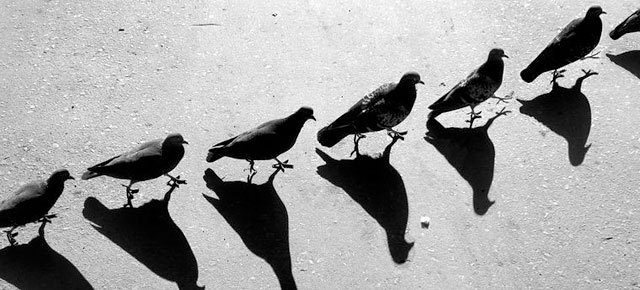


The sense of hearing can detect vibrations. What other sense can detect vibrations?
A
B
C
D

Jim planted 20 tomato plants full in the sun. Each day he watered them all. He gave 10 of the plants a spoonful of fertilizer. He did not fertilize the other 10 plants. These are his results. What is the best claim that can be made from the results?
The height of plants is an inherited trait
The height of plants is affected by nutrients
The height of plants is affect by sunlight
The height of plants is affected by water

Plants need light to survive. Which of the following best explains how one of the structures of a plant will allow it to grow like this?
The flexible stem allows it to grow toward the light
The flower is pulled towards to the light.
The leaves are attracted light to make food.
The flower needs the light to attract pollinators.

Which of the following would best fit in the space labeled A?
Moss
Plum
Pine
Fern
A student is developing a model to use to classify plants as flowering or nonflowering. Which of the following is the best question to ask to help decide how to classify the plant.
Does it have seeds?
Does it have leaves?
Does it have fruit?
What color is it?
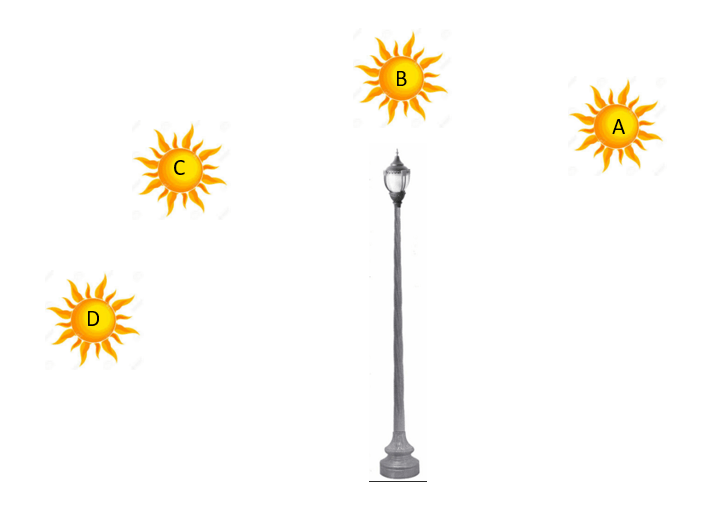
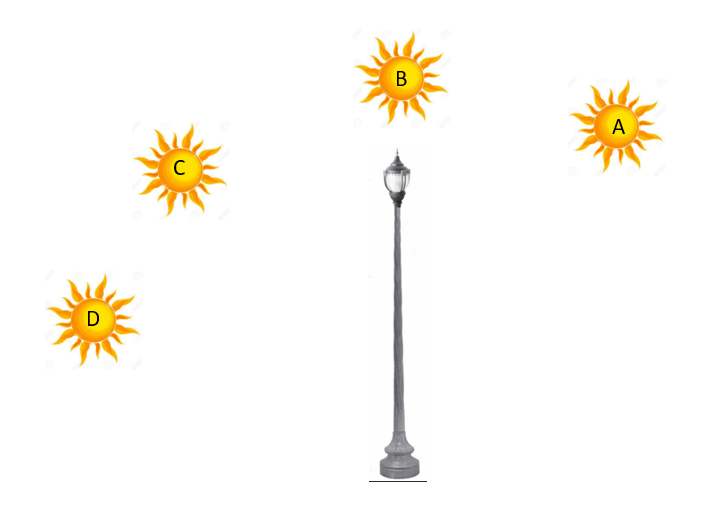


Stars like the sun appear to move across the sky due to Earth _________________ on it's axis
Revolving
Wobbling
Rotating
Jumping

Stars like the sun appear to rise in the ___________ and set in the _____________.
West, East
North, South
South, North
East, West
The Big Dipper


Is the Earth moving, or are the stars in the sky moving?
The Earth is moving
The stars move



