
 Worksheets
G5 T2 Review 2
Total questions: 100
Worksheet time: 3590secs

Between waves F and G, which is lower in pitch?
Wave F
Wave G
Between waves F and G, which is higher in pitch?
Wave F
Wave G
Between waves F and G, which has a lower frequency?
Wave F
Wave G
The frequency of a wave is...
The number of waves that a pass in a given time.
The height of a the wave.
The distance between wave crests.
The strength of the wave.
What controls the pitch of a sound wave?
amplitude
it's height
frequency

High frequency waves make
high pitch sounds
low pitch sounds
loud sounds
soft sounds

Low frequency waves make
high pitch sounds
low pitch sounds
loud sounds
soft sounds
Drums tend to make __________________ sounds.
high frequency
hitch pitch
low frequency
short amplitude
Sound waves are _______ waves
transverse
compression
electromagnetic
As the wavelength of sound increases, the frequency ___.
increases
decreases
stays the same
is higher pitched
The spread apart regions of particles in a sound wave are called ____.
rarefactions
compressions
frequencies
wavelengths
The pressed together regions of particles in a sound wave are called ____.
rarefactions
compressions
frequencies
wavelengths
A disturbance that transfers energy from one place to another is called a ___.
wave
motion
matter
force



Between waves B and D, which is louder?
Wave B
Wave D
Between waves B and D, which is has a higher amplitude?
Wave B
Wave D

Between waves C and H, which is has a lower amplitude?
Wave C
Wave H

Select ALL waves that are louder than wave A.
Wave B
Wave C
Wave D
The amplitude of a wave is...
The distance from crest to crest.
This distance from trough to trough.
The distance from a crest to a trough.
The distance from either a crest or a trough to the equilibrium.


What is a medium?
Solid
Liquid
Gas
All of the above
Sound needs a medium in order to travel.
True
False
An object that does not vibrate cannot produce
light
heat
electricity
sound
A place where no sound exists is
in the air
space
under water
all of the above
Sound does not travel in space because
space is too far away
space is the final frontier
space has planets
there is no matter in space
Which sentence BEST describes how sound moves?
Sound can move through solids, liquids, or gases.
Sounds can move through solids and liquids, but not gases.
Sound can move through an empty space and through matter.
Sound can move through liquids and gases, but not through solids.
What is vibration?
how loud a sound is
the quick back and forth movement of matter
the loudness or softness of a sound

4. How does sound energy travel?
Sound energy travels in sound waves
Sound energy travels in light waves
Sound energy travels in a straight line.
__________ is the loudness or softness of a sound.
Echo
Volume
Pitch
Vibration
Can sound travel through water?
Yes
No
I have no idea!
All sounds make
a movement
a vibration
a song
Sound waves travel as ________ waves.
Transverse
Compression
Surface
A rarefaction is generated when particles move
Together
Under
Apart
The _______ of a wave increases with increased energy.
Wave length
Amplitude
Loudness of waves is measured in
Hertz
Decibels
Watts
High frequency sounds have _______ pitch
HIgh
Low
distance between a point on a wave and the same point on the next wave
amplitude
crest
longitudinal
wavelength
distance from the midpoint (resting point) to the crest
frequency
amplitude
trough
wavelength
highest point on a wave
trough
amplitude
pitch
crest
lowest point on a wave
crest
pitch
trough
amplitude

Waves with short wavelengths will have high frequency
True
False
Which is not a part of the electromagnetic spectrum?
X-rays
Gamma rays
Visible light
Magnetic field
Wavelength and ______ are used to measure the various electromagnetic rays.
Density
Frequency
Time
Rarity
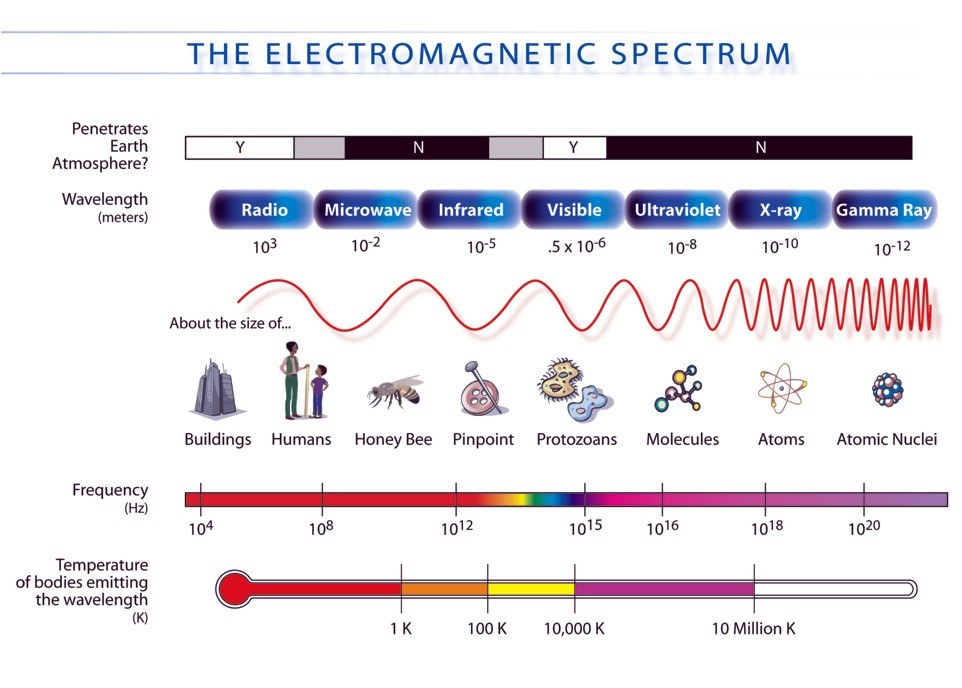
What wave has the longest wavelength and lowest frequency?
Gamma rays
Infrared
Radio
Visible light
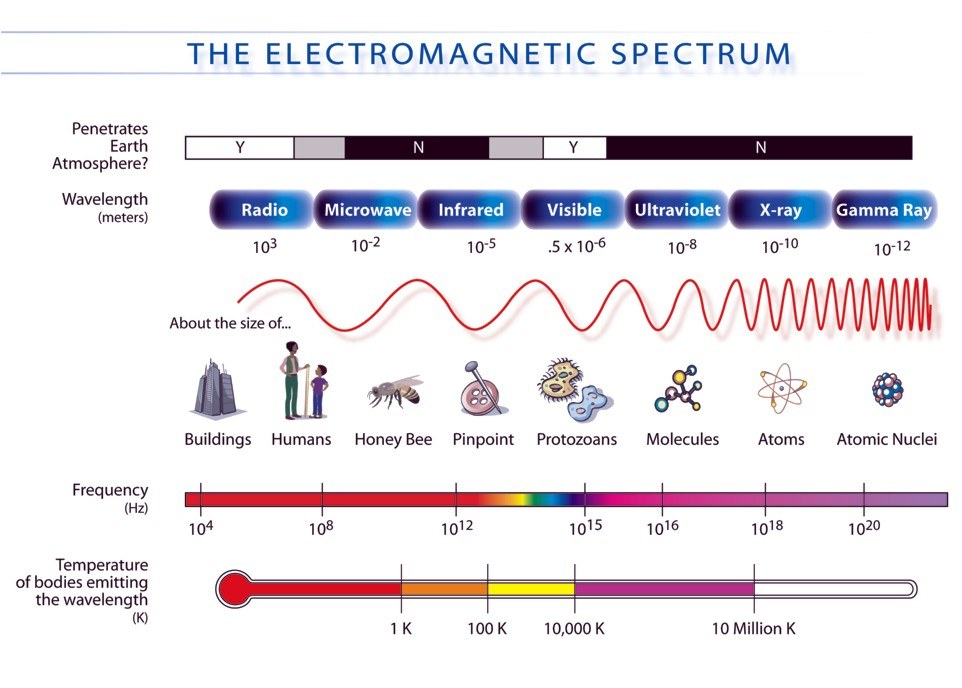
An example of a wave with a short wavelength and high frequency is a
Gamma Ray
Microwave
Visible light wave
Infrared wave
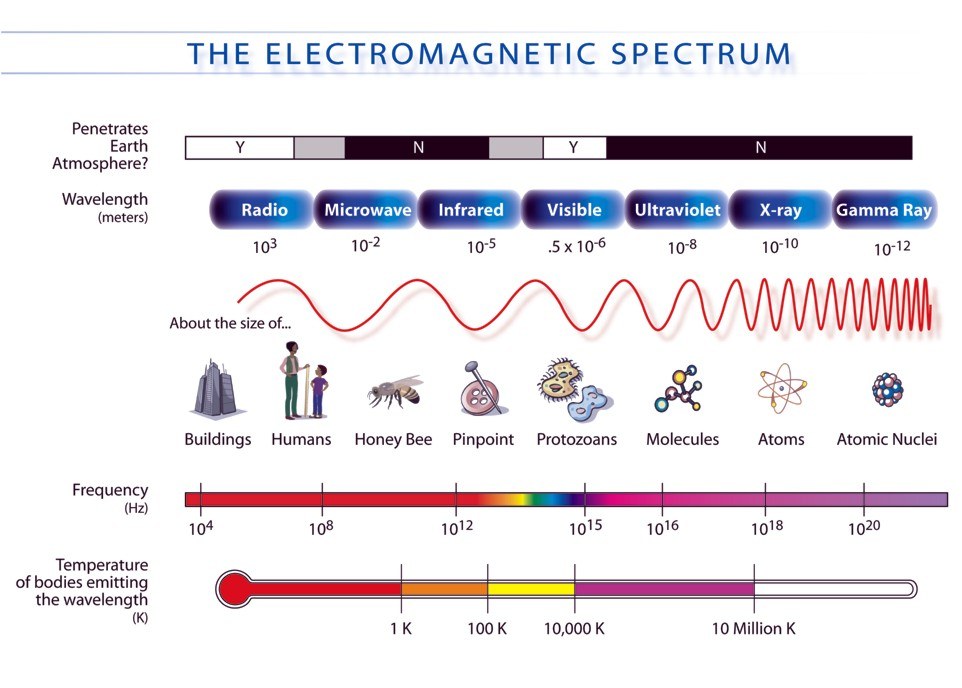
Which of the following electromagnetic waves do we use to heat our food and for cellular phones?
Radio Waves
Microwaves
Visible Light
Gamma Rays
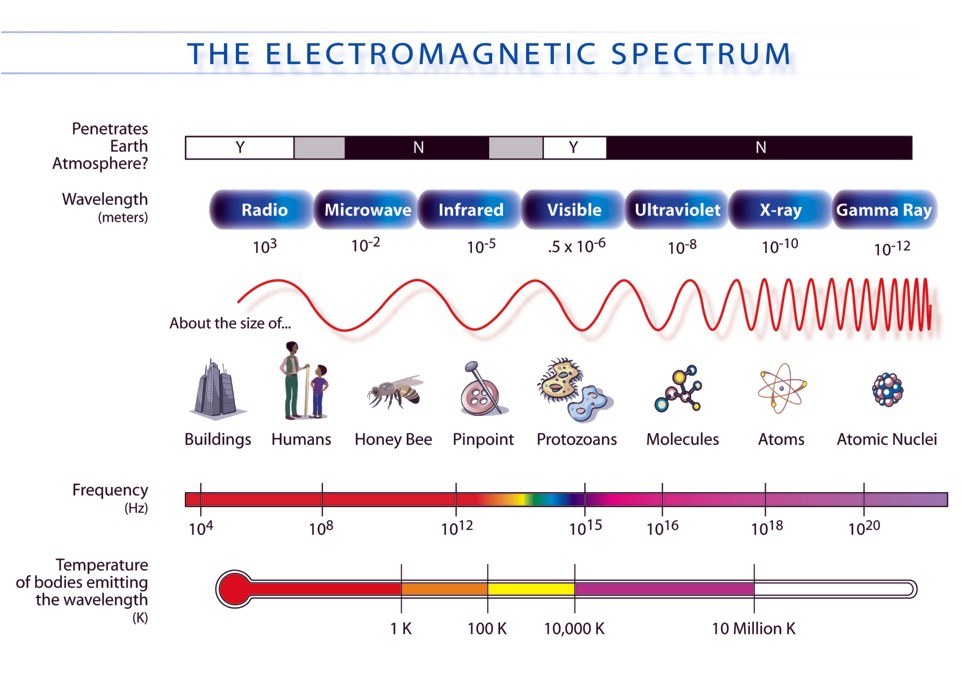
Which electromagnetic waves help doctors detect broken bones inside your body?
gamma rays
x-rays
ultraviolet rays

This form of radiation is harmful to humans and causes sunburn.
Gamma
Ultra Violet
Microwave
Infrared
Electromagnetic waves can be classified and arranged according to their
wavelengths/frequencies
Wave height
Amplitude
Wave depth
How many regions are there to the electromagnetic spectrum?
5
6
7
8
Select all that are apart of the electromagnetic spectrum.
Gamma Rays
X-rays
Visible Light
Microwave
Which electromagnetic waves have the lowest frequency?
(a)
Which band of waves have the highest frequency?
Radio
Ultraviolet
X-rays
Gamma rays



In ONE direction, in staright lines
In ALL directions, in staight lines


The further right you go on the light wave spectrum, the shorter the waves become.
the material they travel through

The larger the amplitude, the less energy
true
false
When light shines through a prism it creates ________________
visible light
infrared radiation
ultraviolet rays
electromagnetic wave
Wave height
frequency
wavelength
amplitude
wave speed
The distance between 2 crests or troughs
wavelength
amplitude
frequency
wave speed
_____ waves NEED a medium to travel.
Seismic
Light
Mechanical

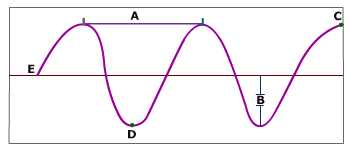
This is a high frequency wave. Which part of the wave is "B"
crest/peak
wavelength
trough

Look at this wave. "A" is which part of a wave?
Crest/Peak
Wave Speed
Resting Point

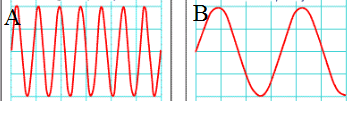
Which wave has the longest wave length?
top wave
bottom wave

Does this wave have a high frequency or low frequency?
High
Low
What color has the longest wavelength?
red
violet
green
blue
Which color has the shortest wavelength?
red
violet
green
blue

