wayground logo

Free Printable Worksheets

Font size

S
M
L
XL
Worksheets

Unit 1

Total questions: 100

Worksheet time: 2hrs 17mins

Name
Class
Date
1.
What is climate?
a)
What's happening in space at a time and place.
b)
What's happening in our atmosphere at a time and place
c)
The average weather over many years
d)
The average temperature over many years.
2.
What is weather?
a)
What's happening in space at a time and place.
b)
What's happening in our atmosphere at a time and place.
c)
The average weather over many years
d)
The average temperature over many years.
3.
What climate does a desert have?
a)
Tropical
b)
Polar
c)
Arid/Dry
d)
Temperate
4.
Which of the following is NOT a natural cause of climate change?
a)
pollution
b)
meteorite collisions
c)
solar spots
d)
Volcanic eruptions
5.
Which of the following is a greenhouse gas?
a)
carbon monoxide
b)
oxygen
c)
nitrogen
d)
carbon dioxide
6.
When the sun's rays pass through our atmosphere and then heat is trapped by the atmosphere it is called
a)
Global Warming
b)
Greenland Effect
c)
Greenhouse Effect
d)
Ice Age
7.
All of the following are causes of Global Warming except
a)
Rotation of the Earth
b)
Deforestation
c)
Increases in Greenhouse Gases
d)
Burning Fossil Fuels
8.
Which of the following would help decrease Global Warming?
a)
drive hybrid/fuel efficient cars
b)
burn fossil fuels
c)
deforestation
d)
use aerosol cans
9.

Regions closest to ________________ tend to have warmer year-round climates.

a)

Forest Fires

b)

South Pole

c)

North Pole

d)

the Equator

10.

What does "latitude" refer to?

a)

the distance away from the Equator

b)

how much rain a place gets

c)

how high up a mountain a place is

d)

the number of seasons a place gets

11.
What does this tool measure?
a)
Wind speed
b)
Wind direction
c)
Air pressure
d)
Temperature
12.
What is the name of this tool?
a)
Barometer
b)
Hygrometer
c)
Rain Gauge
d)
Thermometer
13.
This weather instrument is a...
a)
anemometer
b)
barometer
c)
wind vane
d)
thermometer
14.
This weather instrument is an...
a)
wind vane
b)
anemometer
c)
barometer
d)
thermometer
15.
A high pressure system means we might have this weather.
a)
Snow blizzard
b)
Sunny and dry
c)
Rain storm
d)
Tornado
16.

Why do winds change during the day and night near a beach?

a)

The warm air over land sinks and stays there

b)

The warm air over water sinks and stays there

c)

The temperature over air and the land change

d)

Cool air sinks over the land and stays there

17.

What kind of weather would you expect when you have decreased air pressure?

a)

Warm temperatures

b)

Cool temperatures

c)

Clear conditions

d)

Cloudy conditions

18.

How does air move?

a)

Warm air rises and cool air sinks

b)

Warm air sinks and cool air rises

19.

How do air masses move across the US?

a)

The trade winds move the air masses from west to east

b)

The jet stream moves air masses from west to east

c)

The trade winds move the air masses from the Atlantic Ocean to the Pacific Ocean

d)

The Gulf Stream air moves around the Gulf of Mexico

20.
In a high pressure systems
a)
there are few clouds because the air in moving downward
b)
there are many clouds because the air is very humid
c)
there are few clouds because the air is moving outward
d)
there are many clouds because the air is moving upward
21.
A front is
a)
where warm air is cooling at earth's surface
b)
a boundary where hot and cold air are separating
c)
a boundary where two different air masses meet
d)
where cold air is rising and forming rain clouds
22.
Air masses are named for ______.
a)
the type of air they contain 
b)
animals
c)
 people
d)
 where they form 
23.
A cold front usually brings what kind of weather?
a)
snow  
b)
sunny and fair
c)
heavy rain and/or thunderstorms 
d)
 cool and dry 
24.
The weather forecast tomorrow says there will be a 15 mph wind, a high temperature of 52 degrees and a pressure of 720 mb. What three instruments will a meteorologist use to make this prediction?
a)
anemometer, barometer, thermometer
b)
barometer, hygrometer, thermometer
c)
thermometer, satellite image, hygrometer
d)
anemometer, satellite image, barometer
25.
What does this symbol on a weather map indicate? 
a)
High pressure system
b)
Low pressure system
c)
Cold front
d)
Warm front
26.
What does this symbol indicate on a weather map? 
a)
High pressure system
b)
Low pressure system
c)
Cold front
d)
Warm front
27.
What would you expect from a Continental Polar air mass? 
a)
moist, warm air
b)
dry, cold air
c)
dry, warm air
28.
What would you expect from a Maritime Tropical air mass? 
a)
dry, warm air
b)
moist, cold air
c)
moist, warm air
29.
What type of front is this? 
a)
warm front
b)
cold front
c)
stationary front
d)
occluded front
30.

What is the mixture of gases surrounding our planet called?

a)

atmosphere

b)

trees

c)

planet

d)

equator

31.

The kinds of data that reflect climate are different from the conditions described in weather data. Which of the following is a description of climate?

a)

Today it is hot and sunny in Phoenix, Arizona.

b)

Summers are usually mild in Lansing, Michigan.

c)

Last week it rained every day in San Antonio, Texas.

d)

Yesterday was cold and windy in Anchorage, Alaska.

32.

Students measured the rainfall outside their classroom for five days and recorded their observations. The greatest increase in the amount of rainfall was between -

a)

June 12 and June 13

b)

June 11 and June 12

c)

June 10 and June 11

d)

June 13 and June 14

33.

The table shows some weather data collected over a five-day period. What pattern over the five days can be observed in the collected data?

a)

There was more rain on the warmer days.

b)

Rain came along with lower temperatures.

c)

There were fewer clouds as the week went on.

d)

Temperature increased during the week.

34.

Climate data is not the same as weather data. Which of the following is a description of climate data?

a)

New York had a record rainfall on Wednesday.

b)

Lima, Peru had a low temperature last night of 17°C.

c)

Winds are currently from the south in Ann Arbor, Michigan.

d)

The coast of Antarctica has very short summers.

35.
What front is moving through
Alabama and Georgia? 
a)
Warm
b)
Occluded
c)
Stationary
d)
Cold
36.
What type of cloud is shown?
a)
cumulus
b)
altocumulus
c)
cirrocumulus
d)
cumulonimbus
37.
When temperature decreases below the dew point, the water vapor in the air ________ and may possibly form clouds.
a)
condenses
b)
evaporates
c)
stays the same
38.
What type of cloud is shown?
a)
cumulus
b)
altocumulus
c)
cirrocumulus
d)
nimbocumulus
39.
Which cloud type forms only at high elevations of the troposphere and can signal an approaching warm front?
a)
cirrus
b)
cumulus
c)
 nimbus
d)
stratus
40.
The weather data for Columbia shows the barometric pressure reading is rising.  Which is the best forecast for the weather in the Columbia area?
a)
Sunny and dry
b)
stormy weather
c)
falling temperatures
d)
no change at all
41.
a)
25° C
b)
22° C
c)
15° C
d)
20°C
42.
a)
From east to west
b)
From west to east
c)
From north to south
d)
From south to north
43.

What causes wind?

a)

difference in air pressure

b)

difference in oxygen

c)

differences in the gravity

d)

difference in the thermosphere

44.

Local winds blow over:

a)

short distances

b)

the poles

c)

long distances

d)

the equator

45.

How does the air move in a land breeze?

a)

From east to west

b)

from west to east

c)

from the land to the ocean

d)

from the ocean to the land

46.

Air is warmer and less dense at the equator because the equator receives more.

a)

wind

b)

solar radiation

c)

aire pressure

d)

condensation

47.

The Coriolis effect is the curving of the wind across Earth. What causes winds to curve?

a)

Earth;s revolution

b)

Earth's magnetic field

c)

Earth's rotation

d)

Earth's gravitational pull

48.

A mass of moving air that is cold, warm, or stationary

a)

front

b)

humidity

c)

air pressure

d)

condensatiion

49.

An/A _______ map shows air pressure or winds.

a)

isotherm

b)

weather

c)

isobar

d)

doppler radar

50.

Assume that deforestation has taken place. How will this effect the movement of water through the water cycle?

a)

runoff will decrease

b)

sea level will increase

c)

condensation will increase

d)

transpiration will decrease

51.

What is the name of the surface ocean current that brings warmer temperature to SC?

a)

Gulf Stream

b)

California current

c)

south Pacific

d)

equatorial

52.
What are the 3 major climate zones in order from equator to the poles?
a)
polar, temperate, tropical
b)
tropical, temperate, polar
c)
temperate, polar, tropical
53.
What is it called when plants give off water vapor as a waste product?
a)
condensation
b)
evaporation
c)
sublimation
d)
transpiration
54.

Why do all parts of the Earth not receive the same amount of sunlight?

a)

The Earth is tilted on its axis.

b)

The Earth is closer to sun in the winter.

c)

The moon revolves around the Earth.

d)

The Earth is very far away from the Sun.

55.
The cool air from the ___ _____  coming off the lake made the sun’s heat more bearable as we lay out on the dock Saturday afternoon. 
a)
jet stream
b)
ultraviolet light
c)
sea breeze
d)
land breeze
56.
The Continental Polar ____ ____ is very dry & cold; but the Maritime Tropical is warm & moist.
a)
climate
b)
air mass
c)
front
d)
back
57.

Violently rotating column of air in contact with the ground crossing land in a narrow path

a)

hurricane

b)

tornado

c)

blizzard

d)

thunderstorm

58.

These maps show points of equal barometric air pressure (wind speed).

a)

isotherm map

b)

isobar map

c)

isodown map

d)

temperature map

59.

These maps connect points of equal temperature (THERMometer).

a)

Isobar map

b)

Isodown map

c)

Isotherm map

d)

Temperature map

60.

This type of cloud is thin and flat and the edges are not clearly defined

a)

cirrus

b)

stratus

c)

cumulus

d)

cumulonimbus

61.

Nimbostratus and cumulonimbus clouds can signal what type of upcoming weather?

a)

fair skies

b)

hot sunny weather

c)

windy weather

d)

rainy weather

62.
Which of the following is an example of a cloud of vertical development?
a)
nimbostratus cloud
b)
cumulonimbus cloud
c)
cirrus cloud
d)
stratus cloud
63.
This is the symbol for a... 
a)
Stationary Front
b)
Occluded Front
c)
Cold Front
d)
Warm Front
64.
Where the warm and cold air meet and stall, clouds and fog form, and it may rain or snow.  It could bring many days of clouds and precipitation.  
a)
Warm Front
b)
Cold Front
c)
Occluded Front 
d)
Stationary Front 
65.
This is the symbol for a... 
a)
Stationary Front
b)
Occluded Front
c)
Cold Front
d)
Warm Front 
66.
This is the symbol for a... 
a)
Stationary Front
b)
Occluded Front
c)
Cold Front
d)
Warm Front 
67.
Begins when warm moist air over the oceans rises rapidly, condenses forming clouds. This releases latent heat which increases the force of rising air.
a)
hurricane
b)
tornado
c)
thunderstorm
68.

Gas in the atmosphere that protects the Earth from the Sun's rays

a)

atmosphere

b)

troposphere

c)

ozone

d)

nitrogen

69.

The gas that makes up most of Earth’s atmosphere

a)

lifting

b)

troposphere

c)

wind funnel

d)

nitrogen

70.

The highest layer of the atmosphere is

a)

troposhphere

b)

mesosphere

c)

stratosphere

d)

exosphere

71.

Airplanes fly in the

a)

troposhphere

b)

mesosphere

c)

stratosphere

d)

exosphere

72.

Meteor showers occur in the

a)

troposhphere

b)

mesosphere

c)

stratosphere

d)

exosphere

73.

Earth's atmosphere is mostly made up of which 2 gases? CHOOSE 2!!!!!!

a)

nitrogen

b)

oxygen

c)

ozone

d)

water vapor

74.
Look up pictures of the Aurora Borealis on google.  The Aurora Borealis occurs in the
a)
troposhere
b)
stratosphere
c)
mesosphere
d)
thermosphere
75.
Look up pictures of the Aurora Borealis on google.  The Aurora Borealis occurs in the
a)
troposhere
b)
stratosphere
c)
mesosphere
d)
thermosphere
76.
What is the percentage of oxygen in Earth's atmosphere?
a)
1%
b)
21%
c)
78%
d)
90%
77.
Human activities and burning fossil fuels have released excessive amounts of greenhouse gases into the atmosphere.  This has increased Global Warming. THESE ACTIONS HAVE CHANGED THE...
a)
Climate
b)
Weather
78.
What is the Scientific Method?
a)
The steps to making an experiment.
b)
The steps to making proving your hypothesis is right.
c)
Don't know.
d)
The six steps to making an experiment.
79.
Which is NOT a step in the scientific method?
a)
Make observation
b)
Form a theory
c)
Collect data
d)
Form a hypothesis
80.
This variable in an experiment is the one being changed by the scientist. 
a)
dependent variable
b)
independent variable
c)
data
d)
control group
81.
The name of the information that you get from your experiment (you organize it into charts and graphs).
a)
observations
conclusion
b)
data
c)
variables
d)
hypothesis
82.
An experiment is performed on plants to see how different liquids affect plant growth. Each plant in the experiment is given a different liquid; water, apple juice, or milk. Each plant has the same amount of soil, sunlight, and listens to the same music. In this investigation, the independent variable is ...
a)
The type of plant
b)
The amount of sunlight
c)
The type of music
d)
The type of liquid
83.
This is the group that we will compare our experimental group to. This group stays "normal."
a)
Control Group
b)
Experimental Group
c)
 Normal Group
d)
Weird Group
84.
In a controlled experiment, how many variables can be worked with at a time? 
a)
one
b)
none
c)
two or more
d)
how ever many makes sense.
85.
Which of these contains steps in the right order?
a)
Ask a question, state your hypothesis, research, experiment, analyze, make a conclusion
b)
State your hypothesis, ask a question, research, experiment, analyze, make a conclusion
c)
Ask a question, research, state your hypothesis, experiment, analyze, make a conclusion
d)
State your hypothesis, ask a question, research, make a conclusion, experiment, analyze
86.
A scientist performs an experiment to see if acids have an effect on the health of a particular type of plant. Three sets of plants were treated with acidic solutions of known pH while the control set was treated with a solution of neutral pH 7.Which is the best conclusion for this experiment?
a)
Acid has no effect on the health of this type of plant.
b)
B. High acidity is helpful to this type of plant.
c)
C. Low acidity is harmful to this type of plant.
d)
High acidity is harmful to this type of plant.
87.
The graph below shows atmospheric carbon dioxide levels since the year 1880.Which of the following conclusions can be drawn from this graph
a)
 Atmospheric carbon dioxide levels are responsible for global temperature change.
b)
 Atmospheric carbon dioxide levels have been rising at about the same rate for the past century.
c)
Atmospheric carbon dioxide levels have remained the same over the past century.
d)
 Atmospheric carbon dioxide levels have been rising at an increasingly higher rate as the past century has progressed.
88.
Another word for asking questions and seeking answers in science is called:
a)
inquiry
b)
data
c)
hypothesis
d)
procedure
89.
Everything you want to remain the same or unchanged is called are called  the ___________ variables.
a)
independent
b)
dependent
c)
controlled
90.

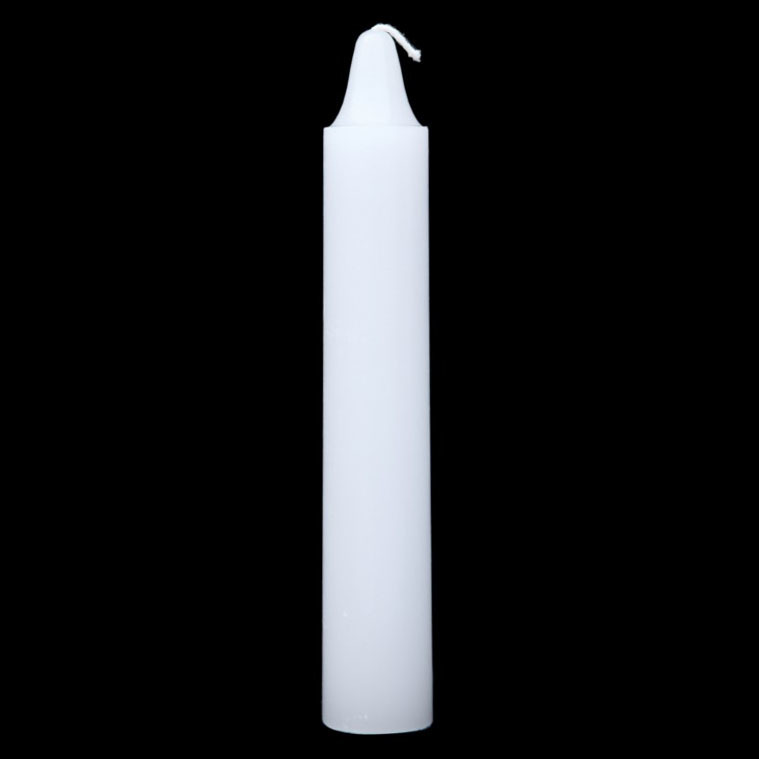
The white candle has a cylindrical shape. it has a diameter of about 3 cm. the length of the candle is 20 cm. It is hard, smooth and can be scratched. There is a white wick that extends from top to bottom.

Which is a qualitative observation from the sentence?

a)

diameter of about 3 cm

b)

length is 20 cm

c)

hard, smooth and can be scratched

91.
It is a process of explaining the meaning of the information or data gathered from the experimentation.
a)
interpreting data
b)
formulating hypothesis
c)
experimenting
d)
defining
92.

Complete the acronym. DRY


DEPENDENT- RESPONDING - _____________

a)

y- axis

b)

x- axis

93.

Complete the acronym. MIX


MANIPULATED- ______________ - X-AXIS

a)

Independent variables

b)

Dependent variables

94.

Specific data that supports your answer. This is usually in the form of data or averages from your observations.

a)

claim

b)

evidence

c)

reasoning

95.

Specific data that supports your answer. This is usually in the form of data or averages from your observations.

a)

claim

b)

evidence

c)

reasoning

96.

4.5 m = _____ cm

a)

45 cm

b)

450 cm

c)

0.45 cm

d)

4,500 cm

97.

8,400 mL = _____ L

a)

840 L

b)

84 L

c)

0.84 L

d)

8.4 L

98.
Evidence is ___________________
a)
A statement or conclusion that answers a question
b)
Scientific data that supports the claim
c)
A justification that connects the claim to the evidence
d)
Not vital when using an argument
99.

Identify the claim and reason.

a)

Winter is better than summer.

b)

Students should wear school uniforms because it makes it harder to tease kids who have less money.

c)

I like tacos better than burritos.

d)

Humans are mammals.

100.

Facts, data, or quotes that you provide to prove your argument

a)

Claim

b)

Argument

c)

Evidence

d)

Counter-Claim