wayground logo

Free Printable Worksheets

Font size

S
M
L
XL
Worksheets

Earth Moon and Sun Review

Total questions: 103

Worksheet time: 1hrs 8mins

Name
Class
Date
1.

The visible part of the Moon becomes larger

a)

Waxing

b)

waning

c)

New moon

d)

Crescent moon

2.

The visible part of the Moon becomes smaller

a)

full moon

b)

waxing

c)

waning

d)

crescent moon

3.

The daily rising and falling levels of the oceans and other large bodies of water

a)

oceans

b)

gravity

c)

lakes

d)

tides

4.

the beginning of summer or winter: days on which the hours of daylight are longest or shortest

a)

eclipse

b)

solstice

c)

ellipse

d)

gravity

5.

the spin of an object around its axis

a)

rotation

b)

revolution

c)

orbit

d)

spinning

6.

the orbit of one object around another object

a)

circling

b)

spinning

c)

rotation

d)

revolution

7.

beginning of spring and fall; days on which hours of daylight equal hours of darkness

a)

lunar eclipse

b)

solstice

c)

eclipse

d)

equinox

8.

movement of one solar system object into the shadow of another object

a)

equator

b)

equinox

c)

solstice

d)

eclipse

9.

What causes our days and nights here on Earth?

a)

The rotation of the moon

b)

The rotation of the Earth on its axis

c)

The revolution of the Moon

d)

The revolution of the Earth

10.

What is Earth's axis?

a)

An imaginary line through the center of the Earth

b)

A metal pole through the center of the Earth

c)

The way the Earth revolves

d)

The way the moon revolves

11.

What causes the Earth's seasons?

a)

The revolution of the Earth around the Sun

b)

The way the Earth spins on it's axis

c)

The way the Earth is tilted on it's axis in relation to how it revolves around the Sun

d)

The way the Moon revolves around the Sun

12.

If the Moon doesn't emit its own light, how can I see it at night?

a)

The moon reflects the sun's light.

b)

The moon reflects the Earth's light

c)

The moon is battery powered.

d)

The sun reflects the moon's light.

13.

If the alignment is Earth - Moon - Sun, what phase of the moon will we see

a)

Gibbous

b)

Full Moon

c)

New Moon

d)

Crescent

14.

What causes tides?

a)

The gravitational pull of the Sun only

b)

The gravitational pull of the Moon only

c)

The gravitational pull of the Earth

d)

The gravitational pull of the Moon and the Sun on the Earth

15.

If there is a new moon tonight, for the next two weeks will the moon appear larger. This is called

a)

waxing

b)

waning

16.

Why does Earth stay in its orbit around the Sun?

a)

The gravitational pull of the Moon

b)

The gravitational pull of the Sun

c)

The gravitational pull of Venus

d)

The gravitational pull of the earth

17.

How many degrees is earth tilted on its axis?

a)

29.7 degrees

b)

25.3 degrees

c)

23.5 degrees

d)

27.5 degrees

18.

What is this a picture of?

a)

a solar eclipse

b)

a lunar eclipse

c)

a solar solstice

d)

a lunar solstice

19.

The sun does not actually rise and set, but appears to because of Earth’s ___________ on its axis.

a)

revolution

b)

tilt

c)

rotation

d)

axis

20.

Why do the days get shorter as winter approaches in the Northern hemisphere?

a)

The angle of sunlight makes the days shorter

b)

It is daylight savings time

c)

The tilt of Earth causes the sun to give us indirect light.

d)

The sun’s path in the sky is shorter in winter.

Back

21.
Which of the following best explains why City 3 experiences the smallest change in day length between summer and winter out of the four cities shown in the diagram below? 
a)
Earth rotates on its axis once every 24 hours
b)
City 3 is located close to the equator
c)
Earth completes one revolution of the Sun every 365 days
d)
City 3 is closest to the Sun during the North Hemisphere’s winter
22.
What is meant by revolution of the Earth around the Sun?
a)
orbit of Earth
b)
turning of Earth
c)
change of magnetic poles
d)
answer not shown
23.

The diagram below shows four positions in Earth's orbit around the sun.


The Northern Hemisphere experiences the beginning of spring when Earth is in --

a)

Position 1

b)

Position 2

c)

Position 3

d)

Position 4

24.
Why does the northern hemisphere experience cooler temperatures at point C?
a)
Indirect rays from the Sun strike north at higher angles
b)
Direct rays from the Sun strike north at lower angles
c)
Direct rays from the Sun strike north at higher angles 
d)
Indirect rays from the Sun strike the north at lower angles
25.
Which locations on this model is experiencing winter?
a)
Points A, B and D
b)
Points C and E
c)
Points A and D
d)
Points B, C and E
26.
At which locations is the northern and southern hemispheres receiving approximately the same amount of daylight hours and direct rays from the Sun?
a)
Locations A and C
b)
Locations B and D
c)
Locations C and D
d)
Location D and A
27.

In the summer many people enjoy going to the beach. The photograph shows a beach in Argentina, which is located in the Southern Hemisphere.


Which diagram shows the position of Earth when it is summer in Argentina?

a)
b)
c)
d)
28.
How does the tilt of the Earth‘s axis affect the number of hours of sunlight that are hitting the Earth?
a)
Sunlight hours are the same all year
b)
Sunlight hours are greater when tilted toward the Sun
c)
Sunlight hours are greater when tilted away from the Sun
d)
Sunlight hours are variable and unpredictable
29.
What causes nighttime and daytime on Earth?
a)
the Sun rotating on its axis  
b)
Earth rotating on its axis
c)
Earth revolving around the Sun
d)
the Moon revolving around Earth
30.
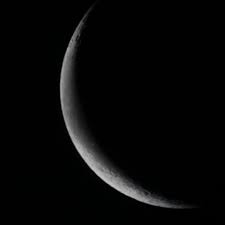
What Moon phase is this?
a)
Old Moon
b)
Far Side of the Moon
c)
New Moon
d)
Waxing Gibbous
31.
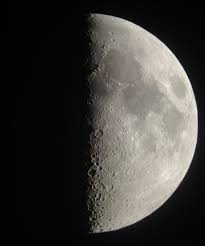
What Moon phase is this?
a)
Waning Crescent
b)
Waxing Crescent
c)
Waxing Gibbous
d)
Waning Gibbous
32.
What Moon phase is this?
a)
Full Moon
b)
Waxing Gibbous
c)
New Moon
d)
Half Moon
33.
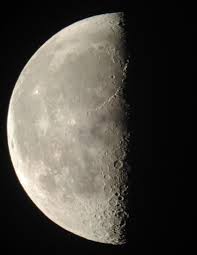
What Moon phase is this?
a)
Waxing Crescent
b)
Waning Gibbous
c)
Waning Crescent
d)
Waxing Gibbous
34.
Name the moon phase
a)
waning crescent
b)
waxing crescent
c)
waning gibbous
d)
waxing gibbous
35.
Name the moon phase
a)
First Quarter
b)
Last Quarter
c)
New Moon
d)
Full Moon
36.
Name the moon phase
a)
First Quarter
b)
Last (3rd) Quarter
c)
New Moon
d)
Full Moon
37.
What is illuminating the Moon?
a)
Nuclear Fusion
b)
Sunlight
c)
Mirrors
d)
Flashlights
38.
The Moon ________ around the Earth.
a)
moves parallel
b)
rotates
c)
doesn't move
d)
revolves
39.

The cycle of the moon lasts about ___________.

a)

15 days

b)

7 days

c)

27-28 days

d)

30-31 days

40.
Changes in the moon's appearance are
a)
phases
b)
eclipses
c)
stages
d)
cycle
41.
Define Full Moon
a)
None of moon is visible
b)
Half moon phase is visible
c)
Complete moon face is visible
d)
Less Than half of moon is visible
42.
Define New Moon
a)
None of moon is visible from Earth
b)
All of moon visible from Earth
c)
Moon is 1/2 visible from Earth
d)
Moon is more than Half Visible from Earth
43.
What moon phase came right BEFORE this one?
a)
First Quarter
b)
Last Quarter
c)
New Moon
d)
Full Moon
44.
Name the phase of the moon for letter a
a)
First Quarter
b)
Last Quarter
c)
Waxing Gibbous
d)
Waning Gibbous
45.
Name the phase of the moon for letter f
a)
Waning Gibbous
b)
Waxing Gibbous
c)
Waning Crescent
d)
Waxing Crescent
46.
Which lunar phase will complete the pattern?
a)
Last quarter
b)
New moon
47.
The phases of the moon, IN ORDER, are:
a)
new moon-->waxing gibbous-->1st quarter-->waxing crescent-->full moon-->waning crescent-->3rd quarter-->waning gibbous
b)
new moon-->waning crescent-->1st quarter-->waning gibbous-->full moon-->waxing gibbous-->3rd quarter-->waxing crescent
c)
new moon-->1st quarter-->waxing crescent-->waxing gibbous-->full moon-->waning gibbous-->waning crescent-->3rd quarter
d)
new moon-->waxing crescent-->first quarter-->waxing gibbous-->full moon-->waning gibbous-->3rd quarter-->waning crescent
48.

In order to see the phases of the moon what space objects play a role?

a)

asteroids

b)

stars and comets

c)

Earth, Sun and moon

d)

planets of the solar system

49.

As the moon orbits around the Earth, different parts of it appear to be illuminated by the Sun

a)

True

b)

False

50.

Waxing is...

a)

increasing

b)

decreasing

51.

Waning is....

a)

increasing

b)

decreasing

52.

half of the moon is _______________ at all times

a)

illuminated

b)

reflected

c)

farthest

d)

left

53.
Which of the following best describes the tilt of the earth when it is summer in the southern hemisphere?
a)
The northern hemisphere is tilted toward the sun
b)
The northern hemisphere is tilted away from the sun
c)
The norther hemisphere is tilted neither toward or away from the sun
d)
Why are you talking about the northern hemisphere when you asked about the southern hemisphere?
54.
The Arctic Circle receives several days each year where the sun not seeing.
a)
True
b)
False
55.
Which of the following best describes equinoxes?
a)
The earth is tilted neither toward or away from the sun
b)
The norther hemisphere is tilted toward the sun
c)
The northern hemisphere is tilted away from the sun
d)
The southern hemisphere is tilted toward the sun
56.
Which of the following best describes solstice.
a)
Either the longest or shortest day of the year for a hemisphere
b)
December 21 or 22
c)
June 21 or 22
d)
All of the above
57.
What does the earth's tilt cause?
a)
The seasons
b)
Day and Night
c)
Tsunamis
d)
Earthquakes
58.
What effect does the tilt of the earth have?
a)
It changes the angle that the sun strikes the earth in different land areas
b)
It causes the earth to be farther away from the sun at different times of the year
c)
When the earth is tilted away from the sun we have night
d)
When the earth is tilted away from the sun we have day
59.
What season is it in the Southern Hemisphere when it is fall in the Northern Hemisphere?
a)
winter
b)
spring
c)
summer
d)
fall
60.
One rotation of Earth is equal to
a)
a day.
b)
a year.
61.
What would seasons be like if Earth's axis were straight up and down?
a)
Seasons would be the same.
b)
Seasons would be more extreme.
c)
There would be no seasons.
62.
How many high tides does a place have each day?
a)
3
b)
4
c)
5
d)
2
63.
What type of tides would this arrangement of earth-moon-sun create?
a)
neap tide
b)
spring tide
c)
new moon tide
d)
full moon tide
64.
Wha type of tide would this arrangement of earth-moon-sun create?
a)
full moon tide
b)
new moon tide
c)
neap tide
d)
spring tide
65.
Which phase of the moon is represented in this diagram?
a)
new moon
b)
first quarter
c)
full moon
d)
last quarter/third quarter
66.
What causes tides?
a)
gravity
b)
wind
c)
spring
d)
neap
67.
The difference in levels of ocean water at high and low tides is the _________________.
a)
low tide
b)
tidal range
c)
high tide
d)
slack water
68.
Which body has the greater effect on Earth's tides?
a)
Sun
b)
Saturn
c)
Moon 
d)
Venus
69.
What type of tide will occur at 9:30 a.m.?
a)
low 
b)
high 
c)
none
d)
high and low
70.
Why does the moon's gravitational pull have more of effect on tides than the sun's gravitational pull?
a)
they are the same
b)
the moon is larger than the sun
c)
tides are not caused by the moon
d)
the moon is closer to the Earth than the sun
71.
What is the darkest inner part of the shadow cone called, where a total eclipse can be viewed.
a)
Total
b)
Umbra
c)
Penumbra
72.
For a solar eclipse to occur, what has to happen?
a)
The sun must be directly between Earth and the moon.
b)
The moon must be directly between Earth and the Sun.
c)
Earth must be directly between the Sun and the moon.
73.
Tides are caused mainly by what?
a)
Moon’s gravitational pull
b)
Sun’s gravitational pull
c)
Earth’s gravitational pull
74.

As the moon revolves around the earth, the water follows the motion and causes...

a)

sea levels

b)

waves and currents

c)

moon phases

d)

high tides and low tides

75.

Spring tides have the largest tidal ranges because...

a)

the earth, moon, and sun are aligned for greater gravitational force.

b)

the moon has the strongest gravitational force.

c)

the sun has the most gravitational force.

d)

none of the above

76.

What type of tide is evident when the moon is in the full moon phase?

a)

high tide

b)

low tide

c)

spring tide

d)

neap tide

77.
The bulge of water on the side of the Earth closest to the moon produces ___________.
a)
high tide
b)
low tide
c)
neap tide
d)
spring tide
78.
What is a difference between spring and neap tides?
a)
Spring tides occur when the earth and sun are IN LINE with the new or full moon. 
b)
Spring tides occur when moon in 3rd or 1st quarter phases
c)
Spring tides are LOWER than neap tides
d)
Spring tides occur in Spring and neap tides can occur in any season
79.
What do we call tides that have a smaller range that happen when the sun and moon are at right angles to each other?
a)
Neap Tide
b)
Spring Tide
c)
Larger Change
d)
Smaller Change
80.
If tides alternate from high to low and there are two of each type of tide a day, about how many hours will generally be between each different tide?
a)
2 hours
b)
6 hours
c)
12 hours
d)
24 hours
81.
The diagram below shows the alignment of the sun, the moon, and Earth. In which locations are neap tides taking place?
a)
1 and 2
b)
1 and 3
c)
2 and 4
d)
3 and 4
82.
How many times per month does a spring tide occur?
a)
Once
b)
twice
c)
three times
d)
it changes every month
83.
What type of eclipse is this?
a)
Total lunar eclipse
b)
Total solar eclipse
c)
Partial lunar eclipse
d)
Partial solar eclipse
84.
This is a diagram of the moon phases Which moon phase would a lunar eclipse occur in?
a)
New Moon
b)
1st quarter
c)
Full moon
d)
3rd quarter
85.
What type of eclipse is this?
a)
total lunar eclipse
b)
partial lunar eclipse
c)
total solar eclipse
d)
partial solar eclipse
86.
What is the correct order of the Earth, Moon, and Sun in order for a lunar eclipse to occur?
a)
Earth, Moon, Sun
b)
Moon, Sun Earth
Moon, Sun, Earth
c)
Sun, Earth, Moon
87.
What type of eclipse is down in the diagram?
a)
Total lunar eclipse
b)
Partial lunar eclipse
c)
total solar eclipse
d)
partial solar eclipse
88.
This is a diagram of the moon phases. In which phase would a solar eclipse occur?
a)
New Moon
b)
1st quarter
c)
Full Moon
d)
3rd Quarter
89.
The darkest part of the shadow during an eclipse is called the ___________________.
a)
penumbra
b)
corona
c)
umbra
d)
phase
90.
What type of eclipse is occuring inthe diagram?
a)
solar
b)
lunar
91.
What does the gray line across the United State represent during the eclipse of August 21st, 2017?
a)
The path of partiality
b)
The path of the penumbra
c)
The path of totality
d)
The path of happiness
92.
What is the correct order of the Earth, Moon, and Sun in order for a solar eclipse to occur?
a)
Earth, Moon, Sun
b)
Moon, Sun Earth
Moon, Sun, Earth
c)
Sun, Earth, Moon
93.
What type of eclipse is being shown in the diagram?
a)
Total solar eclipse
b)
Total lunar eclipse
c)
partial solar eclipse
d)
partial lunar eclipse
94.
Which type of eclipse is shown in the diagram?
a)
solar eclipse
b)
lunar eclipse
95.
Which season is the northern hemisphere experiencing?
a)
Spring
b)
Summer
c)
Fall
d)
Winter
96.
Which season is the northern hemisphere experiencing?
a)
Spring
b)
Summer
c)
Fall
d)
Winter
97.

What causes seasons?

a)

Earth's tilted axis as it rotates on its axis.

b)

Earth's tilted axis as it revolves around the sun.

c)

Earth's distance from the sun in the summer.

d)

Earth's hemispheres receiving equal amounts of sunlight.

98.

How long does it take for Earth to make 1 revolution?

a)

24 hours

b)

365 1/4 days

c)

1 month

d)

1 day

99.

Which statement is true based on the diagram?

a)

It is summer in the northern hemisphere.

b)

Its is winter in the southern hemisphere.

c)

It is an equinox.

d)

It is summer in the southern hemisphere and the northern hemisphere is receiving less direct sunlight.

100.

Which of the following is responsible for the changing of seasons on Earth?

a)

Orbit of Earth around the Sun and Rotation of Sun

b)

Tilt of the axis of Earth and orbit of Earth around the Sun

c)

Orbit of Earth around the Sun and Rotation of Earth

d)

Rotation of Earth and Rotation of Sun

101.

Why don't we have eclipses every month?

a)

The Earth's orbit is tilted 5%.

b)

The Earth's axis is tilted 5%.

c)

The moon's orbit is tilted 5%.

d)

The moon's axis is tilted 5%.

102.

How does a solar eclipse occur?

a)

Part of the Earth is in the moon's shadow.

b)

All of the Earth is in the moon's shadow.

c)

The Earth moves between the sun and moon casting its shadow on the moon.

d)

The moon moves into the Earth's shadow.

103.

True/False. During a solar eclipse, it is safe to look at the Sun.

a)

False

b)

True