wayground logo

Free Printable Worksheets

Font size

S
M
L
XL
Worksheets

KSA Science Test Prep V- Ecosystems, Atomic Structure, EDP

Total questions: 100

Worksheet time: 2hrs 32mins

Name
Class
Date
1.

Invasive species can have a major impact on the ecosystem.

a)

TRUE

b)

FALSE

2.
If a blue catfish is introduced and eats the large fish who eat the smaller fish, what will happen to the population of the smaller fish?
a)
Increase
b)
Decrease
c)
Stay the same
d)
No affect on smaller fish
3.

What is a community?

a)

A habitat with abiotic factors

b)

A very small habitat

c)

All the abiotic factors in a specific area

d)

All the different populations that live together in an area

4.

The place where an animal lives and gets what it needs to

survive is called_______.

a)

A community

b)

A Habitat

c)

An environment

d)

A niche

5.

The first organism in a food chain is always a__________.

a)

consumer

b)

producer

c)

carnivore

d)

herbivore

6.

Ecosystems provide ___________ upon which animals and humans depend.

a)

Water and air

b)

Carbon and nitrogen

c)

Climate

d)

All the above

7.

An ecosystem thrives with biotic and abiotic components. An example of an abiotic part of an ecosystem is ______________.

a)

Bacteria

b)

Fungus

c)

Water

d)

Decaying plants

8.
All energy transformations in an ecosystem begin with
a)
a scavenger
b)
the sun
c)
a decomposer
d)
a herbivore
9.
__________ is an organism that only eats plants for energy.
a)
Carnivore
b)
Herbivore
c)
Omnivore
d)
Terivore
10.

Using food web which of the following is a secondary consumer?

a)

snake

b)

worm

c)

butterfy

d)

squirrel

11.
__________ is an organism that only eats meat for energy.
a)
Omnivore
b)
Borivore
c)
Herbivore
d)
Carnivore
12.

Using the food web what would happen if the eagle became extinct?

a)

The frog population would decrease.

b)

The frog population would increase.

c)

The butterfly population would increase.

d)

The snake population would decrease.

13.

Which is the primary source of energy for plants?

a)

producer

b)

consumer

c)

decomposer

d)

sun

14.

Which of the following would be the most likely effect, if there were a sudden increase in the cricket population?

a)

There would be a decrease in the small bird population.

b)

There would be a decrease in the grass/flowers population.

c)

There would be a decrease in the mice population.

d)

There would be an increase in the grass/flowers population.

15.
What are the organisms that break down dead stuff?
a)
Producers
b)
Consumers
c)
Decomposers
d)
Organisms
16.
The arrows in a food chain or web represents what?
a)
They point to the organism that is being eaten.
b)
It shows how sunlight flows within an ecosystem.
c)
They show what direction the energy is flowing between organisms. 
d)
They represent how water is transferred within a habitat.
17.
In this food chain, what will happen if the frogs become extinct?
a)
The snakes will increase.
b)
The grasshoppers will decrease.
c)
The eagles will remain the same.
d)
The grasshoppers will increase.
18.

Using the food web which of the following is a tertiary consumer?

a)

frog

b)

bird

c)

eagle

d)

worm

19.
A food web can be broken down into several seperate
a)
food chains
b)
food pyramids
c)
producers
d)
consumers
20.

A push or a pull is called a

a)

Gravity

b)

Force

21.

What is Newton's 1st Law?

a)

For every action there is an equal and opposite reaction.

b)

An object at rest will stay at rest, an object in motion will stay in motion, unless an unbalanced force acts upon it.

22.

What is Newton's 2nd Law?

a)

For every action there is an equal and opposite reaction.

b)

Acceleration depends on two variables, the mass of the object and the amount of force.

23.

What is Newton's 3rd Law?

a)

For every action there is an equal and opposite reaction.

b)

Acceleration depends on two variables, the mass of the object and the amount of force.

24.

What explains why objects resist changes in their state of motion?

a)

gravity

b)

inertia

c)

force

d)

friction

25.

What explains a quantity that has BOTH speed and direction?

a)

Inertia

b)

Force

c)

Speed

d)

Velocity

26.

Newton's Second Law is based on two variables, they are .....

a)

mass and the amount of force

b)

gravity and friction

27.

Newton's first law states that an object must travel at a constant speed and in ___________, unless an unbalanced force acts on it.

a)

in a circle

b)

a wave like manner

c)

the same direction

28.

What would happen if a ball was kicked is space?

a)

It continues in the same direction, speeding up as it goes.

b)

It continues in the same direction, speeding up as it goes.

c)

It continues to move in the same direction unless it hits something or is affected by gravity or another force.

29.

Which way would a swimmer push to move forward in the water?

a)

To the left

b)

Forward

c)

Backward

d)

To the right

30.

The reason a boat bounces off the dock when it hits it.

a)

The boat and the dock repel each other.

b)

When the boat exerts a force on the dock, the dock exerts a force on the boat.

31.

Looking at the image. Decide if this is balanced or unbalanced.

a)

Unbalanced

b)

Balanced

32.

Looking at the image. Decide if this is balanced or unbalanced.

a)

Unbalanced

b)

Balanced

33.

Subatomic particles with a negative charge

a)

Electrons

b)

Neutrons

c)

Protons

d)

Quarks

34.
Subatomic particles with a positive charge
a)
neutrons
b)
atomic mass
c)
protons
d)
isotopes
35.
Measure mainly of the nuclear particles: protons + neutrons
a)
Subatomic Particles
b)
Atomic Number
c)
Atomic Mass
d)
Gluons
36.
Subatomic particles that are neutral in charge
a)
Neutrons
b)
Protons
c)
Nucleus 
d)
Electrons
37.

Atoms of the same element with a different number of neutrons

a)

Ion

b)

alloy

c)

Isotope

d)

Quarks

38.
A charged atom
a)
Ion
b)
Isotope
c)
Electron Cloud
d)
Quark
39.
Where electrons are likely to be found as they travel around the nucleus
a)
Nucleus
b)
Electron Cloud
c)
Within a Proton
d)
Within a Neutron
40.
A tiny but very dense, positively charged portion of the atom that holds most of the atomic mass
a)
Electron Shells
b)
Orbitals
c)
Electron Cloud
d)
Nucleus
41.
Arrangement of elements organized by atomic number
a)
Electron Cloud 
b)
Periodic Table 
c)
Electron Configuration
d)
None of these
42.
Atoms of the same element must always have the same number of _________
a)
electrons
b)
neutrons
c)
isotopes
d)
protons
43.
The _________ of an element equals the number of protons in an atom of that element
a)
mass number
b)
atomic weight
c)
atomic number
d)
isotopes
44.

Look at this picture of Argon off the periodic table. Which of the following is true for this element?

a)

18 protons

b)

40 protons

c)

22 protons

d)

21.9 protons

45.

Which part of an atom is used to identify it?

a)

number of protons

b)

number of neutrons

c)

number of electrons

46.

The atomic mass of an atom is equal to

a)

number of protons plus number of neutrons

b)

number of protons plus number of electrons

c)

number of electrons plus the number of neutrons

47.
The nucleus of an atom is made of
a)
electrons and protons
b)
electrons and neutrons
c)
protons and neutrons
d)
empty space
48.
Outside the nucleus of an atom are these
a)
protons
b)
neutrons
c)
quarks
d)
electrons
49.
The mass of this particle is so small that it is not counted.
a)
proton
b)
electron
c)
neutron
d)
quark
50.
Which of these phrases best describes an atom?
a)
a positive nucleus surrounded by a hard negative shell
b)
a positive nucleus surrounded by a cloud of negative charges
c)
a hard sphere with postive and negative charges on the outside
d)
a negative nucleus surrounded by protons and neutrons
51.
All atoms of a particular element have the same number of these
a)
electrons
b)
neutrons
c)
protons
52.
The term "neutral" means
a)
having only a little bit of charge
b)
having a positive charge
c)
having a negative charge
d)
having no charge at all
53.

1. When solving problems, the series of steps that engineers follow is called _______.

a)

the engineering method

b)

the engineering problem

c)

the engineering design process

d)

the scientific method

54.

The first step in the Engineering Design Process is to __________________.

a)

test a solution

b)

design a solution

c)

build a prototype

d)

ask questions

55.

Engineers follow a series of _________ when trying to solve a problem.

a)

steps

b)

solutions

c)

problems

d)

tests

56.

When you are gathering information for the Engineering Design Process you are ____________.

a)

doing research

b)

building a prototype

c)

designing a solution

d)

testing a solution

57.

After planning a solution, the next step is to __________.

a)

build a prototype

b)

improve

c)

ask questions

d)

test and evaluate

58.

After testing and evaluating your prototype design you would __________.

a)

imagine and plan

b)

improve the design

c)

build a prototype

d)

test and evaluate

59.

Which word best describes a prototype?

a)

model

b)

problem

c)

step

d)

solution

60.

What is the main goal of the Engineering Design Process?

a)

write reports

b)

make charts and graphs

c)

find solutions to problems

d)

make things

61.

Someone who designs and builds something to solve a problem is called

a)

a scientist

b)

an engineer

c)

a client

d)

a doctor

62.

All ideas should be written down.

a)

brainstorm

b)

communicate results

c)

plan/create

d)

evaluate

e)

state the problem/challenge

63.

Share with others.

a)

brainstorm

b)

communicate results

c)

plan/create

d)

evaluate

e)

state the problem/challenge

64.

Building a smaller scale, inexpensive model.

a)

brainstorm

b)

communicate results

c)

plan/create

d)

evaluate

e)

state the problem/challenge

65.

The thing you want to work on.

a)

brainstorm

b)

communicate results

c)

plan/create

d)

evaluate

e)

state the problem/challenge

66.

Checking to see if the prototype meets your expectations.

a)

brainstorm

b)

communicate results

c)

plan/create

d)

evaluate

e)

state the problem/challenge

67.

Developing a new system, product, or process.

a)

design

b)

innovation

c)

invention

d)

technology

68.

Improving an existing system, product, or process.

a)

design

b)

innovation

c)

invention

d)

technology

69.

The use of math and science to solve problems to improve the world around us.

a)

design

b)

engineering

c)

engineering design process

d)

technology

70.

A series of steps used to guide people as they develop new solutions, products, or processes.

a)

design

b)

engineering

c)

engineering design process

d)

technology

71.

The art of creating something that does not exist.

a)

design

b)

engineering

c)

engineering design process

d)

technology

72.

Select all the words that mean the same thing as "requirements".

a)

limits

b)

criterion

c)

parameters

d)

restrictions

e)

constraints

73.

Select all the words that mean the same as "parameters".

a)

limits

b)

criterion

c)

constraints

d)

restrictions

e)

requirements

74.

A preliminary model of something from which other forms are developed or copied.

a)

design

b)

invention

c)

prototype

d)

technology

75.
A test is conducted to test how different cleats change an athletes running speed.  Six different types of cleats are tested and the 100m run time is recorded.
a)
Experiment
b)
Investigation (but no experiment)
c)
Technology development
76.
The next time you place an order at a fast food joint, you could see a robot behind the counter. Flippy is an AI-driven kitchen assistant that can flip burgers and place them on buns, and it debuted today at a CaliBurger restaurant in Pasadena, California.
a)
Experiment
b)
Investigation (but no experiment)
c)
Technology development
77.
The cafeteria manager of a high school wants to find out if high prices are keeping students from using the cafeteria. Fifty students are chosen at random to receive half-price lunch passes every day for a month. The manager then records the number of passes used. 
a)
Experiment
b)
Investigation (but no experiment)
c)
Technology development
78.
An experiment is conducted to test how different cleats change an athletes running speed.  Six different types of cleats are tested and the 100m run time is recorded.  What is the independent variable?
a)
The type of cleat
b)
The run time
c)
The 100 meters
d)
The athlete
79.
How many variables can be tested in a controlled experiment?
a)
one
b)
two
c)
three
d)
as many as possible
80.
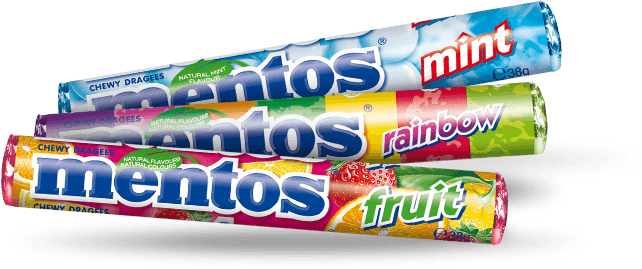
A test is set up to test which brand of soda creates the biggest foam explosion when adding a Mentos candy.  Three different sodas were tested. They measured the height of the foam eruption.   What is the dependent variable?
a)
Brand of soda
b)
Number of mentos candies used
c)
Height of foam eruption
d)
Temperature of soda
81.
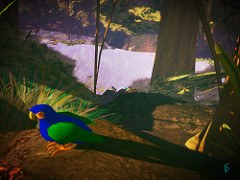
Which of the following is a quantitative observation?
a)
The bird is very colorful.
b)
The bird has 4 different colors on him.
c)
The bird has many, many feathers.
d)
It is a bird. 
82.
A student wants to test the effects of different types of exercise on heart rate.  What is the dependent variable?
a)
heart rate
b)
type of exercise
c)
amount of exercise
d)
time of day exercise occurs
83.
This variable is the actual data collected during the experiment. 
a)
independent variable
b)
dependent variable
c)
control group
d)
data group
84.
This variable in an experiment is the one being deliberately changed by the scientist. 
a)
dependent variable
b)
independent variable
c)
data
d)
control group
85.
Things that stay the same throughout the whole experiment are called
a)
controls
b)
dependent variables
c)
independent variables
d)
constants
86.
The yard is wet so it must have rained last night is an example of a (an)
a)
constant
b)
control
c)
inference
d)
quantitative data
87.
Jane Goodall recorded 40 chimps living in a community, this is ____ data.
a)
quantitative
b)
qualitative
c)
observation
d)
field study
88.
A(n) ____________ is a special type of scientific investigation that is performed under controlled conditions.
a)
experiment
b)
lab
c)
inquiry
d)
hypothesis
89.
The more times that an experiment is repeated and the same results obtained, the more likely the results are _________. 
a)
better
b)
observed
c)
valid
d)
used
90.
An experiment generally tests how one _________ is affected by another.
a)
Variable
b)
test
c)
scientist
d)
option
91.
The variable that affects the dependent variable is called the _________ variable.
a)
dependent
b)
optional
c)
independent
d)
scientific
92.
The affected variable is called the __________ variable.
a)
independent
b)
dependent
c)
changed
d)
numerical
93.
A good experiment usually tests a(n) __________. 
a)
variable
b)
scientist
c)
opinion
d)
hypothesis
94.
Where can you perform a science experiment?
a)
oceans
b)
kitchens
c)
laboratories
d)
all of the above
95.
What tool do we use to measure length?
a)
graduated cylinder
b)
beaker
c)
ruler
d)
balance
96.
What tool do we use to measure mass?
a)
graduated cylinder
b)
beaker
c)
ruler
d)
balance
97.
Telescope
a)
Tool to help you see objects that are far away
b)
You can see larger objects with it
98.
Microscope
a)
Tool to help you see objects that are far away
b)
Tool to make objects appear much larger
99.
This symbol represents what rule  
a)
Will be using electricity
b)
Substance is flammable
c)
Substance is safe to eat
d)
Substance is toxic
100.
The process of gathering information
a)
analyzing
b)
hypothesizing
c)
inferring
d)
observation