
 Worksheets
NSCAS-Finale
Total questions: 97
Worksheet time: 1hrs 10mins

What is the formula for speed?
distance / time
mass x acceleration
velocity / time
½(mass) x (velocity)2
(mass) x (acceleration of gravity) x (height)

Which number shows kinetic energy at its maximum?
three
two
four
five
Which of the following statements about a skier skiing down a steep slope is true?
His kinetic energy decreases and his potential energy increases
His potential energy decreases and his kinetic energy increases
His chemical energy increases
Both his potential and kinetic energy increases
Energy in motion is called
kinetic energy
potential energy
nuclear energy
transfer energy

Where would this tossed baseball have the least amount of kinetic energy?
point W
point X
point y
point z
Increasing an object's mass will increase its kinetic energy.
true
false
Increasing an object's speed will increase its kinetic energy.
false
true

Which car has KE = 50 and PE = 50
A
B
C
D

Which car has KE = 100 and PE = 0
A
B
C
D
potential energy.

If a Suburban and a Miata are going the same speed, but the Suburban weighs three times as much as the Miata, how many times more kinetic energy does the Suburban have than the Miata?
1
3
4.5
9

Two identical (except for color) Miatas are traveling down the road. The silver one is going three times as fast as the white one. How many times more kinetic energy does the silver Miata have than the white one?
1
3
4.5
9
not enough information

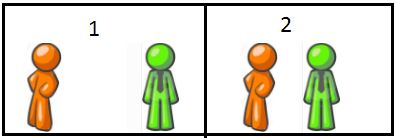
When you drop a hammer and a feather, why does the feather fall slower?
air resistance causes the feather to slow down
gravity pulls harder on the hammer than the feather
gravity pulls harder on the feather than the hammer
air resistance causes the hammer to fall slower
_____________________________________.

What is the average speed of the rolling soccer ball?
1 m/s
2 m/s
0.2 m/s
0.5 m/s

What likely happened at points B-C?
He stopped
he ran quickly
he walked slowly
he ran back home

Which of the statements is true about the object's motion?
In segment B and C, the object is moving quickly
Between sections B-D the object is increasing in speed
Between section E-F the object is increasing speed
The object is moving the fastest between D-E


Identify the correct energy transference for the image below.
Chemical --> Light --> Thermal
Sound --> Thermal --> Light
Kinetic --> Potential --> Sound
Electrical --> Sound --> Thermal


What particle has a negative charge?
Protons
Electrons
Neutrons
What particle has a positive charge?
Protons
Electrons
Neutrons

Cherise sets identical magnetic carts on two tracks. At the end of each track is a blue magnet that cannot move. Cherise can move the carts one space to the left or one space to the right. Which movement will result in the largest increase in potential energy?
Moving the cart on Track 1 one space to the right (→).
Moving the cart on Track 2 one space to the left (←).
Moving the cart on Track 2 one space to the right (→).
All these movements will result in the same change in potential energy because they each move a cart the same distance.
The variable that you keep the same to ensure that your experiment is valid.
independent variable
dependent variable
controlled variable
The variable that you are measuring in the experiment (this is where your quantitative data comes from).
independent variable
dependent variable
controlled variable
Data that includes numbers (measurements and amounts).
qualitative data
quantitative data
Which step of the scientific method is this example-
Using clear containers with measurement marks, I will compare the volume of a glass of water at room temperature with a glass of frozen water.
question
hypothesis
experiment
data
conclusion
Which step of the scientific method is this example-
Container #: State of Water: Height:
1- water =14.0 mL, ice =14.8 mL
2-water=20.0 mL, ice= 20.8 mL
3-water= 24.0 mL, ice=24.9 mL
question
hypothesis
experiment
data
conclusion
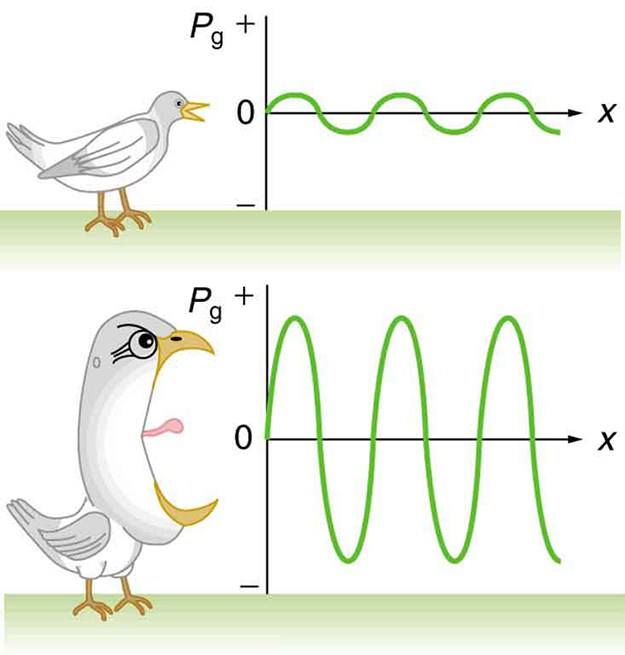
Why can't sound travel through outer space?
There is almost no matter in outer space, so the vibrations have no way to travel through the atmosphere. There is nothing to carry the sound waves through space.
Sound actually travels very quickly through outer space because there is no matter to slow down the sound waves.
There are too many planets and stars in outer space that absorb all of the sound waves, so they cannot travel to the human ear.
Because outer space is a "vacuum," the vibrations are irregular and travel in too many directions for us to detect the sound.
Sound waves can travel through all three states of matter. Which of the following best explains why sound travels most quickly through a solid?
Solids always produce an echo, which makes the sound seem louder to the human ear.
Only solids allow the vibrations to travel from one atom (particle) to another.
In solids, the atoms (particles) are closest together, which allows the vibrations to travel rapidly from one to another through the object.
Sound does not travel quickly through a solid. It travels most rapidly through a gas.

What does the pencil in this picture show about light?
Light is refracted when it hits a curved object.
Light is reflected when it hits a curved object.
Light is refracted when it passes from air into water.
Light is reflected when it passes from air into water.

A leaf is green. What does this tell you about the light that is being absorbed?
The light is a UV ray.
The light is not a part of the light spectrum.
All colors are reflected except green.
All colors are absorbed except green

Which of the following is an advantage of analog signals?
less prone to interference
degrades over time
travels farther
carries more detailed information

Identify the labeled part numbered 1 of the transverse wave.
Crest
Trough
Amplitude
Rest Position
Wavelength


What is the amplitude of the wave?
2 cm
9 cm
18 cm
27 cm
Which of these might be used to determine common ancestry of two different species of plants?
fossil evidence
the size of the population
similar habitats
similar ecological niches

Which piece of evidence could be used to show that mammalodons and modern whales are directly related to each other and share a common ancestor?
They both eat small sea creatures
They share similar anatomical features, such as unused hip bones.
They both produce one baby at a time.
Their social behavior includes swiming in groups.

Assuming that each rock layer formed horizontally, which layer is the youngest?
Layer A
Layer B
Layer C
Layer D
What happens to new traits that HELP organisms survive over time?
Nothing
That trait becomes MORE COMMON in the population
That trait becomes LESS COMMON in a population
Equally common

Body parts of organisms that are the same in structure and position but different in function and shared by a common ancestor.
embryos
homologous structures
analogous structures
vestigial structures

.
Which rock layer contains the newest fossils?
B
F
E
C

Images of the embryo and adult stages of three different organisms are shown.
Which of the following is the best conclusion that can be drawn from this evidence?
Having similar embryos indicates that these organisms eat the same types of food.
Having similar embryos indicates that these organisms share a recent common ancestor.
Having similar embryos indicates that these organisms live in a similar environment.
Having similar embryos indicates that a certain protein controls how many legs the adult organisms will have.
Which is the correct order cause and effect....
Gene-Chromosome -trait-protein-Mutation/No mutation
Gene-Chromosome -protein-Mutation/No mutation-trait
Trait-Chromosome- Protein-Gene-Mutation/No mutation
Chromosome -Gene-protein- Mutation/No mutation-Trait


If two alleles are the same for a certain trait they are considered
Homozygous
Twins
Heterozygous
Common
In science, mutations are
The reason the X-Men exist
Genetically engineered creatures that you fight in the Hunger Games
A change in the DNA of an organism that produces new traits
Always helpful for survival
True or false: Mutations only harm chances of survival:
True
False

If a gene is always expressed or always shown with a capital letter it is
Bossy
Recessive
Yelling
Dominant

If a certain trait has two different alleles (one dominant and one recessive) it is called __________________
Homozygous
Confused
Differentiated
Heterozygous
A dominant allele is represented with a
capital letter
lowercase letter

In the punnett square below, what belongs in the missing square

In the punnett square, what is the probability for white fur?

What kind of mutations exist in humans?
Neutral mutations
Harmful mutations
Beneficial mutations
All of these
What characteristic does "survival of the fittest" need for survival of a species.
Genetic Variation
Speed
Beak shape
Biodiversity

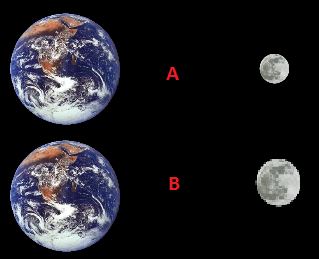
Which correctly shows the size difference between the Earth and Sun
Left picture
Right picture
Both pictures

The graph shows the averages temperatures of the planets in our solar system. Which planet has the greatest average temperature?
Mercury
Venus
Earth
Jupiter

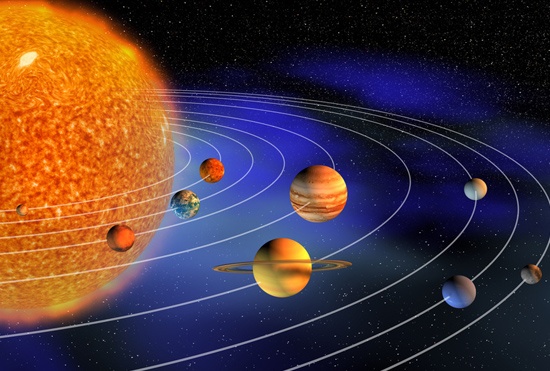
What separates the inner and the outer planets?
Oort cloud
Sun
Kuiper belt
Asteroid belt


What is shown in the diagram?
Solar Eclipse
Lunar Eclipse
New Moon
Nebula

What is being shown in the diagram?
Solar Eclipse
Lunar Eclipse
Full Moon
Supernova
Why is a total solar eclipse only visible to a small portion of the earth?
Because the shadow the moon casts on the earth is small.
Because the shadow the Sun casts on the earth is small.
Because the earth is smaller than the moon.
Because the shadow the moon casts on the earth is large.
What causes the moon to go through phases?
the revolution of the moon around the earth
the rotation of the moon on its axis
the rotation of the earth on its axis
the revolution of the earth around the sun

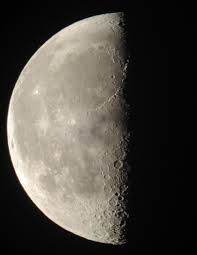

Why does the moon shine?
It emits its own light
it reflects light from the sun
it reflects light from the Earth

What phase of the moon would be visible when the moon is at position 7?
new moon
first quarter
full moon
third quarter


What happens when the area in which you live tilts away from the sun?
It is spring
It is summer
It is fall
It is winter
A solstice event occurs when
the sun's rays reach their highest or lowest point in respect to the equator
the sun's rays shine most directly at the equator
the Earth has it's longest period of daylight hours

Which letter shows Earth's position in December?
A
B
C
D
What is most responsible for Earth's seasons?
distance from Sun
tilt of Earth as it revolves around the Sun
continous changing tilt as Earth orbits
snow cools temperatures bringing on winter

