
 Worksheets
Evolution Review
Total questions: 103
Worksheet time: 4hrs 25mins
What is evolution?
The passing of genes from parent to offspring.
Change over time.
A symbiotic relationship.
The interaction of two different species.
True or false, evolution happens when an individual organism starts changing itself to adapt to its environment. For example, an adult polar bear might start swimming more so it can handle the melting of the polar ice caps.
false, if it had a cub that could swim better due to longer legs or more buoyant bone structure, this could become a more common trait.
True, evolution happens due to changing individuals
maybe, if it chose to.
I wish I had a pet penguin

Who was the Scientist most famous for his study of natural selection and evolution?
Theodor Schwann
Robert Hooke
Charles Darwin
Rudolf Virchow

What is the process in which populations CHANGE gradually over time?
evolution
species
variation
competition

How do we measure the age of a fossil in years?
variation
absolute dating
selection
mutation

What do we call structures that no longer perform their original function?
Natural Selection
Analogous Structure
Vestigial Structure
Homologous Structure

What do you call similar structures that related species have inherited from a common ancestor?
Natural Selection
Analogous Structure
Vestigial Structure
Homologous Structure

Hibernation is an example of which type of adaptation?
Behavioral Adaptation
Physical Adaptation

Beak shape, camouflage, and webbed feet are all examples of which type of adaptation?
Behavioral Adaptation
Physical Adaptation

Select ALL the parts of Natural Selection.
overproduction
evolution
variation
selection
competition

Select ALL that show evidence of evolution.
DNA
mutations
fossils
skeletal structures

Select ALL of the steps to forming a new species.
variation
adaptation
division
separation

What do you call different structures with a similar function but NO common ancestor?
Natural Selection
Analogous Structure
Vestigial Structure
Homologous Structure
When organisms are better adapted to their environment they will survive and reproduce more successfully than organisms less adapted. This process is called what?
Selective breeding
Natural Selection
Cloning
Evolution of all species
Which scientist visited the Galapagos Islands and came up with the theory of natural selection?
Theodor Schwann
Gregor Mendel
Charles Darwin
Rudolf Virchow

Gigantopithecus were very large primates that lived 500,000 years ago. Since none of these mammals are still today, they are said to be....
Extinct
Threatened
Endangered
Declining

Scientists have collected millions of fossils of different organisms, and have developed a timeline of life on Earth. What do we call this?
Mutation
Natural Selection
The theory of evolution
Fossil Record

Sometimes bones in the front limbs of animals are very similar in structure. What do we call similar bone structures that indicate a link to a common ancestor?
Adaptations
Gradualism
Homologous Structures
Extinction
A physical or behavioral trait that helps an organism survive and reproduce in its environment is called a what?
An adaptation
A response to a stimulus
A mutation
Evolution
When looking at two birds of the same species, you notice that one has darker feathers than the other one. You also notice that one has a beak that is just a little longer. These slight differences within members of the same species are called.....
Fossils
Extinction
Meiosis
Variations
What do we call a change in a species over time?
Adaptation
Evolution
Extinction
Environmental influences


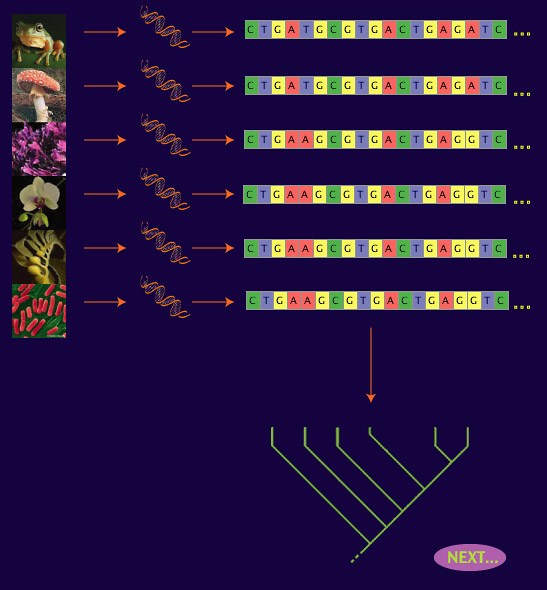

What type of evidence is represented in the picture above:
Fossils
Vestigial Structures
DNA
Homologous Structures

What type of evidence is shown in the image above?
Fossils
Vestigial structures
Homologous Structures
DNA

What type of evidence is shown in this picture?
Fossils
Homologous Structures
Vestigial Structures
DNA

What type of evidence are shown in the picture above?
Fossils
Embryology
Homologous Structures
Vestigial Structures

Adaptations are:
physical or behavioral tendencies.
physical or behavioral characteristics that help an organisms survive and reproduce.
physical or behavioral characteristics that do not help the organism in any way.
genetic mutations that have gone wrong.


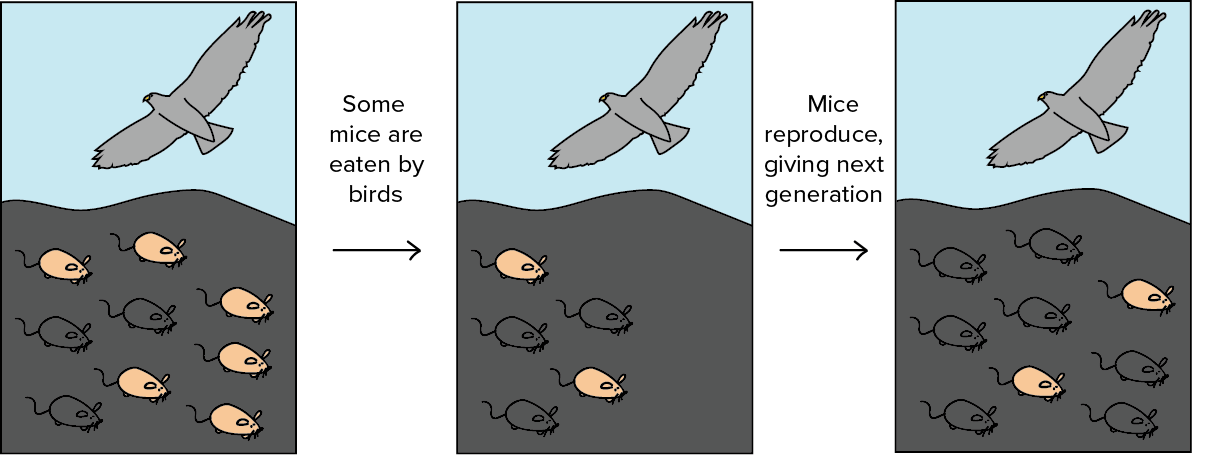
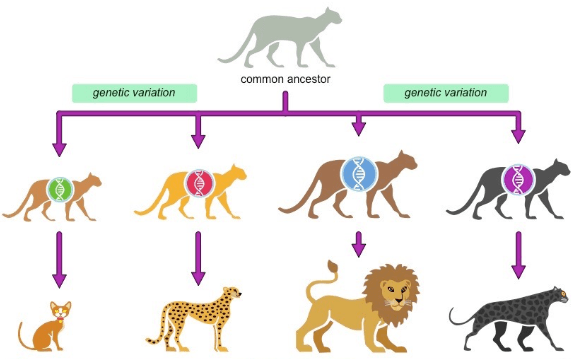
The process by which two populations of the same species become so different that they can no longer interbreed.
natural selection
artificial selection
speciation
fossilization

What are the 3 steps of speciation?
Overproduction
Separation
Struggle for survival
Adaptation
Division

Overproduction, Genetic Variation, Struggle to Survive, and Successful Reproduction are the 4 parts of:
Natural Selection
Speciation
Artificial Selection
Fossilization

A species is defined as:
a group of organisms that are extremely different.
a group of organisms that have similar characteristics and always live in the same place.
a group of organisms with similar characteristics and can reproduce to make fertile offspring.
any two organisms to make a hybrid.
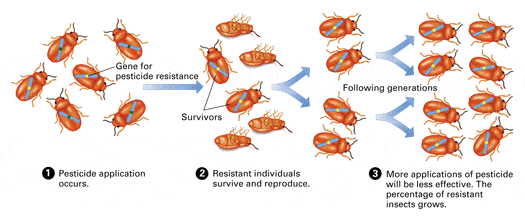
What statement is true regarding why natural selection can be easily seen in insects and bacteria?
Natural selection only occurs in prokaryotic cells
Insects and bacteria can reproduce faster than more complex organisms and pass on selected traits quicker
Insects were the first multi-cellular organism to live on land
Bacteria have directly evolved from insect traits.

Which of the following is true about the picture above?
Camels are highly adapted to cold climates.
There are no benefits to using a camel vs. a horse in the desert.
Camels have directly evolved from whales.
A camels long large intestine, long eyelashes and wide feet allow it to be very adapted to the desert.

Which of the following is true regarding the evidence of evolution
Vestigial structures are not real evidence of evolution.
Homologous structures and fossils are the most dependable forms of evidence.
Comparing DNA is the most definitive and accurate method to show evolutionary relationships.
Embryology and Homologous structures do not support the theory of evolution.

_________ is the process of change by which species of organism change over time.
Nucleotides
Evolution
Mutation
Carbon

Birds are eating all the green beetles. Because the brown beetles are surviving they reproduce more and make more brown beetles. This is called ___________
Artificial Selection
The Theory on the Origin of Species
Natural Selection
Mutation

Why were the beaks on Darwin's finches so Important?
They showed the finches always existed as Darwin found them.
They showed that the finches could mutate their beaks whenever they want.
They showed variability in the finches species. All finches were equally adaptable to all islands.
They show that the finches adapted to their environments. Their beak shape matched the food available on each island.

4. When the industrial revolution started, the trees have been covered in soot from coal factories. Which moth will be more successful in this environment?
White Moth
Dark Moth
Both are Equally Successful in this Environment

Why could the same species of moth be two different colors?
Their color was based on their DNA. Sometimes a mutation would cause the moth to be born with a different color.
Their color was caused by the environment. The soot from the factories would fuse with the moth's skin.
Bacteria inside the moth's stomach would sometimes give the moth stomach the ability of the moth to have "active camouflouge." This allowed the moths to change their color at will.

If scientists find fossils of a type of mosquito on the bottom layer and find fossils of beetles towards the top layer, what can scientists infer?
Mosquitos ate the beetles
Mosquitos are older fossils than beetles
Beetles are older fossils than mosquitos
Both mosquitos and Beetles must have lived at the same time.

When scientists compare fossils to see about old they are in a certian environment, this is called ____________
Comparing
Absolute Dating
Relative Dating
Comparative Dating
Which of the following do scientists not use as evidence for evolution?
Fossils
Vestigial Structures
Embryology
Radiation

When we examine this whale fossil, we can see that the whale has a pelvic bone that doesn't seem to be used by the whale. What do scientists infer?
The whale had an ancestor with legs
The whale must use the pelvis for an unknown reason
The whale was born with an extra bone and has a disorder
The whale had an ancestor with wings

In evolution, these are body parts of species that have similar features.
Adaptable features
Vestigial Structures
Nucleal Structures
Homologous Structures

Why are homologous structures important to the theory of evolution?
Scientists use them as evidence that many species must have had a common ancestor.
Scientists use them as evidence that many species must have independently evolved and are not related to other species.
Scientists use them as evidence to show that all kinds of structures in our bodies work to help us survive.

Why are vestigial structures evidence for evolution?
They are useful in the organism and show natural selection at work.
They are not useful in the organism but they were probably useful in some ancestor of that species.
They show that these organs or behaviors help an organism adapt to new environments

Scientists believe horses evolved over a period of 50 million years. How did they change?
They became much larger
Their toes eventually were replaced by a hoof
Their environment changed from a forest to a grassland environment
all the other answers!

How do scientists use embryology to support the theory of evolution?
Embryos of many species have a lot of similar characteristics when they are first forming showing different creatures must have a common ancestor
Embryos of many species have very little in common until they start developing for long periods of time
Features like gills and tails prove that all animals are really just fish
Parrots are tropical birds. However, in some areas of New York City, some parrots have been able to survive outdoors year-round. These parrots survive, while most others cannot, due to
overproduction of offspring
extinction of previous species
asexual reproduction of parrots with a mutation
a variation that allows these parrots to live in colder climates
The fossil record of ancient life forms provides scientific evidence of
replication
evolution
convection
succession
In the past, humans developed varieties of dogs, such as the German shepherd and the bearded collie, using
selective breeding for particular traits
recombination of genes during mitosis
mutations present only in body cells
natural selection of favorable traits

The overall changes in the population of mice can be explained best by
natural selection
succession
reproduction
extinction
The Galapagos pink land iguana, Conolophus marthae (C. marthae), is native to only one of the Galapagos Islands. Its entire range is currently limited to Wolf Volcano on Isabella Island. The iguana was first discovered on this island in 1986. Genetic studies of the animal began sometime later, and it was identified as a species separate from other iguana populations on the Galapagos in 2009. Its population might have been as high as 100 in 1986, but now there might be as few as 10 of the animals left alive.
Other evidence indicates that this species could have diverged from another line of iguanas about 5.7 million years ago. After that, the other line of iguanas diverged into two other species, C. pallidus and C. subcristatus.
In the future, the current population of about ten pink land iguanas will probably
migrate to new islands in the Galapagos in order to survive
soon become extinct, because they have little genetic diversity
undergo evolution by natural selection and survive
soon become extinct, because they have too much genetic diversity
The Galapagos pink land iguana, Conolophus marthae (C. marthae), is native to only one of the Galapagos Islands. Its entire range is currently limited to Wolf Volcano on Isabella Island. The iguana was first discovered on this island in 1986. Genetic studies of the animal began sometime later, and it was identified as a species separate from other iguana populations on the Galapagos in 2009. Its population might have been as high as 100 in 1986, but now there might be as few as 10 of the animals left alive.
Other evidence indicates that this species could have diverged from another line of iguanas about 5.7 million years ago. After that, the other line of iguanas diverged into two other species, C. pallidus and C. subcristatus.
The testing that revealed that these iguanas are a separate species from the other iguanas present in the Galapagos most likely included
genetic engineering
cloning studies
DNA analysis
use of paper chromatography
The Galapagos pink land iguana, Conolophus marthae (C. marthae), is native to only one of the Galapagos Islands. Its entire range is currently limited to Wolf Volcano on Isabella Island. The iguana was first discovered on this island in 1986. Genetic studies of the animal began sometime later, and it was identified as a species separate from other iguana populations on the Galapagos in 2009. Its population might have been as high as 100 in 1986, but now there might be as few as 10 of the animals left alive.
Other evidence indicates that this species could have diverged from another line of iguanas about 5.7 million years ago. After that, the other line of iguanas diverged into two other species, C. pallidus and C. subcristatus.
One likely reason for the existence of these pink land iguanas today is that their ancestors
had the same variations as other iguanas but, after a long period of changing environmental conditions, mutated to the pink form when the environment eventually stabilized
had variations not present in other iguanas that allowed them to live in a particular environment more successfully than the other iguanas
lived on several other islands long ago, but migrated to Isabella Island around 1980 to have the environment to themselves, without predators to harm them
found that they were less visible to predators if they made themselves pink to blend in with the plants growing around them

The Galapagos pink land iguana, Conolophus marthae (C. marthae), is native to only one of the Galapagos Islands. Its entire range is currently limited to Wolf Volcano on Isabella Island. The iguana was first discovered on this island in 1986. Genetic studies of the animal began sometime later, and it was identified as a species separate from other iguana populations on the Galapagos in 2009. Its population might have been as high as 100 in 1986, but now there might be as few as 10 of the animals left alive.
Other evidence indicates that this species could have diverged from another line of iguanas about 5.7 million years ago. After that, the other line of iguanas diverged into two other species, C. pallidus and C. subcristatus.
Which evolutionary tree best represents the information about the pink land iguana provided in the passage?
picture 1
picture 2
picture 3
picture 4

Base your answers to question on the scatter-plot graph below and on your knowledge of biology. The graph shows changes in the percentage of vancomycin-resistant bacteria in a population between the years 1983 and 2001
Explain why the percentage of resistant bacteria increased over time
more bacteria moved into the area
only vancoymin-resistant bacteria survived to reproduce passing on their genes
a random mutation occurred in all the bacteria
only vancomycin-resistant bacteria died

The graph shows changes in the percentage of vancomycin-resistant bacteria in a population between the years 1983 and 2001.
What scientists might do to successfully combat bacteria that are resistant to vancomycin?
nothing
keep using vancomycin
create new antibiotics
hope that humans evolve

The circled areas in the diagram to the left represent bird species that are in the same genus, a classification group that includes closely related species. These birds are found on the Hawaiian Islands.
Which processes are directly responsible for the presence of the different species of birds shown in the diagram?
mitosis and differentiation
gene manipulation and overpopulation
gene mutations and natural selection
competition and cloning

The circled areas in the diagram to the left represent bird species that are in the same genus, a classification group that includes closely related species. These birds are found on the Hawaiian Islands.
Which two finches are most closely related?
Lesser Koa finch and Nukupuu
Akialoa and Ou
Kauai akialoa and Maui parrot bill
Ou and Greater Koa finch

he circled areas in the diagram to the left represent bird species that are in the same genus, a classification group that includes closely related species. These birds are found on the Hawaiian Islands.
If the Akialoa migrated to an ecosystem occupied by a Greater Koa finch, could both species survive?
there is no way ever
Yes, always
Yes, if they don't compete with each other for resources
Yes, if they complete with each other for resources.

