
 Worksheets
🤗HW16: 10.19
Total questions: 102
Worksheet time: 1hrs 3mins

Changes
Sort each of these examples in the correct grouping. Physical and Chemical Changes.

State Changes

Identity stays the Same

May be Reversible
Action that will not result in an altering of identity.

Cutting Hair

All Cooking

Has Signs (Indicators)

Painting a Wall

Melting Ice Cream

Windows Condensating
Creates a NEW Substance

Grilling

Fizzing

Smoke Forming

Forming a Precipitate

pH Change

Automatic Color Change

Souring Milk

Rusting

Broken Glass

Properties
Sort each of these examples in the correct grouping. Physical and Chemical Properties.

Toxicity

Flammability

Corrosiveness

Reactivity

Combustibility

Green Color

Shapes

Size

Descriptions about Features

State of Matter

Measurements/ Number Descriptions
Description that indicates its ability to participate in a chemical reaction.
Description that remarks of features.
5,000 meters
Liquid

Select the formulas that are compounds (Select all that apply)?
NaCl
He
H
CaO
H2O

What are examples of chemical formulas?
H2O
C12H22O11
Salad
Milk
Lemonade

Understanding the Atom's Structure.
Accurately identify the property of each subatomic particle.
Negatively charged subatomic.
e-
Located in the Electron Cloud.
Smallest of the three subatomics.
Positively charged subatomic.
p+
Located in the Nucleus with n0.
Unique to each element.
Neutrally charged subatomic.
n0
Located in the Nucleus with p+.
Does not affect the charge of the Nucleus.

Blue subatomic particle

Green subatomic particle

Red subatomic particle

The mass number of an element that has
18 protons, 18 electrons, and 19 neutrons is _____.

What is the atomic number for an element with 3 protons?
2
1
3
6

If an atom has 10 protons, 10 neutrons, and 10 electrons, what is the mass of the atom?
10
20
30

Identify the shaded region.
Metalloids

Identify the shaded region.
Metalloids

Describe an Electron Cloud.
the mist outside of an atom
home of the protons
where electrons are located
nucleus

Match the following.
Subatomic particle with +1 Charge.
Proton
Subatomic particle with -1 Charge.
Electron
Subatomic particle with 0 Charge.
Neutron
Center Region of Atom, Positively Charged.
Nucleus
Outer Region of Atom, Negatively Charged.
Electron Cloud
Match the following.
Class of Element, Shiny, Ductile, Malleable, and Great Electrical Conductor.
Metal
Class of Element, Dull, Brittle and Poor Electrical Conductor.
Non-Metal
Class of Element, Properties in Between M+ and NM-, Semi-Conductors.
Metalloid
Small number in chemical formula, indicates the number of atoms present for the element it follows.
Subscript
Large number in FRONT of chemical formula, used as a multiplier for the ENTIRE compound.
Coefficient

Identify each element as Metal (M+), Non-Metal (NM-) or Metalloid (ML).
B
ML
Ca
M+
He
NM-
Identify each element as Metal (M+), Non-Metal (NM-) or Metalloid (ML).
Si
ML
H
NM-
K
M+
Identify each element as Metal (M+), Non-Metal (NM-) or Metalloid (ML).
O
NM-
Al
M+
Po
ML

Determine the number of neutrons for this element. Use the mass number (round to the nearest whole number), minus the atomic number.
48
16
32
32.066
Determine the number of electrons for these neutral elements.

6

54

22

8

7


What is the difference between Neon-20 and Neon-22?
They have different numbers of electrons.
They have different numbers of neutrons.
They have different numbers of protons.
No difference.

H2SO4


How many Carbon atoms are in this compound? H2C3O4

Match the term with its meaning.
Subscript
Lowered number in formula, indicates how many of each element is present.
Coefficient
Large number in FRONT of molecule, used as a multiplier.
Chemical Formula
Symbols and subscripts that tell what's in a molecule.
Symbol
The Letter Abbreviation of each Element - starts with a capital letter.
Bond
Interaction between 2 or more Elements' electrons.

Match each of these Transformations of State with its correct State Change.
G → S
Deposition
S → G
Sublimation
G → L
Condensation
L → G
Vaporization
S → L
Melting
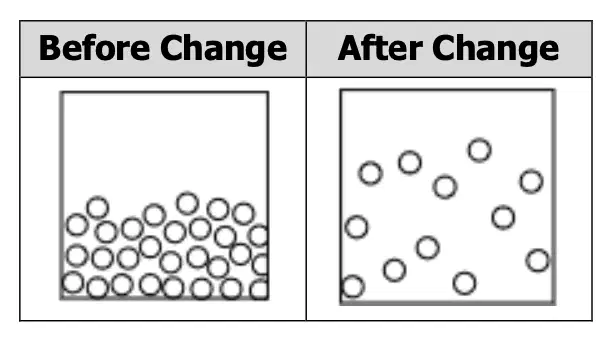
The models imaged show how the spacing between particles changes due to an increase in temperature.
Which statement describes what else occurs to the particles due to the increase in temperature?
The average kinetic energy among the particles increases, and the intermolecular forces become weaker.
The average kinetic energy among the particles decreases, and the intermolecular forces become weaker.
The average kinetic energy among the particles increases, and the intermolecular forces become stronger.
The average kinetic energy among the particles decreases, and the intermolecular forces become stronger.

Match each of these definitions with its term.
Forces of attraction.
Intermolecular Forces
State of Matter, STRONGEST Forces of Attraction.
Solid
State of Matter, WEAKEST Forces of Attraction.
Gas
Pure Substance, 1 Kind of Atom.
Element
Pure Substance, 2 or More Different Atoms.
Compound
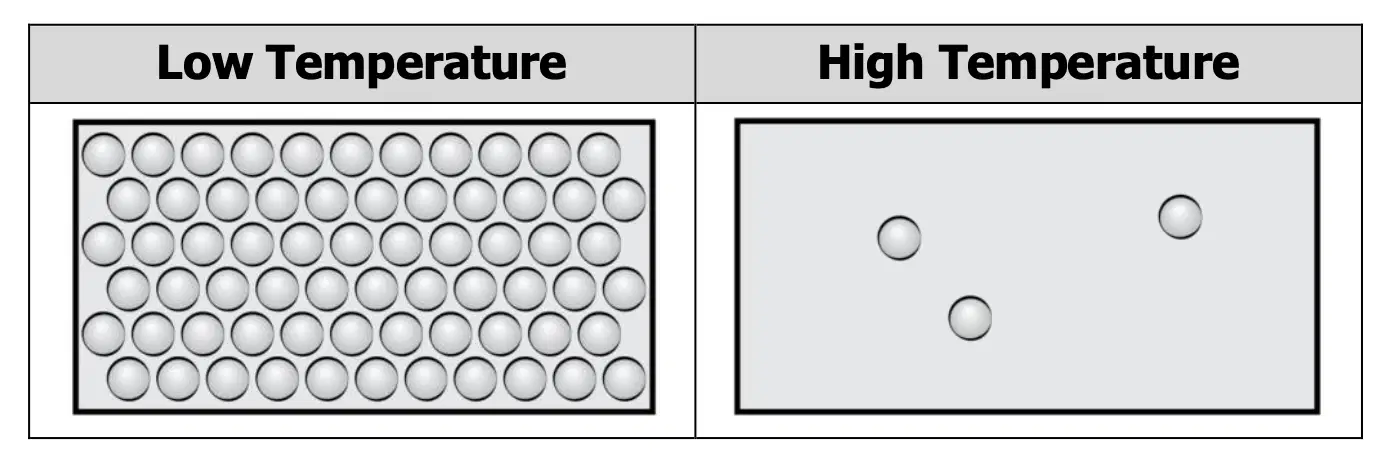
The diagram shows spacing of molecules in a substance at different temperatures.
How does the substance change phase when its temperature changes?
Solid to Gas
Gas to Solid
Liquid to Gas
Solid to Liquid
The diagram shows spacing of molecules in a substance at different temperatures.
Select the correct Descriptors of this occurence.
Physical Change
Chemical Change
Endothermic
Exothermic
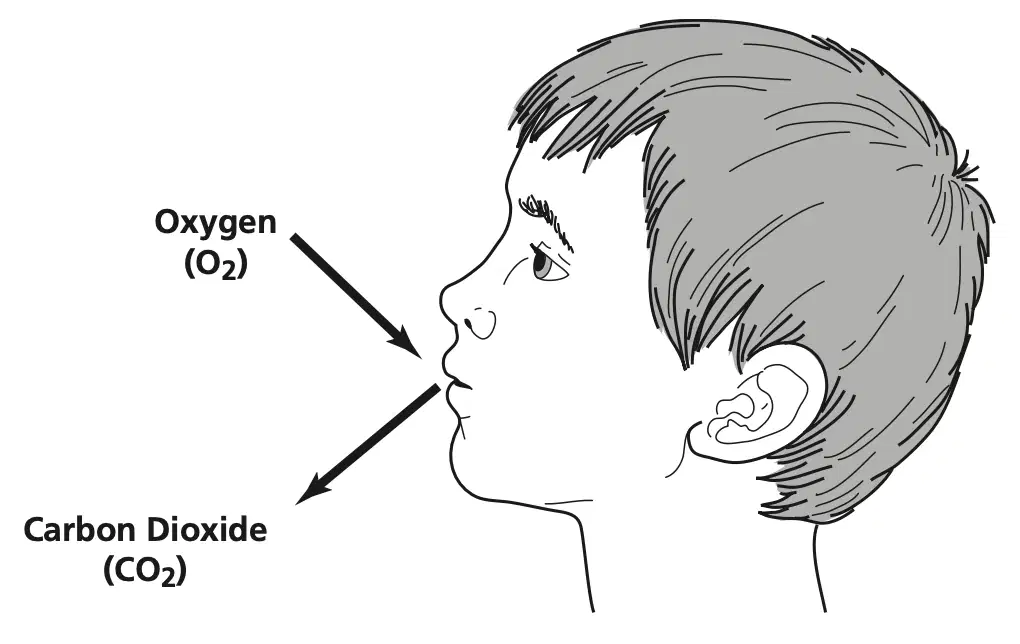
The picture shows gases being inhaled and exhaled.
Which BEST identifies the substances in this picture?
O2 is an element and CO2 is a compound.
O2 is a compound and CO2 is an element.
Both O2 and CO2 are elements.
Both O2 and CO2 are compounds.
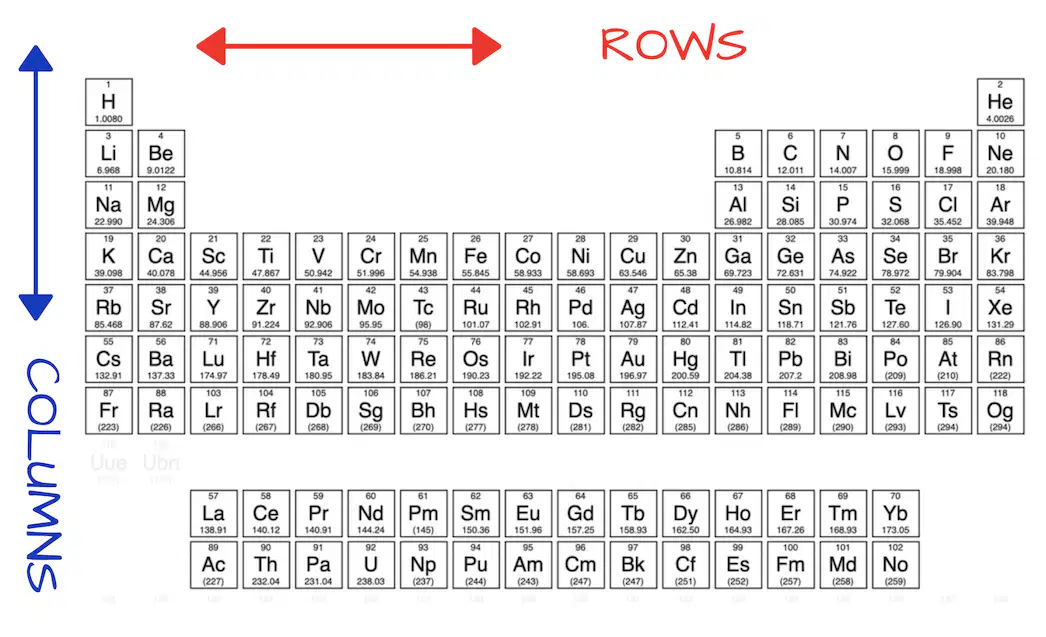
Identifying Properties of the Element Classes.
Correctly identify each of the characteristics of each element class.
Ductile
Malleable
Shiny
Great Electrical Conductors
M+
Includes Transitions
Includes Lanthanide and Actinide Series
Properties of Metals and non-Metals
ML
Semi-Conductors
8 Elements
B, Si, Ge, As, Sb, Te, Po, At
Staircase that separates the Periodic Table into 2-Halves
Most populated Class
Mostly on the LEFT of the PT
Brittle
Dull
Poor Electrical Conductors
NM-
Includes Noble Gases
Labeling the Metalloids.
Place a dot on each of these 4 Metalloids (start with the higher atomic numbers, so you'll be able to see all 4).
Silicon
Antimony
Tellurium
Germanium
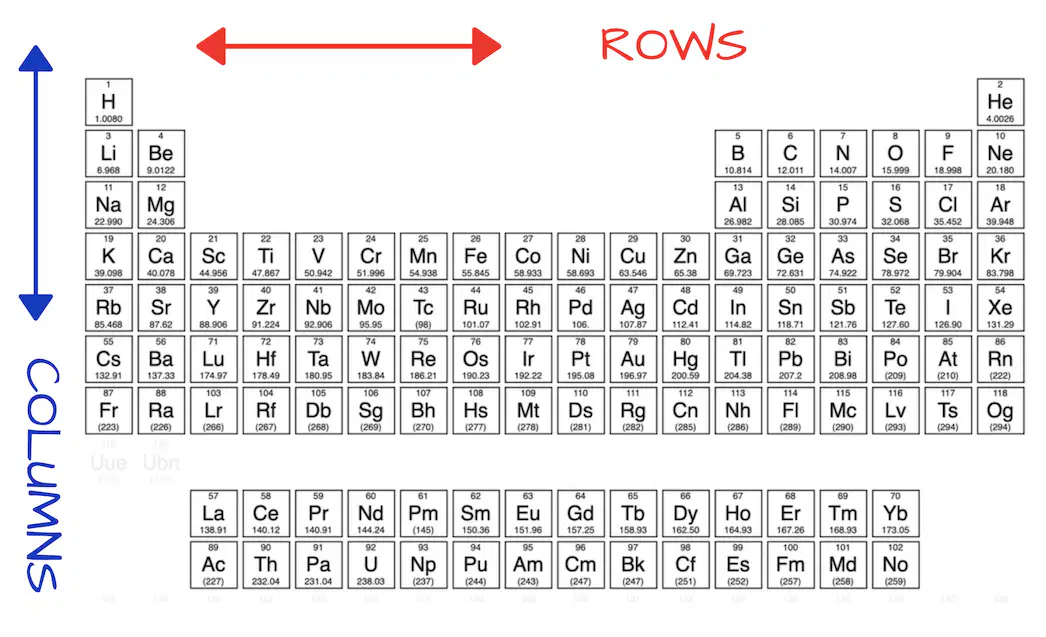
Identification of Element Class.
Which of these elements is classified as a metalloid?
Si
Al
Po
Ge
As
Match the following.
Subatomic particle with +1 Charge.
Proton
Subatomic particle with -1 Charge.
Electron
Subatomic particle with 0 Charge.
Neutron
Center Region of Atom, Positively Charged.
Nucleus
Outer Region of Atom, Negatively Charged.
Electron Cloud

Match each term with its definition.
Big number in front of a formula; multiplies all the atoms present.
Coefficient
Small, lowered number written behind its element, indicates the number of atoms present.
Subscript
Symbols and subscripts written together to express the kinds and numbers of each element present.
Chemical Formula
Formulas that are wrote in a chemical sentence to show activity.
Chemical Equation
In a chemical equation, when the kinds and numbers of the elements present on the reactant and products sides are the SAME.
Balanced Equation

Match each of these terms with its definitions.
Force between two atoms.
Chemical Bond
In a chemical reaction, the start.
Reactant
In a chemical reaction, the end.
Product
Bond between M+ and NM-
Ionic Bond
Bond between NM- and NM- or ML and NM-
Covalent Bond

a
b
c
d

a
b
c
d
Balanced or Not: Mg + O2 → MgO
Balanced Equation
NOT Balanced Equation
Balanced or Not: 4KMnO4 → 2K2O + 4MnO + 5O2
Balanced Equation
NOT Balanced Equation
Balanced or NOT: 2Na2O2 + H2SO4 → 3Na2SO4 + H2O2
Balanced Equation
NOT Balanced Equation

Balanced or NOT: 2Al + Fe2O3 → 2Fe + Al2O3
Balanced Equation
NOT Balanced Equation

CO2 is an example of...
Ionic Bonds
Covalent Bonds
Both
Neither
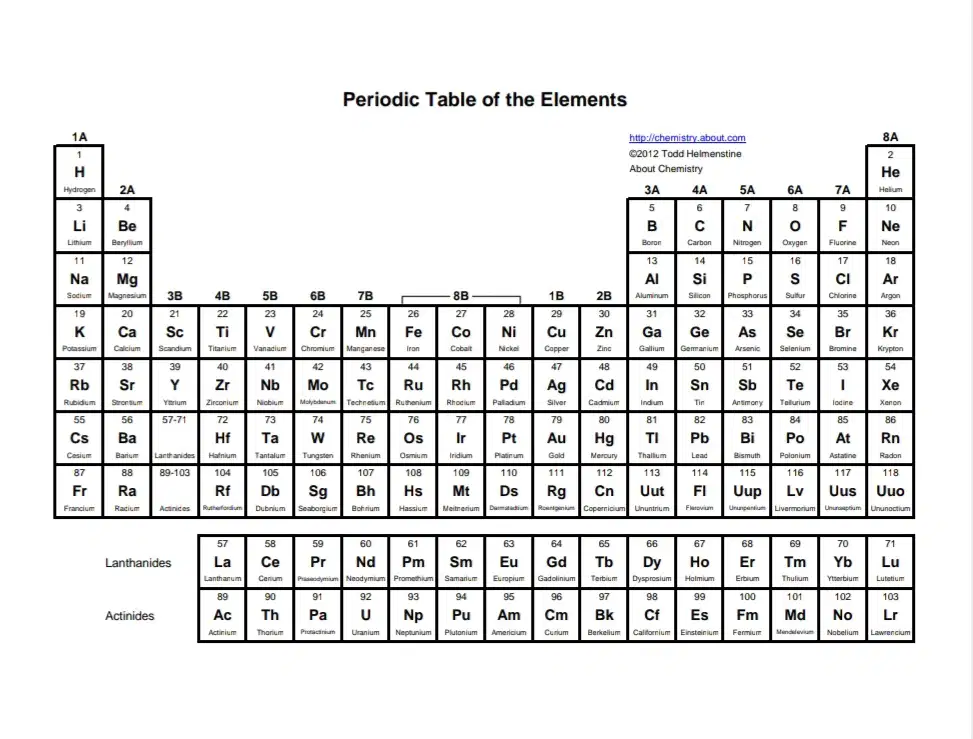

Which of the following described the properties of particles in gas? (Select all that apply).
very far apart
move randomly at high speed in all direction
Vibrate about fixed position
high kinetic energy
Closely packed in disorderly,random manner

What is the Law of Conservation of Mass?
It states that no matter can be created or destroyed.
It states that no energy can be created or destroyed.
It states that matter can be created or destroyed.
It states that no sound can be created or destroyed.


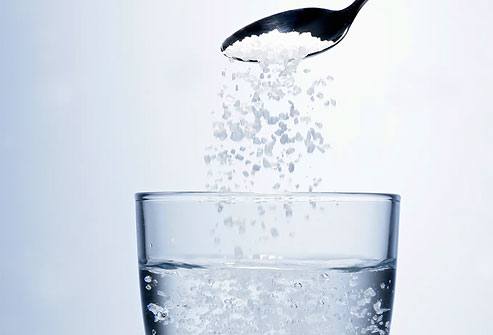

A rock with the mass of 60 g is broken into 2 pieces. What are possible masses for the two pieces of rock?

Which organelles are not present in an animal cell:
A. Cell membrane
B. Chloroplast
C. Cell wall
D. Mitochondria
A and B
B and C
A and D
B and D


Eukaryotic cells can include _______ (Select all that apply).
protists
plants
animals
fungi

Match each term with its correct definition.
Prokaryote
A single-celled organism that does not have a nucleus or membrane-bound organelles.
Eukaryote
Organism made of cells that have nucleus enclosed by membrane.
Cell
Basic building block of living things.
Organism
One individual living thing; anything that can carry out life processes independently.
Organelle
Tiny parts of a cell with a specific function.

Cells with a nucleus and membrane-bound organelles are called _____.

Match each of these parts with its corresponding part.
State of Matter, definite Shape, definite Volume.
Solid
State of Matter, indefinite Shape, definite Volume.
Liquid
State of Matter, indefinite Shape, indefinite Volume.
Gas
One Form of Matter.
State of Matter
Exactly Measurable.
Definite

a
b
c
d

a
b
c
d

Balanced or NOT:
Balanced
NOT

What is #1?
Golgi bodies
smooth endoplasmic reticulum
rough endoplasmic reticulum
Nucleus
Nucleolus

What is #10?
Cell wall
Cell membrane
Mitochondria
Chloroplast

What is #5?
Cell wall
Cell membrane
Mitochondria
Chloroplast
Which is NOT part of cell theory?
all organisms are made of one or more cells
cells are the basic units of life
cells form from other cells
all organisms are made of multiple cells

What is #4?
Central vacuole
Nucleus
Nucleolus
Cytoplasm
What is #11?
Golgi bodies
smooth endoplasmic reticulum
rough endoplasmic reticulum
Nucleus
Nucleolus

What is #3?
Central vacuole
Nucleus
Nucleolus
Cytoplasm

What is #1?
Cell wall
Cell membrane
Mitochondria
Chloroplast
What is #9?
Golgi bodies
smooth endoplasmic reticulum
rough endoplasmic reticulum
Nucleus
Nucleolus

What is #2?
Cell wall
Cell membrane
Mitochondria
Chloroplast
What is #3?
Plasma membrane
Ribosome
Centriole
Chloroplast
Mitochondria
Eukaryotic cells can include _______ (Select all that apply).
protists
plants
animals
fungi
Match each term with its correct definition.
Prokaryote
A single-celled organism that does not have a nucleus or membrane-bound organelles.
Eukaryote
Organism made of cells that have nucleus enclosed by membrane.
Cell
Basic building block of living things.
Organism
One individual living thing; anything that can carry out life processes independently.
Organelle
Tiny parts of a cell with a specific function.
Cells with a nucleus and membrane-bound organelles are called _____.

Select the State Changes that are Endothermic.
L → G
G → L
S → G
S → L
G → S
Match each of these definitions with its term.
Forces of attraction.
Intermolecular Forces
State of Matter, STRONGEST Forces of Attraction.
Solid
State of Matter, WEAKEST Forces of Attraction.
Gas
Pure Substance, 1 Kind of Atom.
Element
Pure Substance, 2 or More Different Atoms.
Compound
Eukaryotic cells can include _______ (Select all that apply).
protists
plants
animals
fungi
Match each term with its correct definition.
Prokaryote
A single-celled organism that does not have a nucleus or membrane-bound organelles.
Eukaryote
Organism made of cells that have nucleus enclosed by membrane.
Cell
Basic building block of living things.
Organism
One individual living thing; anything that can carry out life processes independently.
Organelle
Tiny parts of a cell with a specific function.

