
 Worksheets
Final Quizizz
Total questions: 100
Worksheet time: 2hrs 55mins
Is a change in matter that produces one or more new substances
precipitate
endothermic reaction
chemical reaction
activation energy
A solid that forms from a solution during a chemical reaction
precipitate
concentration
chemical reaction
inhibitor
The total mass of the reactants must equal the total mass of products. Matter is never created or destroyed
Conservation of Mass
Pascal's Principle
catalyst
inhibitor

Identify the type of change, based on the given picture.
chemical change
physical change
nuclear change
both a and b

Which of the following 2 are chemical reactions?
sugar dissolving in water
water turning into steam
burning wood
mixing baking soda and vinegar
tearing paper
heat or light is produced
1. How is a chemical change different from a physical change?
there is no difference
a physical change creates a new substance
a chemical change creates a new substance
A type of reaction that absorbs energy in the form of heat or light.
Chemical reaction
Exothermic reaction
Endothermic reaction
Precipitate
A type of reaction that releases energy through heat or light
Chemical reaction
Exothermic reaction
Endothermic reaction
Law of Conservation of Mass
What type of reaction is: 3Ca + 2AlCl3 --> 3CaCl2 + 2Al
Synthesis
Decomposition
Single replacement
Double replacement
What type of reaction is: P4 + 3O2 --> 2P2O3
Synthesis
Decomposition
Single replacement
Combustion
When balancing equations a ____ can be placed to the left of a formula for a substance to make the equations balanced
charge
subscript
random number
coefficient
What type of reaction is: H2SO4 + Fe -->H2 + FeSO4
Synthesis
Decomposition
Single Replacement
Double Replacement
Fe + O2 -> Fe2O3
2H2 + O2 --> 2H2O
2H2 + O2 --> 2H2O
Example: H2
2C2H2 + 5O2 --> 4CO2 + 2H2O
In a chemical reaction, no new atoms are created, and no atoms are _________________.
Destroyed
Created
A reaction that gives off heat
Exothermic
Endothermic
What is a chemical equation?
a diatomic molecule
a shorthand representation of a chemical bond
a shorthand representation of a chemical reaction
a substance
Can the subscripts in a chemical reaction be changed?
Cannot be determined
Maybe, depending on the energy released
No, they define the molecules in the reaction
Yes, to balance the equation
1000


In which type of interaction does one animal eat another for energy and nutrients?
Competition
Parasitism
Predation
Mutualism
Living factors or organisms that affect an ecosystem are
abiotic factors
species
trophic level
biotic factors

The gradual change that comes to an ecosystem as it matures.
Biomass
Abiotic Succession
Ecological Succession
Pioneer Species

The first organisms to reappear after an ecosystem is damaged.
Abiotic Community
Pioneer species
Succession
Biomass

An ecosystem that has been stable for a long period of time with a high level of species diversity.
Lichen
Pioneer Species
Climax Community
Succession

The progression of life in an area that starts with bare rock or sand but no soil. Example: a volcanic island.
Climax Community
Pioneer Species
Secondary Succession
Primary Succession

The progression of life in an area that starts with soil.
Example: after a forest fire.
Biomass
Pioneer Species
Primary Succession
Secondary Succession
What is one way secondary succession differs from primary succession?
Secondary succession is typically quicker than primary succession.
Secondary succession is typically slower than primary succession.
Secondary succession only occurs in mountains, primary succession only occurs in wetlands.
Secondary succession is the gradual change in plant species, while primary succession is the gradual change in animal species.


In which type of succession is soil already present?
primary succession
secondary succession
both types of succession

TRUE or FALSE: Scarcity of resources can cause a decrease in population size of a species that relies on that resource.
true
false
Living things that get ____ of a resource may grow more slowly and be less likely to survive and reproduce.
more
less
When resources are ____, populations remain stable or increase in size.
abundant
scarce
Natural disasters such as flooding,forest fires, and tornadoes are associated with which type of succession?
primary
secondary
Gordito
ecosystem
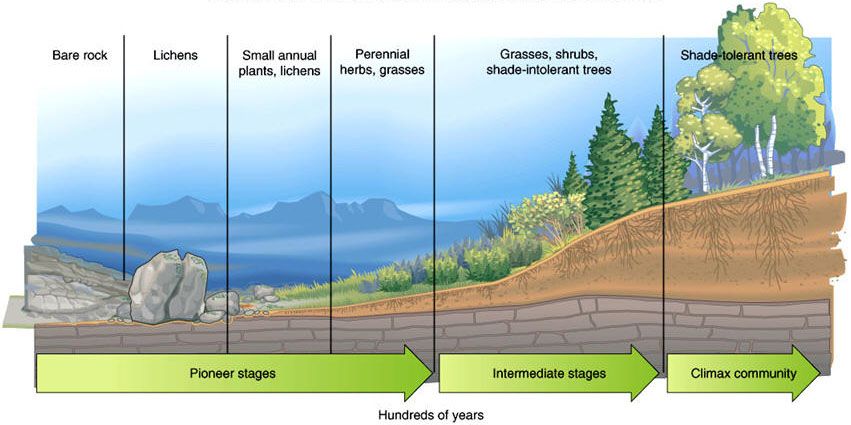
The picture display which type of succession?
primary
secondary
tertiary
all of the above
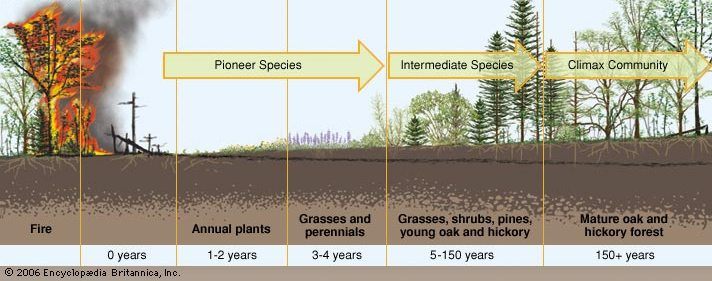
The picture displays which type of succession?
primary
secondary
tertiary
all of the above

Why does primary succession typically occur over a longer period of time (as compared to secondary succession)?
Because trees do not perform respiration
Because the climax community is usually a forest.
Because primary succession already has soil
Because primary succession does not begin with soil being present
What is an example of an area that is likely to undergo primary succession?
Glaciers melt and leave exposed rock
Plants die from drought and decompose
Land is bulldozed and soil remains
A forest fire occurs
An increase in biodiversity or a progression over time -after a natural or man made disturbance - is called what?
ecological recession
climax recession
ecological succession
climax succession


An area that is faster to become a forest due to the presence of soil is ...
Primary Succession
Secondary Succession
Pioneer species are the first
trees to grow in an area that has been disturbed
trees that replace the original trees after a forest fire
organisms to live in previously uninhabited areas
organisms to live in a forest canopy
Elements that share common traits of both metals and non-metals are referred to as
metals
non-metals
halogens
metalloids

What are the vertical columns on the periodic called?
groups
periods
nonmetals
metals
metalloids
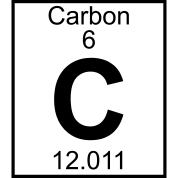
The periodic table is organized in horizontal rows called...
Groups
Periods
Families
Chemical Symbols
What is common among elements in the same group?
They have the same number of energy levels.
They have the same number of valence electrons.
They have the same number of protons.
They have the same number of neutrons and protons.
When elements fall under the same column, this means they belong to the same ______.
group
period

Which elements have 1 valence electron?
period 1
group 1
group 4
The electrons in the outermost shell (main energy level) of an atom; these are the electrons involved in forming bonds
alkali metals (group 1)
Halogens (Group 17)
atomic number
valence electrons
A subatomic particle that has a negative charge
nobles gases
protons
electrons
neutrons
neutron
A subatomic particle that has a positive charge and that is found in the nucleus of an atom
not able to conduct heat or electricity, little to no metallic luster
A subatomic particle that has a negative charge
A small particle in the nucleus of the atom, with no electrical charge

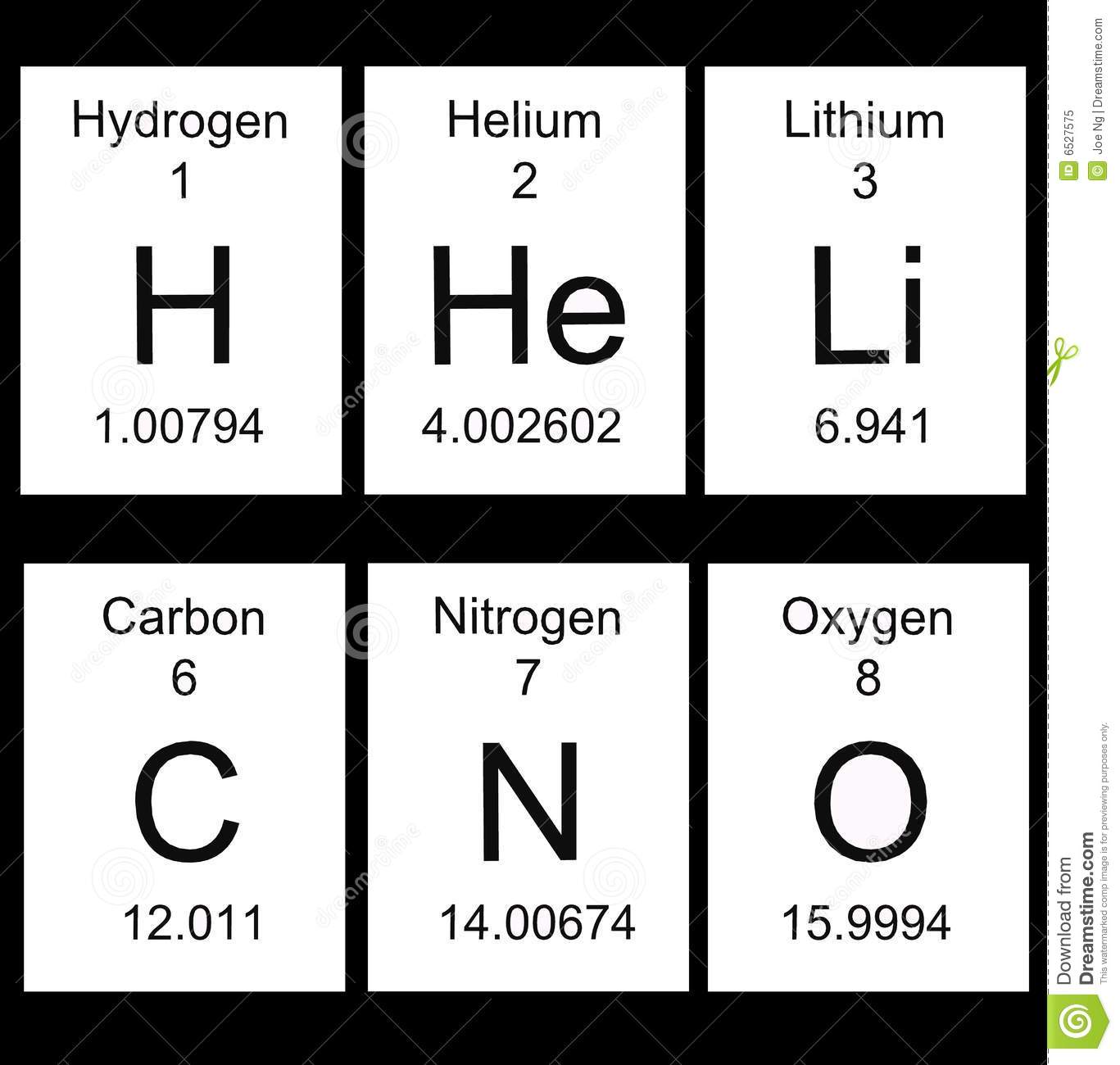
In each square of the periodic table, the number at the bottom is the:
atomic number
atomic mass
chemical symbol
element name
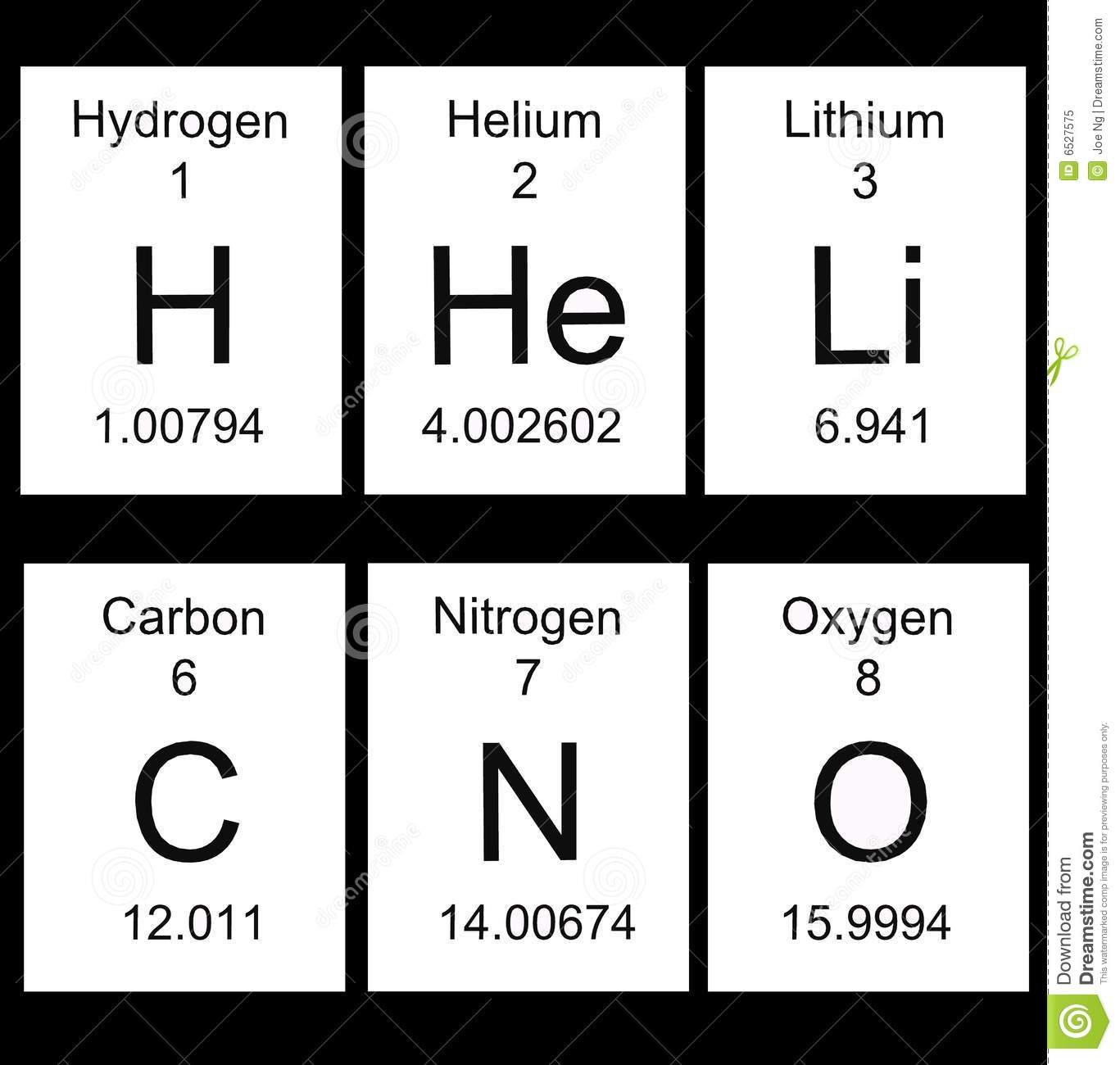
The atomic number is the
average mass of the element
number of protons an element has
number of valence electrons an element has
group and period an element belongs to

Electrons...
are found in the nucleus
give us the atomic number of an element
are how we identify each elements
have a negative charge

Elements in the same period have the same number of
neutrons
valence electrons
electrons
energy levels

___________________ are positively charged particles located in the nucleus of an atom.
Electrons
Neutrons
Protons
Isotopes

Rows in the Periodic Table are called
Periods
Groups/Families
Cousins
Metals

Protons have a ____________ charge, neutrons have a ____________ charge, and electrons have a ____________ charge.
positive; negative, neutral
positive, neutral, negative
neutral, negative, positive
negative, neutral, positive

The number of protons in the nucleus of an atom is equal to the:
Atomic number
Atomic mass
Number of neutrons
Number of valence electrons
The total number of protons and neutrons in an atom's nucleus is equal to the:
Atomic number
Atomic mass
Number of valence electrons
Number of electron shells
The model of an atom that uses dots surrounding the atomic symbol to represent valence electrons is called the:
Bohr Model
Lewis Dot Structure
Rutherford Model
Thomson Model
The model of an atom that shows electrons in circular orbits around the nucleus is called the:
Bohr Model
Lewis Dot Structure
Rutherford Model
Thomson Model

