
 Worksheets
Topic 5 Study Material Ecosystems
Total questions: 100
Worksheet time: 2hrs 55mins
Temperature, light, air, water, and soil are all _____ parts of the environment
alive
abiotic
biotic
living
What is an example of a biotic factor?
rabbit
soil
rocks
water
A population is...
Multiple species that live in one area
All of the living and nonliving things in an area
A group of one species in one area
None of these
Organisms that breakdown all the dead plants and animals and their waste and are converted into nutrients for plants.
carnivore
consumer
producer
decomposer
All the green plants that provide the energy for consumers.
consumer
producer
decomposer
herbivores
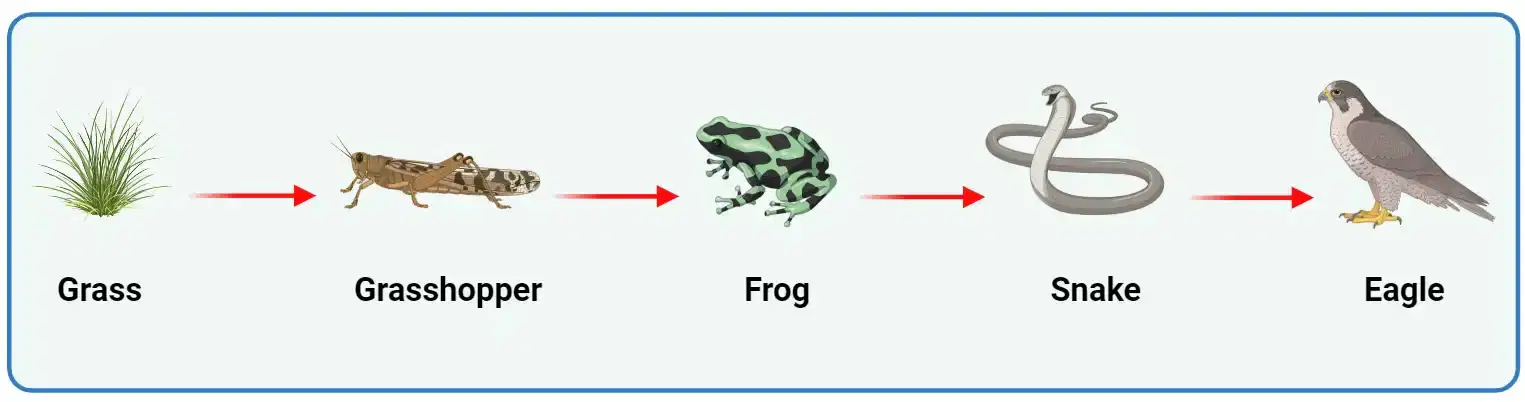
A diagram that shows one way the transfer of energy from one organism to another (who is eaten by what).
ecosystem
energy web
food web
food chain
A diagram that shows the transfer of energy in an ecosystem by using several food chains.
ecosystem
food chain
food web
energy pyramid
One living thing. Ex. One frog, one tree, one rabbit
population
community
ecosystem
organism
Many organisms of the same species living in the same area.
ecosystem
population
community
organism
Many different types of populations living in the same area. All the living things in an area.
community
population
organism
ecosystem
Producers are important because they
convert sunlight and oxygen to produce carbon dioxide and water
create shade for organisms
use energy from the sun to make their own food and are the peak of energy pyramids
use energy from the sun to make their own food and are the base of energy pyramids
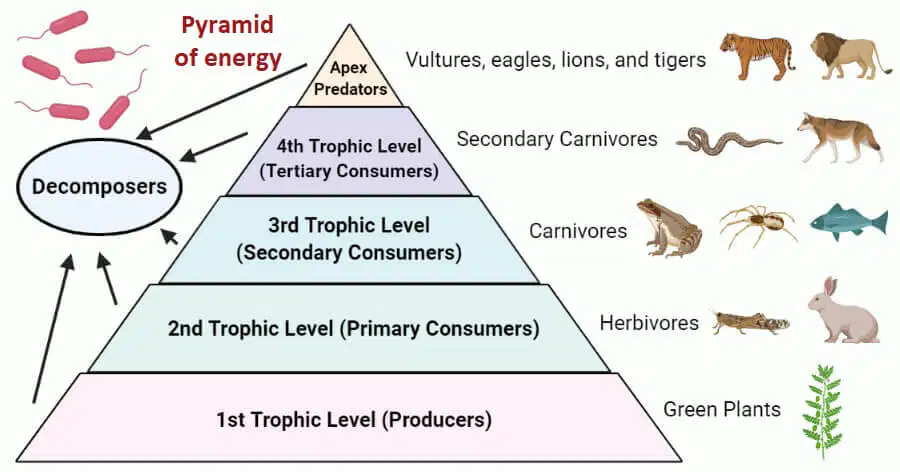
Which level in the energy pyramid has the most energy?
tertiary (3rd level) consumers
secondary (2nd level) consumers
producers
primary (1st level) consumers
What rule is referred to as we discuss how much energy is transferred to the next trophic level in an energy pyramid?
50-50 rule
10% rule
90% rule
25% rule
An environmental factor that causes a population to stop growing or to decrease in size, such as a fatal disease infecting organisms is considered a/an
biotic factor
abiotic factor
habitat
limiting factor
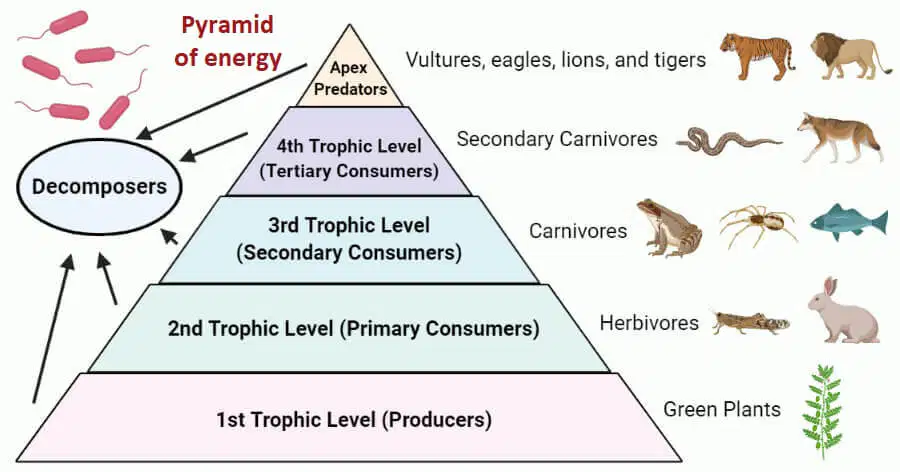
As we move through the levels (trophic levels) of the energy pyramid, starting at the bottom with the producers, how much energy, in terms of percent, would the top apex predators receive?
10%
0.1%
0.01%
1%
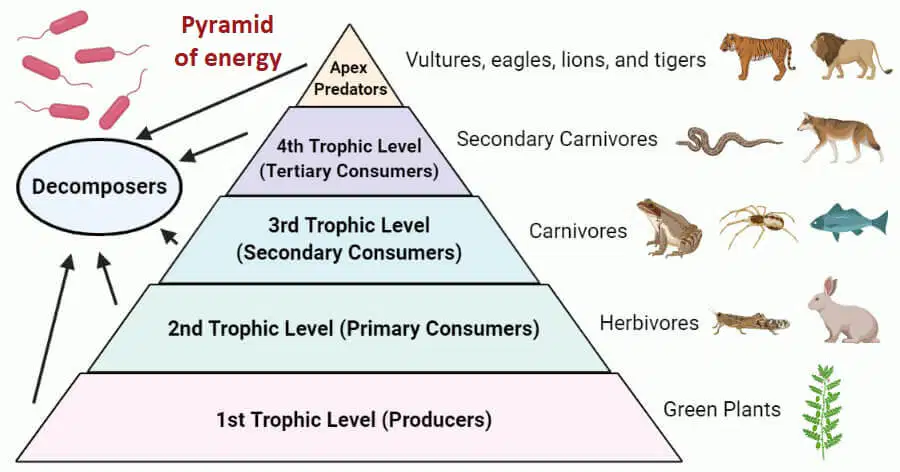
When we are demonstrating the flow of energy within an ecosystem, why do we use a pyramid as the model?
What is a pyramid?
An ecosystem can hold more higher trophic level consumers than producers based on the amount of energy available for transfer into other trophic levels
An ecosystem can hold more producers than consumers based on the amount of energy available for transfer into other trophic levels
An ecosystem can hold more apex predators than producers based on the amount of energy available for transfer into other trophic levels
In a food web or food chain, what direction do the arrows always point?
Towards what it is consuming
Towards what is doing the consuming
Always towards the right
In the direction that gravity is pulling us
Click on all the abiotic factors
water
soil
sunlight
fungus
What role does the producers and consumers have in the oxygen cycle?
Producers release oxygen as a waste product of photosynthesis
Consumers need carbon dioxide to break down food during cellular respiration
Consumers need oxygen to carry out photosynthesis
Producers use oxygen to break down food for energy during cellular respiration
Consumers use oxygen to break down food for energy during cellular respiration
Why is the role of bacteria in the nitrogen cycle important?
Bacteria change free nitrogen into a usable form of nitrogen by the process called helium fixation
Bacteria change free oxygen into a usable form of nitrogen by the process called oxygen fixation
Bacteria change free nitrogen into a usable form of nitrogen by the process called nitrogen fixation
Bacteria change free hydrogen into a usable form of nitrogen by the process called hydrogen fixation


An arctic blast pushed its way through several of the Northern state in the United State. The temperatures dropped below freezing for several days. Temperature is an example of which type of factor?
Biotic
Abiotic

Air is a mixture of colorless gases. The air that makes up the Earth's atmosphere consists primarily of nitrogen and oxygen. Air is an example of which type of factor?
Biotic
Abiotic

Brandon and his dad cut a tree that fell in a storm into smaller sections. Then they split the wood to use for firewood. Firewood is an example of which type of factor.
Biotic
Abiotic
One living thing. Ex. One frog, one tree, one rabbit
population
community
ecosystem
organism
What is the primary role of producers in an ecosystem?
To regulate the climate
To consume other organisms
To provide energy for consumers by converting sunlight into food
To decompose organic matter
Which of the following is an example of an abiotic factor in an ecosystem?
Sunlight
Plants
Bacteria
Animals
In a food chain, which organism is typically at the top?
Apex predator
Secondary consumer
Primary consumer
Producer
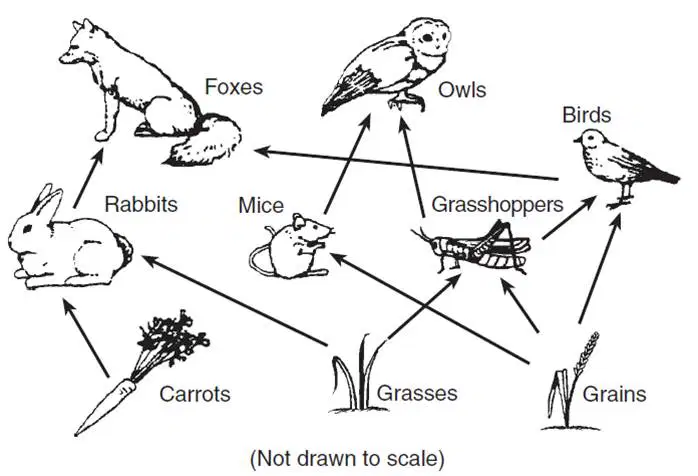
In the food web list all the producers.
Fox and Owl
Grasshopper and Rabbit
Carrots, Grasses, and Grains
Bird and Mouse
In the food chain: Carrots -->Rabbit --> Fox, the fox is a
Producer
Secondary (Second level) Consumer
Primary (First Level) Consumer
Decomposer
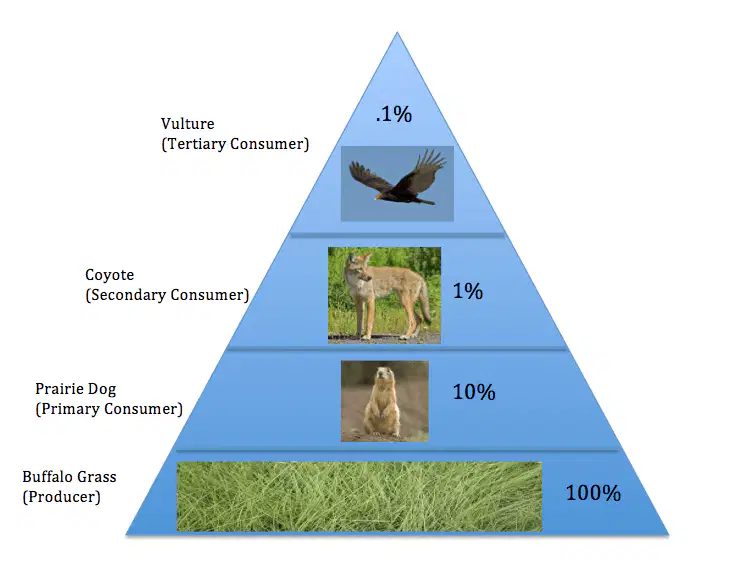
Which level of the energy pyramid has the most energy?
Coyote
Vulture
Buffalo Grass
Prairie Dog
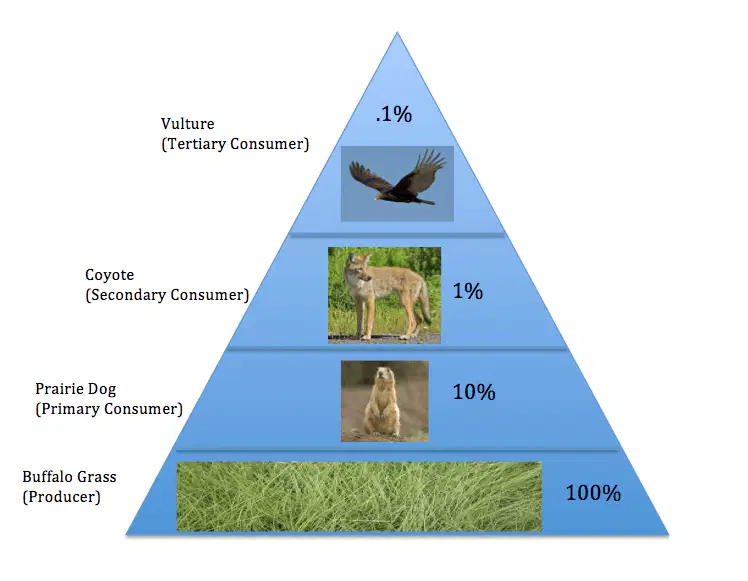
Which level in the energy pyramid would have the least amount of energy to pass to the next trophic level?
Vulture
Coyote
Prairie Dog
Buffalo Grass
What does biodiversity mean?
Only 1 species within an area
all abiotic life
the different amount of different species in an area
nitrogen fixation
An animal that only eats plants
Herbivore
Omnivore
Carnivore
Scavenger
An animal that only eats meat
Herbivore
Omnivore
Carnivore
Scavenger
An animal that eats meat or plants
Herbivore
Omnivore
Carnivore
Scavenger
Brandon and his dad cut a tree that fell in a storm into smaller sections. Then they split the wood to use for firewood. Firewood is an example of which type of factor.
Biotic
Abiotic
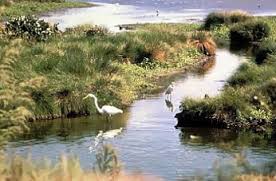
What are the abiotic factors in this image?
water, sunlight, dirt, air
birds, trees, and sunlight
water, trees, and birds
What do the arrows in a food chain and food web show?
What organism dies before another organism
What organism is a consumer and what organism is a decomposer
Points to the organism that is being consumed
Points towards the organism that is doing the consuming
Other than pointing to the organism that is consuming the other,what do the arrows in a food chain and food web show?
what each organism eats
which organism dies first
which organism is the producer
the flow of energy
Complete this state. Energy can not be created or destroyed it can only be
made in a factory
magic
electrical
transferred or converted
What converts nitrogen gas into a usable form for plants and animals?
bacteria
rain
fungi
car exhaust
What is the process of combining nitrogen gas with other elements to make nitrogen into usable compounds?
nitrogen composition
nitrogen fixation
ammonia
denitrification
How is nitrogen "fixed" into a usable form for plants?
Through action of bacteria only
Through lightning only
Through action of bacteria and lightning
Through photosynthesis
What do free living bacteria in the soil do?
Make clouds
Turn atmospheric nitrogen into nitrates
Make carbon dioxide for plants to go through photosynthesis
Help plants take in water
Why don't populations grow indefinitely?
limiting factors
only biotic factors
only abiotic factors
none of the above
The number of organisms per unit area
Density
Volume
Mass

What is the water cycle?
the continuous movement of water from Earth’s surface to the atmosphere and back again.
the continuous movement of air from Earth’s surface to the atmosphere and back again.
a body of water, often an artificial lake, which is used to store water for human use.
water that falls to Earth’s surface

Water from rain or snow that flows over the surface of the land into streams, rivers, and lakes is called...
accumulation
runoff
ground water
surface water


After liquid water turns into water vapor, it goes into the air where it becomes a...
glacier
cloud
surface water
ground water


Evaporation occurs when the sun heats up water in rivers, lakes, or the ocean, and turns it into...
snow
water vapor
rain
sleet
Which one of these adds oxygen and removes carbon from the atmosphere?
cooking with gas
planting trees
burning wood
riding in a bus

Evaporation of water through the leaves of trees is
transpiration
runoff
condensation
precipitation
The process in which nitrogen circulates and is recycled is called
The nitrogen cycle
The carbon cycle
The water cycle
The phosphorus cycle
Which one of these is NOT a source of nitrogen?
death and decay
animal waste
combustion
Which one of these does NOT add carbon to the atmosphere?
combustion
cellular respiration
photosynthesis
burning fossil fuels

nitrogen
phosphorus


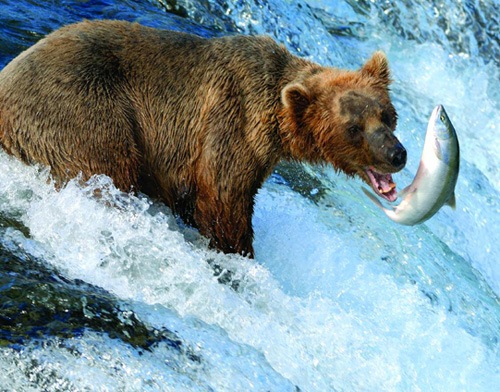


Which trophic level has the least amount of energy?
1
2
3
4
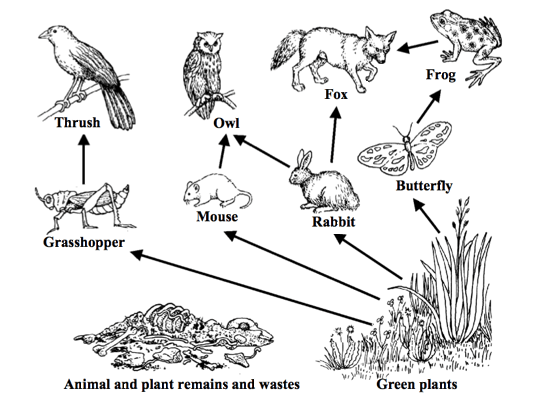

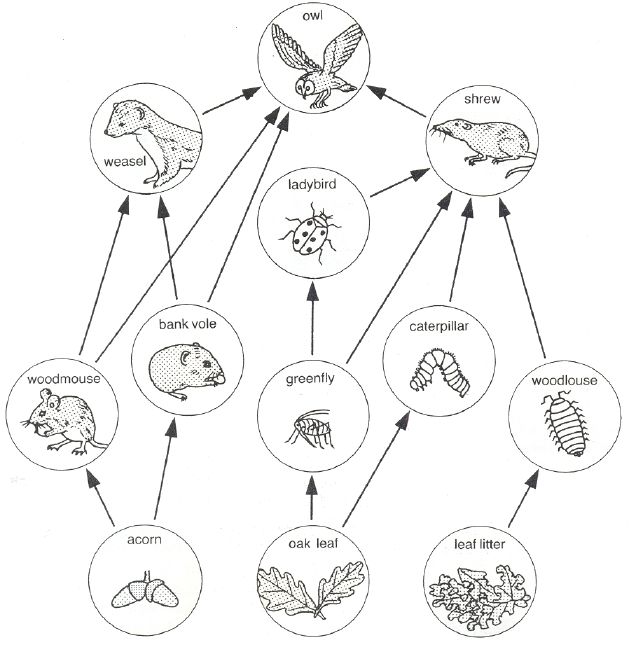

The populations of which organisms will most likely increase as a result of a disease that suddenly reduced the population of Texas horned lizards?
Grasses and ants
Ants and grasshoppers
Grasshoppers and Texas Cottonmouths
Texas cottonmouths and red shouldered hawks

Which statement provides the best explanation for the difference in biomass of organisms found at each trophic level?
Organisms at higher trophic levels have less energy available to them than organisms at lower trophic levels.
Organisms at higher trophic levles require smaller habitats than organisms at lower trophic levels.
Organisms at lower trophic levels provide less energy than organisms at higher trophic levels.
Organisms at lower trophic levels outcompete organisms at higher trophic levels.

When constructing an energy pyramid of a swamp ecosystem, which of these would be placed at the top of the pyramid.
Grass carp
American Alligator
Eastern mud turtle
Great blue heron

Based on this food web, which organisms are direct sources of energy for secondary consumers?
aphid, bird, rabbit
ladybug, fox, dragonfly
frog, butterfly, berries
mouse, snake, hawk

Based on the energy flow between trophic levels in an energy pyramid, how much energy would be expected to be found at the secondary consumer level in this energy pyramid?
100 Joules
500 Joules
1,000 Joules
50 Joules

Which organisms are both secondary and tertiary consumers?
chemosynthetic bacteria and amphipods
zooplankton and muscles
ratfish and octopuses
galatheid crabs and zoarcid fish

What is lost to the environment at each trophic level?
food sources
living space for the organisms
nutrients from soil
heat
Which answer choice best describes a community?
Praying mantises caring for their young
Three-spined sticklebacks living in estuaries
different species of lizard occupying the same niche in a desert
roosting mother bats recognizing their offspring

In what order are the levels in the diagram?
population, community, ecosystem
organism, community, population
organism, population, community
ecosystem, population, community
A science class is planning a field trip to a local farm that has a large pond. Which of the following lists the order of biological organization from smallest to largest that the students can expect to find at the pond?
population, organism, community ecosystem
organism population community ecosystem
organism community population ecosystem
population organism ecosystem community


What happens if a population grows past its carrying capacity?
The population keeps growing
The population reduces untl it is below carrying capacity again
The entire species will go extinct
The carrying capacity just increases

Which of the following statements is true?
A decrease in food availability lowers carrying capacity.
An increase in water will decrease the carrying capacity.
A fishes population cannot exceed the carrying capacity.
A population stays level once at carrying capacity.
If there are not enough predators and too many prey, the prey population may eventually starve.
True
False

In this food chain, what will happen if the frogs become extinct?
The snakes will increase.
The grasshoppers will decrease.
The eagles will remain the same.
The grasshoppers will increase.
How do decomposers help the environment?
They produce food.
They break down organic remains so nutrients can be reused.
They eat insects like mosquitos
They protect us from infections

